• Skip to main content
  • Skip to footer

Personal Finance for PhDs

Live a financially balanced life - no Real Job required

  • Blog
  • Podcast
  • Tax Center
  • PhD Home Loans
  • Work with Emily
  • About Emily Roberts

Money Mindset

Teaching Personal Finance Illuminates the Opportunity Cost of a PhD

March 23, 2026 by Jill Hoffman Leave a Comment

In this episode, Emily interviews Dr. Trevor Hedberg, an assistant professor of practice at the University of Arizona who teaches a seminar on personal finance to undergrad students based on Morgan Housel’s The Psychology of Money. Trevor is a repeat podcast guest, and he shares how teaching the course has made him think differently about finances during his PhD and postdoc, including the financial opportunity cost of grad school and lifetime wealth killers.

Links mentioned in the Episode

  • Dr. Trevor Hedberg’s Website
  • Learn more about Dr. Trevor Hedberg’s research
  • PF for PhDs Tax Workshops (Individual Purchase)
  • PF for PhDs Tax Workshops (Sponsored)
  • PF for PhDs S8E14: A Low-Cost Lifestyle Can Be Both Necessary and Enjoyable During Grad School
  • The Psychology of Money by Morgan Housel
  • The Art of Spending Money by Morgan Housel
  • PF for PhDs Tax Center for PhDs-in-Training
  • PF for PhDs S22E4: The Importance of Financial Student Services to Graduate Students on Stipends
  • Millionaire Mission by Brian Preston
  • PF for PhDs Subscribe to Mailing List
  • PF for PhDs Podcast Hub
Teaching Personal Finance Illuminates the Opportunity Cost of a PhD

Teaser

Trevor (00:00): Because I think that the actual mechanisms for building wealth over time are really pretty simple to understand, but remarkably difficult to put into practice. And I think also as academics, like we’re primed to think that problems in the world sort of correlate in difficulty with their complexity. But it’s not always the case that problems are difficult because they’re complicated. Sometimes it’s just that there are psychological and behavioral things that kind of sabotage us in, in what we’re trying to do.

Introduction

Emily (00:38): Welcome to the Personal Finance for PhDs Podcast: A Higher Education in Personal Finance. This podcast is for PhDs and PhDs-to-be who want to explore the hidden curriculum of finances to learn the best practices for money management, career advancement, and advocacy for yourself and others. I’m your host, Dr. Emily Roberts, a financial educator specializing in early-career PhDs and founder of Personal Finance for PhDs.

Emily (01:07): This is Season 23, Episode 6, and today my guest is Dr. Trevor Hedberg, an assistant professor of practice at the University of Arizona who teaches a seminar on personal finance to undergrad students based on Morgan Housel’s The Psychology of Money. Trevor is a repeat podcast guest, and he shares how teaching the course has made him think differently about finances during his PhD and postdoc, including the financial opportunity cost of grad school and lifetime wealth killers.

Emily (01:37): The tax year 2025 version of my tax return preparation workshop, How to Complete Your PhD Trainee Tax Return (and Understand It, Too!), is now available! This pre-recorded educational workshop explains how to identify, calculate, and report your higher education-related income and expenses on your federal tax return. Whether you are a graduate student, postdoc, or postbac, domestic or international, there is a version of this workshop designed just for you. I do license these workshops to universities, but in the case that yours declines your request for sponsorship, you can purchase the appropriate version as an individual. Go to PFforPhDs.com/taxreturnworkshop/ to read more details and purchase the workshop. You can find the show notes for this episode at PFforPhDs.com/s23e6/. Without further ado, here’s my interview with Dr. Trevor Hedberg.

Will You Please Introduce Yourself Further?

Emily (02:50): I am delighted to have a repeat guest on the podcast today, Dr. Trevor Hedberg, who is currently an assistant professor of practice at the University of Arizona. Trevor was first on the podcast in season eight, episode 14, way back in 2021 when he was a postdoc, and we’ve had five years of time pass. Um, and there’s been a lot of changes and Trevor has a lot of new insights for us today. So I’m very excited to dig into that, um, both on the professional and personal front. So Trevor, will you please introduce yourself and tell us what’s been going on professionally in the last five years?

Trevor (03:26): Sure. Thanks Emily, and thanks for having me back on the, uh, podcast after all this time. So, um, I’m, I’m now as, as you said, an assistant professor of practice. Uh, my primary affiliation is with W.A. Franke Honors College. Uh, I also have a partial affiliation with the philosophy department. Um, the last time I was on, I was a postdoc at Ohio State. Um, and in the, a year or so after that, uh, I landed this job here at the University of Arizona and have been, um, continuing to teach undergrads, do my research, and, um, and most recently I’ve started teaching a personal finance, um, seminar here in the Honors college.

Teaching Personal Finance Seminars Using the Psychology of Money

Emily (04:03): And that is what prompted us to revisit and have another interview. And I’m so excited about this. Um, but yeah, tell us how you went from, you know, doing philosophy for your PhD to teaching personal finance at this point.

Trevor (04:16): Yeah, well, if, if anybody remembers five years back, I did, I did talk a bit about, uh, when I was in graduate school, the, the challenges associated with managing to live on such a small stipend. And so I had some personal interest in issues in personal finance because I had been grappling with some of them, uh, in my own, in my own life, just to kind of, you know, make it as a graduate student, uh, without having to take out additional loans. Um, when I got here to the University of Arizona, it was not part of my original, you know, teaching load. Uh, I was mainly hired to teach applied ethics courses, which is what my main research area is. Um, but there was a personal finance seminar that was being offered in the Honors college, but it was being offered by an out of house faculty, a faculty member in a different department that we were paying, um, to teach that seminar once a year.

Trevor (05:03): And these little honors seminars are one credit classes that, um, all honors students have to take one of them in order to graduate with the honors distinction on their transcript. So, and that happened to be one of the most popular classes, but it was only offered once a year. And the course caps on these seminars are pretty small, like, you know, low twenties in terms of the number of students. And so they were interested in, you know, this, that course was always maxing out. It’s, it had tons of people on the wait list and just, there was a lot of student demand, so it just came up in an administrative meeting. Um, you know, is there, is there someone else who might wanna teach like a course in this area? And I said I could take a crack at it. And, um, about a year later, um, we, you know, we piloted the first, and of course that course filled to capacity.

Trevor (05:53): Um, I used a, uh, I used the primary text Morgan Housel’s, the psychology of money, um, because my way of teaching the course is not just the nuts and bolts of personal finance, you know, what’s a credit score? What’s an IRA, how do you save for retirement? How do you design a budget? It’s also about the psychological and behavioral elements of, of money management and trying to familiarize the students with the, the obstacles that get in the way ’cause I think that the actual mechanisms for building wealth over time are really pretty simple to understand, but remarkably difficult to put into practice. And I think also as academics, like we’re primed to think that problems in the world sort of correlate in difficulty with their complexity. Um, because almost all the things, especially in philosophy, like all the stuff I write about, these are super complicated moral issues with all kinds of, you know, things changing empirically.

Trevor (06:44): All kinds of assumptions being made in the background about effects of, you know, emerging technologies and things like that. But it’s not always the case that problems are difficult because they’re complicated. Sometimes it’s just that there are psychological and behavioral things that kind of sabotage us in, in what we’re trying to do. And history is littered with examples of people who came upon or accumulated vast amounts of wealth at some point in time and managed to lose all of it in a very short span of time. Um, and, and my hope is that the students that come outta my class won’t follow that life trajectory.

Emily (07:20): Well, I love that you mentioned Morgan Housel’s book, and actually at this moment I’m on the waiting list for his next book or whatever his most recent book is. I’m, I’m at the library. I’m gonna be getting it soon. I’m really excited about that. Um, I’m wondering, is that the same, uh, core text that the previous, um, professor who was teaching this course was using? Or was that a shift that you made?

Trevor (07:41): So, interestingly, it was the same primary text that he was using, but I did not know that when, um, when I was like, I was essentially just looking at different books that, trade books that were written for, you know, a general audience in this area. And that was the one that kept coming up, uh, as a, a very popular source. I mean, the, the way the book is structured, each chapter essentially has one key lesson or idea, and the chapters are only, you know, eight to 10 pages long and there’s 20 of ’em. And so for a one credit course, um, where, you know, you don’t want to really overburden the students in that kind of class with a ton of a ton of reading, um, or assessments. It was just a good fit. Uh, I didn’t, now I have this semester, um, this is my third time teaching the course. I have cut out a couple of chapters of the book that I had previously assigned and replaced them with other material covering the same stuff. Uh, ’cause you know, some chapters seem to resonate more with students than others. And so I’m, I’m trying to, you know, kind of keep, keep tweaking the, the course content to a, to adapt to what works best, um, for the students, uh, Housel’s like new book is called The Art of Spending Money, and I actually do have a chapter from that book that I’m, that I’m gonna use, um, this semester. There’s a lot of overlap in his ideas in the art of spending money and in the psychology of money. But I did find, uh, I haven’t read the entirety of the art of spending money, but like probably two thirds of it, I have found the prior book, the Psychology of Money, I, I thought it was superior. Um, the, and I think like there’s overlap between the ideas. It’s clear to see that the artist spending money is an extension of some of the things he says. But, um, certainly as a teaching tool, I think the psychology of, of, of money has is, is a very good text and, and works well for, for these purposes.

Final Project: Creating a Long-Term Financial Plan

Emily (09:33): Yeah. And certainly a credit to it that you and your predecessor both independently chose it for this particular course. Um, it is a very easy and entertaining read and almost like filled with anecdotes and yeah, it’s a very, um, it moves along very quickly and it teaches you a lot in a very effective way, I think. Um, is there anything else that you wanna tell us about the course itself?

Trevor (09:55): Probably the, um, the final project that I’ve had the students do in the class the previous two times is I, I have made them actually design and outline a personal financial plan from their current age, which for most of ’em is about 20 all the way up to retirement age at 65, uh, operating at about five year intervals. Now doing that, uh, that is challenging for anybody to do regardless of, of, of your, of your age or your, um, financial situation. But I think that a lot of these students have never, they’ve never imagined like their, their wealth building journey on this long time horizon. And so I got a lot of feedback the first semester I taught the course where like everybody was like, this is a really valuable thing to do. And also, this was really, really hard and I would like some more direct guidance and more resources.

Trevor (10:40): Um, so I spent more of an effort last semester, um, showing them in class how to use retirement calculators and, um, and where to look to get information about like what their expected income is in their anticipated career at different life stages. And, uh, and also pointed some things out about like, you know, what commonly goes wrong over the course of a lifetime in trying to, because I, I required them in their timelines to incorporate some negative life events that, not saying that those things will happen, but basically like, don’t design your plan operating where, oh, I’m never gonna have any health emergencies. I’m never gonna have a, be in a car accident. I’m never gonna, you know, have any period of unemployment or decide to make a career change or go through a divorce. Like these are not realistic. Something bad will happen to you over 45 years of your life. You just don’t know exactly what it is. So plan for some of those things. Imagine that those things alter what your plans are and, and adjust your goals, um, accordingly, or like build in that preparation into how you structure your emergency savings or, or, um, or what you end, you know, what, what career decisions you make earlier in your life.

Emily (11:50): I think that exercise is so valuable. And actually I don’t think I’ve ever done that, like, to that level of detail, like projecting that far out. But I did want for our audience to take it down to a, a smaller timescale. Um, and just emphasize this principle of don’t assume everything is going to go perfectly financially, um, especially as you’re entering into a new position as you’re entering graduate school, as you’re entering a postdoc later on in your career. Um, if you’re pro projecting your budget and trying to figure out, okay, can I make it on this stipend? Can I make it on this postdoc salary in this city? You have to build in some of those shocks and prepare your finances for them because the length of term you’ll be in, you know, your PhD program, the length of time you’ll be in a postdoc way too long to assume that nothing is gonna go wrong. And so if your plan relies on everything going perfectly and you’re living on a razor’s edge, it’s not a good enough plan at that point.

Trevor (12:43): Yeah. The, the one, um, the one change that I am making this semester to that final kind of project is I am giving them an alternative option because a number of students kind of seemingly wanted to do this in previous courses, which is I’m gonna allow them alternatively to spend 12 weeks during the semester tracking their spending. Um, and then essentially the, the personal financial plan has two components, like the timeline that I’ve kind of described, and then a narrative that syncs up the timeline with like the course content and material. Like, why did you pick the strategies you did? How is it influenced by the, um, the stuff that we’ve read? Uh, it’s the same thing, but it’s like the information you’d be using is like, what did you learn about your spending over these 12 weeks of tracking your interactions with money? What do you spend money on? How is that consistent or not consistent with the things that we have, uh, covered in the, in the class? You know, what changes might you make in light of what you’ve learned to how you are, uh, to how you’re spending money or what you’re spending things on. Um, now whether or not students will actually like do this project, ’cause this requires you to get started like week three or week four, I’m gonna outline for them next week like how to use a template that I’m giving them for tracking, you know, your spending over time. So it’s an experiment. We’ll, we’ll see how many people actually do it. Um, but, but the idea behind both of these is just, you gotta have a certain level of intentionality and forethought with respect to how you manage your money. It does not magically happen in, in some way. And, and, and for I think virtually every student who takes this class, they’ll not have done either of these things, either this long-term kind of mapping things out to retirement, at least hypothetically, or just let me see what I’m spending money on for three months and see if I am okay with my behaviors. Uh, and if not, what am I gonna do to make a change?

Emily (14:38): I’m just loving this. I hope the audience is as well. And you know, I’m sure they’re all wishing they had the opportunity to take this course, uh, when they were in undergraduate or in graduate school. Um, it sounds incredible, uh, but I understand that you, you know, this is now your third time through teaching the course. It’s caused some reflections and, um, you know, rethinking in you about, you know, decisions you’ve made in the past and so forth. So I’d love for us to kind of, yeah, with this new information and deeper knowledge that you have in this area. Like, let’s speak to, you know, your time as a graduate student and as a postdoc, and how your thoughts about that have changed.

The Opportunity Cost of Grad School

Trevor (15:12): Yeah, so one of the things when, one of the, the basic pieces of advice you always get if you go to grad school in the humanities is like, don’t take out any loans to pursue because of the career prospects are uncertain and you don’t wanna take on additional debt, so on. That’s a totally fair point. It’s actually very understated, um, how important that is. But there’s also, like, there’s a really high opportunity cost to going to graduate school in, in, in any humanities field in your early twenties because the, you’re, you’re de you’re depriving yourself of, of a financial resource that we don’t talk about that much. Um, so a lot of people will point out like, well, if you, if you got an even just an entry level job where you were making, I don’t know, $50,000 a year to start out, you’d not only be working towards having a higher income, you would also be potentially, you know, paying off your debt sooner or, you know, uh, accumulating, you know, $50,000 a year instead of 15 or $20,000, whatever your graduate student stipend was.

Trevor (16:09): Um, that’s all fair. But the real resource that you’re depriving yourself of is time, uh, and specifically time for your money to grow via some kind of investment mechanism. So the, the alternative where you’re making 50 or $60,000 a year in your early twenties as opposed to try just trying to get by, not take out any more loans and, but not in a position to really save anything, um, when you’re in graduate school, that time is disproportionately more valuable than time in your thirties and forties and so on. Because if you put that money even in just like a basic index fund, um, it’ll, we have to make some assumptions about like, you know, based on past performance of how like the market does, but it’s reasonable to think that whatever money you put in will double somewhere between seven and 10 years after you put it in.

Trevor (17:00): So if you were to spend your twenties, even if it was just, I don’t know, $10,000, $15,000, put that in. By the time you are in your, you know, mid sixties and looking to retire, that money is going to have, have doubled four to six times. And so you’ll be in a position where if it was say, $10,000 and even if it only doubled four times, 10,000 goes to 20,000, 40,000, 80,000, that’s $160,000 by the time you get all the way down there. This is the, just the basic concept of compound interest, which I spend about two weeks trying to drill into my students in, in this class because all of them are typically 18 to 20 year olds. And so for them, the greatest resource they have is, is their time. So I think, I think this is an element of going to graduate school, uh, and being in graduate school for a long time with a relatively modest salary, uh, that isn’t properly appreciated because you’re, you’re not just depriving yourselves of like income in the short term. You’re also taking away like essentially one doubling cycle on money that you could save. And that, that, that cycle that takes place during the twenties, so and so if you, if you lumped all this money in instead, like when you’re 30 instead of when you’re in your early twenties, you’ll only wind, you’ll only have about half as much at the end of this process as you would’ve had, um, using that same money if you just put it in eight to 10 years earlier.

Emily (18:27): I, I wanna make sure the audience is really picking up on this because, um, as you’re saying, it’s not just the lost wages, it’s the lost time for the investments. You, we can presume in our scenario, you would’ve been doing had you not been in graduate school, and it’s not just a few thousand dollars or 10 or $20,000 that you could have invested, let’s say in your twenties, if we’re talking about a traditional PhD student, what we’re really talking about is the last doubling that occurs on your money. Your career itself is let’s say seven years longer if you start it after your bachelor’s degree instead of starting after your PhD. So to make up for that last lost doubling, which could be worth, it could be worth a million dollars. It could be worth hundreds of thousands of dollars easily. You have to earn more on the backside of the graduate degree and save more on the backside of the graduate degree, invest more, um, to make up for the lost time.

Emily (19:24): And so, as you know, from your perspective as someone in the humanities, um, that’s something that you have to be very, very cognizant of, careful about, like if you, how much is the premium going to be on your salary if you have the PhD versus not? What’s the expected outcome there if you get the tenure track job versus you have to take some other kind of job because it didn’t work out in that respect. So you have to make so much more money to make up for this. Now we can all make lifestyle decisions, like it’s okay if you just want to have a PhD, but to be aware of the financial, you know, implications from that decision. Um, really it should be taught before you make these decisions about where you’re, you know, if you go to graduate school, where you go to graduate school and so forth. So I’m really glad you brought this up. I just wanted to put another like kind of underline under there that’s not just a few thousand dollars, it’s the last doubling that you’re missing out on.

Trevor (20:18): Yeah. Now, as a disclaimer, I should note that like, I don’t think this is in itself like a decisive reason to never go into any graduate program or pursue any professional training. Um, most people who go into graduate school in philosophy or any humanities field like I did, uh, you’re probably making that decision primarily for non-financial reasons. I would hope, I would hope that that is the primary motivation for, for doing that. So it’s not like I look back and I say, oh, it was just a total mistake to go to graduate school in philosophy because I, because, you know, my 65-year-old self could have, I don’t know, $500,000 more than I would’ve had, uh, in, in the, in the timeline that I’m currently in. It’s more like knowing what I know. Um, if I could go back in time, one of the things I would’ve done, I was able to still save a, a significant chunk of money while I was in grad school.

Trevor (21:06): And I used some of that to pay off, um, a couple of stu of, of the student loans that I had from undergrad. Um, but I had enough money at, at a couple of points in time where I could have opened a Roth IRA and it wouldn’t have been a huge sum of money initially if I did it as a lump sum, it would’ve only probably been like a couple thousand dollars. But I think what I would’ve liked to do is open a Roth IRA around the age of maybe 23 or something like that, and put in, you know, a hundred dollars a month or something like that. Uh, just get into the hab- even if it was only $50 a month, right? Just build a habit of just putting money in investing in this vehicle. And I just, it did not occur to me, uh, at that time, uh, to do that. So that’s probably the biggest, the biggest change I can look back on and say I would’ve made, um, in grad school. The-

Emily (21:52): Absolutely. So to take that scenario that I just said, okay, you’re starting a career, let’s say seven years later because you decided to do a PhD and you couldn’t save in that meantime, um, that’s true under that set of assumptions that we were just talking about. But what you just pointed out is if you can start to invest a little bit, then you have started that clock, then you’re not missing out entirely on the last doubling, you’re missing a fraction of it because you’re able to invest much less than you would if you had a different kind of job during that period. But you’re, you’re lessening the damage, right, of that lost time just by getting started a little bit. And as you said, a hundred dollars a month, $50 a month, this is still a significant amount of money once you project it forward, you know, as you said, four to six doublings later.

Emily (22:34): Like, this is a significant and effective amount of money. And so it’s not, um, something that you should disregard just because, oh, I can only save $50, I can only save a hundred dollars. No, go ahead and do it if, if you’re financially ready for it. And as you just mentioned, it not only is the effect of the money itself, but the, it’s the effect of the habit. It’s the effect of you having your identity as I am someone who invests even in difficult life circumstances. I still invest, you know, and so that’s very, very valuable as well.

Commercial

Emily (23:03): Emily here for a brief interlude! Tax season is in full swing, and the best place to go for information tailored to you as a grad student, postdoc, or postbac, is PFforPhDs.com/tax/. From that page I have linked to all of my free tax resources, many of which I have updated for this tax year. On that page you will find podcast episodes, videos, and articles on all kinds of tax topics relevant to PhDs and PhDs-to-be. There are also opportunities to join the Personal Finance for PhDs mailing list to receive PDF summaries and spreadsheets that you can work with. Again, you can find all of these free resources linked from PFforPhDs.com/tax/. Now back to the interview.

Financial Changes After Grad School

Trevor (23:54): Yeah, so once I got out of grad school and, and got into kind of, you know, making like a reasonable, like closer to that $50,000, you know, hypothetical income we were talking about, um, the things I did after that was like, I immediately paid down, you know, my high interest student loan debt. Uh, I had never had any, I’ve never had any credit card debt. I’m one of those, uh, what they call in the industry deadbeats who uses credit cards, but just pays off the balance in full every single month. Uh, so that wasn’t an issue. And then I, um, now I, I didn’t really look into, it took me about two years to pay off that debt and to pay off my car. And then I started my postdoc at Ohio State, and it was really that moment, like early, like I believe I was 31, um, when I was actually like, okay, I have some retirement money from, you know, that was just being pulled from my paycheck at South Florida.

Trevor (24:45): Let me convert that into a Roth IRA and, and let’s, let’s actually now start, start like taking this, you know, seriously, not because it’s like, I didn’t care about it previously, but it’s like I actually have money now. I actually am saving a significant chunk of, of my income because one thing I did manage to avoid and have continued to manage to avoid is I have not really had the lifestyle creep problem that, that some people experience, where as your income goes up, your, your lifestyle and the cost of it proportionally increases so that you, you know, you’re making $10,000 more a year or $20,000 more a year, but you’re not actually saving any more money than you were when you were making less. Um, that has not been a, I I haven’t been tempted, um, to, uh, just start to live lavishly, um, once, once I had like a real income

Emily (25:39): Listeners. I have, I need to be very disciplined still <laugh>.

Trevor (25:43): Yeah, so I, I think, I think once I got into like doing the stuff in the postdoc, like I don’t really think there are a lot of choices I would’ve made differently given that, but I, I do, as I said, wish I had kind of set myself up, um, a little bit better. One thing I have learned in teaching this class and just investigating kind of the trends in among, you know, my, the, these people in their late teens, early twenties, folks who are just starting to manage their money. Um, there are certain kinds of well-known like wealth killers, and it’s amazing how often if you just, if you just, if you read some books on the subject or if you, uh, just browse like YouTube videos or other social media for like, from financial advisors or other people, the same kinds of problems just surface over and over again in this in different ways.

Four Common Financial Wealth Killers

Trevor (26:27): Credit card interest, I think is the most well known like wealth killer because the interest rates are so high, you do not wanna ever be carrying a balance month to month on a credit card. Um, student loan, um, interest if, if the, particularly if you’re taking out like private student loans with real high interest rates and not being very aggressive and paying those off. Um, historically there have been cases of people who spend 10, 20 years paying down a balance, and because they were paying so little on the balance, the amount they owe is actually more than the amount they started with because they’re not, they’re not paying off any of the principal money they borrowed, they’re just paying off the interest. Um, that’s a disastrous situation that I, you know, emphasized to my students, you gotta avoid.

Trevor (27:11): And then the two things that, so I knew about those, but there were a couple other things I did not know about, um, teaching this course, one of which is just dubiously financed auto loans. Um, this is sort of a combination of a couple of things. Buying, buying a car you can’t afford, uh, but also buying it on terms that I didn’t even know existed. Uh, I, you know, I, I’ve heard now that there are apparently 84 month and 96 month car loans, which I didn’t know that was a thing. Um, and the interest rates, um, the car I have right now is a 2.9% interest rate, which is pretty good. I think I’ve seen interest rates of like between 11 and 16%, uh, in, in some, in some instances that get talked about in some of these videos. And that’s, um, that’s sort of nightmarish. Uh, and granted, I know like, you know, having a good credit score is what qualifies you for interest rates. Not every people are in different circumstances, but you gotta be cognizant of what kind of car you can afford given your financial situation.

Trevor (28:07): And you’ve, you’ve, you’ve gotta, you’ve gotta find a better, better situation with that. You cannot take, if you’re, if you’re paying 11% interest on $80,000 car, uh, by the time and it’s 84 months, by the time you pay that off, you’re probably paying double what the car’s value is. And it’s a depreciating asset. So if you, you know, get, if you get caught in a situation where you have to get rid of the vehicle or it’s totaled out or something like that, uh, you may have to roll negative equity into your next, which is another thing that I didn’t even know was like an option for, for vehicle purchases. So I don’t know if, like, I was just naive about how people buy cars or, or what, but seeing like all of the ways you can sabotage yourself in that area has been somewhat enlightening for me teaching, um, teaching the class.

Emily (28:51): I totally agree with you, and this is really great stuff to know when you’re going into like your first car purchase or maybe your first financed car purchase or new car purchase or something along those lines. Um, but zooming back out to that like sort of lifetime timeline that we were talking about earlier, one of those other wealth killers related to cars is just always having a car loan. Like never keeping a car <laugh> much, much long, you know, much, much longer past the time period when you’re done paying off the loan. A lot of people do get in a cycle of, they’re just accustomed to it. They’re just accustomed to always having a car loan when their car is paid off, they get another new or they finance another car. And that, that habit alone makes a massive difference for your wealth over your lifetime.

Emily (29:36): I mean, easily a million dollars if we’re talking about like more expensive like kinds of cars, it’s incredible what that habit is. Now, there are structural reasons why this happens, okay? Like we live most of us in very car dependent cities. Absolutely. And so cars are a necessity for a lot of people. And the other thing, sorry, this is a little bit of soapbox for me, but like the types of cars that are being produced now are much, much, much more expensive than types of cars that have been produced in the past. So people feel like they’re kind of forced into a very expensive car just because they’re very limited options on the lower end of the price range. So that is a structural issue that’s kind of pushing people in this direction that’s also very worth, you know, pointing out. But the more, as you’re doing with your students, you know, the more awareness you have about these, um, influences around you, the more that you can try to work against them when you’re making your own individual decisions.

Trevor (30:28): Yeah, and I, I definitely empathize with the point about, um, not wanting to be in a state where you don’t have a car payment every month. So when I came to Arizona, I was driving, um, a Hyundai Elantra that had been fully paid off for several years, but a few months into being here in Arizona, uh, it was one of those older models of vehicles that, uh, unbeknownst to me did not have what is known as a key immobilizer, which means that if you knew what to do, uh, and unfortunately, yeah, so there was a, a TikTok trend about this that was going around under the hashtag Kia Boys, where it was basically a series of tutorials about how to steal Kias and Hyundais that had been manufactured without key immobilizers. And essentially if you strip off the steering column and know what to look for and have like a large blunt object, uh, like in, in this case, I believe it was a, just a screwdriver, um, a flathead Phillips flathead screwdriver that was used. You can, um, you can get the car to start without having any of the keys, right? And so overnight, uh, my car was stolen outta my apartment parking lot and crashed and totaled out in, uh, in like 25, 30 minutes outside of town. Um, and this is apparently just what these people were doing. Um, so somewhere on TikTok, there may be a video in, in the archives of someone driving my Elantra and just crashing it out in the Catalina Foothills of Arizona. Um, but I had two off-, just two. I was woken up by two police officers knocking on my door at 7:00 AM and be like, sir, do you have the keys to your vehicle? Do you know where it’s located? You know, et cetera, et cetera. So we eventually figured out what had happened. Someone had broken out the back window, uh, of the car climbed in, stripped off the steering column. There was a screwdriver in the vehicle that was not mine. That was a very long, you know, uh, there had been a bunch of stuff that had been, you know, it, the vehicle had been totally trashed. It was totaled. Um, so I had to buy a new car here in Arizona. Like that wasn’t my financial plan. This is one of those things that can go wrong, right? We were talking earlier about you can’t, you can’t, like that was a completely unanticipated event. Um, my insurance gave me a very good like, payout for the vehicle, but I had to get a new vehicle right when it wasn’t, it wasn’t part of the plan. Um, so I’m looking forward to, in about a year where I will have this current car paid off and not, um, and not, not have, hopefully not have that car payment for a lot, for a lot longer. I know my new car does have a key immobilizer, so at least won’t be destroyed in the same way.

Trevor (32:53): So the, the one other thing I learned that that was not, this was definitely not a thing when I was growing up, is, um, there’s, so one of the great advantages we have now compared to the past when it comes to like building wealth, is you can manage your investments and other stuff like online. You don’t have to go through like a broker at a brick and mortar bank. Um, and, and you can, you can get a snapshot of like how things are going, what you’re doing, et cetera, way more easily. But the downside of that is it’s now also possible to engage in dubious investment practices or what we would just describe as outright gambling, um, with your money. Some of that is in investment formats. People who are doing, like, they’re, they’re pretending sort of to be day traders, uh, and, and doing, doing things with their money. That’s, I think just basically indistinguishable from gambling, especially if they’re doing things like investing in these, these crypto meme coins where occasionally something hits it big, but the vast majority of the time these things just crash zero over over time. Um, and, and the other big one is sports betting, which is just everywhere now.

Trevor (33:56): And, uh, used to be a very niche thing, uh, that that very few people did. And if they did, it was really just kind of a novelty, like, oh, I happen to be in Vegas, so whatever I, I, I bet on a horse race or something like that, I, but now it’s everywhere and you can access it on your phone. Lots of, lots of, and, and it disproportionately affects young men. Um, the vast majority of, of sports bets are men, uh, and they’re, they skew really young. Um, that, you know, age range of 18 to 25 seems to be like the, the largest, um, growing demographic of that. So I’ve been trying to caution my students many times about not doing these things, these behaviors where you’re ex the expected value is not that you gain money over time, right? And that’s why FanDuel and DraftKings and these, um, why they give you these promotional benefits, you know, that $5 get $200 in bonus bets or, or these, these profit boost tokens they give out where, oh, if your bet hits you get 1.5 times the payout on this. You know, it’s all designed to just keep you there placing bets because they know the longer you’re in the game, the more likely it is that eventually you’ll lose and they’ll make money off of you.

Emily (35:10): Absolutely. I was just explaining to my daughters a few days ago, the concept of gambling. Like they don’t even know what it is. They’re very young, and I, the first thing I said to them is, the house always wins. Remember that <laugh>, like, do not let go of that lesson. The house always, always wins. As we’re recording this interview, um, in January, 2026, it happens to be that I listened to a podcast episode yesterday of deep questions with Cal Newport where he covered sports betting and gambling and the new technology around that and how prevalent it is, as you were mentioning. And this also came up for me in previous conversations with Dr. Zach Taylor, who’s been a repeat guest on the podcast as well, who works with undergraduate students too. And so the stat that I heard in that episode with Cal Newport was that, um, 70% of young men who live on a college campus have a sports betting account, right?

Emily (35:55): We don’t know how much they’re using it, but they have an account, they have access to it. Um, and so to me, I don’t address gambling much. I think this is maybe the first time it’s come up on the podcast, but to me, I struggle with, um, helping to teach how <laugh> entertainment and spending money on entertainment might be okay, and it can be part of your budget, but how gambling, you know, obviously taken too far, it becomes very addictive and very financially damaging and damaging to relationships. And like, how do you find yourself on that spectrum and sort of for your own personal self, your own personal values, decide what you’re comfortable with and what you’re not. How, how do you address this with your students?

Dr. Hedberg’s Experience with Sports Betting on FanDuel

Trevor (36:37): What I tell the students about gambling, whatever form it takes, is that you need to approach what you’re doing. That money that is not savings money, that’s not money that you’re, you know, putting aside for emergency savings. It’s not money that you’re investing for retirement. This is money that needs to be in the same category as like, I’m going out to a nice restaurant, or I’m, I’m going to the movies with some friends, or I’m, I’m, I’m buying some, you know, decorative item from my home or whatever. Um, it needs to be money that you are okay if there is zero return on investment, if it is all, if it is all lost. Um, and that’s how I approached, um, I did a couple of years ago, um, use FanDuel, uh, which is one of the major sports betting apps, uh, for one year. And I basically took a fixed sum of money, which in my case it was like a thousand dollars.

Trevor (37:23): And I said, this is what I got for the whole year. If I lose all of it, that’s it. If I, whatever I, you know, and, and, and we’ll just see what happens. I mostly bet on NBA games as a sport I’m the most familiar with in that, in that kind of context. I actually wound up making $50 over the course of this whole experiment, but it was incredibly tedious, um, and did not make me enjoy watching basketball more. Um, for me it was very much the opposite. I could have made more money just putting that a thousand dollars into, uh, a brokerage account or even like a high yield savings account probably. Um, and so that, that was not, uh, ’cause the other factor is like the gambling earnings or taxed in kind of a weird way. So like, I’m, I’m not sure I actually made $50.

Trevor (38:09): I don’t know what the positive value was, but it was negligible is the, is the point. I neither made nor lost a meaningful sum of money doing that. Um, but if I had lost all of that money, nothing about my financial future would’ve hinged on that. There was no expected amount, rate of return. It was just an experiment. Wanna see how this app works? Want to see what, what this experience is like because so many people are doing it. Um, I don’t really regret doing the experiment, but I also like have deleted my account. Will never go back. So, um, I encourage, you know, my students to, if they are going to do any kind of gambling, to approach it that way, like set aside a fixed sum of money that is just your, and, and have it budgeted in that way. Don’t put more money into your account and do not anticipate or make projections about your financial future based on anticipated earn earnings or gains. Um, that, that’s a recipe for disaster.

Emily (39:06): And I think that, um, paired with this extra, this optional exercise that they have of tracking their spending over the course of the semester is really valuable because some people may be adding money all the time to these kinds of accounts, and it’s one of those like small transaction things that can kind of get overlooked unless you’re really, really in your numbers and adding them up over the course of the month or what have you. And so that could be really valuable. Oh, I’m actually spending this many hundreds of dollars per month on gambling, and maybe that’s not, that’s more than entertainment budget than I need to be spending at this point. Right?

Trevor (39:38): Yeah, I, we’ll see, I I, since I have done that activity before, um, I don’t know what to expect for what, what, how many students will do it or what I’ll, or what I’ll learn about it. But, um, but I do think that if they, if they really did it for the full 12 weeks, that’s three months, that’s enough of a time slice that they would get some idea of what some of their habits were, and they might get some insight into, um, where they might want to make changes, uh, in, in, in the future. Or maybe they would discover like, oh, I’m, I’m doing better in this than I thought, you know, it’s possible.

Dr. Hedberg’s Future Financial Plans

Emily (40:11): Absolutely. Uh, you mentioned the future, so I wanted to ask you if your own plans for your life, your finances have ch- and you know, forward looking have changed at all from your experience teaching this course?

Trevor (40:25): I think for the most part, I mean, I think some of the habits that I have had, had, had developed, um, I, I, I feel are a little bit more vindicated given, you know, like the avoidance of high interest debt and a and a few of the other things. Uh, as I mentioned earlier, I do kind of wish in the past and maybe I had developed an investing habit a little bit earlier. Um, but the, the one thing that is different now is that when I was a postdoc, I was always operating on basically 18 month time horizons with everything in my life because, you know, what’s the next job? What, what am I doing to make myself competitive for that next cycle? And that included the fi- the financial stuff too, right? I mean, there, there was, you know, there was an expectation that at some point that would stretch out longer term, but it’s really hard to like, feel like you’re prioritizing re- retirement outcomes when you don’t even know whether you’re gonna be employed the next academic year.

Trevor (41:18): And once, once I got here at Arizona and once, like, after a year or so, I kind of got the sense that this could be a fairly stable and permanent, you know, appointment, you know, and I liked living here and liked the people I work with. Um, then it became easier psychologically to say like, okay, we’re gonna, I’m gonna overhaul some of the things I’m doing and we’re gonna really, we’re gonna be maxing out that Roth IRA, the university has a, has an HSA as as well that you can use as a kind of retirement investment vehicle. So I’m maxing that out also. Um, and then, um, I also opted in actually to the university’s pension, uh, options. So they give you two options at the University of Arizona, and you have to decide pretty early in your, when you start your job, what you’re taking.

Trevor (42:00): One of ’em is a 403B, which is structured like a 401k, and the other one is a defined benefit pension plan where if you, there’s a formula where like you get a certain percentage of your highest five income earning years in the state of Arizona based on how many years you worked. And, um, so if you work, like, I don’t have the table in front of me right now, but if you work around 25 to 30 years in, in, in the state of Arizona, uh, while you’re eligible for the pension and are putting in the amount of, you know, it’s mandatory, they just deduct it, you know, pre-tax from your, um, from your paycheck, uh, you will get like something like 70% ish of your, of that salary every month, you know, for the rest of your life until, until you die. Uh, so the hope is that between like my Roth IRA, which is like a, like something that I’m maintaining on my own and which started with funds from Ohio State and University of South Florida, like the retirement stuff I had done in those places before getting here between that and the HSA and then having a pension hopefully between those three things, you know, in tandem. Um, I’ll, I’ll be all right when I, when I get into my sixties. Um, right now the short term goal is I’m, I’m, uh, I’m, I’ve got some m- money that I’m growing to potentially make a down payment on a house or, or maybe buy a condominium or something like that.

Emily (43:27): It’s amazing. I’m so glad to hear that, um, that you chose the pension. I mean, obviously the numbers are different for different people, but just to have that perspective, um, for the podcast audience of like, yeah, pensions actually do still exist, um, in higher education at certain types of institutions. And so this may be a choice that you are faced with and you, it’s really a combination of a career and a financial decision. And it’s also, I also would be very tempted by the pension just for the aspect of the guaranteed income. And as you said, you can still do some retirement investing on your own. Maybe you consider it optional, maybe you consider it necessary, I don’t know. Um, but you still have those other vehicles that you know, you can use for that purpose as well. So anyway, it’s just very interesting and as I’ve gotten, um, well closer to retirement, I guess you could say time keeps passing. Um, I find that idea of guaranteed income to be very attractive and possibly worth, you know, paying a premium for in some ways. So, super interesting.

Best Financial Advice for Another Early-Career PhD

Emily (44:23): Um, I wanna end with the question that I ask all of my guests, which is, what is your best financial advice for another early career PhD? You answered this the first time you’re on the podcast, so let’s get a, a refresh on that. And it can be something that we’ve touched on already in the interview, or it could be something completely new.

Trevor (44:40): The thing that I’ve learned, like I’ve mentioned here earlier, that the one thing I would go back and change is that I would’ve started, I would’ve opened a Roth IRA and I would’ve started investing, even if it was a tiny sum of money every month, just to build that, just to get that habit. Like this is just the thing I do. Um, I think that is something that is not on a lot of 22, 23-year-old PhD students radar. And that’s something that I would definitely, uh, tell people. Now, if I was, if I was advising, uh, an undergrad student who’s gonna go to grad school, this is, this is something that I would make them, um, privy to because, uh, you know, there are all these, um, calculators you can use on in online space to figure out how much money it’s worth. The most common figure that I’m familiar with, which, uh, originates from a guy named Brian Preston, who, who runs like a, I think it’s like called the the Money Guy Show, or the Money Guy podcast or whatever.

Trevor (45:33): He has a book called Millionaire Mission. He’s got this chart, uh, based on, it’s basically how much is a dollar worth at the age of 65 invested at different ages. And, and it assumes a declining rate of like investment returns as you get closer to retirement because you make your, you make your portfolio a little more conservative to make sure that that money doesn’t fluctuate dramatically right before you retire. And essentially $1 invested at age 20, at least according to his calculations, is worth about $88 at the age of 65. Now, again, there are some assumptions built into how that’s calculated, but on any plausible estimate, in my view, the minimum is it’s gonna be like $64 and it could be higher, it could be over a hundred, depending on, again, what background assumptions you’re making, how aggressive your portfolio is, and what actually happens in the market.

Trevor (46:23): So getting even just a small amount each month when you’re 21, 22, 23 years old into these kinds of accounts is just such an incredibly powerful thing. But you don’t get that money for 40 plus years. So there’s a trade off, you know, and, and I know as a graduate student, I was always weighing like, how much emergency savings do I need in the event that I’m unemployed for six months after I get my PhD? And it’s easy to look back now and to say like, oh, I really wish I’d invested, you know, 10,000, $20,000, uh, of, of that, of that money I had on hand now because I didn’t have that period of unemployment. But that’s very much a hindsight bias because certainly if things had gone a little bit differently, there could have been a gap of some sort where I would’ve been very glad to not have a bunch of money tied up in a retirement account. So this has to be, these things have to be weighed, but a small amount, $20 a month, $50 a month, whatever you can scrounge away, like just building that habit and knowing like this is, when you were in even I think once you get to your thirties and you see how much it’s grown in just that short time, you, you will not regret building that habit early and and making those choices.

Emily (47:31): Very well said. Trevor, thank you so much for giving this interview. Thank you for coming back on the podcast and giving us all an update. It was wonderful to hear from you.

Trevor (47:39): Yeah, thanks for having me back, Emily, it was great to see you again, chat about this stuff. And, uh, I, you know, I’ve, I’ve, I have enjoyed teaching about it and I, I expect I’ll keep doing that here in the Franke Honors College for quite some time.

Outro

Emily (48:02): Listeners, thank you for joining me for this episode! I have a gift for you! You know that final question I ask of all my guests regarding their best financial advice? My team has collected short summaries of all the answers ever given on the podcast into a document that is updated with each new episode release. You can gain access to it by registering for my mailing list at PFforPhDs.com/advice/. Would you like to access transcripts or videos of each episode? I link the show notes for each episode from PFforPhDs.com/podcast/. See you in the next episode, and remember: You don’t have to have a PhD to succeed with personal finance… but it helps! Nothing you hear on this podcast should be taken as financial, tax, or legal advice for any individual. The music is “Stages of Awakening” by Podington Bear from the Free Music Archive and is shared under CC by NC. Podcast editing by me and show notes creation by Dr. Jill Hoffman.
How to Reduce Financial Anxiety as a Limited-Income PhD

June 2, 2025 by Jill Hoffman Leave a Comment

In this episode, Emily presents five suggestions for reducing financial anxiety that you could use alongside your general anxiety management strategies. These five suggestions are designed to be used by graduate students, postdocs, and PhDs who are in objectively stressful financial situations. They include choosing just one financial goal, taking a small step, creating a recurring appointment, thinking through the worst case scenario, and talking with others.

Links mentioned in the Episode

  • Host a PF for PhDs Seminar at Your Institution
  • New PF for PhDs Workshop: Create Your Financial Emergency Response Plan
  • Anxiety definition from the American Psychological Association
  • Healthline: Money Anxiety Is Common, But You Don’t Have to Handle It Alone
  • Emily’s E-mail Address
  • PF for PhDs Subscribe to Mailing List
  • PF for PhDs Podcast Hub
How to Reduce Financial Anxiety as a Limited-Income PhD

Introduction

Welcome to the Personal Finance for PhDs Podcast: A Higher Education in Personal Finance. This podcast is for PhDs and PhDs-to-be who want to explore the hidden curriculum of finances to learn the best practices for money management, career advancement, and advocacy for yourself and others. I’m your host, Dr. Emily Roberts, a financial educator specializing in early-career PhDs and founder of Personal Finance for PhDs.

This is Season 21, Episode 1, and today is a solo episode from me with five suggestions for reducing financial anxiety that you could use alongside your general anxiety management strategies. These five suggestions are designed to be used by graduate students, postdocs, and PhDs who are in objectively stressful financial situations. They include choosing just one financial goal, taking a small step, creating a recurring appointment, thinking through the worst case scenario, and talking with others.

I recently created a new workshop, the topic of which dovetails pretty nicely with this episode. The title is Create Your Financial Emergency Response Plan. As the name implies, during the workshop, I guide you through creating a plan for handling the type of financial emergency you’re most likely to encounter at the moment, which is the loss of your primary income. The idea is to really think through the resources that you would rely on if your grant gets cancelled, your funding runs out, you’re laid off, or you can’t land a job as quickly as you expected. Then, you’ll decide what steps you can take in the immediate future to bolster your plan’s likelihood of success. I piloted this workshop with subscribers to my mailing list, and it was very well received. I’m offering this workshop in two formats. The first is as a live workshop for university clients, so if you’d like to learn more about that you can go to PFforPhDs.com/financial-education/. I would really appreciate you recommending the workshop to an appropriate host at your institution. The second is as a pre-recorded workshop for individuals. You can read more details about this option and purchase it via PFforPhDs.com/financialemergency/.

If you perceive that there’s a reasonable chance that you might lose of your primary income in the next year or so, I hope that you will find a way to take this workshop, either via your institution or individually, so that you can create your plan and experience a bit of relief from the financial anxiety and stress that our academic and research community is currently experiencing. You can find the show notes for this episode at PFforPhDs.com/s21e1/. Without further ado, here’s my solo episode on reducing financial anxiety.

Disclaimer

I have to get this out of the way up front: I’m not a psychologist or anything similar—my PhD is in engineering—so the strategies I’m sharing with you today don’t necessarily have a medical or clinical basis or backing. Also I personally am not a generally anxious person and I’ve never sought treatment for anxiety or anything like that. I have experienced financial anxiety and financial stress at times, particularly when I was in graduate school, because money is obviously important to me and objectively that was a financially challenging time, and I did become too preoccupied with it for a while. However, I’m more so coming to this topic from my position as a financial educator, someone who is thoughtful about finances, reads and listens widely, and talks with people. And I have noticed that many people in our PhD community experience some degree of financial anxiety as well as financial stress.

What Is Financial Anxiety?

One conversation in particular inspired this episode. This past spring, I gave away a bunch of one-on-one money coaching sessions as part of my Giveaway Spring initiative. One of those coachees, a graduate student, came to me with the chief question, “How do I reduce my financial anxiety?” The person shared that they also experience climate anxiety and had found a body of suggestions for reducing it that were helpful, and so were looking for something similar in the financial realm.

I thought this was a fantastic question, but I wasn’t very well-prepared to answer it during that coaching session. I did make a couple of suggestions and gave a podcast recommendation, but promised to look into the topic further. This podcast episode is my follow-up for that coachee and all of you.

Let’s start off with a definition of financial anxiety, because it is distinct from stress, and I want to at least try to not conflate the two.

I pulled this definition of anxiety from the American Psychological Association’s website: “Anxiety is an emotion characterized by feelings of tension, worried thoughts, and physical changes like increased blood pressure. Anxiety is not the same as fear, but they are often used interchangeably. Anxiety is considered a future-oriented, long-acting response broadly focused on a diffuse threat, whereas fear is an appropriate, present-oriented, and short-lived response to a clearly identifiable and specific threat” (https://www.apa.org/topics/anxiety).

Furthermore, I pulled this summary of financial anxiety from an article from Healthline: “Money anxiety, in basic terms, happens when you worry about your income or fear something bad could happen with your finances. To put it another way, it’s an emotional response to your financial situation… A few signs your anxiety around money is becoming a more serious concern are aches and pains, avoidance, analysis paralysis, no work-life balance, rigidity, rumination, and trouble sleeping” (https://www.healthline.com/health/anxiety/money-anxiety#signs).

If you are experiencing financial anxiety, you should put into practice general anxiety-reducing advice to the extent of your ability, things like getting enough sleep, eating well, exercise, meditation and mindfulness, etc. You should also consider therapy, if that is accessible to you, such as through your university. In this episode, I’m going to focus on ideas for reducing anxiety long-term that are more specific to your finances. These strategies are ones that I pointed to during that coaching session and that I teach in my workshops. I’m going to avoid strategies that will primarily reduce your financial stress, like earning more or spending less, to focus more on the anxiety reduction. Of course, not all these strategies may work for you since anxiety is caused by and manifests differently in everyone.

Suggestion #1: Choose Just One Financial Goal to Work on at a Time

Here’s something I like to say in my financial goals workshop: There are a lot of good things you could be doing with your money. When you’re living on a limited grad student stipend or postdoc salary, you can’t work on all of them at once. You have to pick and choose the most optimal single goal. When you focus all of your available savings rate on just one goal at a time, you make relatively quick progress, which helps you to stay motivated and even get creative about how you might reach your goal even faster. When you split your available savings rate across multiple goals, you make slow or even imperceptible progress toward all of them, which can be very demotivating, and you’re more likely to abandon your plan.

How I think this principle can help with anxiety is that you give yourself permission to set aside all of your potential priorities save for the single one you’ve decided to work toward in the present. Instead of spinning your wheels in your mind telling yourself that you should be addressing every single aspect of your financial life or potential financial life, you can feel calm and settled that you are working toward the one most important thing you should be doing at the moment. The rest can wait until later.

In my workshops, I teach a financial framework that guides you in selecting that singular goal that’s most appropriate for you at any given time. I get a lot of questions like should I repay my student loans while they’re in deferment or start to invest? Should I save up cash or pay down my credit card debt? The framework answers those questions. If you can accept that it’s best to work on just one goal at a time and have confidence that you’ve chosen the most optimal goal to work toward, hopefully your mind can rest easier that you’re doing everything you need to right now and that those other goals will be addressed when the time is right.

While I can’t present my whole financial framework in this podcast episode, I will get you started on it: Step 1 is to create a starter emergency fund in a separate, named, high-yield savings account. Previously, in normal times, I suggested a starter emergency fund size of $1,000 to two months of expenses. Since academia and research are currently under attack in the US, I’ve revised the target size for the starter emergency fund to three months of expenses.

The good thing about having a target for this goal is that there is a defined end point. I have actually seen a tendency to over-save among some PhD trainees, and that is potentially financial anxiety manifesting itself. Having an emergency fund is vital, but there are other great financial goals to work toward as well, namely steps 2 through 8 of my framework, so it’s important to move on once you’ve fulfilled the first step. Excess savings are not actually serving any practical function for most people most of the time.

Suggestion #2: Take Just One Small Step

Related to that first suggestion of picking just a single goal, even a goal can be too overwhelming sometimes. For example, Step 2 of my framework is to pay off all high-priority debt, which includes credit card debt, IRS debt, and high interest rate debt. That’s a lot! So you really have to break it down further to make it manageable; it’s still far too intimidating as a group of debts.

Pick just one of these various debts that you want to work on first. Let’s say it’s a credit card balance. Break it down even further. What’s the one very first smallest step you can take to start to clear this debt? Maybe you could set up autopay on that card for more than the minimum, unsave the card from your online shopping portals and wallets, or eliminate one recurring expense so you can shift the money over to repaying the debt. Maybe you need to simply log in to the account and look at the balance if you’ve been avoiding that! Choose something readily accomplishable in just a few minutes.

Taking that very first small step might help to alleviate some anxiety because you are starting to take appropriate action. Again, you don’t have to do everything all at once, and in fact trying to tackle everything simultaneously can be counterproductive. Don’t beat yourself up about not going from A to Z immediately. It’s better to take one small step and then another than to stay stuck at the starting line.

Commercial

Emily here for a brief interlude. Would you like to learn directly from me on a personal finance topic, such as taxes, goal-setting, investing, frugality, increasing income, or student loans, each tailored specifically for graduate students and postdocs? I offer seminars and workshops on these topics and more in a variety of formats, and I’m now booking for the 2025-2026 academic year. If you would like to bring my content to your institution, would you please recommend me as a speaker or facilitator to your university, graduate school, graduate student association, medical school, postdoc office, or postdoc association? My workshops are usually slated as professional development or personal wellness. Orientations, postdoc appreciation week, or close to the start of the academic year would be a perfect time for tax education or general personal finance content. Ask the potential host to go to PFforPhDs.com/financial-education/ or simply email me at [email protected] to start the process. I really appreciate these recommendations, which are the best way for me to start a conversation with a potential host. The paid work I do with universities and institutions enables me to keep producing this podcast and all my other free resources. Thank you in advance if you decide to issue a recommendation! Now back to our interview.

Suggestion #3: Create a Recurring Appointment with Your Finances

My next suggestion is one that I came up with spontaneously during the coaching session that I mentioned, and it’s a variation on a commonly recommended tactic. The idea is to create a recurring appointment to address your finances, perhaps 30 to 60 minutes 2 to 4 times per month. In a couple, this is often referred to as a money date, but I think it would work very well for a person managing financial anxiety, whether single or coupled, and that’s how I’ll speak about it now.

During your money appointment, you should run through a few potential action items.

1) What do I need to decide regarding my finances? This is your time to think through and possibly research decisions you need to make. Maybe you want to open a new type of account and you’ll use this time to review your options. Maybe you have an upcoming spending opportunity and you need to figure out whether it’s possible and how you’ll pay for it. Updating your budget is a type of decision as well.

2) What do I need to do regarding my finances? This might involve carrying out a decision you just made or made previously. It probably involves minor recurrings tasks, like recording your net worth, updating your tracked expenses and comparing them to your budget, or manually paying a bill.

3) What do I need to learn regarding my finances? I think that you should make financial education a regular part of your life, and you might devote a portion of each appointment to it. Perhaps you can read a book in installments, listen to a podcast episode, or catch up on a financial creator’s social media content. This learning could be targeted to a certain topic you want to bone up on or be general.

4) What do I need to celebrate regarding my finances? Take some time to acknowledge when you’ve accomplished a goal or reached a milestone. Your celebration might just be an internal “good job!” during your appointment, or you could commit to a more visible celebration, like treating yourself or sharing your good news with a family member or friend.

What this strategy, when practiced regularly, could do for your anxiety is two-fold:

First, you will do things within your finances. Because of the regular attention you’re giving your financial decisions and tasks, your to-do list will get whittled down and you will make positive strides. It can help you get out of the procrastination-perfectionism cycle that is so common among PhDs. After a while, you start to trust yourself that you are appropriately handling your money—because you are! This can reduce anxiety in some cases.

Second, with this meeting, you have created a time container for your financial energy, whether that’s positive energy or negative. When you start to experience more acute financial anxiety, part of how you can alleviate it is to tell yourself that you will think about and/or deal with the matter during your next appointment. You can even keep a running agenda so items don’t slip through the cracks. You might also want to limit your consumption of financial content, like this podcast, to this appointment window only. This can help you calm your mind outside of those meeting times so you aren’t ruminating 24/7 about financial matters. You have already marked on your calendar when you’re going to address it so you can have confidence that it will be addressed at the appropriate time.

One final tip: Occasionally, you may need to call or chat with a financial institution during business hours. So, while your regular appointment time does not need to be during business hours, it might be helpful to identify a secondary time that falls within that window that you can use for that purpose when necessary.

Suggestion #4: Think Through the Worst Case Scenario

During another recent coaching session, not specifically related to financial anxiety, the coachee shared with me that they had an impulse to hold on to grant money they received and not spend it on research. Their reasoning was that they could keep the money in reserve for future research expenses in case they never won another grant. However, they had already told me during the session that in the past spending grant money on research expenses produced results that, as you would expect, made their subsequent grant applications stronger.

So I asked that coachee, “Well, let’s say that your worst-case scenario came to pass and you never won another grant. What would happen? Would you still be able to finish your PhD?” We talked through that for a few minutes, and the coachee realized that they had ways to pivot if they didn’t get any more grants and that the proper course of action would be to spend the already received grant money instead of holding onto it.

The coachee had been held up by this decision about what to do with the grant money for some time before we met. Yet all that really needed to happen was to face the dragon, so to speak. Once they looked the dragon of not winning another grant full in the face, they realized that it wasn’t so scary and was in fact manageable.

Other scary potential scenarios that might cause anxiety could be funding being cut off or running out, a soft job market in your chosen field, rising cost of living, or a personal or familial emergency.

Now, realizing that the scenario is manageable is not always going to be the outcome when you decide to address the source of your financial anxiety or stress. However, I think often it is the case that you’ll feel better having fully faced the possible worst case scenario rather than trying not to think about it.

I saw this with the pilot version of Create Your Financial Emergency Response Plan. I asked participants to self-report their financial anxiety on a scale of 1 to 5 at the beginning and end of the workshop, and they reported a 1-point reduction over that span of time. What we did, in part, was face up to the possibility that the participants could lose their primary incomes and created a plan for what resources to draw upon if that happened. The participants left the workshop with a few next steps to carry out or research to increase the chance of their plan successfully helping them navigate a loss of income.

Suggestion #5: Talk with Other People about Money

The last option I’ll put forward for reducing your financial anxiety is to talk with other people about money generally or your financial anxiety in particular. It can really help to know that you’re not alone in your struggles, stress, and anxiety. In fact, these coachees that I’ve been mentioning were taking this exact step when they signed up for a session with me, and several of them spontaneously expressed at the end of our time how much it had helped them emotionally just to talk and hear from me.

Of course, financial coaching isn’t the only way you can accomplish this. You can broach the topic with a friend or family member. Polling shows that financial stress and anxiety are very common among Americans generally, and I have to imagine it’s only increased in our current financially uncertain times. It may help to speak with someone who knows more intimately what’s going on right now in academia and research, like a friend who’s also a peer. I certainly found it easier to talk about money with my fellow grad students back when I was in that stage of life because I knew all of our incomes were within a tight range so we could all relate to one another.

If even speaking with a friend is too much, going back to the small step suggestion, perhaps consume some public financial content. Not if it worsens your anxiety of course, but if you find it helpful. You already know about this podcast. Another podcast that might help is called Money Feels, and I would suggest in particular the early episodes, where they speak often about money trauma. Again, you might find that particular podcast helpful or super not helpful, but there are lots of financial content creators out there on every platform for you to choose among.

That’s it from me for this episode! I hope that if you are experiencing financial anxiety that you will try out one of these suggestions alongside your other general management strategies. If you do, please let me know how it goes!

Outro

Listeners, thank you for joining me for this episode! I have a gift for you! You know that final question I ask of all my guests regarding their best financial advice? My team has collected short summaries of all the answers ever given on the podcast into a document that is updated with each new episode release. You can gain access to it by registering for my mailing list at PFforPhDs.com/advice/. Would you like to access transcripts or videos of each episode? I link the show notes for each episode from PFforPhDs.com/podcast/. See you in the next episode, and remember: You don’t have to have a PhD to succeed with personal finance… but it helps! Nothing you hear on this podcast should be taken as financial, tax, or legal advice for any individual. The music is “Stages of Awakening” by Podington Bear from the Free Music Archive and is shared under CC by NC. Podcast editing by me and show notes creation by Dr. Jill Hoffman.
How and Why to Become an Entrepreneurial Scholar

March 10, 2025 by Jill Hoffman 2 Comments

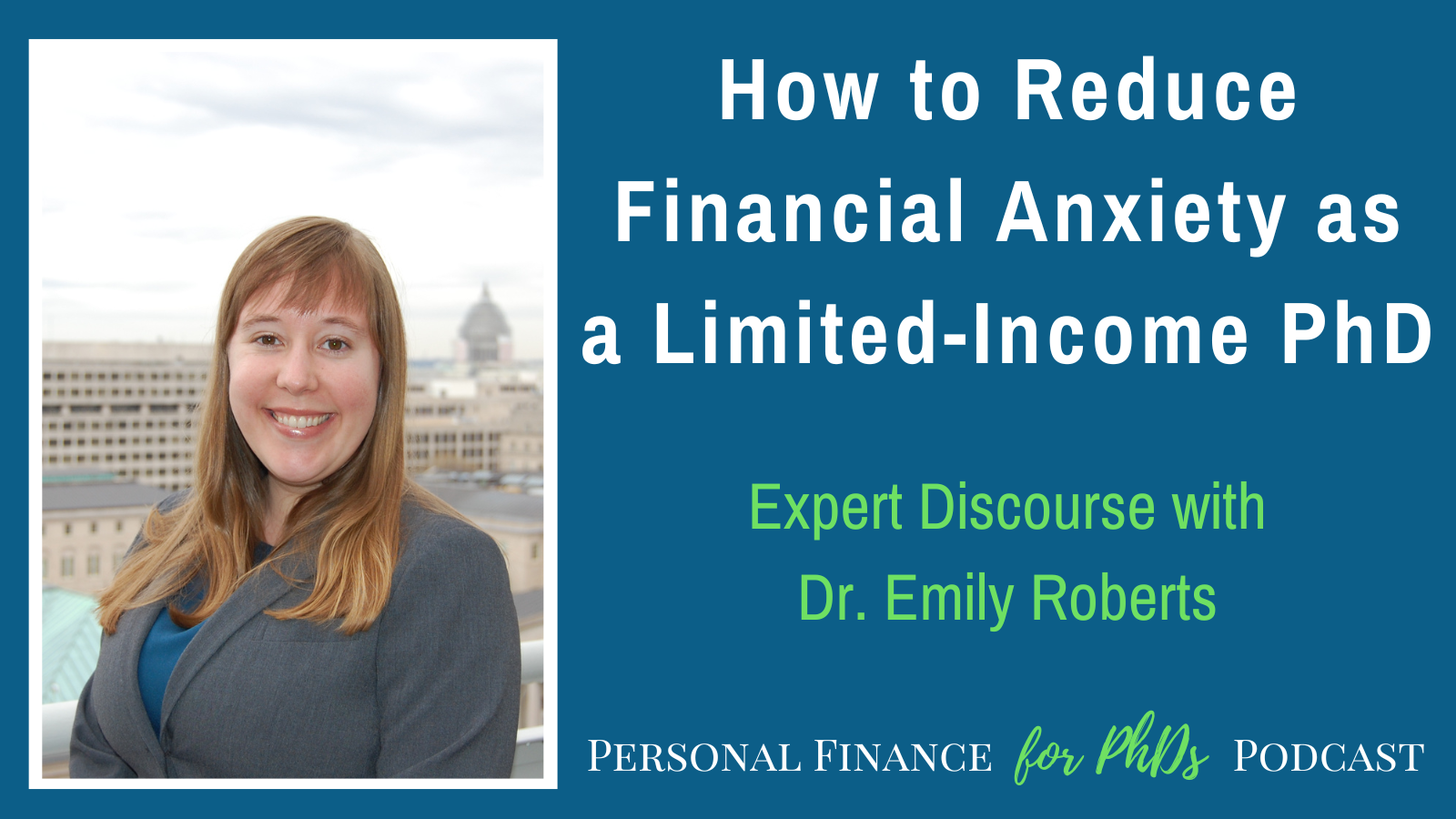
In this episode, Emily interviews Dr. Ilana Horwitz, a professor at Tulane University and the author of the newly released book, The Entrepreneurial Scholar: A New Mindset for Success in Academia and Beyond. Ilana explains how a grad student or academic can be an entrepreneurial scholar and why it is so beneficial in an environment of uncertainty and limited resources. Ilana and Emily discuss the necessity for grad students to become the CEOs of their own educations and careers. Finally, they explore in more detail ideas from the chapter on how to leverage resources, both human and monetary.

Links mentioned in the Episode

  • Dr. Ilana Horwitz’s Website
  • The Entrepreneurial Scholar: A New Mindset for Success in Academia and Beyond (use discount code: IMH20)
  • PF for PhDs S16E4: How This Grad Student-Parent Managed Her Money and Time in the Bay Area
  • PF for PhDs Tax Workshops
  • PF for PhDs Tax Center for PhDs-in-Training 
  • PF for PhDs Subscribe to Mailing List
  • PF for PhDs Podcast Hub
How and Why to Become an Entrepreneurial Scholar

Purchase Dr. Ilana Horwitz’s book, The Entrepreneurial Scholar: A New Mindset for Success in Academia and Beyond, use the code IMH20 to receive a discount!

Teaser

Ilana (00:00): It helps you sort of to have an identity outside of academia to have sort of self-worth in yourself, right? To understand that you are a person that isn’t just bound up with your academic identity. Because if, again, the academic job market doesn’t work out, the crisis that one has about their sense of self-worth is like maybe a little bit less, knowing that you have value in some other capacity.

Introduction

Emily (00:34): Welcome to the Personal Finance for PhDs Podcast: A Higher Education in Personal Finance. This podcast is for PhDs and PhDs-to-be who want to explore the hidden curriculum of finances to learn the best practices for money management, career advancement, and advocacy for yourself and others. I’m your host, Dr. Emily Roberts, a financial educator specializing in early-career PhDs and founder of Personal Finance for PhDs.

Emily (01:03): This is Season 20, Episode 5, and today my guest is Dr. Ilana Horwitz, a professor at Tulane University and the author of the newly released book, The Entrepreneurial Scholar: A New Mindset for Success in Academia and Beyond. Ilana explains how a grad student or academic can be an entrepreneurial scholar and why it is so beneficial in an environment of uncertainty and limited resources. Ilana and I discuss the necessity for grad students to become the CEOs of their own educations and careers. Finally, we explore in more detail ideas from the chapter on how to leverage resources, both human and monetary.

Emily (01:44): The tax year 2024 version of my tax return preparation workshop, How to Complete Your PhD Trainee Tax Return (and Understand It, Too!), is now available! This pre-recorded educational workshop explains how to identify, calculate, and report your higher education-related income and expenses on your federal tax return. Whether you are a graduate student, postdoc, or postbac, domestic or international, there is a version of this workshop designed just for you. I do license these workshops to universities, but in the case that yours declines your request for sponsorship, you can purchase the appropriate version as an individual. Go to PFforPhDs.com/taxreturnworkshop/ to read more details and purchase the workshop. You can find the show notes for this episode at PFforPhDs.com/s20e5/. Without further ado, here’s my interview with Dr. Ilana Horwitz.

Will You Please Introduce Yourself Further?

Emily (02:56): I am delighted to have a return guest on the podcast today, Dr. Ilana Horwitz, who’s a professor at Tulane University, and the author of the new newly released book titled The Entrepreneurial Scholar and Ilana’s previous episode on the podcast was season 16, episode four, and we get a lot more of like her personal story about being a parent in graduate school and like all the resources she marshaled to, you know, financially get through that period. But it’s interesting, she and I were just looking back at our email exchanges. We first got connected back, you know, over a year about two years ago, um, because she was starting to write this book and wanted to, you know, give for, wanted me to give a short interview for it. And I ended up interviewing her and that came out quite a while ago. But now the book that she’s been working on for so long is finally out. And so that’s our subject for today, the Entrepreneurial scholar. So Ilana, thank you so much for coming back on the podcast. Will you please give a brief introduction for the audience?

Ilana (03:50): Absolutely. Thank you so much for having me, Emily. It’s great to be back. Um, as you mentioned, yes, I am trained as a sociologist of religion and education. I am in the Jewish studies and sociology department at Tulane University. I’ve been here, um, for four years, and before that I spent a decade at Stanford as a grad student and as a postdoc.

What Is An Entrepreneurial Scholar?

Emily (04:10): Excellent. I wanna jump right in to like, what, what is this book about? Because it’s not about, as I, you know, maybe thought just by reading the title, it’s not about academics or PhDs who want to become entrepreneurs. We have a slightly different spin on that. So can you tell us the working definitions you have for like an entrepreneur and also an entrepreneurial scholar from the book?

Ilana (04:31): Absolutely, yes. So this is a little bit of a different definition of what entrepreneurship means. When I say entrepreneurship and when I talk about entrepreneurial scholarship, I’m specifically talking about the ability to generate ideas with very limited resources while navigating an environment of high uncertainty. What I don’t mean by entrepreneurship is, uh, I’m not talking about trying to take a neoliberal approach to academia, uh, that advocates for the corporatization of the academy. I am not talking about applying market models to universities, and I’m also not talking about the kinds of sort of, um, business oriented research firms. And as you mentioned, I’m also not talking about necessarily starting some sort of, um, venture on the side, which is like what most people of think of when I say entrepreneurial, uh, thinking. And so again, being an entrepreneurial scholar means being a- able to generate ideas, right? That is the product that is like the currency with which we work. Being able to generate ideas with very limited resources while navigating an environment of high uncertainty. That is what entrepreneurs do. And it’s actually also what scholars do when we are at, um, when we are sort of working within the constraints of what academia is.

Emily (05:51): And one of the things that I found really interesting about your book is that, and this is actually what how you ended up quoting me, like within the subject matter, um, is that going, we’re not just talking about like academics like you, like who have, you know, career professors and that kind of thing. We’re going all the way back to basically the grad student stage and how this mindset can be helpful in, in fact is necessary even from that point of making that transition from undergrad to graduate student. And you just mentioned, um, you know, ideas are the product that we work with within academia. And so I just wanted you to expound on this a little bit more. Like what is this transition that a person has to go through from being a, an excellent undergraduate <laugh> to being a successful graduate student? And why do so many people kind of get stuck or mired along the way and don’t make that transition successfully?

Ilana (06:40): Yeah, absolutely. The main mindset shift that I think people need to make is being able to shift from being a consumer of information to a producer of knowledge. And I really didn’t understand this. I think when I started my PhD program and it was at my orientation that, um, a professor said, right to all the incoming students, like, your job is no longer to consume information, it is to produce knowledge. And what that meant for me as this like realization that my entire life I have been evaluated on the basis of like my ability to consume information and regurgitate it back to the teacher, right? That’s what we generally do in K 12. That’s mostly what we do in college, right? And I was actually never very good at this. Um, which is, I ultimately, I think what ended helped me love graduate school. Um, but when I realized that graduate school is about being able to, um, is, is really about this production of knowledge, meaning that you are now like playing detective and it is up to you what is the problem in the world that you wanna pursue.

Ilana (07:45): And it is up to you how you wanna pursue it and when you wanna pursue it and what resources you wanna pursue it. Like you have so much agency in the process and your grades no longer matter. And for me, that was really liberating. But for a lot of people that’s really debilitating. And the reason it is debilitating is because people who often end up in PhD programs are people who are so good at school and meaning that they were so good at navigating the, what I call the or sociologists of education called the hidden curriculum of school. Like the rules and the routines and regulations, right? They’re like pros at this and they’re like, oh, I’m so good at school that I should go pro. And going pro means going to a PhD program, right? You are a career sort of, uh, student career students, um, aren’t necessarily great at having the mindset to sort of think outside the confines of what is expected of you.

Ilana (08:35): And so when grad school starts and you have a bunch of, you know, requirements, it’s okay, but then the script falls away. And then that is when I think panic, uh, sets in for a lot of people. ’cause it’s like, wait, now there are no rules and there are no routines and there are no regulations, like, what am I supposed to do? And then they, there’s this resentment of like, why isn’t my advisor telling me what, what to do? And like, why isn’t it super clear? And so the ability to like, instead of feeling that moment as debilitating, but instead of, uh, embracing it and embracing that autonomy, I think is like the big mindset shift that needs to happen.

Becoming the CEO of Your Own Education

Emily (09:08): I totally agree. And I, I see, you know, in retrospect how I kind of f- faltered in that myself during graduate school. And it was, it was difficult and you just used the term like script. I think that’s a really, really good way of putting this, like, as you said, you can master how it is to be good at school, you know, all the way up through the end of undergrad and be successful in that. And then once you reach graduate school, you have to really forge your own path. And it’s not totally cl- it’s not just, you know, x, y, z and then you get a degree. It’s a completely like unique experience. And the term that you use in the book, which I really loved is, um, becoming the CEO of your own education. And one of the reasons why I liked this is because it made me think about your education is not just what you do in graduate school, it’s a holistic picture of everything that goes into who you are professionally. And that could be experiences that you have through your classes and through your research and with your advisor and with your colleagues, but it could include a whole lot more than that. And you had a lot of examples in the book of people, um, seeking out experiences that, um, you know, using this mindset of being an entrepreneurial scholar that ultimately led them to the creation that they, you know, were in, were in graduate school or in their careers and to do so. I just really liked that like, framing of it. Did you wanna say anything more about that, that phrasing or how you view it?

Ilana (10:30): Yeah, that’s such a great question because right, my PhD is from a school of education, so I also, uh, think of education as a much more holistic endeavor. And when I think about your P- one’s PhD journey, and if I reflect on my own right, it’s so much more than what I learned in my classes. Um, and so for example, in the book I talk about this experience that I created for myself where I realized at one moment, maybe around my fourth year that I really needed teaching experience, um, as a Stanford, a PhD student in my program. Like I didn’t have to teach, I only had to be a research assistant. And I was like, how do I create an opportunity for myself to go teach? I ended up going to teach at a community college. And so when I think about my own education, I learned so much from that experience of being a community college, um, professor, both from the students in the class who were very different than most of the people I spent time with. They were like working adults mo- mostly first gen, low income, um, students of color. And so not only did I learn from them, but I also learned what it means to sort of educate a different population and what it means to sort of talk about sociological concepts to people who generally don’t come from elite backgrounds. And, um, and so all of that right, was part of my education. Uh, and my education also when I think about my PhD was about navigating things like gender expectations in the academy and like being, um, a sort of, uh, in a household, um, where I had to navigate gender dynamics, um, as everyone mostly has to. Um, and it was about doing a bunch of side hustles, uh, so that I could learn like, what does it mean to do, you know, statistics like act- for ac- an actual client as opposed to doing it for a class. Um, so yes, education is this like much more holistic experience, um, as you mentioned,

Emily (12:22): And now this is a little bit of a sidebar, but it’s kind of a soapbox that I get onto from time to time on the podcast, which is I really think it’s shortsighted of graduate programs to, um, disallow their students. And maybe this was not your experience, but it is in some places to disallow their students from taking outside work opportunities, very much like the ones you just mentioned, adjuncting, you know, side hustling using their skills that they’ve learning graduate school. Um, I get it that they want them to stay focused on finishing their dissertations. Um, but it’s, as I just said, it’s very shortsighted because many of these kinds of side hustles can be, um, augmenting as we were just talking about being the CEO of your own education and making you a better prepared professional once you get to the end of graduate school. So, um, yeah, little <laugh> just a little sidebar there, but I don’t know if you have any comments about, about that and how faculty might in some places view these kind of side endeavors.

Ilana (13:16): Yeah, I think it’s tricky, right? Because I, as you said, like I understand from the faculty’s perspective that they want students to be really focused because once you have some sort of job, especially if it’s like a full-time job, it’s really hard to stay focused on your research. But, um, I also feel very strongly and uh, and I did this myself, that when you take those outside opportunities, you are both, um, building your skillset, developing a network that’s really important. And also like, just being really realistic about the fact that most people who start a PhD program are not gonna end up in a a professor position, right? A very, very tiny percentage of people will end up in the, uh, being able to get a tenure track position or even a non-tenure track position. So it’s just like to, to navigate the uncertainty of academia means being really realistic with what the prospects are and to buffer yourself against that, uh, sort of crisis that is gonna come when you realize you can’t get a job. It’s really helpful to know that you have other options. Um, in my case, um, the School of Education, look, it didn’t have, I think there was a policy and some professors sort of instituted the policy more than others. I will say that, um, there was certainly not enthusiasm for me pursuing this, uh, teaching position at a community college, but I made the case, um, of why it was beneficial. And so it was allowed. And then I, and then there was a bunch of stuff that I did without telling anybody, and it was totally fine because I’m very good at being the CEO of my own education and I sort of knew what I could manage and what was valuable, like what, when I thought about it from a cost benefit ratio, like how much time am I spending on something versus the value I get out of it? And I have no regrets about pursuing anything, um, outside of academia and in the book, there are several examples of people who I interviewed, um, of how transformative those opportunities were. Because one is, it helps you sort of to have an identity outside of academia to have sort of self-worth in yourself, right? To understand that you are a person that isn’t just bound up with your academic identity. Because if, again, the academic job market doesn’t work out, the crisis that one has about their sense of self-worth is like maybe a little bit less knowing that you have value in some other, um, sort of capacity. And some, um, there have been some like amazing opportunities that people got because, you know, one person who I interviewed, Tamara worked for Kamala Harris, uh, on Fridays, and that led to a bunch of other opportunities. And particularly like if you’ve never worked outside of an academic setting, like if you are a person who’s pretty much going straight through from undergrad to your PhD, it’s really important to work in the outside world to understand sort of like the real, how the world, real world functions and not just be in like the academic bubble.

Emily (16:13): Absolutely. I, I totally agree everything you just said. Um, and I guess maybe a, a a corollary, like a, another interpretation of CEO of your own education is CEO of your own career, because you don’t know for sure that you are gonna end up in academia. And it makes sense, as you were just saying, to have, um, built an image of yourself that’s bigger than just an academic in case that career path, if it’s one you’re even going for, um, doesn’t work out. And you can still be an entrepreneurial scholar in graduate school and pivot to something else outside of it. But, um, the point that I wanted to make is that being the CEO of your own career maybe includes some career development experiences that you wouldn’t, you aren’t automatically being pushed into as a graduate student, but that are available to you probably from the graduate school and the career center and so forth. And just being able to like, spend some time exploring those professional development, um, resources and career ideas can, can really help you whenever you are making that next transition point,

Ilana (17:07): Right? And I talk in the book about like, you cannot predict the future, but you can help create it. And that’s, uh, I think an important lesson because all these things that you’re doing can help create your future, um, and it helps sort of offset that uncertainty that we as grad students, uh, sort of have to live with on a, on a day-to-day basis.

Emily (17:29): Yeah, and I, I really love that you talked in the book about uncertainty and about limited resources and oh my gosh, how timely is this? We’re recording this in February, 2025, and as of now there’s been these executive orders. We don’t know in academia how this is all gonna shake out whether there’s gonna be a massive funding decrease, um, you know, know layoffs. We don’t know. We’re in a period of uncertainty. And so how, I mean, it’s, it’s horrible timing in a sense, but it’s good timing for your book to like sort of land in this moment where in academia there’s probably a lot of questions going around about what, what resources do I have? What’s the value that I can bring here? What is my career path going to look like? And so, well, for that reason, if not any other, maybe it’s time to, you know, pick up this book.

Commercial

Emily (18:15): Emily here for a brief interlude! Tax season is in full swing, and the best place to go for information tailored to you as a grad student, postdoc, or postbac, is PFforPhDs.com/tax/. From that page I have linked to all of my free tax resources, many of which I have updated for this tax year. On that page you will find podcast episodes, videos, and articles on all kinds of tax topics relevant to PhDs and PhDs-to-be. There are also opportunities to join the Personal Finance for PhDs mailing list to receive PDF summaries and spreadsheets that you can work with. Again, you can find all of these free resources linked from PFforPhDs.com/tax/. Now back to the interview.

Leveraging Available Resources as an Academic

Emily (19:07): And since we were just talking about scarce resources, um, I was really compelled by the, the book is basically five, five big ideas, five big chapters, and I was really compelled by the fourth one, which is around leveraging the resources available to you as a graduate student or as an academic. And so can you just expound a little bit more about what kinds of resources, um, might be available to a graduate student or an academic that could, you know, help them as an entrepreneurial scholar?

Ilana (19:33): Yeah, absolutely. So I actually start off the book with this idea of that being, um, thinking entrepreneurially means asking yourself, given who I am, what I know, and who I know, what kind of opportunities could I create for myself? And so here we are thinking about sort of, um, like the intellectual capital that you have, the human capital that you have, and the social capital that you have, right? Who do you know, what do you know? And who are you, um, to start thinking about how you can leverage all of that. So let me talk about this. First of all, this idea of like who, you know, in academia and particularly in the humanities, um, we tend to sort of think of, um, this very, this like lone scholar sitting in a library doing work very independently. And I really wanna disrupt this idea even in the humanities, because even if you’re writing a monograph, I wanna put forth the idea that scholarship is a community sport. Even if you end up writing alone, why is it a community sport? I want people to sort of imagine that the academic landscape is this vast network where each node is a person and each link is a potential collaboration or a shared idea, or even like just a mutual support system, um, because nobody should be doing this alone. And I remember even like as a grad student, I’m in the social sciences, so there isn’t a fair amount of collaboration, but the sort of reticence that some of my colleagues had to ask each other for help to seek out help from, um, more senior people was, was astonishing to me because I came from working in startups and in management consulting where it was very, very common to just ask for help or ask for other people for ideas. So when I say that I want people to think of scholarship as a community sport, what, what that means in practice is like thinking about your network and relationships that you have, not just like, how do you in an icky way try to extract value from that, right? That’s an icky like, um, and I think incorrect version of what it means to network. Instead, I want people to think about networking as the opportunity to actually help other people, right? Not extracting value, but actually putting yourself out there so that your idea and someone else’s idea or sort of your problem and the problem that someone else is experiencing, um, can have sort of mutually beneficial, um, solutions, right? That you in, in partnership with other people can problem solve together, right? And so for example, um, at one point in when I was a sort of latter stage grad student, I was working on a paper, um, and I got really stuck on it. Um, and a new postdoc came to Stanford and I, we were having lunch and I started telling him about this paper. Um, and then I realized that like what I was missing was like a whole framing around gender.

Ilana (22:26): He happened to be a gender scholar, and I realized like it would be really beneficial if he came and joined as an author on this paper. Um, and it was this very, very mutually beneficial decision and collaboration that by the way, has a, actually ended up, that paper ended landed in the top sociology journal. And I don’t think I would’ve been able to do that alone. And since then, he and I have collaborated on several other, uh, other things. Um, but it wasn’t like I was like, oh, this, this person is coming and I wanna just extract value, um, by having lunch with ’em and like seeing what I can sort of get out of that person. Like I knew that this would be a me- mutually beneficial relationship. Um, and so there are many ways to think about how can you identify people in your network, but also develop relationships with people who are outside of your network, um, by thinking about like, where might you have complimentary skills with other people? Um, how might you be able to offer value to somebody else’s project? Right? And so not just thinking about your own career advancement, but thinking about like, how can we do more with what we have, um, by, by collaborating, right? If like, I think of, uh, I think therefore I am instead, like, I think therefore I collaborate.

Emily (23:38): Hmm. Yeah. As you were talking about that, I was just thinking like, yes, this is such a human endeavor. Like it’s human to have relationships with other people and build things together. And I like what you said there because under, under the topic of like leveraging resources, really what you’re saying is think of yourself as a resource that you can offer to other people, and then they mutually can offer their resource of themselves in this case back to you. So it’s, it’s, it’s quite mutual. So I love that. Um, any other sort of categories of, of ways people can leverage resources?

Ilana (24:11): So when people hear the terms leverage resources, they immediately think of money, right? And sort of funding. And so I would do wanna touch upon that and what does it mean to sort of think entrepreneurially about funding? Um, in the book I give examples of people who, uh, have been very successful at getting different fellowships. And there are different ways to think about how to be strategic in those. Like do you go for a bunch of sort of small, low, uh, uh, sort of low bar, uh, grants where it doesn’t take very much to apply to them? Like maybe you can repurpose something and then you just apply to a bunch of really small things. Or do you invest several months into putting together something that has, uh, bigger, bigger reward, right? You always wanna be thinking in all of academic life, you wanna diversify your risk, uh, sort of risk benefit portfolio. And funding is one of those things. Um, I’ll give an example of something that happened to me recently because a lot of thinking entrepreneurially is like taking advantage of opportunities that you didn’t necessarily expect. And so recently, um, Tulane had, uh, somebody from the Russell Sage Foundation come and give a talk about, you know, their funding streams. And I went, and in that talk I realized, I was like, oh, I don’t have anything relevant for this, because they’re looking for really early, more early stage projects than anything that I have. Um, I sort of wrote it off, you know, like I didn’t even take the opportunity to meet with a program officer. And then about a month later I had kind of like a crisis in one of my projects that resulted in me pulling out of the project for a variety of reasons. Um, and I, I was having this like sort of moment of both, like panic, but also seeing opportunity emerge from this breakup where I was like, oh my gosh, like this gives me an opportunity to actually do a totally different study. Uh, and I was like, oh gosh, but that’s like really early stage. Where would I get funding? And I was like, wait a minute. I was like, I just sat through one of those RSF things. So right away I contacted the person at Tulane who had set up that program officer to come and I said, I all of a sudden have an idea, is it too late to meet with them? And she said, let me get in touch. So I met with a program officer, I learned so much, I told them what my idea was, and through that conversation I learned about like some stuff that, about their grants that I wouldn’t have been able to figure out just based off of their website. Like it turns out that there was a stream of funding that wasn’t gonna continue and it would be very beneficial for me to apply to, to this particular stream of funding. So I did, and I submitted, um, a letter of intent, um, which is their first stage. And I actually made it through to the, to the proposal stage. So I should hear back in a couple of weeks about whether I got it or not. But I at least feel very good that I made it through the LOI stage. And again, the like, key takeaway is I didn’t, you know, the sort of, I put myself out there, I went to the session, I didn’t think anything would come of it. And then when I had this like moment of, of crisis and I, and I saw opportunity, I was like, oh, wait a minute, I can connect the dots here. So, so thinking about like, um, expansively about funding and resources, um, and just like sometimes going to stuff that you may think doesn’t have any benefit for you, you never know when there will be, um, a payoff.

Emily (27:24): Hmm. And I’ll speak as a business owner, I actually don’t identify with the term entrepreneur for my particular type of business, but as a business owner, I have to think about the revenue streams in my business. And I have, I might have predictions about which revenue streams are gonna work out to what capacity, but it’s really beneficial, as you were just saying, to have, um, ideas maybe on the back burner, <laugh> of other revenue streams, other fellowships, other grants you could apply to. And so if you have the capacity, like in your example that you just gave, if you suddenly have the capacity to be applying for things or putting effort into an area that you weren’t before, then you say, oh, I, I have some background in this. I know how to turn this on in a, in a quicker way than just, you know, starting completely like cold. I really love that example. Anything else you wanna add? Um, I, I, just for the podcast listeners, especially if you’re a longtime podcast listener, chapter four of this book is really special because Ilana included, um, my podcast, like interviews as some of the resources and also interviewed some other people that I’ve had on the podcast before. So like, it was like seeing some old friends in this chapter, which was really exciting. And also, of course also pulled in some other interviews that I found really, um, great. So I thought you actually summed this up really well in the, you know, concluding notes for that chapter where you said, remember, every funding opportunity is also a chance to expand your community and collaborate with others who share your vision and actually ties really well both of those points, um, together. So thank you so much. Anything else you wanna add in about this leveraging resources topic?

Ilana (28:48): I’ll add one more thing, and this is sort of the, this idea of connecting with people so that you can expand your knowledge of what is possible in the world. And what I mean by that is there are things like that I remember as a doctoral student that I was like, there’s no way that I can do this because I have no mental map and I have no schema in my head for how to make this possible. So for example, um, at towards the end of grad, grad school, I was like, I wanna write a book. I had written a multiple multi paper dissertation, but I wanted to write a book, but I have no mental model of how you go about writing a book when you are a PhD student. And it seemed like out of the realm of possibility. And nowhere in my graduate program did anyone ever train me to think about this. Um, and I had a friend who as a grad student was able to, uh, not a friend, he wasn’t even at my institution, but, but it was someone who I had met along the way. Uh, and I knew that he had been able to secure not one, but sort of two offers from prestigious public, uh, book presses, um, for an advanced contract. And I was like, wait, that’s a thing. I didn’t know that was possible. And once I knew it was a thing and he helped me understand how it became a thing and walked me through all the steps that he went through and even shared his proposal, I had this like ability to think beyond what I could think about earlier. I was like, oh, if he could do it, maybe I could do it too, and here’s what it could look like. And I followed some of the similar steps, um, and it became possible. Um, so I think we, we don’t think of collaborating, um, as sort of an opportunity to think beyond ourselves, but that’s what it does for me. It gives me the, the poss- that that sort of opportunity to imagine possibilities that I thought were off the table.

The Origin Story of The Entrepreneurial Scholar Book

Emily (30:37): Mm-hmm <affirmative>. Yeah. So this is your second book and you use this book as an example in, I believe it’s the fifth chapter of, um, a an entrepreneurial scholarship activity, right? Of publishing a book. So, um, can you just tell us really briefly how the book, um, came about?

Ilana (30:56): Yeah, the book came about, um, from something I totally didn’t expect and out of a sort of a story of failure, which I think is like a very defining, uh, feature of entrepreneurship. When I was a graduate student at the very end of grad school, I was a sixth year, you know, I wasn’t even taking classes, but because I was in this mindset of like, I wanna get everything I can out of Stanford while I’m here and while it’s free, um, I decided to, I was auditing a bunch of classes. I was auditing classes on like how to be a good public speaker and improv. And one of the classes I audited was how to Write for the Public. And it was taught by Sam Weinberg, a professor, um, at the School of Education. And our final assignment was to write an op-ed, right? Not surprisingly, and mostly everyone in the class took this opportunity to write an op-ed about their research. And at the time I was about to graduate and I was reflecting sort of deeply about how my own PhD journey, um, went. Um, and so I took this opportunity to write, um, an op-ed that like, basically I submitted to a couple places and it failed. It did not get published. And it was really frustrating. And Sam, who, um, who I really, really have to give a lot of credit to, he was like, you, you shouldn’t give up on this idea. There’s something there, there. And even if you sort of put it down for a little while, you have to promise me that one day you will pick it back up because I see it, it has a future. Like he, he believed in it. Um, and so for two years, Emily, I kid you not two years, this thing just like sat on my computer. And so about a week before I started my job at Tulane, I was already in my new office and I was about to go home for the day and I was like, you know what? I was, was like, I have childcare. Nothing is gonna like blow up at home if I just like stay in the office for two more hours and I’m gonna pick up that op-ed and I’m gonna dust it off, you know, and see what I can do with it. ’cause I promised Sam that I would. And, and I did, and I, I sort of spoke from a place of what I knew, like I leaned into this startup and, um, consulting experience that I had and I wrote this op-ed that was, or I revised it I think with the title Why PhD students Should Think Like Entrepreneurs. And I submitted and then I thought about, okay, I have this, where can I submit it to? At that point, I already had published once in Inside Higher Ed, so I submitted it to them, right? That was like the, the, the, the most obvious choice. I already had a personal connection there. And within two hours they wrote me back and I, and they were like, yeah, this is great, we will take it. And I was like, oh, that was easy. Okay. And then a few weeks later it came out and, you know, I got a, a couple of nice emails from, um, faculty and some from therapists who said how much this resonated for them and working with grad students. And then I got the most unexpected email. It was from, uh, the editor at Princeton University Press, Peter, and he was like, this is great. Do you wanna flesh this out into a book? And I was like, I’m sorry, come again, <laugh>, uh, you want me to write a book on this topic? And so that, that is the, the sort of birth story of this book. Um, and so it really came out of something very unexpected and to, to write this book, I went out and I interviewed about, um, 45 people who hold either different positions in academia or who have left academia or who are entrepreneurs. So this book really required me to think about like, who am I? What do I know and who do I know to make it happen? So in that way, it is very much like a story of an entrepreneurial, uh, endeavor.

Emily (34:30): Absolutely. I can see that so clearly. I’m so glad that you brought that up so that I could ask you this question about how the book came to be. Um, and so interesting that there was that two year just time period, and I dunno what it was, I don’t know if it was the rewriting that you did or how things had changed in your perspective in two years, or how the world had changed in the two years, but somehow the idea clearly hit <laugh> the second time around. Um, and that’s, that’s fantastic. Where can people find the book?

Ilana (34:57): The people can find the book at Princeton University Press, and I think in your show notes, uh, I can share a, uh, discount code, um, that people can use. People can also find it on Amazon as well as learn more about it on my website, www.IlanaHorwitz, that’s I-L-A-N-A-H-O-R-W-I-T-Z.com. Uh, and I encourage people to reach out to me, uh, if they wanna learn more about it.

Best Financial Advice for Another Early-Career PhD

Emily (35:27): All right, and since you said that you love dispensing advice, we have one more opportunity for you to do so, which is with the standard question that I ask of all my guests, which is, what is your best financial advice for another early career PhD? And it could be something we’ve touched on in the interview already, or it could be something completely new.

Ilana (35:44): My best advice is to pursue a side hustle if possible. And I recognize that it is not possible for everyone, especially international students, students who are parents. Um, I get that this is something that isn’t available to everybody, but if you have the opportunity and sometimes the pay might be so bad, like my first side hustle, I made $12 an hour and it was absolutely worth it because I gained so many skills from the experience. But don’t just think about it from a financial perspective, think about all the other different ways that it could benefit you. Um, and the money that you get on the side is also a really nice perk.

Emily (36:26): Very good. Uh, thanks for tying all those themes together. Well, Ilana, thank you so much for coming back on the podcast. It’s been a pleasure to speak with you again.

Ilana (36:34): Thanks Emily.

Outtro

Emily (36:45): Listeners, thank you for joining me for this episode! I have a gift for you! You know that final question I ask of all my guests regarding their best financial advice? My team has collected short summaries of all the answers ever given on the podcast into a document that is updated with each new episode release. You can gain access to it by registering for my mailing list at PFforPhDs.com/advice/. Would you like to access transcripts or videos of each episode? I link the show notes for each episode from PFforPhDs.com/podcast/. See you in the next episode, and remember: You don’t have to have a PhD to succeed with personal finance… but it helps! Nothing you hear on this podcast should be taken as financial, tax, or legal advice for any individual. The music is “Stages of Awakening” by Podington Bear from the Free Music Archive and is shared under CC by NC. Podcast editing by me and show notes creation by Dr. Jill Hoffman.
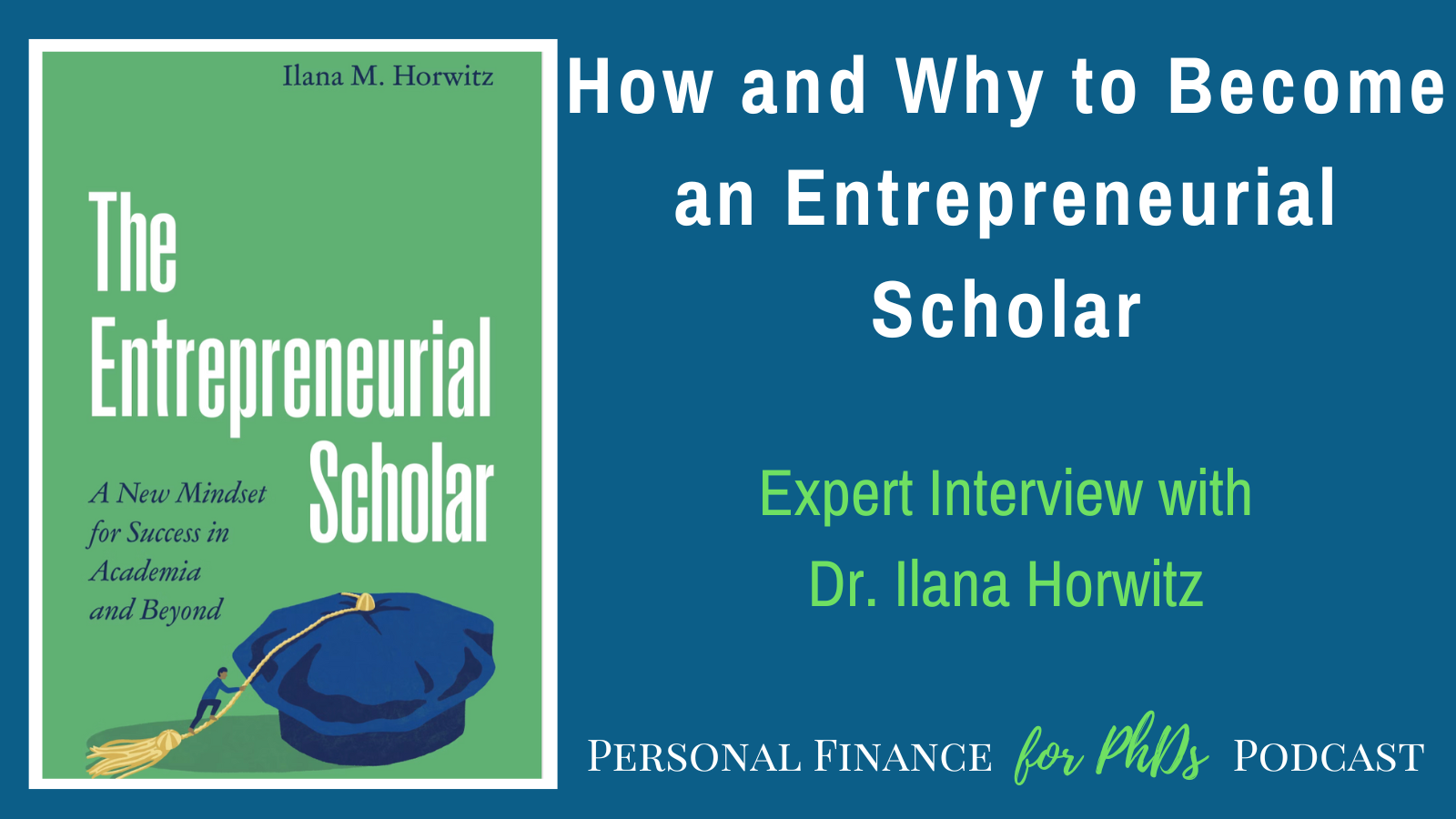
How This International Graduate Student Grew His Career and Social Wealth Alongside His Net Worth

June 17, 2024 by Jill Hoffman

In this episode, Emily interviews Dr. Cyrus Liu, a postdoctoral fellow in computer science at Grinnell College. Cyrus came to the US from China as a graduate student without any knowledge of how the US financial system works. Over the course of his PhD, Cyrus found ways to minimize his expenses and increase his income so that he could meet his goal of investing $500 per month into a Roth IRA and a taxable brokerage account. He also invested in his physical and mental health and grew his career and social wealth in a frugal manner. Cyrus ends the interview with incredible insights into why he was motivated to work on his finances during graduate school and in what ways academics are truly wealthy.

Links mentioned in the Episode

  • Dr. Cyrus Liu’s Twitter
  • Dr. Cyrus Liu’s Website
  • Host a PF for PhDs Seminar at Your Institution
  • Emily’s E-mail Address
  • PF for PhDs Subscribe to Mailing List
  • PF for PhDs Podcast Hub
How This International Graduate Student Grew His Career and Social Wealth Alongside His Net Worth

Teaser

Cyrus (00:00): Don’t underestimate yourself because you are a PhD student and you definitely have the knowledge base and then sharing those knowledge with the community, and you are passing to the knowledge. This is the wealth we possess, right? Normally people think we are poor, but actually, and a wider definition of the wealth here we have this part to share with someone else.

Introduction

Emily (00:33): Welcome to the Personal Finance for PhDs Podcast: A Higher Education in Personal Finance. This podcast is for PhDs and PhDs-to-be who want to explore the hidden curriculum of finances to learn the best practices for money management, career advancement, and advocacy for yourself and others. I’m your host, Dr. Emily Roberts, a financial educator specializing in early-career PhDs and founder of Personal Finance for PhDs.

Emily (01:01): This is Season 18, Episode 2, and today my guest is Dr. Cyrus Liu, a postdoctoral fellow in computer science at Grinnell College. Cyrus came to the US from China as a graduate student without any knowledge of how the US financial system works. Over the course of his PhD, Cyrus found ways to minimize his expenses and increase his income so that he could meet his goal of investing $500 per month into a Roth IRA and a taxable brokerage account. He also invested in his physical and mental health and grew his career and social wealth in a frugal manner. Cyrus ends the interview with incredible insights into why he was motivated to work on his finances during graduate school and in what ways academics are truly wealthy.

Emily (01:45): I’m offering a new slate of workshops for my university clients this fall, and over the summer I’m practicing delivering these workshops for free to a limited number of graduate students and postdocs on the Personal Finance for PhDs mailing list. Last month, we did “Seven Steps to Start Investing as a Graduate Student or Postdoc,” and later in the summer we’ll do “Your Financial Orientation to Graduate School” and “Tax Season Preparation Starts Now for Graduate Students” and possibly more. If you’re not currently on my mailing list but want to receive notice about the upcoming pilot sessions once they are scheduled, please join now! The best way to get on the mailing list as a podcast listener is to sign up through PFforPhDs.com/advice/; you’ll receive a document that summarizes all of my interviewees’ responses regarding their best financial advice. You can find the show notes for this episode at PFforPhDs.com/s18e2/. Without further ado, here’s my interview with Dr. Cyrus Liu.

Will You Please Introduce Yourself Further?

Emily (02:56): I am delighted to have joining me on the podcast today, Dr. Cyrus Liu. He’s currently a postdoctoral fellow in computer science at Grinnell College, and we are going to be talking about his fascinating financial journey, um, as a graduate student and now a postdoc in the US as an international student. And so, Cyrus, I’m so happy that you’ve decided to join me on the podcast today, and will you please introduce yourself a little bit further?

Cyrus (03:19): Yes. Hi, Emily. Thank you for having me here. So I graduated in December, 2022 from computer science degree. Um, after that I landed this, uh, postdoc, um, fellow in computer science. And the current position, I’m do- mostly doing research in the area of programming languages and security.

Money Mindset After Arriving in the US

Emily (03:45): Excellent. So let’s go kind of all the way back to when you first arrived in the US. I assume that was at the start of graduate school, but you can correct me if that’s wrong. Um, tell me like about what your money mindset was at that point and how, if at all, how familiar you were with the US financial system.

Cyrus (04:01): Also, this is my first time before I come to US. It’s actually, I’ve never been to us before my PhD and I’m from China, so I grew up in a poor family, in fact, there. So with that in mind that I’m kind of sort of inherently frugal. But what’s interesting is back then, like I never feel poor in terms of any financials. In general, I have no idea about in credit card scores, uh, credit cards and investing or retirement. And, and that’s later on. I discovered after I entered the US that I do have, uh, a saving and spending mindfully and because how my parents raised me. Right.

Grad School Stipend vs. Local Cost of Living

Emily (04:50): I see. And so when you arrived for, um, graduate school here, can you tell me about, um, what your stipend was and how that struck you, maybe versus like the local cost of living?

Cyrus (05:02): I was living in Hoboken for, um, two years and a half, and also Stevens Institute with the university. I finished my PhD is located in this really beautiful city and it, it is, the local cost is like 60% higher than the national average. I would just say and put in the number that means like I think if you got two bedroom apartments that you might need to spend, um, at least 1700 for one bedroom, that means you need a a roommate. And back then the stipends, uh, I would say it’s like a 28 thousandish and it’s roughly, I remember we got paid like a biweekly, it’s like 2000 a hundred per month after tax.

Increasing Income During Grad School

Emily (05:55): Okay. Well, I really wanna dig into this, uh, with that, you know, relatively expensive cost of living and the relatively low stipend. Um, and the listeners don’t know yet, but this is a financial success story that we’re about to talk about <laugh>. So we’re gonna see how, you know, I wanted to see that starting point and now let’s see how you got to the end point that you got to. Um, so let’s kind of break this down, um, systematically. So during the course of your time in graduate school, how did you, what did you do to increase your income?

Cyrus (06:24): Yeah, so there are a couple things. Um, like I said that before I entering, uh, US, I have, I really have no idea what’s the, uh, um, investment, investment investing or credit cards, and that’s a totally different systems, but I do have a mindset that I need to save, right? And it is how I grew up. Um, but it’s not too much. So most of the case, um, I start to reaching out, um, all the resources I can, I, I think I start with reading the book first and then also I love reading. And then the first book I get to know is basically, uh, it is called I Will Teach Rich by the Ramit. And, and he, he actually kind of introduced me to the whole US financial system from credit card, from the, uh, uh, Roth IRA and then how you would you, uh, increase, uh, your finance and manage your, your spending habits and to how would you invest if you have extra money, even though if you don’t have extra money, just put maybe one, uh, 100 or $50 you can squeeze out. Just experience how things work. Uh, at the beginning it was a little bit overwhelming, but I, I enjoyed read his book. I I think this is also helps me to manage my life, uh, here in a completely, uh, foreign nation. Right?

Emily (08:04): Yeah, that’s a wonderful first book to get started with. I will teach you to be rich by Ramit Sethi. Um, yeah, great, great introduction. He’s very firm about how to tell if someone, someone, you know, an institution is trying to take advantage of you. Like he’s really helping you, like recognize that and push back against it. So I can definitely see how that would be useful when you’re entering a new system, um, entirely. So awesome recommendation, you started there, you read that book,

Cyrus (08:28): And then I start to act <laugh>.

Emily (08:31): Mm-Hmm. <affirmative>.

Cyrus (08:31): And then I open the credit card and then I, I, I take the, the same strategy that I recommended by the, by the book. It, it’s not promotion for the book, but it’s more like, I think around nothing to think of that it is really like you try to minimize all the possible interest, right? Rates I would have and then, or a lot of promotions provided by the credit card and then try to take advantage of that because now we think about that credit cards more like the more you expense and then the more you can potentially save and also they encourage you to spend. So, but I personally very mindful with my expense, but the same times I think they do, credit cards do offer a lot of discounts in terms of purchasing. So that’s the first step.

Emily (09:24): So are you saying that you pursued credit card rewards, like points and cash back and stuff after? Of course, you initially need to establish credit and get started there.

Cyrus (09:32): Yes, exactly.

Emily (09:32): But is that where this led eventually?

Cyrus (09:34): The, the signing bonus and also the cashback reward, that’s also something new to me that I never did, uh, touch before. And then also we do have, uh, I think the first one is the discovery. I think most of international students would get to discovery first because we don’t have any, uh, credit score history here. And so they also have these online stores that will give you 10% or 5% discount. And then when I go out to buy clothes in, or I was living in New York City area, so there’s a lot of department store that can use with this discount opportunities.

Emily (10:16): Mm-Hmm, <affirmative>. Okay. So both increasing income through credit card, um, bonuses and cash back and so forth. Also finding a way to be even more frugal in saving certain percent, percentages on the purchases that you do make.

Cyrus (10:28): After that, um, uh, I started to opening a investment account that was also a little bit struggling because I, first of all, as an international student, I do not know if I was allowed to do that. So I, that’s kind of for research myself. But in the end, after like, um, as long as we are considering as a tax payer resident, and then, so you should have the same opportunity to open all those investment account. And then I, I remembered I started with, uh, uh, 500 ish, um, over the month for the first month. So I just put, I think I, I, I was not expecting to gain anything. I just, uh, put 500 to get to understanding, uh, how the investments work and buying individual stocks. And I think I bought, that was 2018. I bought a Tesla <laugh> because I really like, uh, Elon Musk.

Cyrus (11:30): Um, but that was another story. It was really funny. And so that’s one part. And then, uh, after that, uh, I get to know the, Roth IRA and then the retirement account. Um, it’s also be, uh, I, I get to understand how the tax work here and then the tax deferred account. And I think that’s whether in long term if, uh, I am staying here or not. I, for me, it’s like, I think it’s, uh, uh, beneficial to open this account as soon as possible because I do pay a lot of taxes. I mean, it’s, uh, in terms of graduate students. Uh, so I think, uh, that’s one way you should take benefit of that. And then I did that, but um, although I didn’t have much money to put on that, and then, uh, in the end, I would, my, my goal was, uh, try to save like, uh, 500 and put into other way to the Roth IRA or the personal, um, uh, investment brokerage and yeah. But this all comes with the risk. So with the mind that you, the money you put in, in the investment account, like it’s possible to lose all of them. Right. But I was fine with that.

Contributing to a Retirement Account as an International Student

Emily (12:47): Couple things there, uh, because I get so many questions from international students and postdocs, um, yeah, maybe they know, they, you know, in theory could contribute money to a Roth ira for example. They, they understand the eligibility, but they’re more questioning like, is this a good idea? And it sounds like you came down on Yep. As soon as possible, whether I end up in the US long term or not, this is a good idea. Can you tell us a little bit more about that thought process and how you made that decision?

Cyrus (13:15): Uh, I think that this decision is very personal for me. Um, because that, that’s all really depends, um, where you going to stay, where are you going to retire in, in the future, right? Um, for me, I didn’t really think that too long. Um, I can in, in the long run, I, I prefer this. I might not stay in United States. Uh, but, uh, I, but uh, for me, you, you got to understand what, what, what’s your, uh, long-term goal. Uh, if you are not going to come back to us at all, or even this is the case, but it is still helpful that because, uh, you are kind of tax deferred assuming you grow your money over there, right? Um, and it just take some penalties if you break the, the rules that you’re taking out the money before your retirement age. But if you can stand with that, it is nothing comparing that if you in your future that you might want to settle down in US or you go want you coming back in us in a later life, it, it, it, it can benefit you a lot, but without risk balance you got assessment, what’s your goal, it is. And then for me, I would like to take that even though maybe a few years I have to, uh, uh, leave or, or for, or I have to withdraw the money, but I need to take a 20% or I don’t know exactly number the penalty for that.

Emily (14:53): Mm-Hmm, <affirmative>, yeah, if I’m remembering correctly, it’s, I think it’s only 10% and it’s only on the gains. And if we’re talking about the Roth IRA, right, because you can withdraw the contribution. So it’s, as you said, you know, there’s a, um, a, a risk there in a sense. Okay, well maybe I will need to remove this money early for some reason. Well, this is the penalty. Am I willing to accept that? Do you know, I’m, and the penalty again, is only on the growth. So it’s only if, yeah, if there things have actually gone well with that investment account, um, in the intervening years. So thank you for giving us a little bit more insight there.

Investing as a Graduate Student

Emily (15:24): And then I also wanted to ask about the taxable brokerage account. Um, you mentioned you bought Tesla. Yeah. Were you, um, cashing out, like making trades and actually taking income from this money over the years? Or is it more been like just sitting there for like, for the long term and you’re not taking income from it?

Cyrus (15:40): So for me, it’s more like a, um, a personal habit. Like, um, uh, I do, I don’t, I didn’t, I did not have much money to invest, and I think I was just bought two or three, few five shares of Tesla, but in 2018, and, but after that, Tesla was like a, like a high rocket, and I do, I did sold a couple share, but those number I really like comparing it, it’s not much. And so no, it, it, it’s more like, uh, a habit. That one is a habit. The another one is I, I did not really have much extra money to invest in this account.

Emily (16:24): Yeah. And I, you said the number of $500 earlier, was that your, was it your goal to invest $500 per month or is that over a different period of time?

Cyrus (16:32): Uh, yeah, I was, uh, uh, a month.

Minimizing Expenses as a Graduate Student

Emily (16:34): Let’s talk about keeping a lid on expenses or decreasing expenses then, because we’ve already heard that the cost of living is very challenging on your grad student stipend. So you already mentioned having multiple roommates. I think you said you were sharing a bedroom, right? So like maybe four people in a two bedroom apartment, is that right?

Cyrus (16:49): Um, um, no, that, that was like, uh, we do have five bedrooms in, uh, a big house, but we, we have our own bedroom. But the things like, uh, in that case we did cutting down a lot of expenses. We share everything.

Emily (17:05): Mm-Hmm, <affirmative>. Okay. So kind of the, the frugal tip there is like larger residents, more roommates, more people to split everything among, right?

Cyrus (17:15): Yeah. Not many PhD students actually live in Hoboken. I was lucky to find this place. Uh, but the same times, like I personally, I don’t think roommates are bad. And because I, I get a chance to know different people and, uh, in my case, uh, there’s a, a little, uh, uh, that, but I can stand with because we do sharing, uh, things, uh, and then sometimes can getting busy, but most of the case are fine with that. So we, I have four other roommates, but they are working in a different area. So basically we would have a different schedule. So in this case, uh, it’s doable and especially, uh, given the resources I have, I don’t commute that much. And then I enjoy in the on campus resource, I like to do it to gym. So it’s like a 10 minutes away from my, uh, my, my lab and then also the, to the gym. So the, I spend most of the time in the lab. And then after that, I go to the gym really just, uh, over the night, come back. And then sometimes we have the good parties, you have roommates, and you can have some little party on the weekends and watch a movie together. That was pretty nice.

Emily (18:30): Mm-Hmm. <affirmative>. Yeah. I actually really like the setup of a single family home that’s shared among multiple different, multiple, you know, people at their own bedrooms. I feel like that’s a pretty, in most areas of the country, that’s a pretty economical way to live if that type of housing is available to you as opposed to like the apartments or, you know, the townhouses or whatever. Yeah. Um, yeah. So what other ways did you find to decrease or minimize your expenses?

Cyrus (18:55): So at the same time, um, we, we do have, uh, uh, so I try to, uh, take a break from my research sometimes. And another way is like, um, travel. When, when it comes to travel, um, I prefer to go with my friends or in a group, and in, in generally I do meal prep. I do, uh, regularly do, uh, exercise and eat healthy. Um, the meal prep myself, it’s also cost less. So I think it is a, it is beneficial in two ways. Um, also in long run, I do value work workout regularly and keep your mental health checked. This would’ve, uh, stopped me going to hospital that often. Like I remember when the seasoning transitions during the transition seasonings and you catch flu isn’t sometimes it’s not just going to the hospital suffering. It’s more like you take at least one week to recover and then you get behind with my research and then that kind of padding up. It’s a lot of stress. So I, I, I wouldn’t, so I, I realized that like, and I, the good way is like take, do more exercise and then to, to keep your immune system robust, <laugh> against that. Um, another thing is like, it, it’s very funny, like when we pay in taxes, right? We, we considering as a, a tax resident. And, uh, but at the same time, I really appreciate my student id. I was living in New York City area and then using student id, you got a lot of free, uh, tickets and also discount tickets to the art gallery and museums and, and gardens. So although I, I, I was, uh, frugal, but I didn’t miss out any fun things over there. I, I still go to museums, gardens, and sometimes, uh, uh, uh, meetups and, and, and local, uh, parties. I, I was, was really fun. And it didn’t really cost you much.

Emily (21:10): Mm-Hmm. <affirmative>. So your entertainment was also satisfactory to you, but you found a way to do it in a frugal manner.

Cyrus (21:16): Yeah. Yeah.

Emily (21:18): Anything else on your list of, of expenses that you managed to minimize?

Cyrus (21:22): I don’t drive, right? So it is also, I was living in the city. It’s really, uh, so those expenses not really, uh, a thing for me. I personally, I do not really purchase too much clothing for me. I’m very minimal. Like, uh, as long I have, uh, uh, a clean fit clothing, that’s enough for me. And for shoes, like, uh, I don’t like to switch too much, and also maybe I have two or three, two, uh, three pair of shoes that one for winter and one or two I can switch during the summer or something like that. So, uh, wearing the things like to the, to the most, um, I think this is preco- probably also because the way that I, how I raised that I am fine with that. And I think that’s kind of, uh, one part, uh, that can cut off the cost in my case.

Emily (22:26): Yeah, definitely.

Commercial

Emily (22:29): Emily here for a brief interlude. Would you like to learn directly from me on a personal finance topic, such as taxes, goal-setting, investing, frugality, increasing income, or student loans, each tailored specifically for graduate students and postdocs? I offer seminars and workshops on these topics and more in a variety of formats, and I’m now booking for the 2024-2025 academic year. If you would like to bring my content to your institution, would you please recommend me as a speaker or facilitator to your university, graduate school, graduate student association, or postdoc office? My seminars are usually slated as professional development or personal wellness. Orientations or very close to the start of the academic year would be a perfect time for tax education or general personal finance content. Ask the potential host to go to PFforPhDs.com/financial-education/ or simply email me at [email protected] to start the process. I really appreciate these recommendations, which are the best way for me to start a conversation with a potential host. The paid work I do with universities and institutions enables me to keep producing this podcast and all my other free resources. Thank you in advance if you decide to issue a recommendation! Now back to our interview.

Increasing Social Wealth

Emily (23:56): Is there anything else that you would like to add about overall how you increased your net worth during graduate school? We talked about investing in the Roth, IRA and also in the taxable brokerage account. Anything else in that category?

Cyrus (24:09): Uh, I think one thing that is more intangible, the the wealth and the finance that, uh, the, it is kind of the, the social wealth, the, which I, I, I, I was not really proud of that, um, and try to, uh, take advantage of the local resources, right? And then I was lucky to live in New York City area, and then that’s, and also Hoboken locally and is very nice community, but I think no matter where you live, the local community more often, have more resources that you can imagine and you might not be aware, just try to reach out. And for example, I was attending almost like every weekend I go out and then join the meetup and conference, and most of, of the time they provide you these free meals, lunch or dinner, and then it, it, it’s a, it’s a nice way you can social and also you don’t need to cook your meal yourself. So these things are very subtle and the same things happening on campus that, um, in, in your department, uh, no matter which major you are, um, try to join the, uh, the, if you have any habit, right, join the club and then your peers, and those are most likely have this, uh, social events that can help you, uh, to reduce sometimes if you don’t want to cook or for breakfast meal. And then those are all great ways to, to do

Emily (25:59): Classic grad student strategy. Um, but I like that your focus here and kind of your spin on it is both like, yeah, you can get some free meals from time to time, but also you get, you get your entertainment and your social interaction. Um, and so it fills your, your calendar and helps you again with your work life balance and your wellness overall. And I like that you mentioned not just doing this on campus, but in the community too. And the thing is that if people are putting on events and they’re giving food and all those things, they really want you there. They really want people to come. So like you’re also, you know, you’re contributing to their community as well.

Cyrus (26:32): Yeah. Yeah. I, I think, um, one of the things not just about the meals, and another thing is about the, the, the social wealth. I would say it’s all, uh, it’s also the concept I learned from the books that, uh, it’s more how would you connect to the people? And then that was, uh, kind of potentially, and the connection may or may not be lead you to in the future when you are in the job market, you could have used these connections, but, uh, I wouldn’t say put this in more like a transactional way, but you should try genuinely more just enjoying the life. But at the same times, you might not realize by doing that, you kind of gain the social wealth.

Freedom as the Ultimate Goal

Emily (27:20): You were obviously putting in a lot of effort with your finances, right? All the things we went through, ways that you keep your lifestyle to a minimum ways you figured out how to increase your income, you know, self-education, and then that turned into more investing and so forth. Um, why, why weren’t you just satisfied with getting by day to day and saving all of that for after you finish graduate school?

Cyrus (27:45): I, I think that’s awesome. One role of the reason is due to my personality, I guess. Um, I think the, the ultimate goal is the freedom to achieve the freedom and to be confident. W- with the any decisions I’m going to make. So I would like to, we are talking about freedom and confidence. It’s more like in the sense that I was, I can make decisions based on my own personal demand, not really subject to any resources surrounding me, right? Like, like I said, like before I entering us, I never felt I’m, I’m poor <laugh> because I don’t really have, have much need and I was spending most of my life and time with school. And then after you explore the world, I have this dream, and then now the time’s moving on, and then I start to realize that I really, it’s not what you think, like ideas are great, but you have these obstacles that related to this, uh, money topic, and then you actually making decisions based on what the resources are available for you. So the final goal, then I would start to thinking like, yeah, this comes so natural, you save more, but saving is just one of those strategies. So, and then that’s why I end up start to find out the other opportunities and yeah. So I, I would say the ultimate goal is to be freedom.

Emily (29:30): Do you feel like, you know, you are, I don’t know, five, six or so years into this now, um, do you feel like you’ve attained that to a degree? Obviously you’re not, maybe, you know, complete financial independence is still, still some time away, but, um, I guess I’m, I’m wondering about, yeah, like does it feel like you are a percentage ways, like towards that at this point?

Cyrus (29:53): Uh, in terms of the net worth, obvious, No, that is a far away, but I think in terms of mindset and the knowledge, and then I am preparing myself and then I’m being mindful with my personal life. It’s called personal finance, right? And then you, I i, I was now I’m able to figuring out in the big picture and then what’s the come in flow, what’s the outflow? And I’m, I’m very mindful of that. And then in the end, it, it’s really also, it’s another pro- a question for myself. Do I really want to be retired early or not, or, so the, the, the, the freedom for me is in a more, in a wider definition that it’s more about the resource management and the organize myself, and it, it, it, it includes material and, but also my mind. I think this kind of, uh, uh, knowledge and skills over these past five to six years that I develop, it’s very helpful. Um, in the long term. I, I think if I stick to that and then keep this growth mindset and in the future, the net worth is just a number, whether you choose retire 40 at 40 or 50 a a it is, can is this is the freedom that I, I’m talking about. I can decide, doesn’t matter if, if I have to work or not, right?

Emily (31:33): Absolutely. I love that. Thank you much for pointing that out. I similarly, I think I came to this similar kinds of reflections after I had finished graduate school, after I’d been on that path for a few years, like recognizing how, um, having not only some money in terms of the net worth, but also those mindsets and the habits and the skills and everything that it took to start down that path really afforded me more, uh, choices even at that relatively early stage, um, in life. So thank you so much for sharing that. Exactly.

Personal Finance Resources for Grad Students

Emily (32:07): Um, do you have any additional resources that you’d like to recommend, either to specifically the international graduate student population or maybe graduate students and postdocs more widely? I mean, your first recommendation, I will teach you to be rich by Ramit Sethi was an excellent one. Were there any other books or I don’t know, podcasts or YouTube channels or anything else that you, uh, that you felt was really helpful along the way?

Cyrus (32:27): Yeah, I think, um, so I, I think books are really, uh, good to start with. And in terms of which books you should read, uh, um, uh, I would recommend if you use Reddit, and that there’s a personal finance Reddit channel, uh, you can join that one. There’s a lot of resources about personal finance and what books you’re getting started. And if you like a podcast, and I think this one is very nice since, uh, at the beginning I, I couldn’t find much resources. That’s also how I get to know this podcast. And I was very excited that actually someone thanks to you <laugh>, um, so you, you, you can get, keep get informed to make a good decision, right? Um, and this, uh, this, this is, uh, complete within your reach if you want to do that. And then I would suggest you do that.

Cyrus (33:28): And in terms of, uh, um, tangible resources, be mindful for the, uh, reach out to your university resources. Like, um, especially I was using this, uh, psycho, uh, psychological services therapy and be open-minded. And for those like, um, we are PhD students, we are graduate students, and then it’s can definitely be very lonely. And then even you are in a relationship, so, and those resources are really just find somewhere to talk. And this I think is the part that can easily be ignored by the students, especially international students thinking I’m really, because I’m alien here and then I feel constrained. But actually, uh, uh, in us, you can definitely, especially in your university, you have a lot of resources, uh, uh, to help you out. And then when you graduated, and actually the careers, uh, service is also very helpful, but you need to know that and you need to reach out for yourself.

Cyrus (34:41): And in terms of local community, no matter where you live, try to find a city. And what I did is like get engaged with the locals and I like running and then I go to 5K races. So those are, you can, um, reach out without any cost, right? And also you can, uh, remain your, uh, healthy mind, mind, uh, mental health. So yeah, I, I think overall just be open-minded. We are living in this, uh, information liberal age is really, you don’t feel missing out, and then you have the access to other information you can figure out yourself. And what’s, one thing I, I learned is, um, what makes you, uh, anxious is mostly the things that you actually didn’t do right? And then if you act on it, it, it, it doesn’t matter how challenging the, the things itself, and then you will be fine. But sitting there <laugh> doing nothing, that that’s the big problem.

Emily (35:54): Mm-Hmm, <affirmative>, I’ve absolutely seen that in, I mean, it, it applies widely, but certainly in the case of finances, um, it’s better to just face it and engage. Yeah. And try something. Um, yeah, instead of, as you said, kind of avoiding or spending a long time in analysis paralysis, not sure which direction you should go, just try something. And you’ve tried a lot of things and I love that we got through all of that in this interview.

Best Financial Advice for Another Early-Career PhD

Emily (36:16): Let’s wrap up with our last question that I ask all of my guests. What is your best financial advice for another early career PhD? And it could be something that we’ve touched on already in the interview, or it could be something completely new.

Cyrus (36:28): Yeah, so, um, I think everyone has a very unique experience, uh, in terms of giving. Otherwise, I would just say I wish what I have done or done more to in my PhD. Um, so one thing I think, like I mentioned couple times, um, value social wealth. And that means that, uh, try to, uh, go out and in, in your spare time, sometimes you might think you don’t have time, especially as a PhD student. And, but I tried, I have the similar mindset, uh, at a certain amount of time. But the thing is like you stick in the lab and the home, you might, you become less productive and then it might take more time than comparing that you just go out and do some activities and then come back with, uh, more energy and fresh mind. So this is the thing that I, I think I did, uh, less, uh, whether it, if you are in a relationship or not, it is the similar thing sometimes, like go out with friends and, and to the meetups and or more importantly, um, it’s also more, uh, career wise or professionally. Like we, we as a graduate student, we don’t really have money to give out, but the same, uh, idea applies. The more you give the, the, the, the, the better. So, but as a scholar, that means that volunteer to giving talks in the meetups, workshops, seminars in your neighboring institutions, I think, uh, don’t underestimate yourself because you are a PhD student and you definitely have the knowledge base and then sharing those knowledge with the community, and you are passing to the knowledge. This is the wealth we possess, right? Normally people think we are poor, but actually, um, a wider definition of the wealth here, we have this part to share with someone else. And then the same times you will get rewarding back, right? Because you, you go out and people get your idea, you get a chance to talk about your research, and the same times you build this genuine connections with the community, and in the future, this connections might help you to navigate your, your future career path.

Cyrus (38:58): So this is the thing that I, I think I missed out a lot also because we was in the covid times, and that’s really dark age. Um, on the other side, as I, I would like to share is I think what I did to contribute the success of my PhD is one thing is really be open-minded. I considering myself a very open-minded person, I, I, at the same time, very minimal for me. And then, but I do exercise more and then, and try new things at the beginning. All those investment accounts really scares me because every time I open the account, that’s a whole for legal documents I have to read. And I, as an international, I’m concerned that I fly-, am I breaking the law or something like that. But if, if you are looking into it and it’s really not that scary, right?

Cyrus (39:56): So I think, I think I, I stand with myself and then I, I try all those things. And then the, the, the, the idea is you need to realize that if you don’t do that, and it’s actually you are paying that, you are not doing that, right? Because the inflations and the interest rates, rates all the things that you have to, you kind of, everyone should open their investment account and, and, and do the investment and manage that to beat the, at least the inflation. So another thing I think I value, uh, more is the people itself, whether it be your significant others or friends. I do valuable value those things. Um, uh, that means that if, if there’s a chance I can spend more time with my friends, like, uh, we go out for a nice, a night, a fancy dinner. Sometimes we go out for, to New York, Manhattan to try different restaurants. I, I, I, I really not at that moment, I value more with the time with my friends. And even though the meal is expensive sometimes, I remember one time we spent almost a hundred each of us for one meal <laugh> was like, but I think that was really, uh, um, uh, valuable for me.

Emily (41:15): Yeah, so insightful. Thank you so much for sharing that with us. Thank you for this entire interview Cyrus, for volunteering to come on the podcast. Um, it’s been absolute pleasure to have you.

Cyrus (41:24): Thank you. And thank you for having me and it is great to sharing the stories with everyone. Thank you so much.

Outtro

Emily (41:41): Listeners, thank you for joining me for this episode! I have a gift for you! You know that final question I ask of all my guests regarding their best financial advice? My team has collected short summaries of all the answers ever given on the podcast into a document that is updated with each new episode release. You can gain access to it by registering for my mailing list at PFforPhDs.com/advice/. Would you like to access transcripts or videos of each episode? I link the show notes for each episode from PFforPhDs.com/podcast/. See you in the next episode, and remember: You don’t have to have a PhD to succeed with personal finance… but it helps! Nothing you hear on this podcast should be taken as financial, tax, or legal advice for any individual. The music is “Stages of Awakening” by Podington Bear from the Free Music Archive and is shared under CC by NC. Podcast editing by Dr. Lourdes Bobbio and show notes creation by Dr. Jill Hoffman.
This Grad Student Took Control of Her Finances to Shift Her Income Sources

April 15, 2024 by Jill Hoffman

In this episode, Emily interviews Fern Wolburg Martinez, a 4th-year PhD student in Industrial/Organizational Psychology at Portland State University. Fern shares the pros and cons of the various income sources she’s used for her graduate work: a teaching assistantship, a fellowship, student loans, side jobs, and social safety net programs. When Fern was offered a fellowship, she realized she would no longer be eligible to take out student loans and had to decline it. Fern subsequently worked on her spending and budgeting to put herself in a position to accept the fellowship and increase her income later on. Finally, Fern and Emily discuss how you can employ a researcher’s skills and mindset in the personal finance arena.

Links mentioned in the Episode

  • PF for PhDs Tax Center for PhDs-in-Training
  • PF for PhDs Subscribe to Mailing List
  • PF for PhDs Podcast Hub
  • Fern’s LinkedIn
This Grad Student Took Control of Her Finances to Shift Her Income Sources

Teaser

Fern (00:00): No idea where my money was going, how much money I was spending, and how, what my stable fixed expenses looked like every month. And then finally what my advisor offered the fellowship and she’s like, Hey, you should go on this fellowship. I was like, oh, I don’t know. I can’t do student loans. I have to look into it, so maybe I can afford it, but I’m not sure. So this is where the scientist mindset came in. It’s like, okay, I need objective data to look at my situation and make an informed decision.

Introduction

Emily (00:36): Welcome to the Personal Finance for PhDs Podcast: A Higher Education in Personal Finance. This podcast is for PhDs and PhDs-to-be who want to explore the hidden curriculum of finances to learn the best practices for money management, career advancement, and advocacy for yourself and others. I’m your host, Dr. Emily Roberts, a financial educator specializing in early-career PhDs and founder of Personal Finance for PhDs.

Emily (01:05): This is Season 17, Episode 8, and today my guest is Fern Wolburg Martinez, a 4th-year PhD student in Industrial/Organizational Psychology at Portland State. Fern shares the pros and cons of the various income sources she’s used for her graduate work: a teaching assistantship, a fellowship, student loans, side jobs, and social safety net programs. When Fern was offered a fellowship, she realized she would no longer be eligible to take out student loans and had to decline it. Fern subsequently worked on her spending and budgeting to put herself in a position to accept the fellowship and increase her income later on. Finally, Fern and I discuss how you can employ a researcher’s skills and mindset in the personal finance arena.

Emily (01:51): If you’re listening to this episode on the day it drops, you know that it is Tax Day! I hope that you have already submitted your 2023 tax return, paid your 2023 tax bill, and made your 2024 quarter 1 estimated tax payment for your fellowship, if required. However, there have been many years in which I was still working on any or all of those elements right up to and even past the deadline. If you’re in that position and need additional resources on taxes tailored to the graduate student, postdoc, or postbac experience, join one of my asynchronous tax workshops to immediately access my best teaching on these topics. Go to PFforPhDs.com/tax/ and scroll to the bottom of the page to learn more about the tax return preparation workshop and the estimated tax workshop. Best of luck to you in these final hours of tax season! You can find the show notes for this episode at PFforPhDs.com/s17e8/. Without further ado, here’s my interview with Fern Wolburg Martinez.

Will You Please Introduce Yourself Further?

Emily (03:10): I am delighted how joining me on the podcast today, Fern Wolburg Martinez. She’s a current graduate student at Portland State in industrial organizational psychology. And we are going to talk about how Fern has funded her graduate program, both, you know, through the graduate program, through side hustles. Um, we’re also gonna talk about budgeting and just really get into the numbers today of like what a current graduate student is, um, is making and spending. So, Fern, I’m so delighted to have you on. Thank you so much for volunteering to come on and be open about this subject. And would you please introduce yourself a little bit further for the listeners?

Fern (03:41): Yeah, thank you, Emily. So, like you mentioned, I’m Fernanda, I go by Fern and I am currently in my fourth year of my graduate program preparing for my comprehensive exams. And my expertise is on occupational health psychology. Specifically, I explore how sexual harassment and customer sexual harassment affects the wellbeing of employees.

PhD Program Funding and Stipend Advocacy Efforts

Emily (04:03): Okay, thank you so much. Can you tell us about how your program has been funded to date?

Fern (04:09): Yeah, so the nice thing about my program is just a master’s to PhD program and it’s fully funded if you get accepted. So they cover tuition, everything. And it was an interesting trajectory because we had a stipend that was very low. It was like after taxes, it was about a thousand a month. And then the students really advocated for more because that’s barely covers rent in Portland. Portland’s a pretty expensive city. And then they raised the stipend by almost like 200%. So after taxes, it ended up being like $2,000. Um, and that’s just for the graduate teaching assistantships. And we also have a, an amazing funding program from the National Institute of Health, which is under the CDC, which is an OHP or occupational health psychology type of training where they give a fellowship to up to three to four students per year. And you can have it for two years. And that’s what I’m currently on, and that one is not taxed. And it’s about like 2,400 a month.

Emily (05:14): Okay. I wanna hear more about this advocacy process. It doesn’t sound like, was there an official union going on or was it just like, Nope, we’re all just talking together and saying you have to pay us more. This is unsustainable.

Fern (05:25): Yeah, so I cannot take full credit for that. Not even partial credit because I have to say it’s when I started the program, it’s kind of like, oh, I’m so excited to have a PhD and join this program and I don’t care how much money it is. And then I face the realities of actually having to live on that stipend and take out student loans. And the stress comes with that because grad student loans are different from undergrad student loans with the interest and the plus loans. Um, so I was just dealing with it and I was like, this is fine. This is the way it is. And stressfully. And, but thankfully I was, uh, I started during covid, so I was still living at home in Arizona at this time, so I could still save on rent, but it was still nothing. Right. Um, and it’s not until the cohort after me that the program really focused on diversifying our population of students.

Fern (06:14): And these students from different backgrounds were all about fighting for themselves and for the collective wellbeing. And they were like, this is not a livable stipend and if you wanna be a diverse and competitive program, you need to do something about it. So they really insisted with the faculty. And we do have a union, but the union, you know, the students can barely afford to pay for the rent. So like, nevermind paying for a union due. Right. Um, so they didn’t go through the union. It was more like the psychology department students from that specific cohort just really advocated with the faculty. And then the faculty were also really amazing at being receptive about it and talking to the dean about it. And I’m not sure how they moved the funds around, but they were able to increase the stipend for everybody.

Emily (07:00): Wow. Love to hear that success story especially.

Fern (07:03): Yeah. Shout out to them.

Emily (07:04): I mean, the union as like approach is certainly powerful, but it’s, but it’s slow and it’s, um, it’s onerous. And so this sounds like kind of a quicker if if the faculty and so forth, everybody is, um, amenable to it. This is kind of like a quicker route. So I’m so glad to hear that story of how that cohort after you, um, helped themselves and everybody else by just talking about this. And it’s, I mean, a thousand dollars a month is just ridiculous for an amount of stipend to try to live on that. Okay. So it sounds like you had been on a teaching assistantship at first, is that right? For at least a couple years,

Fern (07:36): Yes, for the first three years.

Emily (07:38): Okay. So for three years on a teaching assistantship, now you’re on this fellowship  through the federal funding kind of route. Can you tell us, um, in terms of your experience as a graduate student, what the advantages or the pros and cons were for each of these different, um, types of funding?

Fern (07:54): Yeah, so the teaching assistantship, it’s like a regular W2 job. So you, your taxes are taken out, you don’t have to worry about that. You get the same money at the same time every month. It’s less money though. So it’s about, oh my God, what’s the difference? Like $500 less, probably more in comparison to the fellowship. Um, but the good, the biggest pro about that, besides the fact that they give you the W2 and the taxes, is that you can take out student loans with that. So with having the teaching assistantship, I was also able to qualify for loans and then like my teaching assistantship would pay for rent and some credit card bills or whatever else I had to pay. And then I would use the student loans to pay for, like, if I wanted to visit my family, if I have to travel to conferences, if I have to buy food, if I want to go eat up food with my friends, everything else was covered by the loans.

Fern (08:51): And then the pro of the fellowship is the time flexibility, because I’m just doing research. I don’t have to do a teaching assistantship. And sometimes, uh, just working with professors and instructors can be a great experience and sometimes not such a great experience, and you never know who you’re gonna get and if it’s gonna be a more stressful term in comparison to the previous one. So having the time flexibility to do research on my own time and work on my own projects and get paid for that is amazing. It’s also more money, but the cons is, it’s, um, it’s weirdly coded this grant, I think there’s only like three universities in the, in the United States that have this type of fellowship. And it’s coded so that it counts the tuition reimbursement as part of the fellowship that we receive. So it counts as salary. So we no longer qualify for loans because we’re making too much money.

Fern (09:44): So beyond our monthly stipend, that tuition money was also, it also looked like from the tax perspective, from the, uh, government’s perspective, that that money goes to us instead of it going to the university for tuition. So I no longer qualify for student loans at the moment. So that’s why I waited my three years until I was at a place where I had like, I could afford rent and I had paid off all my debt so that I could actually take out this fellowship and not have to rely on student loans, which was always my goal to only take out loans for two to three years, and then not for the last two years of my program.

Emily (10:17): I see. So it sounds like you actually had a degree of agency over when you had one position versus another, so you could kind of coordinate that with your personal finances. Um, I haven’t heard of that before. I, I guess I’m more accustomed to people like sort of being, um, the timing of fellowships happening just based on like your timing in your program or something like that, or like when you happen to win it. Um, but that sounds really, really smart that you worked on your personal finances while you had access to those loans. Um, before switching over, I’m a little surprised to hear that you don’t have access to loans anymore, but I don’t know.

Fern (10:50): Yeah.

Emily (10:50): I don’t know all the details about it, so.

Fern (10:52): It’s so weird.

Emily (10:52): I’m sure you’ve been through the technical specifications.

Fern (10:54): Yeah, it was, it was a whole thing because I actually got it offered my second year and I said, yeah, I’ll take it. And then I found out, they didn’t let me know it was miscommunication. I found out that I couldn’t qualify for loans anymore and I had to tell my advisor like, Hey, I, I didn’t know about this and I can no longer afford anything if I can’t take a loan. So they had to switch me back to being a TA ship. So after that I was like, okay, next time I, if I do switch back to a fellowship, I wanna be more conscious and in a good place where I can actually take advantage of that.

Emily (11:24): Hmm. Yeah, I think the generalizable like, you know, lesson here for the audience is just to be really, um, heavily consider how these different types of funding are going to affect your personal finances. Whether it’s, you know, the tax implications, whether it’s the student loan implications, whether it’s the increasing amount of take home income, decreased amount of take home income, and just as, as best you’re able to, like you did, um, exert, you know, agency in this process and or prepare on the personal finance side for the changes that are upcoming so that you’re not caught. I mean, what would you have done, like if you had to, had to accept this fellowship? Couldn’t afford everything, couldn’t take out student loans? Well, we’re gonna talk more about how you’ve like, um, made the budget balance. Um, in a moment. But yeah, it would’ve been a harder financial position for sure.

Fern (12:08): Yeah, absolutely. I think it’s very important for people who are in grad school and are considering one versus the other to look into, like you said, taxes, student loans, and just asking all the questions to their advisor regarding these things. I think that, uh, supervisor support is very important if you have a supervisor who’s transparent about the process and helping you to the best of their capabilities on everything that entails going into a fellowship versus having a regular, uh, teaching assistantship, um, with all that stuff.

Side Jobs During the PhD Program

Emily (12:38): Yeah. Um, did you also have a side job at any point during these four years?

Fern (12:45): Yeah, I worked my first two years and, you know, as I was like in college I had two jobs and I was going to the gym at five in the morning and it’s like, yeah. But I was also 18, 20 years old. It’s very different, uh, than going to grad school. Grad school is a different beast. So I had a job for the first two years I was working in the restaurant industry, which is what inspired my thesis topic. And it was really stressful because, you know, I don’t know if you remember what your first two years were like, but it would take me four hours to read like a 20 page article because the content is so dense and so difficult and so different from just a textbook. So I was spending my time with the four hours, uh, classes per week and two classes, uh, for every week.

Fern (13:33): And then also on top of that, reading the articles. And then on the weekends I was working. So I was just exhausted all the time. I was burnt out. It, yeah. I wasn’t great for my health, so I decided on my second year to quit. And then on my third year, again, before I moved to Portland, I decided to get a job to be able to afford to move to Portland. So I started working back in the restaurant industry. So a lot of respect for restaurant employees because that industry’s always there when we need it, but it’s definitely a sacrifice. The quality of my work and the quality of my health did decline, but it’s also a trade off of then I can have more money that is not, that I don’t have to give back to the government.

Emily (14:16): Hmm. Yeah, I mean, because you were, you had the stipend, you had the student loan, um, kind of bridge coming in and you had the side work. You really had to find that balance among all three of those things in which funding source is most appropriate and how much energy would you have to use and so forth. So, um, that’s really tricky. And since you’ve switched over to the fellowship, it sounds like you haven’t been working on the side, right? With the higher income?

Fern (14:40): No, I did hold a, so this was another opportunity that just came to me and follow my lab. This student recently graduated and her and I just had a really good working relationship and worked on a lot of projects together. So she really liked my work ethic, so she recommended me to do a summer internship that she had to turn down and that worked great for me. So I was doing analysis for the university factor analysis where they wanted to reduce the items in a course evaluation scale. And that was awesome because I was able to make a couple extra, like 2000 that month or that summer. Uh, so opportunities like that arise as I progress through the program and I become more skilled. Like now I’m at the point that with my master’s I can get an internship and that’s a lot more money than any part-time job can give me. Right. Um, so opportunities come and go. And also it’s just every year is different and just have to adapt and find ways to make the finances work.

Using SNAP (Food Stamps) During the PhD Program

Emily (15:35): Yeah, I like that you pointed that out. Like as you progress in your program, you become more skilled, you become more knowledgeable, there are different opportunities that come up for you. I’m like, you, you’ve probably heard me say on the podcast before, but I’m like a big advocate of people, um, being paid a high hourly rate as much as they can. And that probably means employing your unique skills that you’re developing inside of academia, maybe inside of academia, maybe outside of academia. So in addition to the stipend from the assistantship and the fellowship in addition to the student loans for some time, in addition to the side work, I understand that you also relied on government programs for a period of time. Can you tell us more about the types of programs that you accessed and what they did for you?

Fern (16:14): Yes. So I need to give credit again to the cohort that came after me because I was like, oh, I’m just stuck in this. And some people mentioned food stamps, but I went into the snap and SNAP is, I don’t know what it stands for, but it’s the Food Stamps Assistance program. And they said that graduate students didn’t qualify and I didn’t look further into it. I was like, okay, I just don’t qualify. Undergrads do, but graduates don’t for whatever reason. And then the cohort after me said, yeah, you do qualify. I’m on it. And I had never been on food stamps before and I also had this perception that food stamps was for people that were very low income and really needed it and were like below the poverty level. And I was, I’m a grad student so I can still rely on my parents if I need to.

Fern (16:56): So I just didn’t see myself in that realm. But if anything, once they told me that they were on it and I could apply for it, and I applied and I got it and I got an extra $200 a month to be able to pay for groceries, it was great. And it just gave me a lot of independence and freedom and just a lot of relief for my expenses because sometimes if I have to pay for conferences and I have to pay my bills and everything else, then I would just buy less food. And with the food stamps it’s like, oh, now I can afford it. And also relying on the food pantry at my university. And a lot of us got on food stamps. And what’s also great about this program is that at, at least in Portland, they’re very supportive of the arts.

Fern (17:38): So if you show your EBT card, which is how you pay for the food stamps, I a lot, I thought it was actual stamps, it’s not actual stamps. It’s like they give you like a little debit card and they refill it every month with X amount of dollars that they give you every month. And like it never expires until you no longer qualify for the program. But if you show your EBT card, then you can also get $5 entries to like museums and opera concerts and ballet concerts. So it’s great also for that experience if you also can’t afford hobbies and to get out there and have um, things to do, it also brings that option on the table.

Emily (18:12): Um, so I wanna follow up on two pieces to that for the first is the mindset. Um, this is not for people like me. But you mentioned you were making a thousand dollars a month. Yeah. Like that’s not a lot of money in an expensive city. Yeah. As you mentioned. So like, I, I’m glad that you brought up like the fluctuating expenses too, because you might think in a given month, I don’t have any problems paying for food this month. So I don’t need this program. But then the next month you have an unexpected expense that comes up. And like you said, the food is like the variable thing that can get sacrificed that month and it’s just not a position that you want to be in. It’s better to be precautionary, take all the benefits that you’re eligible for, um, use them to the fullest extent, and then have more reserves to be able to build up for those unexpected, um, expenses that might come up. So I’m really glad that you mentioned this and that and that you did take advantage. I want to learn more about, okay. You initially read grad students weren’t eligible, then you found out that you were, what, what changed? What was the difference?

Fern (19:07): I don’t know. I didn’t ask. I just, I just applied. I told them how much I made and they said yes. I, I don’t know if it’s one of those things where it’s like, we’re gonna look the other way. Um, it’s just graduate students are in this unique position where we’re students, but we’re employees and the taxes are different. And like, I’m not poor, but I’m below the poverty line, but I have an iPhone. So it’s really weird mindset and like thing to get into. And also this, like, I don’t wanna take resources from the people that really need it, but also I qualify for these resources. So it’s this like weird situation that I had to just get over and be like, just apply if they say no, no. Which eventually they did say no once I got my fellowship and I now I make too much money for them.

Fern (19:55): Um, but yeah, I think it’s important that if there’s resources out there, if it’s food stamps and this and that, I was like, oh my God, I can’t believe I’m gonna be on food stamps. And I was like, no, this is great. I love ’em. I can go to $5 Chinese gardens and explore. It’s something that otherwise I wouldn’t be able to afford because it’s too expensive and I can afford food, which is great, and I don’t have to stress out about buying that. And it’s nice because it’s an allocated amount of money that’s specific for groceries. I cannot go and spend it on anything else. So yeah, I, I don’t know what was different in the application process. The website says that I shouldn’t have qualified, but I did qualify. So worked out for me.

Emily (20:34): I like that approach of just like, make them tell you no. Just, just apply, just push if they say no. Okay. You weren’t any worse off than you were beforehand, but hey, they said yes. And like again, credit to that cohort behind you for like experimenting with this and just pushing for it and helping everybody by, you know, sharing what they found out.

Fern (20:54): Yeah, definitely. They’re, they helped change my mindset and they’re helping change the program for the better.

Using Medicaid for Health Insurance During the PhD Program

Emily (21:00): I love it. Okay. So were there any other public benefits that you’ve been taking advantage of?

Fern (21:05): Yeah, the, I can’t remember the difference between Medicare and Medicaid, but I’m on that and that’s for health insurance. Portland State University has mandatory health insurance, so this is crazy. One thing that I don’t like about my university is that if you don’t have health insurance, they automatically enroll you in the university’s health insurance, which is very expensive. It’s like 300 a month. And that’s a little ridiculous to me because if you can’t afford to have health insurance, then they get you on their expensive health insurance. And yeah, it’s, it’s weird. I appreciate the aspect of wanting to keep the overall community healthy, but at the same time as employees wouldn’t qualify for health insurance from the university whereas other universities do. So I, uh, decided to apply for the, uh, Obamacare and again, I qualified for that and I have it and it’s in Oregon. It’s actually great. It’s a, it’s completely free for me and I have a really great doctors and a really good network of doctors. I was able to go to the dentist after like five years of not being able to afford it. So another great benefit to use.

Emily (22:12): Yeah, absolutely. I mean it’s so common. All universities require that their students have health insurance. Um, it’s unfortunate. It sounds like their internal option is, is unaffordable, like you said for the students, but, um, it’s so great. Obviously this is a very state by state thing, but great that Oregon has a robust exchange and with your income and everything you were able to qualify at that, um, it sounds like zero premium, right? Yeah. So that’s immediate. Yeah. And another great thing to look into.

Fern (22:38): Yeah. And it’s like above a percentage of the poverty level. So you can be, I think 200% above the poverty level and still qualify in Oregon, but it varies by state.

Commercial

Emily (22:49): Emily here for a brief interlude! Tax season is in full swing, and the best place to go for information tailored to you as a grad student, postdoc, or postbac, is PFforPhDs.com/tax/. From that page I have linked to all of my free tax resources, many of which I have updated for this tax year. On that page you will find podcast episodes, videos, and articles on all kinds of tax topics relevant to PhDs and PhDs-to-be. There are also opportunities to join the Personal Finance for PhDs mailing list to receive PDF summaries and spreadsheets that you can work with. Again, you can find all of these free resources linked from PFforPhDs.com/tax/. Now back to the interview.

Changes to Budgeting Throughout Graduate School

Emily (23:41): Now you mentioned to me that the way you budget has changed throughout graduate school. We’ve already seen some hints of that in the changing of the funding and the different, you know, sources of income and so forth. But can you tell us about how you used to budget and then how you budget now?

Fern (23:55): Yeah, so the simple storyline is that I didn’t budget. I was just have my money and spend it and not know where it went. And I would get my, uh, student loans and I would put half of them ’cause I get them per term. So every three months. Um, so I would put half of them on my savings accounts. That was not a high yield savings account, so they was just sitting there doing nothing. And then I would just keep the rest of my, uh, checking accounts and just hope that the number didn’t get to, to zero. So try to keep it as high as possible, but no idea where my money was going, how much money I was spending, and how what my stable fixed expenses looked like every month. And then finally what my advisor offered the fellowship and she’s like, Hey, you should go on this fellowship.

Fern (24:42): I was like, oh, I don’t know. I can’t do student loans. I have to look into it. And at the time I had moved in with my partner and I was like, well, my rent is about to be cheaper. My, I have, I’m on food stamps, so my groceries about to be cheaper, so maybe I can afford it, but I’m not sure. So this is where the scientists mindset came in. It’s like, okay, I need objective data to look at my situation and make an informed decision. So that’s when I had a breakdown for what I first did is track my expenses for a month. And that’s when I realized like, oh, I go to the grocery, like I buy little snacks here and there way too much and I’m spending too much at the bars and why am I buying shoes that I can’t afford?

Fern (25:19): And that was like a wake up call for me. So then I decided to look at my fixed expenses and see what that looks like and see if I had any money left over for me to have a decent living because again, I couldn’t take out student loans and I didn’t wanna take on an extra job to protect my wellbeing and my mental health. So if my remaining balance after all my fixed expenses was something like a hundred, that’s just not realistic. That’s just not enough. Especially right now with inflation, everything’s very expensive. So if there was an emergency, anything, I wouldn’t have been able to do it. So it’s like, okay, first thing I need to do is set up my emergency savings. And then I started learning about finances and I was like, okay, I need a high yield savings account so that the money that I have extra is not just sitting there. It’s actually like accumulating interest. And I started doing that and now I know exactly how much I spend on what each month. I know how much I have left over each month. And it’s, yeah, it’s a really good feeling.

Emily (26:16): I’m, I’m so glad to hear about that positive kind of transformation. Um, it sounds like your income source is changing is what really prompted you. You knew you weren’t gonna have that cushion of the student loans, so like you had to get more granular about what was going on in your finances.

Fern (26:30): I’ve always been pretty good at not spending and saving, but now I wanna take it to the next step and make my money work for me. So investing in a a retirement account and knowing what I’m spending on and being more essential with like my buckets of money of like skincare makes me really happy. So I wanna spend more on that and I don’t wanna eat out as much, so I’m cooking a lot more now. So I wanna be a lot smarter with my money beyond just saving and not spending.

Using a Researcher Mindset With Personal Finances

Emily (26:56): Now you mentioned earlier kind of taking, um, the, the researcher’s approach actually looking at the data, um, to figure out where your spending was going and what you would, you really started budgeting, like what were you going to be able to afford? Were you going to be able afford to switch onto this fellowship given the new rent, given all the other changes that were going on? Um, are there any other ways that you’ve employed this like researcher mindset within your personal finances? Aside from setting up the budget?

Fern (27:21): I mean beyond finding you and your account. You know, ’cause my, my friend Morgan always says this to me every time I’m like, oh, I need to do something really hard. And she’s like, you’re getting a PhD, you can do anything. It’s like, you’re right. Like I know how to investigate, I know how to learn. I need to start doing that. So I remember I wanted to get more broad skill sets with data analysis and I was like, well, Excel is always required, so I’m gonna learn how to use Excel. So I’m gonna use a nice spreadsheet as an excuse to learn Excel. And my excuse to do that is gonna be by budgeting. So I have this like really fancy spreadsheet that has formulas that are connected through different tabs and different cells. And I really learned how to use Excel for my advantage and use, uh, data visualization to look like my most expense categories.

Fern (28:09): And I have different percentages for everything. And it’s, yeah. And with that is just learning how to use Excel. So looking at tutorials and then actually doing the work, which is a lot of what we have to do as PhDs when our advisors don’t know how to use something in SPSS and no one else knows how to do it. And you just have to learn how to use an SPSS macro yourself. Um, and then learning the lingo. So like, okay, if I wanna go beyond saving and uh, start investing, what does that look like and what does that mean? And where does it start looking at the experts? Kind of like when you’re doing a lit review and you just have no idea what the topic is about. So you have to read a bunch of articles until you get an like a, an an understanding of what that topic is.

Fern (28:53): It’s the same skill sets can be applied to budgeting and knowing where your money goes and then just implementing that behavioral change. Whenever we write our research articles, and at least in psychology, we always try to make practical recommendations of what organizations can do with the research findings that we have. It’s like, okay, how can we expect other people to follow these behaviors that we’re suggesting to do if we can’t follow the own behaviors that we are learning from budgeting and all these other behavioral things. ’cause also saving money and spending money is very psychological, right? So just the same skills that we learn on research can be applied to anything in particular right now talking about budgeting.

Emily (29:37): I love it. I love the way you articulated that and that mindset and kind of going back to the beginning of what you said, like where your friend Morgan has been telling you. Um, I totally agree and I never like felt so, um, accomplished or like expansive in my person as I did like right after I defended, like I literally felt like I was like on top of a mountain. Like I can do, I finished the, like I finished my dissertation, I defended it, it’s done. I literally can do anything I put my mind to. And even though personal finances are challenging in psychological ways and logistical ways and all that, um, like you said, when you take, I mean all, everyone who gets into a PhD program is so capable and so talented and so smart. And like if you just decide to apply what you card kind of already innately can do in these other areas of your life to your personal finances, like you’re going to be successful. It’s just a matter of time. Yeah. It’s a matter of time and a matter of increasing that income eventually when you get out of graduate school. So eventually. Um, I just love that approach.

Best Financial Advice for Another Early-Career PhD

Emily (30:32): Well Fern, would you like to wrap up now by telling us your best financial advice for another early career of PhD? And it could be something that we’ve touched on already in the interview or it could be something completely new.

Fern (30:43): Advice. Oh my God, I don’t know if I have any advice. I just feel like advice is so like personal individualized, but I have like a thought that just occurred to me both with what you were saying is that a lot of new PhDs have this huge, especially underrepresented PhDs, you know, women, women of color or people from like low socioeconomic backgrounds whose parents never went, uh, to college or immigrants. It’s, there’s this huge imposter syndrome that we start with. There’s like, oh, I’m not supposed to be here. And now looking back, I think if like the Fern first year Fern saw met with the Fern right now, fourth year Fern, she would be like, oh my God, that girl is so smart and I’ll just never be like her. And like, you know, that is me. So I think it’s really important to understand that it imposter syndrome is just your social comparison of where you think you need to get and where you are.

Fern (31:38): And it’s all about learning. The only way to get over that imposter syndrome is to actually do and increase our self-efficacy and our belief that we can do these things. So just it, and that can apply to anything, right? With budgeting, it’s like, it’s not this imposter syndrome of like, I have to have X amount of money in order to be successful. It’s like you just have to learn how to budget and learn those skills and just do it. And then once you feel confident about it, that imposter syndrome will just eventually dissipate and just pass on that knowledge to people who are just getting started.

Emily (32:09): And that ties in back so well with what we were talking about with like the social programs that you learned about from like your peers and everything. Just not counting yourself out as like, oh, I’m not the type of person who should be doing this at this stage. Yes you are. These programs are designed for you at this current stage. You’re not gonna use them forever. It’s gonna be a temporary thing, but it’s really gonna help you get your feet under you, you know, and you only needed to be on them for, you know, two, three years and now you have this fantastic fellowship and like things are so different in your finances now, just, just after the passage of a little bit of time and a little bit of change of income sources. So again, I’m so glad that you share these, these tips and these insights with the audience. Um, thank you so much for volunteering to come on and being so transparent and I really think people got a ton outta this interview, so thank you.

Fern (32:50): I hope so. Yeah. Thank you so much for having me.

Outtro

Emily (33:03): Listeners, thank you for joining me for this episode! I have a gift for you! You know that final question I ask of all my guests regarding their best financial advice? My team has collected short summaries of all the answers ever given on the podcast into a document that is updated with each new episode release. You can gain access to it by registering for my mailing list at PFforPhDs.com/advice/. Would you like to access transcripts or videos of each episode? I link the show notes for each episode from PFforPhDs.com/podcast/. See you in the next episode, and remember: You don’t have to have a PhD to succeed with personal finance… but it helps! Nothing you hear on this podcast should be taken as financial, tax, or legal advice for any individual. The music is “Stages of Awakening” by Podington Bear from the Free Music Archive and is shared under CC by NC. Podcast editing by Dr. Lourdes Bobbio and show notes creation by Dr. Jill Hoffman.
Catching Up with Prior Guests: 2022 Edition

December 19, 2022 by Lourdes Bobbio Leave a Comment

Emily published the first episode of this podcast in July 2018. This is the 176th episode, and over the last four and a half years, the podcast has featured 156 unique voices in addition to Emily’s. This last episode of 2022 catches up with the guests from Seasons 1 through 9. The guests were invited to submit short audio updates on how their lives and careers have evolved since the time of their interview. They also included their best financial advice for an early-career PhD if their answer has changed since the initial interview.

Links Mentioned in this Episode

  • Dr. Caitlin Faas: Season 1, Episode 7
  • Dr. Sam Zelenka (from Government Worker FI): Season 3, Episode 8 and Episode 9
  • Dr. Zach Taylor: Season 10, Episode 10 and Episode 11
  • Dr. Sean Sanders: Season 6, Episode 8
  • Dr. Sean Bittner (from The Life Science Coach): Season 6, Episode 12; Season 10, Episode 14
  • Dr. Travis Seifman: Season 7, Episode 4
  • Diandra (from That Science Couple): Season 7, Episode 10
  • Dr. Samantha McDonald: Season 8, Episode 3
  • Dr. Jacqueline Kory-Westlund: Season 8, Episode 8
  • Elana Gloger (from Dear Grad Student): Season 8, Episode 9; Season 10, Episode 17
  • Dr. Sarah Birken: Season 8, Episode 12
  • Dr. Lindy Ledohowski: Season 8, Episode 15
  • Rutendo Chabikwa: Season 9, Episode 1
  • PF for PhDs Tax Workshops
  • PF for PhDs Subscribe to Mailing List (Access Advice Document)
  • PF for PhDs Podcast Hub (Show Notes)

Teaser

00:00 Sarah: I wasn’t ready to think about my finances until my forties <laugh>. And it’s not too late as it turns out. So, trust yourself, you’ll get there. Do it in your own way.

Introduction

00:19 Emily: Welcome to the Personal Finance for PhDs Podcast: A Higher Education in Personal Finance.

00:26 Emily: I’m your host, Dr. Emily Roberts, a financial educator specializing in early-career PhDs and founder of Personal Finance for PhDs.

00:36 Emily: This podcast is for PhDs and PhDs-to-be who want to explore the hidden curriculum of finances to learn the best practices for money management, career advancement, and advocacy for yourself and others.

00:49 Emily: This is Season 13, Episode 9, and today I am featuring many guest voices! I published the first episode of this podcast in July 2018. This is the 176th episode, and over the last four and a half years, the podcast has featured 156 unique voices in addition to my own.

01:12 Emily: For our last episode in 2022, I thought it would be fun to catch up with the guests from Seasons 6 through 9, and a few from earlier seasons as well. I invited them to submit short audio clips to update us on how their lives and careers have evolved since the time of our interview, as well as to provide their best financial advice if that has changed since our initial interview. We have some very big and very exciting updates this year, and I’m confident you are going to appreciate the perspectives that these guests bring.

01:45 Emily: The audio clips in this episode are ordered by when the original episode was published. If you’d like to circle back and listen to any of the previous interviews, you can do so in your podcatcher app or at my website, PFforPhDs.com/podcast. To keep up with future episodes, please hit subscribe on that podcatcher and/or join my mailing list at PFforPhDs.com/advice.

02:14 Emily: You’ll hear an update from me first, followed by the rest of the guests.

02:18 Emily: You can find the show notes for this episode at PFforPhDs.com/s13e9/.

02:25 Emily: Happy listening, happy holidays and happy New Year! See you in 2023!

Dr. Emily Roberts

02:35 Emily: This is Emily Roberts from Personal Finance for PhDs. I am of course the host of this podcast and you hear from me every week.

02:44 Emily: On the personal side, nothing can really top the update I gave you last year about finally becoming a homeowner. My family has been in our house in north San Diego county for about a year and a half now, and life is very sweet here. We have really integrated into our neighborhood and community. This year, I rediscovered a pastime from my youth, which is reading—voraciously. Through college, grad school, and early parenthood, reading fell by the wayside for me, but I picked it up again after tax season ended. I haven’t kept close track, but I think I’ve read a few dozen books in the last 8 months, almost all from the library, of course! One that really made an impression on me was Die with Zero by Bill Perkins. I recommend it to anyone who is inclined toward over-saving and expects to have a good income for your career, even if you’re still in grad school or your postdoc. Relatedly, I’ve been inspired to have more adventures and vacations and such with my family, and I’ve gotten back into the credit card rewards game to help fund that.

03:52 Emily: As for my business, Personal Finance for PhDs, 2022 was another awesome year with strong growth. I’ve gained a lot of clarity on how I want to spend my time, and I’m implementing more productivity and time management strategies. In 2022, I attended two in-person conferences and delivered several in-person speaking engagements, which was so so rewarding. I didn’t realize how intense my Zoom fatigue was! Going forward, I’m promoting my live in-person seminars and workshops and my pre-recorded workshops and demoting my live remote webinars. If you want me to teach you and your peers about taxes, investing, increasing income, student loans, frugality, home ownership, etc. etc., please connect me with a potential host at your university. I appreciate these recommendations so much.

04:50 Emily: Thanks for listening to my update! If you want to get in touch, you can visit my website at PFforPhDs.com or email me at [email protected].

Dr. Caitlin Faas

05:07 Caitlin: Caitlin Faas here, helping experts get off the hamster wheel for good, as a master certified life coach. I was on season one, episode number seven way back in 2018, and I also gave an update last year where I was a tenured faculty member, became a department chair, and then left in 2020 to coach full-time and paid off all my debts with my husband, and you can hear those updates.

05:27 Caitlin: But in the past year, I’ve had some huge life transitions that I also want to give you an update on. So my husband and I decided to get divorced in January of 2022, and in April, he died unexpectedly before paperwork was filed, so I became a legal widow. And of course, the grief is devastating and it was something I never wanted to happen, and yet I also prepared for it with him financially. We had created our wills together; the idea of death and either one of us being a widow had been on my mind because I’m a developmental psychologist by training, and it was something I listened to, people who were widows, what they wish people had known, and I’m so grateful I listened, even though the statistics were never gonna happen, that one of us was gonna die before we grew old together, right? And yet it did.

06:42 Caitlin: And so taking the time now, my advice for you, take the time to write down your passwords for someone else. Check in about your financial status and showing it to somebody else that’s important in your life so that they know, I wasn’t prepared with all of those things, we hadn’t taken those steps, but, you know, some of the next financial steps are the legal will. What happens if you do lose someone important to you, will you have the capacity to work? Can you put yourself in a position of you’d be able to take off time if you needed to, if you wanted to? And taking a few minutes now will pay off if it ever does happen. I hope it doesn’t. And yet having awareness and not being afraid of it, not pushing it away, or thinking it would be like the worst thing ever can be so beneficial for your financial health. I’d really like to not have huge updates in the next year, and we’ll see what happens as I prepare for it and ride the waves of life coming at me. Best of luck as your life unfolds this year, too!

Dr. Sam Zelenka

08:05 Sam: Hi, this is Sam Zelenka from Government Worker FI. I talked with Emily in season three, episodes eight and nine about the FIRE movement, financial independence, and retire early. And I wanted to give everybody a big update about how we’re doing on our financial independence journey. About a year ago, I decided to work part-time, and this was possible because we were saving up a ton of money and preparing for full financial independence or leaving the workforce entirely. But, we decided that actually it would be really great if I could keep doing my job, just do less of it. I was able to negotiate working part-time with my employer, and I now still am a PhD, pretty academic type person, doing research, but I only do that part of the time and I have a lot more time to spend with my family and my pets and just enjoy life at a little bit slower pace.

Dr. Zach Taylor

09:15 Zach: Hey everybody, this is Zach Taylor. I’m currently an assistant professor at the University of Southern Mississippi, and I was on the Personal Finance for PhD’s podcast on [season 5] episodes 10 and 11. I can give a couple of personal updates after bouncing around to a few jobs during the pandemic. I finally was able to earn a job that is really a great fit for me at the University of Southern Mississippi, so I’m very happy about that.

09:42 Zach: Something that is just something interesting financially is that relocation assistance provided by institutions. My institution did provide relocation assistance, but when I asked about it, they said that very few people ask about it, and even fewer people actually keep receipts and document their expenses. One suggestion I would give to really early career PhDs who are either on the job market or are looking to relocate, is be very clear with your hiring manager about any relocation costs that they will reimburse you for and keep all of your receipts. I had to actually submit original paper receipts from gas stations and the moving company, and when I bought cardboard boxes, I needed to keep those paper receipts. They would not take electronic receipts. I had to have them printed off in paper from the original source. And so be very, very clear with your hiring manager, about that.

10:47 Zach: But a lot of the advice that I gave about sniping great grocery prices using coupons, I still do that all the time. I actually just discovered that the Walmart near where I live in Hattiesburg, they discount meat every Thursday. And so I usually go and check on Thursday afternoons to see what grocery items have been discounted. Then I buy those and I freeze them, and it’s as good as if it were fresh to me at least. So that is something that I continue to do in a habit that I continue to kind of implement in my everyday life. If you have any questions or want  to get in touch with me, my email address is [email protected]. That’s the letter U texas.edu, and I wish to everyone the best.

Dr. Sean Sanders

11:34 Sean S.: Hi, Emily. I was delighted to join you back in June, 2020, which I believe was episode eight of season six for a fun conversation about my financial journey and especially my desire to retire early. I wanted to send a quick update on what’s happened since we spoke. And my exciting news is that as of early next year, that’s 2023, I’ll be leaving my current job at AAAS and semi retiring. I’m still a little stunned that I managed to get to this point, but here I am. I’ll still lightly be doing some consulting work in my field, but I’m also taking a sharp turn away from editing to become a dog trainer. This has been a goal of mine for many years, and I feel like it brings together my love for dogs with my scientific curiosity. I want to understand how dogs think and perceive their world as a pathway to improving our communication with them.

12:40 Sean S.: I’m also planning to do some volunteering with some local organizations, particularly to help people with some of their basic personal finances. I’ve been thinking about early retirement or semi-retirement for a few years now, as we talked about in my 2020 interview. And I’ve been working hard to save since my first postdoc, really, and wanted to be able to enjoy the benefits of all of that effort before I was too old to do things like traveling and volunteer work and, you know, pursue some other passions. There were really two precipitating events that led me to pulling the trigger and finally making this, this decision. The first was that I felt really burnt out at my job, which I’ve been at for 15 years, and really felt that a change was needed. The second is the long bull market that we’ve enjoyed for the last 10 years or more that has grown my investments to the point that I could feel comfortable making a move to part-time work.

13:44 Sean S.: To be honest, I’m still a little nervous with all the talk of the impending recession, but I’m staying the course and have put some safeguards in place to mitigate any risk of a recession, like having a bit more cash available to get me through the next two years. This is a big move, so wish me luck. I’m excited about the prospect of still staying in touch with my science roots, but also branching out into some new and exciting areas. If I were to offer any advice to early career graduates, I’d say do your best to focus on your long-term financial goals and remember that as the saying goes, time in the market is better than timing the market. So start investing early and try not to get caught up in the daily news cycle. Thanks so much for this opportunity and stay well!

Dr. Sean Bittner

14:41 Sean B.: Hey there, this is Sean Bitner. I was interviewed by Emily on Personal Finance for PhD’s season six, episode 12 and season 10, episode 14. In the most recent episode, Emily and I discussed comparing job offers after defending my thesis, the main components of a non-academic job offer, and how to prepare for the job hunt. Since our interview aired, I’ve been able to complete my accelerator’s first cohort, and I had an opportunity to work with a group of really incredible medical device company founders. I’ve also continued my coaching work and I’ve begun leadership education at the undergraduate level. Here, I’m teaching students about important leadership and communication skills that they can use, not only while they’re in college, but also as they move out into their first jobs. On a personal note, I still love to travel, which you’ll remember from season six, episode 12. Since last year, my wife and I have taken an incredible trip to South Africa, and by the time this recap episode comes out, we’ll be gearing up for a trip to Japan.

15:39 Sean B.: To add on to my advice from previous episodes, I want to again, encourage listeners to be looking for how they can fit their PhD work or their new job into their broader life and goals, rather than trying to squish their broader life and goals into their studies. If you’d like to connect with me, you can find me on Twitter @lifescicoach, on Instagram @seanwithoutanh S E A N or on LinkedIn. I’m also taking new coaching clients, so if you’re curious about leadership coaching and want to learn more, feel free to reach out to me. Thank you again to Emily and her team for having me on the podcast and thank y’all for listening and I hope you have a great holiday season. Bye!

Dr. Travis Seifman

16:25 Travis: Hi Emily and listeners, my name is Travis Seifman and I was featured in season seven, episode four, where I talked about the pros and cons of university housing. At that time, I had just finished my PhD in history at the University of California, Santa Barbara, and was preparing to move to Japan to take up a postdoc position where I remained today as a project researcher at the University of Tokyo’s Historic Graphical Institute. Life here in Tokyo is good. I feel extremely fortunate, just so lucky to have landed the position that I did and to be able to be living the life that I am now. In contrast to paying a thousand dollars a month for a poorly maintained basic amenities housing in a middle of nowhere California town, I’m now paying 92,000 yen a month, that’s about $650 with the current exchange rate, or closer to 800 and more normal times, for a nice apartment right in Central Tokyo. Excellent, basic amenities, excellent location in one of the greatest cities in the world. I’ve been fortunate too in that I’ve been able to save a considerable amount of money from being on this postdoc. So fingers crossed, depending on what job or lack of a job I may have after this, the academic job market being what it is, I’ll at least have a sizable savings to fall back on, in case my financial situation becomes tight again.

17:46 Travis: I would offer two points of advice to current grad students regarding housing. One, do what you can to investigate research institutes in the area that might offer housing or other alternative housing options. When I first arrived at the University of Hawaii for my masters, East West Center was a mystery to me – a research institute that I had no connection with, no idea about, no sense that I could potentially move in there, and yet I di and I found in the East West Center a wonderful community in a building where I paid $400 a month to live right off campus instead of a thousand dollars a month to live alone, a long walk or bus right away, somewhere out in town. It can be difficult to know what’s hiding in plain sight sometimes right on our campuses or in our city, so do what you can to find these possibilities.

18:32 Travis: Second, organize and agitate. As I record this in mid-November 2022. As you may well know, nearly 50,000 grad students and the like across the University of California are on strike, striking for better pay and better working conditions. When our institutions won’t act on their own to create affordable, pleasant, supportive environments for students and faculty, but instead put other priorities ahead of that, they need to be held to account and to be pressured to change and to do better. I hope that these strikes lead to positive change at the UC and across the country. Good luck to you all and solidarity.

Commercial

19:10 Emily: Emily here for a brief interlude!

I’m hard at work behind the scenes updating my suite of tax return preparation workshops for tax year 2022. These pre-recorded educational workshops explain how to identify, calculate, and report your higher education-related income and expenses on your federal tax return.

For the 2022 tax season starting in January 2023, I’m offering three versions of this workshop, one each for US citizen/resident graduate students, US citizen/resident postdocs, and non-resident graduate students and postdocs. That third workshop is brand-new this year, and I’m very excited about it.

While I do sell these workshops to individuals, I prefer to license them to universities so that the end users, graduate students and postdocs, can access them for free.

Please reach out to your graduate school, graduate student government, postdoc office, international house, etc. to request that they sponsor one of my tax preparation workshops for you and your peers. I’d love to receive a warm introduction to a potential sponsor this month so we can hit the ground running in January serving those early bird filers.

You can find more information about licensing these workshops at PFforPhDs.com/tax-workshops.

Now back to our interview.

Diandra from That Science Couple

20:52 Diandra: Hi there, this is Diandra from That Science Couple and I was on the PFforPhDs podcast season seven, episode 10. I was talking about working before starting a PhD and the financial and career advantages that go along with that. Emily asked me if I could provide you an update with what I’ve been doing in the last year and so in 2022, I completed my preliminary exam and became a dissertator. My research is on diet and lifestyle factors and on the impact that they play in the risk of developing vascular dementia and white matter hyperintensities, and I’m set to graduate in spring of 2023.

21:29 Diandra: On the personal side, this past year, I took a once in a lifetime trip with my husband and parents to Italy and I overcame a major health crisis. Both of these things directly relate to what I talked about in my episode that by having a financial cushion before I entered my PhD program, it was much easier for me to handle an overseas trip and also to afford the healthcare related expenses because I had an HSA and investments to fall back on from my previous employer.

21:57 Diandra: This year, I also launched That Science Coaching and my program is evidence-based nutrition coaching in which I help others to identify food allergies, create a healthy lifestyle, and prevent or manage chronic illness through diet and lifestyle changes. When I was on the PFforPhDs podcast, my best financial advice for early career PhDs was to fight lifestyle inflation. And while I still believe that this is very important, I think you should also keep investing in yourself and in your health. While I was going through this major health crisis, I realized that it’s easier to maintain your health than to regain it, so if there are small things that you can do on a weekly basis, such as yoga or working out for self care, it’s gonna help your mental health and also your physical health. While we work really hard in the lab, I think it’s important to actually unplug and take the time to relax when you’re on vacation.

22:53 Diandra: If you’d like to contact me or follow our blog, we are online at thatsciencecouple.com. We’re also active on Twitter @science_couple and Facebook @thatsciencecouple. I’m currently accepting new clients, so if you’re interested in my program, please don’t hesitate to contact me. To wrap things up, I’d like to thank Emily for asking me to do this update. I hope everyone has a great end of their year, and please keep listening to the PFforPhDs podcast.

Dr. Samantha McDonald

23:25 Samantha: Hi, My name is Samantha McDonald. I was on season eight, episode three and I was discussing in particular in this episode, knowing your worth in an environment that devalues you work, and looking especially at someone who made more money than a lot of people in the the department at that time. Life has changed a lot. <laugh> I got my PhD woo-hoo about a year and a half ago in, I believe it was either March or May of 2021. After doing so, I took a three month break after my PhD as almost like my mini wellness sabbatical. I took a sailing class for two weeks in the Catalina Island to learn how to sail catamaran. I worked on a farm in a seek community in New Mexico for a few weeks, which was amazing. And I backpacked the High Sierra Trail in the Sierra Nevada of California, which is also amazing. It was a great break! I recommend to anyone after their PhD take a few months off. Even my partner spoke to a Nobel laureate who said that one of his biggest regrets was not taking some time off between his PhD and post-doc. It made all the difference in the world.

24:46 Samantha: After that was over, I started working full-time in industry actually at Meta, which was at the time Facebook when I joined the company. I still work for Meta, and I have for the past year and around I’d say three to five months, which has definitely been an insightful experience. Financially I am in a position I’ve never been before with making more money than I ever have or probably ever will in my life, so my finances are doing great. I save 50% of my paycheck still because I’m still in this super save mode. And luckily Meta provides a financial planner, who has been super helpful in making sure I’m making the right investment opportunities when I’m still young, still can take risks, but also figuring out some other plans.

25:33 Samantha: Personally, and the reason why I say Meta is as much money as I’m gonna make ever is I’m actually quitting my job in a few months, starting in January. Not because in particular I didn’t like my job or didn’t like industry, but mostly because I made a promise to my partner that when he finished his PhD, which is gonna be happening soon, we’d take a year off and live on a sailboat that we bought together. That’s happening very soon. It’s very different than what I thought I’d be doing, but we’ve saved up enough money, especially with my tech job that it’s a very cheap way to live financially and have an adventure for a year with his one year sabbatical after his PhD. After that, we’re going to New Mexico for a postdoc for him, and I’ll figure it out. I don’t know what I’m gonna do yet, but there’s something exciting about that, of taking a year off and just taking some time to breathe.

26:23 Samantha: My financial advice is still the same. Keep saving as much as possible, but taking as much time off and really understanding your worth and your value, it’s super important. And just understanding how much you’re worth and knowing that sometimes in industry, you’re overqualified for jobs in ways that you don’t realize that you’re there. So I’ve learned a lot in the past year and a half working in industry and I can’t wait to learn more. Contact info – my email is still the same. You can still contact me. Also, if you’re just interested, Michael and I, my partner, have started a YouTube channel for our sailing adventures, just for us to remember for ourselves and for our family to see. It’s called Sailing Ambrosia, A M B R O S I A, Ambrosia. It’s named after Michael’s grandmother. So if you’re just interested to see our adventures after PhD, it’s there too.

Dr. Jacqueline Kory-Westlund

27:14 Jacqueline: Hello, I’m Jacqueline Kory-Westlund. I was interviewed in season eight, episode eight. In that episode, I talked about how my husband and I managed our work and finances while I was in grad school so that we were able to start a family. Yes, I had my first baby as a fourth year PhD student, and then when I graduated we bought our own home in cash. We’ve continued to choose flexible work arrangements and prioritize our family. And now I’m excited to share that I have a book forthcoming from Columbia University Press, tentatively titled “#PhDone: How to Get Through Grad School Without Leaving the Rest of Your Life behind”. It’s the book I wish I’d been able to read as a student, a pragmatic how to guide on flourishing in grad school, both personally and professionally. And alongside all the life balance tips, you’ll find a whole chapter about grad school finances. You can find me on Twitter @JacquelineKory or on my website www.jakory.com.

Elana Gloger

28:25 Elana: Hi, I’m Elana Gloger, host of Dear Grad Student, and I’ve been on the Personal Finance for PhDs podcast twice. I was on season eight, episode nine where Emily and I did a financial coaching session; season 10, episode 17, where we talked all about me doing a side hustle while in grad school; and I’ve had Emily on my podcast, Dear Grad Student, she was on for episode 27 with another graduate student where we talked generally about grad school finances and episode 56 where we talked more in depth about surviving tax season.

28:59 Elana: Since you last heard from me on this podcast, I have become a PhD candidate. I’ve submitted a really exciting grant and I’m only a year and a half away from graduation. In terms of finances, I have finally almost finished saving up my emergency fund. I’m still throwing a little bit of money in that Roth IRA even though Emily told me not to. It’s just a little bit, and honestly, I’m still fighting a little bit with debt, but I know that that’s what comes along with making $20,000 a year, so mostly I’m trying to make sure that I’m setting up patterns for myself so that when I make a little bit more money, it, you know, it’ll all work out.

29:36 Elana: The best financial advice that I have for an early career PhD is don’t be afraid to budget for things that you enjoy. That way you won’t overspend if you know that you’re allotted a little bit, even with a small budget to start with. If you wanna hear more from me or Dear Grad Student, you can find the podcast Dear Grad Student anywhere on any podcast app. You can check out the website deargradstudent.com for literally everything related to the podcast, including ways to contact me, to support the podcast, and even merch, lots and lots and lots of merch! You can also find the podcast on social media. You can look up deargradstudent on Facebook. We’re @deargradstudent on Twitter @deargradstudentpod on Instagram and now on TikTok, @deargradstudent. Thanks again to Emily for having me twice on the personal Finance for PhD’s podcast. Hopefully you’re all hearing my voice again soon and have a good holiday season.

Dr. Sarah Birken

30:34 Sarah: Hey everyone, this is Sarah Birken. I am an associate professor in the Department of Implementation Science at Wake Forest University School of Medicine. And Emily interviewed me in episode 12 of season eight, and we talked about my early financial decisions in that episode. I’ve always been pretty assertive when it comes to negotiating salary and startup, but I’ve also been very passive with my personal finances. That all had to change when my partner, who is a personal financial planner, and I separated. Since then I’ve gotten very serious about managing my finances and my sister has been helping me since April really get my finances in order using YNAB, the You Need a Budget App, which Whitney Robinson, my co-host from AcaDames has always advocated for.

31:31 Sarah: Since I have been very scrupulously managing my finances, I’ve noticed a couple of things. One is that it’s unbelievably empowering <laugh>. I get to decide what I spend my money on and kind of just accept full responsibility for it. And I don’t have to answer to anyone for my decisions, which is lovely. And also I do have to answer to myself, so it’s caused me to be a lot more thoughtful and dare I say philosophical about what money is for in my life. The other thing I’ve noticed is that I’m focusing much more on managing my startup budget from my position. It’s something I’ve been starting to track as carefully as I do my personal finances and again, kind of bringing in this philosophy of what do I care enough to spend this money on that my institution has provided to me so that I can be an asset to them. I think the only additional advice I would give to early career folks is trust yourself. I wasn’t ready to think about my finances until my forties <laugh>. And it’s not too late as it turns out. So, trust yourself, you will get there. Do it in your own way. You can reach me on Twitter @BirkinSarah. Thanks everybody!

Dr. Lindy Ledohowski

33:22 Lindy: Hi everyone, this is Dr. Lindy Ledohowski. I spoke with Emily in season eight, episode 15, and she titled our conversation “How a Boom and Bust Money Mindset from Grad School Serves this Startup Founder Well”, and what we chatted about was the ways in which being a graduate student prepared me for some of the ups and downs of my post professorial life as a startup founder. I left my tenure track job as an English professor and I co-founded and then led academic writing startup, Essay Jack since I last chatted with Emily, Essay Jack has been acquired and I joined the acquiring company so I can add driving a startup through an acquisition to my resume. And I would say that that boom and bust money mindset that I carried over from graduate school into the ups and downs of startup life for five years into the acquisition and now I am Chief Operating Officer at Wise Prep, the company that acquired Essay Jack, that boom and bust Money Mindset has served me well all along the way. And luckily now I’m at a boom phase in life post-acquisition and we continue with the adventure as Essay Jack is reborn as Wize Writer part of the Wize Prep family of educational resources. So that is my little update since I last chatted with Emily about my post academic life and the way that I thought about finances as a graduate student and how that carried over into the very different world of entrepreneurship and startup life.

Rutendo Chabikwa

35:19 Rutendo: My name Rutendo Chabikwa of the So You Got a Scholarship podcast as well as the Taking Into Account podcast. I was on season nine, episode one of the Personal Finance for PhDs podcast. I’m now in my third year of my PhD at the University of Oxford. Financially, I ran into a bit of a hurdle where my tuition was unexpectedly cut and the rug taken from beneath my feet unexpectedly. However, I was able to connect with people in the university who became my allies and advocated for me and ensured that my tuition agreement would remain. And then the second thing that I have done professionally is that I have now reached a stage where I’ve done enough reflection and exercises and enough research for me to figure out that I want to be in industry at the end of my PhD. I do not want to stay in academia. And so as a result, I am now able to put my energies more into doing that, into making those connections, into getting internships, or contract positions that are more aligned with where I see myself. As a result, this has also actually helped my finances because industry positions do pay a little bit more, even if you’re working part-time.

36:39 Rutendo: And so my advice for early career PhDs, it has not fully changed since my interview, but I think with these new experiences that I’ve had, there are two things that I would say. And the first is, within your institution, do find people who are your advocates. Do find people who are your allies, especially if you’re someone who comes from an underprivileged background or from a different country and you are new to this system. Things like getting your funding pulled from you, as I have learned through my own experience, are that these things do happen to people and for others, this can mean that they do not get to finish out of no fault of their own. And so it is unfortunate that institutions do function in this way still, but it is really useful that you find the people around you who can make sure that the agreements that were made for you do stay in place.

37:29 Rutendo: And then the second thing also is that if you’re thinking about splitting your energies between part-time work and doing your project, I would advise that after at least your first year, you start to consider seriously where you want to be in terms of industry versus academia. That way you’re putting your energy into something that actually then helps you with where your next step is and it’s not just something you’re doing because it is useful for the money. I wish you all the best! My contact info, you can find me on Twitter, I am @tedoex. That is T E D O E X and all my information is available there.

Outtro

38:13 Emily: Listeners, thank you for joining me for this episode!

I have a gift for you! You know that final question I ask of all my guests regarding their best financial advice? My team has collected short summaries of all the answers ever given on the podcast into a document that is updated with each new episode release. You can gain access to it by registering for my mailing list at PFforPhDs.com/advice/.

Would you like to access transcripts or videos of each episode? I link the show notes for each episode from PFforPhDs.com/podcast/.

See you in the next episode, and remember: You don’t have to have a PhD to succeed with personal finance… but it helps!

The music is “Stages of Awakening” by Podington Bear from the Free Music Archive and is shared under CC by NC.

Podcast editing by Lourdes Bobbio and show notes creation by Meryem Ok.

  • Go to page 1
  • Go to page 2
  • Go to page 3
  • Interim pages omitted …
  • Go to page 5
  • Go to Next Page »

Footer

Sign Up for More Awesome Content

I'll send you my 2,500-word "Five Ways to Improve Your Finances TODAY as a Graduate Student or Postdoc."

Success! Now check your email to confirm your subscription.

There was an error submitting your subscription. Please try again.

We won't send you spam. Unsubscribe at any time. Powered by Kit

Copyright © 2026 · Atmosphere Pro on Genesis Framework · WordPress · Log in

  • About Emily Roberts
  • Disclaimer
  • Privacy Policy
  • Contact