• Skip to main content
  • Skip to footer

Personal Finance for PhDs

Live a financially balanced life - no Real Job required

  • Blog
  • Podcast
  • Beyond the Broke Graduate Student
  • Tax Center
  • PhD Home Loans
  • Work with Emily
  • About Emily Roberts

frugality

This PhD Student Feeds Her Family Largely from Her Garden

October 7, 2019 by Lourdes Bobbio

In this episode, Emily interviews Jane CoomberSewell, a PhD student in Media and Cultural Studies at Canterbury Christ Church University. Jane is self-funding her PhD through several part-time jobs and self-employment as part of the gig economy. Jane and her wife embrace this lower-earning phase of life by making frugality and budgeting into a game for their household of five. They are serious gardeners with a long-term plan to become almost completely self-sufficient in their food consumption. Jane explains what she grows in her garden, how she creates standard daily meals from the produce, and how gardening helps her work-life balance.

Links Mentioned in This Episode

  • Personal Finance for PhDs: Schedule a Seminar
  • Personal Finance for PhDs: Podcast Hub
  • Personal Finance for PhDs: Help Out
  • Find Jane CoomberSewell on Twitter

grad school garden

Teaser

00:00 Jane: Financial balance is tricky. If you treat it as a challenge that it’s almost certain that you’re going to overcome and therefore it becomes a bit of a game, then it all becomes a lot more fun. And why are we here if not to be enjoyed and enjoyable?

Introduction

00:27 Emily: Welcome to the personal finance for PhDs podcast, a higher education in personal finance. I’m your host, Dr. Emily Roberts. This is season four, episode eight and today my guest is Jane CoomberSewell, a self-funded PhD student in media and cultural studies at Canterbury Christ Church University. Jane and her wife are avid gardeners. They have dramatically reduced their food spending by eating largely from what they produce and have a 10 year plan to become almost totally self-sufficient with respect to their food. In addition to discussing her garden and favorite recipes, Jane shares her positive attitude toward this lower income phase of life and how she makes budgeting and frugality into a game. Without further ado, here’s my interview with Jane CoomberSewell.

Will You Please Introduce Yourself Further?

01:15 Emily: I am delighted to have joining me today on the podcast, Jane CoomberSewell and she’s gonna take a moment to introduce herself to us a little bit further right now.

01:26 Jane: As you said I’m Jane. I’m the equivalent of a third year PhD student, but it’s a bit complicated because I’ve been part time until very recently, so I’ll be looking to submit in March 2020. I have a wife and we’ve been married for nearly eight years and in our household we have three grown-up young men, a 20 year old and two 24 year olds, all of whom are on the autistic spectrum to whom we give care. We’re trying to go self-sufficient, as much as we can, but we also have a range of jobs that we do to keep the wolf from the door and because we love doing them. My background is that I was a civil servant, I worked for the local authority, and now I work as a study skills support tutor to mainly students with disabilities at a couple of local universities. That gives you a starting point on me.

02:33 Emily: Could you say what your field is and where you attend, if you like.

02:39 Jane: I go to Canterbury Christ Church, which is one of three universities in the city of Canterbury, which is about 45 minutes drive from where I live. I come under media and cultural studies this week because they keep changing the name of the department. Might be media and design by the time we finish this. What I’m doing is I’m studying the life of a British war-time and post-war comedian/entertainer/actress called Joyce Grenfell.

03:14 Emily: Thank you. So you’re not employed by your university as what we would say in the States as an RA or TA. What is your relationship with your university and where does your money come from?

03:31 Jane: My relationship with the university, as such, is that of pure grad student. I’m counted as self-financed, so I don’t have any scholarships from any external bodies. My bio on university websites says I’m funded by the sweat of my own brow, and that’s basically how it is. In the past, when I was part time, I had up to four jobs that I was juggling along with studying, but now, because we’ve been able to secure a contract directly with disabled students allowance, it means we’ve been able to become become more stable. I’m actually better paid per hour, so I can cut my hours back and be full time on my PhD. But I also do all sorts of portfolio career and gig economy work. Whatever it takes to keep a roof over my boy’s head and keep funding. But yes, it’s my bank account that my fees come out of every month, not anybody else’s.

04:36 Emily: Right. That sounds like a very busy lifestyle. Full time on your dissertation, part time work, full time parenting of multiple children.

04:46 Jane: Yep, never bored, never bored.

04:49 Emily: Can you share with us what is your household income?

04:55 Jane: Okay, so it’s actually quite difficult to work out. Our household income is low enough that of the last seven years, we’ve only actually paid income tax twice so that indicates that in pure earned money, we’re earning less than £26,000 a year between the two of us, who as such, are heads of the house hold. But because of the boys disabilities, they get a variety of other income streams which works out to not huge amounts, but the impacts on the sort of total household income, about another £12-15,000 pounds a year. That’s all. So if you put that together, you’re talking, you’re still talking under £40,000 pounds. Not quite sure what the dollar conversion is but I think that would be about $60,000 for five of us.

05:53 Emily: Yeah, that’s a pretty tight of income to work with. Can you give us broad strokes how you’re making that work at a really high level?

06:04 Jane: Okay, so at a really high level, we treat it as a game because if you treat it as stress you would probably go a bit kabloo-y. So everything is a game. When the boys were younger, it was about challenging them. How quickly could they turn off all the switches so nothing’s on standby except the freezer and the fridge. Everything is a game. Everything is about how low can you get the costs for the necessities, so then you’ve got a little bit of money left over for fun, but also how much fun can you have for free. That’s basically how we treat our total income. We’ve very lucky we don’t have a mortgage, because in past years we earned more and we were able to get rid of the mortgage when we got married. We’re also very lucky because we live in a beautiful part of Kent in the Southeast of England. We are less than a mile from a beach and well, if you want some entertainment, go outside.

07:11 Emily: Yeah. I love that attitude of keeping the necessities down, leaving room to spend money on fun, but then also just maximizing the amount of fun that you can have for free. I love that.

Food Spending and Starting on the Path to Self-Sufficiency

07:23 Emily: So, specifically what we’re going to be talking most about in this podcast is food. Food spending and generating —

07:29 Jane: My favorite subject!

07:31 Emily: Yeah. So please give us kind of a sketch of how food works in your house.

07:37 Jane: So how food works is the two biggest boys, who are husband and husband — one is our grandson, so the other is our grandson in law — they have an apartment down the side of our house and they have part time jobs, so they generate their own money for food, or nearly generate their own money for food and they’re responsible for their own shopping and their own cooking. As I said, they’ve all got disabilities, but hopefully by the time they’re in their mid thirties, those two will be completely independent. When I’m talking about food and budgeting and I’m talking in the context of three people. Now the first thing to say is that, bless him, the youngest, the one who’s still most dependent on us, he has some food issues with his disabilities and he doesn’t eat any homemade food. He will only eat ready meals. So of our, approximately £40/week food budget, about £12 is for Ruki’s food.

08:43 Jane: After that, one of the ways we do it is that, my wife’s gone vegetarian. That’s for health reasons, but it has benefited the budget. I’m a bit cheeky, I only eat meat when I’m at my mum’s so she can pay for it. Or you know, if it’s a treat. Going vegetarian isn’t to everybody’s taste, but if you’re careful and you like veggie food, it can save you a lot of money. We are in love with beans, pulses and lentils and things like soya mince. Cooking is one of the things I’m best at, so I’m really good at flavoring things so they don’t taste boring. But we also have a Costco card and a Booker’s card, because it’s a similar cash and carry type thing, and we’re really good at stretching that out when they’ve got deals on.

09:49 Jane: But we’re also going self-sufficient. So until very recently, unfortunately I’m between flocks at the moment, but until very recently we had six chickens. We were producing our own eggs. And we have an enormous garden. My wife’s a lot older than me, so we have raised beds so that as we get older we can still garden and we are probably seven years into a 10 year plan to go almost entirely self-sufficient. We’re not quite there yet, but very nearly. We grow all our own, particularly potatoes, tomatoes. Then big crops at the moment I’ve just planted 240 sweet corn, or corn on the cob. We have three freezers and as long as you run them full rather than empty, they’re very cheap to run.

10:45 Emily: So when you say self self sufficient, is that the term that you used?

10:49 Jane: Yeah.

10:50 Emily: What does that mean?

10:51 Jane: Okay. So within as far as we can without actually starting a small holding, we’re trying to produce as much of our own food and to an extent later on, I want start adding so herbal medications as we can. We’re also beginning to try to be kind to the environment, so we try to keep, not only to keep costs down, things like single-use plastics out of the house as much as possible. We’re not quite there yet and realistically, I’m never going to own a cow and make my own cheese, but as much as you can in an ordinary domestic, suburban street, it’s about having as much in-house as we can.

11:46 Emily: Yeah. I’m glad you added that detail of the kind of place that you live. So it is a suburban environment? You have like sort of a back yard, we would say here.

11:55 Jane: Yes. When we talk about yards, we tend to think of something that’s concreted over, but yes, we have a very large garden. It’s 50 feet wide by a 100 feet long. I’ve got enough room to have — I mean my chickens are so spoiled. They don’t have a coop, they have a whole summer house that I’ve adapted and they have an 8 foot by 10 foot run, plus a mobile run on wheels. We have a greenhouse, and basically apart from one area that I let one of the boys have to plant flowers, if I can’t eat it, I don’t grow it.

12:35 Emily: Gotcha. So it sounds like, for your 20 year old, that’s most of the grocery budget you said, which was about £40 a week which is a over $50 in US. That’s almost all supporting him, is that right?

12:53 Jane: Well, no. I would say considering, considering that he’s one person, about half the budget is being spent on him, but even then, one of his disabilities is a very bad relationship with food. And if he doesn’t finish it, it supplements the chicken’s feed. As long as it’s nothing that can harm a chicken, I have a bit of a thing about feeding chickens, chickens, but apart from that, there’s very little things chickens won’t eat. So if Ruki can’t finish it, then either the chickens get it or the cats get it. Nothing, nothing is wasted. We have a lot of composting. It’s not only about how little you can spend, but it’s also about how far can you stretch it.

13:42 Emily: Yeah. So then the other half of the grocery budget is for you and your wife, but really mostly you’re eating out of your own garden and you’re cooking at home, it sounds like exclusively vegetarian meals.

13:57 Jane: Almost exclusively. At the moment we’re about 50% self-sufficient. We’re not quite to growing entirely out of the garden. I’m not sure whether I’ll ever crack the volume of beans and pulses that we would need to last us all year round, but certainly for six to eight months of the year where we’re pretty much eating out with the garden. And eventually I hope to make that all year round.

14:26 Emily: Well, yeah, I’m glad you mentioned seasonality. So how does that work there? Is your actual money you spend weekly on food, higher in certain seasons and then lower in others and how do you handle that?

14:39 Jane: I think it’s certainly lower in high harvest. We do a little bit of bartering as well. So among neighbors, friends and family, if I’ve got a glut of rhubarb, I’ll happily swap it with a neighbor for some green beans if mine haven’t been very good this year. And the wonderful thing about the barter economy, of course, is you can’t be taxed for it. But yeah, our fresh fruit fruit, veg, and salad bills are a lot cheaper in the summer than they are the winter. But as I said, I have three freezes and as harvest time approaches, everything has to be finished from last year, so we can start fresh and really stock them up.

15:31 Emily: Do you do any other food preservation, like canning or anything like that?

15:35 Jane: We are practicing. I don’t think we’ve quite cracked it yet and I’m very fortunate in that I have a very — they live a ways away but I have a very efficient mother and I’m not very good at things like jams and jellies, so I will turn up with the fruit, the sugar, the pan, and the jars and she will give me back the jam and the chutneys. I am very lucky from that point of view. I think the big thing with going self-sufficient — gardening, cooking — is you never stop learning. I think that’s maybe that’s one of the reasons why I love it so much. At the moment, I could honestly say I’m really good at making fruit syrups to go on ice cream, but my jam never sets, but next year I might crack it. I’m going to keep trying.

16:22 Emily: I liked that attitude as well.

Commercial

16:25 Emily: Emily here for a brief interlude. Through my business, I provide seminars and webinars on personal finance for graduate students, postdocs and other early career PhDs, for universities, institutes and conferences, associations, etc. I offer seminars that cover a wide range of personal finance topics and others that take a deep dive into the financial topics that matter most to PhDs like taxes, investing, career transitions and frugality. If you’re interested in having me speak to your group or recommending me to a potential host, but you can find more information and ways to contact me at PFforPhDs.com/speaking, that’s P F F O R P H D S.com/speaking. Now back to the interview.

Long Term Plan for Food Self-Sufficiency

17:14 Emily: So you mentioned that you have a ten year plan and that you’re seven years into it, I was just wondering how you have managed to make that plan, and to plan for that kind of long term time period? And you said at the end of it you want to be nearly self sufficient, but what’s changing between now and then?

17:36 Jane: I think part of it is about getting the boys as independent as they can be. The more independent they are, the more time I have to spend on the garden. So the reason why I say seven years of a ten year plan, originally it was a five year plan. We bought this house seven years ago, August coming, and it was a very different house to how it is now. And at the time we had a little bit of savings. So what do you do when you find the perfect house? You rip it to shreds and reconfigure it. The first two and a half years were about making the house how we wanted it. What is now the boy’s apartment had been the office of the previous owners. So that was a big part of it. We knew for the first two and a half to three years that the garden would be on the back burner and we really weren’t self sufficient then, but it was always part of the dream. Then, we were on track and we had a really bad year. We lost my mother in law. Ruki came to live with us having been in a very desperate house situation. He’s another grandson. He’s the one who we have to buy most of the food for. Also, another of our grandsons was murdered. It was a hell of a year and it was also the year I started my PhD, and that’s when your relationship with the university becomes really important because several times they offered me an interruption and it took me quite a lot to persuade them that actually, doing my PhD was my solace and what was actually keeping us going because it was the one part of my life that wasn’t wrapped up in all this chaos. That, and doing a bit of gardening, so that’s one of the things that slowed well.

19:46 Jane: I think we’ve always wanted to go self sufficient and be as independent as we can. I think the plan has developed and I think any plan that doesn’t develop and isn’t organic is just a document. Ours is a document, it’s on pieces of paper and backs of envelopes, but it is a working document. Every few months we’ll go out in the garden, we’ll say, “You know what, that crop isn’t growing there on the plan of our garden, next year we’re going to grow it in raised bed — they’re very originally titled raised bed one, two, and three. It’s not growing in raised bed one, let’s try it in three next year or it’s not growing under the cherry tree. It’s too much shade. Let’s try it next to coop where there’s full sun next year.” And so I think one of the big things, whether you’re planning a business or anything that you’re planning to develop yourself, you have to keep revisiting that plan. And I’m hoping it’s not going to turn into a 12 year plan or a 14 year plan. I’m hoping that by 10 years the garden will be fully productive and every year it will just be about giving it that first seasonal weed and getting the crops in, or indeed, not even having a seasonal weed because it’s productive 365 days of the year. My big dream this year is having spuds I’ve grown myself for Christmas dinner.

21:12 Emily: How much time are you devoting to it?

21:21 Jane: Well, an ideal day for me looks like getting up around seven, being in the garden by eight. This is obviously if it’s not throwing it down. Doing a couple of hours and if Joyce is free to come with me too, so much the better. And then spending the rest of the day either studying or earning money. In an ideal world, I literally do that seven days a week. When you have a portfolio career like us, there’s no such thing as a working week. Every day has the potential to be a day off or a day of work. That’s why we also try and only do things that we love because then it never feels like hard work. You might be exhausted at the end of a day of heavy digging or of working very hard with students who nearly got what you’re trying to get across them, but they’re not quite there, but Joyce says if it doesn’t move, touch and inspire you, you can do without it in your life.

22:29 Emily: Yeah, I love that. And I relate to it very much, as well, as a self employed person. It never stops, but if you’ve chosen what you love to do, then that’s great, because it never stops. It sounds like you’re trying to have, maybe not work-life balance in the sense of hard weeks versus weekends, but just the daily “I’m doing what I love, I’m doing what’s rejuvenating, what’s refreshing” right away after you get up and then you can tackle the rest of the day.

22:56 Jane: Yeah. And I think particularly for trying to create a balance between study or an external job and growing even some of your own fruit and veg — lots of people go to the gym first thing in the morning, I go and garden. And because I have to put the chickens to bed, they don’t have their own little beds, I wish they did, I’m also out in the garden probably for the last 20 minutes before I go to bed, or before I start getting ready for bed. That starting and ending the day, even if it’s just time to have a walk round and see where I’m at, really helps set my mind up. Especially with one of my part time jobs, it’s all a bit stressful at the moment. Just keep it in perspective sometimes. Actually, just don’t do anything for a day or two, wait, see what develops, and the garden could really give you that message.

23:54 Emily: Yeah. Thank you for sharing that with us.

Frugal Food Recipes

23:57 Emily: I asked you to prepare to tell us a few different recipes that you like that are both inexpensive, and you mentioned earlier that you are great with seasoning, so I want to hear how you’re doing with that because I am not so good with seasoning the food that I create. What are some of your favorite low cost recipes?

24:13 Jane: Okay, so really simply, you asked me t0 think about each meal of the day. Nine times out of ten, we’ll have — okay, mandatory translation — porridge or oatmeal for breakfast. So this time of the year, that might be in the form of overnight oats or Bircher where I’ve taken the fruit, we’ve grown ourselves. Yesterday we had our own strawberries. We have a microbiotic drinks that we buy, one of the few things I will never be able to replace, called Actimel. So it would be, oats, this microbiotic drink, and the strawberries. Goes in the fridge the night before and just get it out the fridge next day.

25:03 Jane: Lunch. Our favorite is always some kind of salad, which at the moment is very much from the garden. We are also quite fortunate that one of the boys works part-time at a local salad packing factory and anything that they’ve decided is not appropriate to sell, they’re allowed to bring home to supplement their wages, and he’s not a salad boy, so he passes it all onto us. So yeah, we have a lot of salad, often, as I say Joyce is vegetarian, with a boiled egg or with a little bit of grated cheese.

25:40 Emily: And then what about a dinner meal?

25:43 Jane: Okay, so a a dinner meal. I’m a big fan of, as I said, lentils and pulses, and also, soya mince. But supplementing it with as much fresh fruit and vegetables as in season as I can. I’ve almost got what I would refer to as a soya mince base that I can then get a tub out of the freezer. That’s what I’m going to do tonight. Tthen I add to it to turn into, so it’s a bit like, again, post-war Britain or post-war anywhere really. You would often have the stew on the stove that you added to every day. My absolute classic one is the equivalent of a can of tomatoes, half cup of lentil, any lentil, normally red in this house, an ounce per person of soya mince and whatever small vegetable, for example peas, sweet corn, mushrooms, onions, peppers, that you’ve got available, chopped up, really small. I make a vat of it in the slow cooker, and then I will portion that down. And then today we want something akin to Shepherd’s pie or cottage pie, so I will take out enough for the two of us I’ll add more vegetables that probably need using up, yet more mushrooms, yet more whatever. And we’ve got some potatoes that need using up, so I’ll put a top on it, but then next week I might get out the same base add some red kidney beans and some chilies. I’ve even managed to dry and caramelize my own chilies now. And that will be chili. Joyce’s mom was always teased because she could take mince, add different flavorings and turn it into anything. But actually if you’re imaginative, especially if you’ve got access to fresh herbs in the garden — right now my rosemary bush isn’t doing very well at the moment and we grow rosemary at university, so every time I’m on a break at uni, I go around and pick some rosemary from the university garden. And I’ll bring it home and dry it. I make rosemary biscuits.

Jane: And really if you’ve got those core mixes that you can cook very quickly and have available — we do a lot of batch cooking — then it being a good cook doesn’t have to be standing in front of the stove for another two hours when you finished your day’s work. It also doesn’t have to be having things sent to you in a box with a recipe card. When you said to me, what’s some classic recipes, it’s actually really hard for me because I am very much a “this is what I’ve got available” type of cook. How much have I got? Chuck it in! My boy Jason, the eldest, he says, you know you’re a good cook when you can open the fridge. Go damn, there’s nothing there. I know what I can make from that!

28:59 Emily: Yeah, very good point. I’m really, really glad that what you shared with us basically is what you’re eating on a daily basis. You have patterns in what you eat every day, and I like that because, of what you said. When you have more or less the same mix of things available or at least things that you can sub out, like this is going to work or that is going to work, depending on the time of year, you can be really efficient with using up everything you have. And it doesn’t take a lot of mental energy to figure out what you’re going to eat every day because it’s more or less a variation, it’s the same pattern.

29:36 Jane: It’s also, both budget-wise and health-wise — I mean I’m not exactly wasting away here and I’m trying to lose a few pounds –if you plan it will become sort of easy. Normally, Friday is shopping day for us. The boys have to be taken to the shop because neither of them have passed their driving license test yet. On a Thursday evening, while Joyce is watching the news, because I know everybody should be interested in current affairs, but I’m not, I will write the menu for the following week and then every day I will check, so I’ve got out what I need.

Tips for Starting Your Own Garden

30:16 Emily: As we conclude, we’ve talked a lot about like cooking tips, which I think is awesome, but do you have any tips for let’s say another PhD student or busy person, busy PhD, who’s interested in maybe dipping their toe into gardening? Not doing the full ten year plan that you have, but where would you get started? Maybe even for someone who just could do container gardening for example?

20:41 Jane: People would say start with the simple things, like potatoes and tomatoes. I would say yes, they are great things to start with, but don’t just grow things because they’re easy. Grow things because you like them. Okay. If all you’ve got is a window sill and you like spices, grow ginger and garlic. You can grow ginger from just planting a knob of the little head of ginger you buy from the supermarket. And if you’re patient and you water it, well, it will grow. I suppose my big thing for gardening is, as with everything that we try to live by, only do the bits you love or start with the bits you love until you get the bug.

31:38 Emily: Thank you for that suggestion. I don’t do any growing of my own food or anything right now. I live in an apartment so it’s inherently challenging, but I do love garlic and so I really liked the idea of having a little container in the window sill and having fresh garlic because I don’t really buy fresh garlic right now even though I love using it. It’s that you just use a little bit at a time. So, thank you for that suggestion.

Living a Frugal, Yet Enjoyable Life

32:00 Emily: Anything else you’d like to add before we sign off?

32:04 Jane: I think I’d go back to what I said earlier which is that I was a very serious person before I met my wife. I’m very lucky in that she will always see my funny side. Financial balance is tricky. If you treat it as a challenge that it’s almost certain that you’re going to overcome, and therefore it becomes a bit of a game, then it all becomes a lot more fun. And why are we here if not to be enjoyed and enjoyable?

32:43 Emily: Yeah, I do like that shift, because really, if you’re living on, let’s say a fixed, fairly low income, like you said, there’s certain challenges or certain realities to that, but your attitude towards it goes so far to make it bearable, enjoyable, horrible, whichever way. It can really go a lot of different directions just depending on how you approach it.

33:10 Jane: And however busy you are and however passionate you are about your studies, because we are after all dealing with PhD students or people who are maybe doing a postdoc even, try and put something aside for another passion, whether that’s playing the guitar or walking your neighbor’s dog or whatever. Anything you do that you’re passionate about, will benefit the PhD as well.

33:43 Emily: Thank you for adding that. I think PhDs can, some of them can get caught in this trap of 100% of my effort has to go towards my studies. And as you said, having some balance is good for you. It’s good for your work. You can’t be so 100% into that. It’s not healthy.

34:02 Jane: I sometimes get accused of telling people to abandon their responsibilities and that’s not true. I have very high sense of duty, but actually, if we don’t love it, especially if we are serving somebody else like helping to try and bring up the boys or doing some charity stuff, if we don’t love it, we’re not blessing the people we’re serving. So the more we love what we do, the more we’re not only blessing ourselves, but we’re blessing well the people around us. And I try to live like that. It’s not always easy because I’m not a naturally positive person, but I’m really lucky in that I have a wife, and who particularly around the boys, who is almost always positive. And you know, if you’re not surrounded by positive people and you need that positive energy, go and find somebody who is.

35:04 Emily: Yeah, thank you for that. Can you share with us your Twitter handle or where else people might find you so that they can get some doses of that.

35:12 Jane: So my personal one is, I’ll just spell out, is at J A N E, capital C, O, capital S, E. So @JaneCoSe and our business one is @CoomberSewell. But I have said the business one is slightly neglected because I’m so busy trying to finish this PhD at the moment.

35:32 Emily: Okay. Well, thank you for sharing that with us and thank you so much for joining me today.

35:36 Jane: Thank you very much for inviting me. It’s been lovely.

Outtro

35:39 Emily: Listeners. Thank you so much for joining me for this episode. PFforPhDs.com/podcast is the hub for the Personal Finance for PhDs podcast. There you can find links to all the episode’s show notes, a form to volunteer to be interviewed, and a way to join the mailing list. I’d love for you to check it out and get more involved. If you want to support the show and my business, please go to PFforPhDs.com/helpout. There are plenty of ways to sell without laying out any of your own money. See you in the next episode, and remember, you don’t have to have a PhD to succeed with personal finance, but it doesn’t hurt. The music is Stages of Awakening by Poddington Bear from the free music archives and it’s shared under CC by NC.
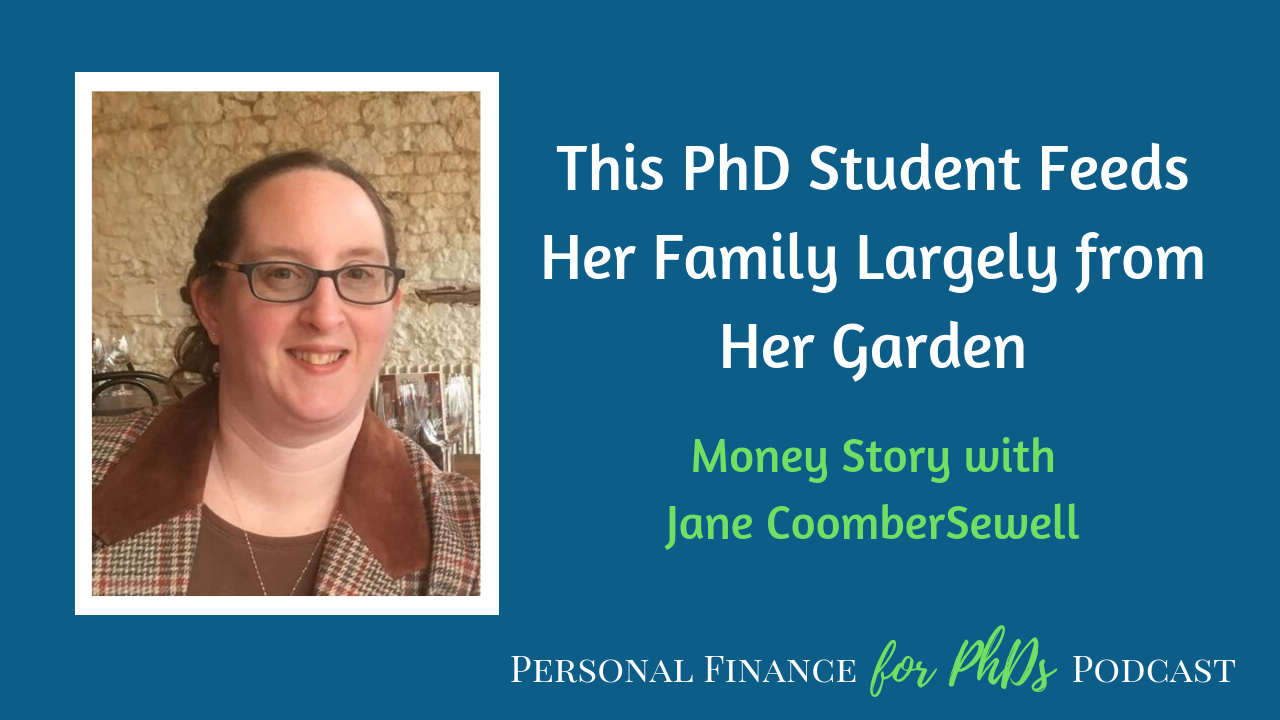
This PhD Healed Her Scarcity Money Mindset Using a Goal-Setting Framework (Part 2)

September 23, 2019 by Meryem Ok

In this episode, Emily interviews Dr. Lucie Bland, about her financial journey from graduate school to self-employment. Lucie was severely underpaid as a PhD student, and she felt such guilt and shame around spending that she became terrified of money. Her money mindset didn’t improve when her income increased several-fold as a postdoc, and it wasn’t until she discovered the Good-Better-Best goal-setting framework that she started to heal her relationship with money. She now describes herself as a money boss. In this second half of the conversation, Lucie describes the Good-Better-Best goal-setting framework and how she applied it to personal finance as well as other areas of life. She also shares how mastering her personal finances enabled her to take the leap into self-employment.

Listen to part 1 of this interview!

Links Mentioned in the Episode

  • Lucie’s Website: luciebland.com
  • Lucie’s Free Guide to Writer’s Block
  • Personal Finance for PhDs: Speaking
  • Personal Finance for PhDs: Help Out

PhD self-employed money boss

Teaser

00:00 Lucie: Money is so interesting because it’s where you have a conflict between all your limiting beliefs and your trapped emotion and your resources that are linked to survival. That’s why money triggers our fear centers so much. It’s the modern-day saber-toothed tiger that’s coming to eat us.

Introduction

00:24 Emily: Welcome to the Personal Finance for PhDs podcast, a higher education in personal finance. I’m your host, Dr. Emily Roberts. This is season four, episode six, and today my guest is Dr. Lucie Bland, a self-employed PhD living in Australia. Lucie has such an amazing story to tell that I’ve split it into two episodes. Last week’s and this one in this episode, Lucie shares how she relied on the Good-Better-Best, or GBB, framework when she decided to become self-employed. She also illustrates her current practice of personal finance now that she is a self-described “money boss.” She proposes many ways PhDs can use the GBB framework with respect to income, personal finance, research, and other areas of life. Without further ado, here’s the second part of my interview with Dr. Lucie Bland.

Lucie’s Self-Employment Journey: Using GBB

01:19 Emily: Okay. Now we’re going to resume talking a bit more about your self-employment journey. So you’ve already told us that you went through this period of re-evaluation where you’re taking time off from your postdoc, then you went back part-time to your postdoc, which didn’t work out very well because it’s very difficult to do research part-time. And you also had a side job as an editor for some time. But then you were saying that you sort of realized that you really wanted to be self-employed and wanted to have more control over your work, control of your schedule, I assume that self-employment would offer you. So let’s talk more about this GBB model and how you used it in this journey towards self-employment.

02:02 Lucie: Yes. Basically, when I was using GBB in the budgeting I realized that my “Good” goal, or my minimum viable income, is 33,000 Australian dollars, which is actually not that much. It basically means that I need to make $50,000 minus tax, which is a very realistic start for a business. And especially kind of as we talked about before, I still have a lot of savings. So doing these highly-paid postdocs enabled me to have the financial security to then go on and do my business without taking a loan, without taking a lot of risks in many ways. And so using that GBB framework enabled me to make a really intentional decision and actually a very low-risk decision to start my own business.

Two Forms of Runway: Savings and Part-Time Work

02:56 Emily: Yeah, so I was highly involved in the personal finance community, the personal finance blogosphere in 2011 to 2015, I would say. And I watched a lot of other people in that space move from being employees to being self-employed. And ultimately, I did this as well. And the term that we used for what you did was to give yourself a runway. So you gave yourself two kinds of runways. The first was by having a good amount of savings from having that higher income for a number of years. So you knew that you could have no income coming in for some period of time and you would be fine. Or you know, a lower than ideal amount of income. And the other runway you gave yourself was working this part-time position, having the side job, experimenting with how much you would need to work for other people but still be able to fulfill what you wanted to do and ultimately you could drop those things off as you were able to take off with your business income and no longer need those need the runway.

03:52 Emily: Right. So, two forms of runway. Just for anyone considering self-employment or considering maybe even doing another job that’s lower-paid. Any kind of transition like that, giving yourself some runway. Here’s a great idea, whether it’s through savings or side jobs or whatever it might be. Yeah. Anything else you want to say about using that model and your transition to self-employment?

Taking the Time to Experiment and Make Mistakes

04:16 Lucie: Yes. And you know, I think you make very good points about using the two different types of runway. And for me, in a way where doing the postdoc part-time worked really well in that it gave me time to know what I wanted to do. Because it did take me two years, two whole years to figure out what I really wanted to do. And that’s very typical of any career transition if you read the career-coaching literature. So it gave me time to set up my business and know what I wanted to do. It gave me that time where I was only working part-time hours to set things up behind the scenes, make lots of mistakes, go down lots of rabbit holes and not have that pressure of things having to work out immediately in the sense that, now, I’m in my first year of business. But really, I’ve been doing this for almost two years. I know how things work a little bit better. So again, probably a theme that’s coming through this interview is that I’m actually a little bit risk-averse in many ways. But I was much more comfortable making that decision to jump into my business. Having had just a little bit of legs under that idea and a little bit of knowledge, some numbers through my GBB goals and my budgeting other than flying by the seat of my pants, which is not really me.

05:32 Emily: Really what you’re doing, in all those different approaches that you just mentioned, is giving self-employment or your business, the ultimate business idea that you settled on, the best chance it could possibly have. Because like you said, when you’re first starting out with a new venture, you have to do a little bit of experimentation. You have to bumble around a little bit and make some mistakes. And if you have given yourself no runway and it has to work within two months or whatever it is, you have to make enough money to start sustaining your lifestyle within that short period of time. It doesn’t give your business really the room to evolve and grow and succeed. And so, yeah, I definitely would say that if you’re serious and very, very aspirational about becoming self-employed, you need to build that into your plan, right. Build some bumbling around and some mistakes into your plan.

06:21 Lucie: Yeah.

What Does Your Business Look Like Now?

06:22 Emily: And so what did you ultimately come to, you know, through this period of experimentation, what does your business look like now?

06:29 Lucie: Now I run an editing and coaching business and I’ve got three arms to my business. I’ve got editing, coaching and writing workshops. And the advantage with professional services businesses, like yours and mine, is that they have very low expenses, and in a way, they’re quite low risk. They do require some work in terms of to make it more leveraged or passive. You know, I need to evolve my business model in terms of I can take holidays and not have to be working all the time. Because otherwise, I’m just my own boss that’s still the slave to working every day. But for me, it’s a much better balance.

07:09 Lucie: And I would say that I definitely went from surviving to thriving. And that’s where being really intentional and self-knowledge is critical in the sense that when I did this career-coaching with this What Color Is Your Parachute?* book, one of the things I realized was that creativity and freedom or some of my core values. If I’m not getting this in a job, then being self-employed, you have ultimate control, you have ultimate freedom. And so there are lots of reasons why for me this is the best choice. And I think for people who would be listening to the podcast, then any self-knowledge that you have about your own values, about your own preferred work environments can only enhance your decision-making. Regardless of whether you want to continue in academia or do something else. It’s like your minimum viable income, but for your personal happiness.

[* This is an affiliate link. Thank you for supporting PF for PhDs!]

Professional and Personal Development

08:06 Emily: Yeah, exactly. I did a lot during graduate school. I would always pay attention when the career center or professional development stuff sent out emails about workshops and events they were doing. And I was always like, yeah, if I can go, I’m going to go, and did a lot similar to you. Like self-exploration, guided exercises, little tests and stuff to help me figure out like what was the work environment that I wanted and so forth. And it was funny because at that time, it didn’t at all occur to me that self-employment would’ve been a good fit. And yet, I’m really enjoying it now. I’ll link to a post in the show notes about how I think that PhD research and self-employment actually have a lot of overlap in terms of the skills that you learn in one can apply to the other. But what you were just mentioning about kind of being your own boss and managing your time and so forth. I think that there is room for another loose interpretation of the Good-Better-Best goal framework there. Like “Good” might be working 40 hours a week, every single week out of the year, “Better” as being able to have a little bit more freedom and flexibility with your time, and “Best” is being able to have so much stuff outsourced and have people on your team that you can take time away from your business whenever you like. There are so many ways that Good-Better-Best framework I think can be applied outside of just how much money do you need to make to fund your lifestyle. Right? It seems so flexible.

The Many Applications of the GBB Framework

09:29 Lucie: Yeah. It can actually be applied to anything. So, for example, for a PhD student or a postdoc Good-Better-Best: How many papers do you want to publish this year? For me, I run writing workshops. How many people do I want in my writing workshop? What’s the minimum to make it viable? What would be a better goal that I would be happy with? And what would be the best that I would be completely chapped with? What’s your Good-Better-Best for losing weight or gaining weight or eating better. So, it can be applied literally to any form of goal-setting. And it actually makes any form of goal-setting much more realistic in that life is not black and white. It’s not like we meet or we fail at reaching our goals. And this gradation actually enhances motivation. That’s why it works so well for different areas, because once you reach your Good goal, you really want to reach your Better goal. Versus with traditional goal-setting: If you reach your goal, then what’s left?

10:27 Emily: Yeah. I love that you stated it that way, that you brought that up. I was thinking the exact same thing that it’s not a black and white success or failure with a razor-thin line in between the two for whatever your goal might be. As you were saying, there are gradations there of success. And even sometimes failures can be reframed as successes, you know, if you can see them the right way and so forth. So, I really love that. I think the audience members hold me to that, but I think I may try to figure out how to apply this Good-Better-Best framework within the teaching that I do within personal finance. Because I do talk about goal-setting and about financial goals. But as you were saying, it can be so demotivating to not reach a goal.

11:08 Emily: And yet you also want your goals to be very lofty, right? Like you want to be able to strive for something. So, it’s again about self-knowledge, about knowing what’s going to work for you. Do you want to strive for something and maybe not quite reach it but feel good about it? And know that you’re going to focus maybe on that Best goal? Or, do you want to set something that you know you can succeed at and then you’ll be motivated to move on from there? Well, that’s the “Good” goal. I feel like this is a good framework for people of many different kinds of mindsets toward goal-setting. So, I don’t know. I’m really excited about this. I’m really excited about learning about this framework.

Applying GBB to Research Life

11:40 Lucie: And I think one aspect where I really wish I had known about Good, Better goals when I was doing my postdoc was exactly about how many papers to publish. Because especially within research, there’s this kind of like runaway consumption model in that you need to do more and more and more and more. And if you never put a note on it, you’ll never reach it. And it’s very frustrating. Versus I feel that if now I was working in research again, I would definitely set myself Good-Better-Best goals just so I would know when to stop and relax and take a break.

12:17  Emily: I love that. Have you had any other thoughts about that? How you would apply GBB to research life for those who are still in it?

12:27 Lucie: Yes. So definitely in terms of your income and your budgeting, any of your key performance indicators, your grant income. More and more of academic life is measured with numbers, whether we like it or not. But because it is done this way, we better get on board with it. You can even apply the GBB to your h index if you really want to.

12:52 Emily: I was just thinking that. Yeah.

12:54 Lucie: But there again, it’s about, you know, having that realistic benchmark and then that motivational benchmark and that dream benchmark rather than having these unattainable goals. That makes it much more attainable and then you can discuss it with your supervisors or with your peers. And then for me, I wish I would not have gotten so run into the ground, in the sense that if you reach your “Best” goal, maybe you can take the foot off the accelerator.

How Can People Work with You? *Free Gift*

13:24 Emily: Yeah. And not get to the point like you did where you just had to throw up your hands and say, I have to take a complete break and escape from this for a while. Is there anything else that you’d like to tell us about your business? Like who do you work with or how can people work with you?

13:40 Lucie: Yeah. So, I have a website. It’s called luciebland.com. L u c i e b l a n d. And I have a blog where I blog about everything, academic writing and productivity. So you might have guessed, I’m really into goal-setting. I’m actually a certified coach, and so I work professionally with people to help them reach their goals. Especially their publication goals in a kind of holistic manner. And so I love to blog about evidence-based techniques to reach your goals. And I will send out a little gift and surprise that I would like to offer to the listeners of this podcast. I have a free Guide to Beating Writer’s Block. Everyone suffers from writer’s block one moment or another. And so I have a really nice free guide that recaps the different techniques that you can use to beat writer’s block. And you can get that at luciebland.com/write. So that’s w r i t e. And so you can go and download that for free. And I always kind of keep it to my side if I ever feel my motivation lacking I always refer back to these little exercises.

How Are Your Personal Finances Now?

14:46 Emily: Yeah, that’s great. Thank you for that. And we’ll link to that as well from the show notes. So if you want to go there first, that’s fine. So, when we started talking about doing this interview, you described yourself as a money boss or maybe it was an aspiring money boss–you’re getting to be towards the money boss state. And so there was this huge difference between the mindset that you had towards money during your PhD and where you are now. And so can you talk a little bit more about how you’re managing your personal finances right now, how you’re using the GBB framework and your personal finances? And just more about the healthy point that you are at or that you’re developing at this moment in comparison with where you were a few years ago.

15:33 Lucie: Yeah. Well, I think that really the proof is in the pudding in that five years ago, I was never looking at my bank accounts and I was completely in the dark about anything financial. And now, I make extremely detailed 2-year cashflow projections using that GBB framework. And I feel good. I feel good about it now. I enjoy it. And that’s why I’m on this podcast because I’ve actually become a personal finance nerd. So, you can see the extent of the transformation, both in practical terms and in terms of mindsets, and especially now both, given my background as a coach. So, when I trained as a coach, I worked with a lot of clients who had money issues because money is so interesting because it’s where you have a conflict between all of your limiting beliefs and your trapped emotion and your resources that are linked to survival.

Money: The Modern-Day Saber-Toothed Tiger

16:30 Lucie: That’s why money triggers our fear centers so much. It’s the modern-day saber-toothed tiger that’s coming to eat us. And so there’s a perfectly logical explanation to why money is so difficult to so many people, both for the people who are really in scarcity mindset or the people who own that runaway consumption type of spending. And so what I love about the GBB goals and the budgeting is that, for those of us who are scientists, it really taps into our experimental tendencies. So for me, going from being scared of my finances to budgeting, I took it with a lot of self-love and self-compassion in that, “Okay, I’ll just see how it is.” Had a glass of wine because I couldn’t bear to look at my expenses without a little treat, and “I’m going to tweak a few things. I’m not going to change everything all at once. I’m just going to see how it is.” As if I was running an experiment in the lab. Like, what’s working, what’s not?

17:34 Lucie: What can I change next month? What can I change the month after that? And getting kind of that objective perspective with the numbers removes that emotion. Because we’re not going to go from fearful to excited all at once. You know, going from fearful to curious is a very good progression. Maybe then you become curious about your money, curious about how it functions, what other little tricks you can use. So, for example, I went through a phase where I would change all my electricity and gas providers and my phone. I went through all the things very methodically, with my personal expenses. Yeah, the gas bill.

Easy Ways to Make Extra Income

18:33 Lucie: And then another thing that really helped my mindset, especially for people who suffer from a scarcity mindset, is I started generating lots of money from random places. I became a lot more inventive with how I generate income. For example, over the weekend, I worked at festivals during my postdoc. Most postdocs don’t do that. Just work at festivals to make a little bit of cash. I sold a lot of my unused furniture and unused clothes. So, I just started to have these random little pockets of money that would come from kind of very odd places. And then that increased my belief that I could make money easily. Money is not that difficult to make. There are lots of places where we can make money, so I can imagine some people being on Airtasker or even driving Uber, et cetera. There are actually lots of ways to make little pots of cash in this day and age. And so both kind of doing the budgeting, revising my expenses, and creating these additional pools of cash really increased my confidence.

Commercial

19:26 Emily: Emily here for a brief interlude. Through my business, I provide seminars and webinars on personal finance for graduate students, postdocs, and other early-career PhDs for universities, institutes, conferences, associations, etc. I offer seminars that cover a wide range of personal finance topics and others that take a deep dive into the financial topics that matter most to PhDs, like taxes, investing, career transitions, and frugality. If you are interested in having me speak to your group or recommending me to a potential host, you can find more information and ways to contact me at pfforphds.com/speaking. That’s p f f o r p h d s.com/speaking. Now back to the interview.

Frugal Experimentation

20:15 Emily: I wanted to add kind of two further examples to what you were just saying. One is frugal experimentation. You said that you can take sort of an experimentalist approach towards managing your money, and this is something that I’ve talked about as well. If you’re looking for ways to reduce your expenditures, or like you were saying earlier, not necessarily reduce what you’re spending but rather shift from using your money in ways that don’t give you as much satisfaction towards ways that do give you more satisfaction is a better way of thinking about it, right? Rather than just spend less everywhere. But if you are looking for something that you don’t care about spending money on too much, how can I spend less and less in this area? So I can redirect my money elsewhere. You can run what I call frugal experiments.

20:56 Emily: And so I think this is what you were mentioning. You would find a frugal tip somewhere online or whatever from a friend, and just try it out in your life. And what I say is to try it for 30 days. So it’s really giving it a good shot. Seeing if you can make it habitual and make it mindless and easy for you, and then go ahead and evaluate what was the actual effect. How much money did you end up not spending in that area that you didn’t care so much about? Was it worth the effort that you put in? Were you able to make it a habit? Were you able to make it easy? And if the answer is no, it didn’t reduce my spending enough to make all that effort worthwhile, well then just go back to whatever you were doing before. You can just easily reverse it.

21:35 Emily: And so you can do maybe, you know, one frugal experiment per month and just take like sort of a playful approach to it as you were saying. It’s not do or die in every single one of these things. You don’t have to change everything about your lifestyle in one fell swoop, but you can just take these small areas and make a change. And if you don’t like the change, then just go back. No big deal. So that’s one comment I wanted to make. And the other one is about finding other ways to earn or finding that money would start coming your way once you were thinking about it a little bit differently.

Having a Plan for Windfall Money

22:09 Emily: And what I did during graduate school, again, when our incomes were lower and it was very important to me that we used our money in the best way possible. I was very careful that I had a plan for any, what I might call windfall money that came my way. So it could be receiving maybe a gift, a birthday gift or something. Or it could be, I occasionally would participate in studies, like clinical trials. Very minor stuff. You know, psychological surveys, that kind of thing. If I made $10 from that, okay, well I would always have a plan for where that money was going to go. It wasn’t something that went into my general checking account to be just floating out there and who knows where it went. It went towards what we were using, targeted savings accounts. So it went into my target savings account for travel usually, or one time we were saving up for like a camera purchase for a DSLR. And so we would put in the extra money that we found into that savings account for that ultimate goal.

23:10 Emily: And I think having a plan for where that money was supposed to go, to help me use my money in a way that was most satisfactory to me, really made me pay more attention to all those little ways that money came to me. Whether it was from earning it or whether from, I don’t getting cash back on something, right. I had cashback credit cards, like just having a plan for any of those little non-salary income sources of money. Having a plan for what to do with it made sure that I was using it in a way that felt most optimal for me. And so I really love that you said that example as well. And maybe money was coming your way from time to time earlier, but you just weren’t paying attention in the right way to it to be able to use it in a way that was satisfactory.

23:53 Lucie: Yeah. And what I love about your example, Emily, is the actually you were almost using GBB. Because when you talk about your camera in your savings account, you know, to me that’s like your “Better” goals. And so, you were intuitively using a similar system by putting all that windfall income into these very specific goals.

Anything Else About Being a Money Boss?

24:14 Emily: Yup. That’s probably why I’m so excited about the framework is that it’s a way of sort of crystallizing how I was thinking about things already in a way that will help me communicate those ideas better with other people. Anything else you want to say about becoming a money boss or how you are a money boss? How you behave as a money boss now?

24:32 Lucie: So definitely this in terms that I’m spending more time being more future-oriented. So for example, now thinking of buying a property having these two-year cashflow projections, dreaming to the multiple six-figure business. All of these things now are within reach because I can actually monitor my progress to them rather than feeling stumped. And the other thing that has happened, which is surprising me a lot, is that I’m teaching basic business finance to other entrepreneurs, which seems really odd. But I’m actually doing it. And so, teaching other people how to do cashflow projections, how to manage money in their business. And so for me, especially lots of everything that we’ve talked about in this conversation, is a complete turn around.

25:24 Lucie: I had the skill set to do that. My training in biology was in specifically statistics. I was a computational modeler. So, money should not have been so difficult to me because I know how to deal with numbers. But it was the emotions attached to it that were blocking me. Versus now, I can really feel that my mathematical skills or my decision-making skills, I can use them to the best of their effect because basically my conscious mind and my subconscious mind are in the same direction. And now, I can head towards the future and make these better longterm decisions and also help other people make decisions like that.

26:10 Emily: Yeah, I love that point. I mean sometimes I hear that personal finance is intimidating to people because it is about numbers. Kind of. They think it’s about numbers. But really, I mean especially if we’re talking about PhDs, the level of mathematical ability is a very low bar to be passing to be successful in personal finance. It’s really all about mindset and emotion and understanding your values and self-knowledge and all the things that we’ve been talking about in this conversation. That dwarfs the ability, in terms working with numbers, to be successful in personal finance. Of course, it helps if you’re comfortable with math and everything, but it’s not what’s holding you back basically if you’re not feeling successful in that area.

Start Frugal Experiments Today

26:54 Lucie: What I would say as well to anyone listening is to start doing these frugal experiments. Start doing it now. And that’s not because I want to scare anyone out. But now especially that I work with business owners a lot more: people who can manage their money well will always be catered for, and you’ll definitely have a leading edge over anyone. Actually, very few people manage their money well. And so, if you can have both these mathematical skills that most of us would have in the academic world. and the willingness and the right mindset to manage your money. And if you can do it as soon as possible, let’s say in your late twenties or whatever. The rest of your life is going to be so much easier because of things like compound interest. And so it’s really worth kind of pulling the BandAid off and starting small today. Let’s say, looking at your phone bill and how you can optimize that, and then just gradually looking at all the other elements.

27:59 Emily: Yeah, I think you put that so well. And I could not agree more. Start today. And it doesn’t have to big, it doesn’t have to be scary. Have a glass of wine, like you said, whatever it takes for you to be able to look at your account transactions or whatever it is that your starting point needs to be. Just start, and start small. And the earlier you do it, the more you’re going to benefit really throughout the rest of your life. So as we sum up here, how do you think that PhDs can use the GBB framework with respect to personal finance and with respect to other areas of life?

How PhD Students Can Use the GBB Framework

28:35 Lucie: Yes, I think that the main two ways that PhD students can use the GBB framework are first, in terms of budgeting their expenses, or trying to align that concept of what is “Good” or what is the minimum viable income that you need. And kind of either reducing your expenses or rejigging your expenses to some things that provide higher value. And if this is available to you, also diversifying your income. Unfortunately, now we’re in an increasing world of casualization of the academic workforce. So a lot of people are working smaller contracts and having kind of little pools of money, and the GBB framework is great for that. But also for people who might have a more stable income, there are lots of opportunities out there to make more money if you wish. And so, once you’ve costed out what your dreams are going to cost you–your savings account, your camera, and your holidays–then really it’s up to you how you reach that goal. And for me, it’s a motivation to work hard because I enjoy doing it and especially with the Best goal, that’s where you can allow yourself to dream big. And I can imagine as well that having that GBB framework comes in extremely useful when negotiating for jobs. Because once you have that number in mind, it’s crystallized in your head. I need that number. I would like that number. I really, really want that number. And it’s up to you to make it happen.

Look at the Numbers and What Works For You

30:07 Emily: Yeah. Excellent point. I think something that may be useful for someone who’s in a really, really tight spot with money, maybe it’s during graduate school, like you were really not making a sufficient income for where you were living. If you are allowed to take on outside work, if it’s permitted by your contract or you think you can get away with it, whatever the situation is. I think it could be really useful to actually look, as you were just saying, at what is the shortfall that I have between what I’m making right now and what that minimum viable income is. And if I did this type of work, how many hours would it actually take to make up that shortfall? Because I’m thinking that maybe a lot of PhD students in that situation don’t need to work an additional 20 hours per week at the pay rate that they can gain using the skills from their PhD.

30:59 Emily: Maybe they’re going to be able to make a very decent hourly rate. Maybe it’s $20 per hour. Maybe it’s $50 per hour. Maybe it’s $200 per hour depending on what their skill sets are and what the market is. But really looking at, okay, well if I just worked an extra two hours a week or five hours a week, maybe I can make up that shortfall and it would make such a huge difference to your general sense of wellbeing in your life to be able to do that. This is just basically an argument for looking at the numbers and looking at potential income in certain areas as we’ve been talking about throughout this entire episode. And again, trying to figure out what is it really going to take to make that amount of money. And maybe it’s not as much effort or not as much time as you were thinking it would be when you were just sort of hiding your head in the sand about it.

Diversification of Income: Side Hustles

31:45 Lucie: Yes, that’s excellent advice. And as you say, a lot of PhD students have a lot of skills that are very much in demand. For example, tutoring or teacher relief, et cetera. Even my editing job was something I could do from home anywhere and that any PhD student with superior English could do and would pay quite well. And so there are lots of opportunities both online and offline to make these extra little pools of money. And as you say, it might only be like two or three hours a week.

32:17 Emily: Yeah. So I think that was using the GBB framework on your personal finances and on budgeting. That was the first suggestion. What was the second one?

32:26 Lucie: Ah, yeah, the second one was to diversify your income.

32:29 Emily: Ah, okay. Yeah. Great. I love both of those suggestions. And really the diversification of income strategy is not just one for PhD students as you did during your postdoc. Or even maybe if you had had a regular job at that time, you were just experimenting and you were exploring with other types of work that you could do. And eventually, you were able to hit on what is now your business and what is really bringing joy and satisfaction in your life. But without sort of stepping out of your current status, without stepping out of your comfort zone, you wouldn’t have taken that journey and been able to get to this point. So again, a theme coming up again is experimentation, whether it’s with new types of work or frugal strategies or what have you.

Additional Benefits of Side Hustling

33:10 Lucie: And I think there are a lot of other benefits to having a side hustle experimenting beyond the extra money. You know, there are lots of talks that most PhD students don’t stay in the academic world and need to translate their skills to industry or the business world, et cetera. And experimenting and having a side hustle is the perfect way to do that, in addition to earning more money.

33:34 Emily: Yeah, if some of the different topics we’ve covered in this episode have peaked your interest, listener, please go to the show notes because I have written about so many of these things in different ways. I’m going to add a lot of links there to different articles I have that you can go to explore deeper and of course also visit Lucie’s site. You want to mention it again, Lucie?

33:53 Lucie: Luciebland.com. L u c i e b l a n d.

33:58 Emily: Yeah. Especially if you want more content around what she is specializing in. Lucie, it was such a pleasure to talk with you today, and I’ve learned a ton from this conversation. I’m sure the listeners have as well. Thank you so, so much for this interview.

34:10 Lucie: Thank you, Emily.

Outtro

34:12 Emily: Listeners, thank you so much for joining me for this episode. Pfforphds.com/podcast is the hub for the Personal Finance for PhDs podcast. There, you can find links to all the episode show notes, a form to volunteer to be interviewed, and a way to join the mailing list. I’d love for you to check it out and get more involved. If you want to support the show and my business, please go to pfforphds.com/helpout. There are plenty of ways to do so without laying out any of your own money. See you in the next episode! And remember, you don’t have to have a PhD to succeed with personal finance, but it doesn’t hurt. The music is Stages of Awakening by Podington Bear from the free music archive and is shared under CC by NC.

This PhD Healed Her Scarcity Money Mindset Using a Goal-Setting Framework (Part 1)

September 16, 2019 by Meryem Ok

In this episode, Emily interviews Dr. Lucie Bland about her financial journey from graduate school to self-employment. Lucie was severely underpaid as a PhD student, and she felt such guilt and shame around spending that she became terrified of money. Her money mindset didn’t improve when her income increased several-fold as a postdoc, and it wasn’t until she discovered the Good-Better-Best goal setting framework that she started to heal her relationship with money. She now describes herself as a money boss. In this first half of the conversation, Lucie details her financial journey from underpaid PhD student to well-paid postdoc and how she needed to take a break from full-time employment to set herself on the right career and financial trajectory.

Listen to Part 2 of this interview!

Links Mentioned in the Episode

  • Lucie’s Website: luciebland.com
  • Personal Finance for PhDs: Speaking
  • What Color is Your Parachute?
  • Good-Better-Best with Megan Hale
  • Financially Navigating Your Upcoming PhD Career Transition
  • Personal Finance for PhDs: Help Out

healed money mindset

Teaser

00:00 Lucie: I did go to some extent through that transition of seeing not money as like an enemy or something that needs to be hoarded, but something that can be used as an investment for a good life. When I was doing my PhD, I was not future-oriented. I was in survival mode.

Introduction

00:21 Emily: Welcome to the Personal Finance for PhDs podcast, a higher education in personal finance. I’m your host, Dr. Emily Roberts. This is season four, episode five, and today my guest is Dr. Lucie Bland, self-employed PhD living in Australia. Lucie has such an amazing story to tell that I’ve split it into two episodes. This one and next week’s. In this episode, Lucie talks us through the roller coaster of her financial journey from severely underpaid graduate student in London to well-compensated postdoc in Australia to not having an income to starting a business. Lucie describes herself during graduate school as “terrified of money,” And that didn’t automatically improve when her income more than tripled and her cost of living dropped. We discuss the intentional steps she took to heal her money mindset, including the goal-setting framework that she now applies in her personal and professional life. Without further ado, here’s the first part of my interview with Dr. Lucie Bland.

Will You Please Introduce Yourself Further?

01:26 Emily: Thank you so much for joining me on the podcast today. We have a really delightful set of episodes ahead for us. It’s going to be a two-parter. My guest today is Dr. Lucie Bland and so I’m going to kick it right over to her right now and have her introduce herself to you a little bit further.

01:44 Lucie: Thank you, Emily. Thank you for having me on the podcast. My name is Dr. Lucie Bland. I’m an editor and writing coach and I help researchers and writers get published.

01:54 Emily: Yeah, that sounds really exciting. Can you tell us what your background is?

01:59 Lucie: Yeah. I graduated from Oxford University with a degree in biological sciences and then I did my PhD at Imperial College, London in Ecology in 2014. That’s when I finished, and then I moved to Australia for two postdocs in conservation science. The first one at the University of Melbourne and the second one at Deakin University. And now for about a year I’ve been running my academic editing business, which I now do full time. So very much serving the academic community, but I’m no longer directly a researcher.

02:34 Emily: Yeah. Well, we are in the same boat in that respect. Can you say right away up top what your website is?

02:42 Lucie: My website is luciebland.com and that’s spelled l u c i e b l a n d.com.

02:49 Emily: Yeah. And any other personal details you’d like to share, maybe where you’re living now or is your household just you?

02:56 Lucie: I live in Melbourne with my boyfriend and our Burmese mountain dog that you might see in the video if he comes around.

03:05 Emily: Yeah. Enticement to hop over to YouTube and watch this on the video instead of over the podcast. Okay. So we have this great story that I know a little bit about already, so bring us back to your time in graduate school. What was going on with you financially at that time, both in terms of like how much money you were making and also what was your relationship with money?

Lucie’s Evolving Relationship to Money

03:30 Lucie: Yeah, my money situation, my relationship to money when I was doing my PhD was very different to how it is now. I was living in London, one of the most expensive cities in the world, and I was earning 13,000 pounds per year, which is 16,000 US dollars. And I would spend 650 pounds a month on rent, which is 60% of my income. And I remember that time reading a report that said that your level of basic socioeconomic level can be determined by how much you spend on rent, and the higher it is the poorer you are. So that was a little bit depressing to me. But despite having these really high expenses and that really low income, I was really not wise about money at all. My money strategy was to bury my head in the sand. I was paid quarterly, which would mean that I would run out of money every quarter.

04:27 Lucie: And I didn’t have a savings account. So normal accounts could be very regularly in the double digits and I just didn’t know how that would happen. And when I moved to Australia, I experienced a very different money situation in that my income pretty much tripled. I was paid $80,000 a year and I lived in a really funky flat on my own in the hipster part of town. So I kind of went from rags to riches, but I very much kept my very Scrooge-y lifestyle and I still didn’t budget. It did mean that I was saving $20,000 a year because my expenses were really low cause I would still collect vouchers and coupons and have that very “PhD student” lifestyle. But I wouldn’t say that my budgeting skills or my approach to money improved in any way. It was just that my income was higher.

05:26 Emily: Gotcha. Yeah, that’s a great overview, and I think it’s one that’s going to be relatable to a lot of people within the audience. Most of my audience is in the U.S. and the cost of living differences can be so wide between, you know, New York and San Francisco versus certain cities in the Midwest that are quite a bit smaller. And so a graduate stipend can also kind of be all over the map and it doesn’t necessarily correlate with higher stipends in higher cities necessarily. Sometimes that’s the case and sometimes not. I’ve interviewed several people on the podcast who live in high cost of living cities but have an okay kind of income, maybe double or more what you just mentioned, and others where that’s completely not the case. A much, much lower income. Actually, I want to go back a little bit further and talk about your mindset from even before you started graduate school. Would you say that you grew up middle class, or what was your mindset about money or the socioeconomic status you had prior to entering graduate school?

Money Mindset Before Grad School

06:34 Lucie: Yes, so I was definitely middle class. Especially my father had a very relaxed and confident approach to money and to some extent my mother as well. But in a way they hadn’t taught me any budgeting skills at all, which is a little bit sad, but kind of looking a bit backwards again. And that has really influenced my money story. My French grandparents grew up under German occupation and under rationing and that really influenced their mindset around money and around the use of resources. And to some extent, even in my kind of middle class nuclear family, especially, my mother could also have that very Scrooge-y or scarcity mindset. And I remember my grandparents still drinking chicory, which is a coffee replacement that’s made from the root of a plant, that French people used to drink under the German occupation.

07:30 Lucie: And so they still had some of these relic habits of, you know, we don’t know when the next meal is coming. And so you’ve got to finish off your plate, you’ve got to use all your resources in a very savvy way, which in many cases can be a good approach. But I think that as a child, I really internalized that. And one of the funny stories in my family is that at the age of 10 or 11, I signed up to this website, it was called scrooge.com and got lots of vouchers and was very obsessed with using those and not spending any money. So, I’m quite conscious that my personal money story and approach to money, well to some extent determined by my socioeconomic level or being from a middle-class family, was also influenced by lots of other family patterns that predated that.

Money Mindset During Grad School

08:20 Emily: Yeah. So I guess we could suffice to say that in some ways you were unprepared for being in graduate school on that kind of income and in that expensive city. In other ways, you had maybe some skills and some mindsets that would be, I hesitate to even say helpful. I mean helpful to survive, but maybe not helpful to be sort of healthy mentally overall towards money, especially later on once you have that income increase. So when you were accepted to graduate school and you knew what that stipend was going to be, and you knew more or less where you’d be living and that it was going to be 60% of your income going towards rent, what were your thoughts? How did you approach that situation? Did you think, “well, I’m just going to have to make this work. I’ll do it somehow”? Or did you consider debt? And I don’t know if that was even really an option for you.

09:14 Lucie: The thing is I didn’t even know that I was going to spend 60% of my income on rent because I hadn’t calculated it at all. I was completely in the dark, and no, that was not an option. I’ve never had a loan or credit card. Again, different countries have different approaches to that. And for me, I was just going to have to eat pasta. That’s how short-sighted my thinking was. To some extent, I could have considered a student loan, which I might not have been eligible for as a French person. But you know, my thinking was not even that advanced.

09:54 Emily: Right. And so once you did find out, once you did secure housing and you knew how much of your stipend was going to be eaten up by rent, what was your plan at that point, and kind of how did you get through it? And I guess this might be sort of advice in sort of how to keep expenses low. Although of course in the overall arc of this conversation, that’s not really what we want to be talking about. But for those years, how did you get by?

10:19 Lucie: I probably spent very little money on food, and I did go out a little bit, but I wouldn’t do anything that was fun. You know, I would probably not go to the cinema. I probably would not go to expensive parties. One of the things I did in London, I had a bike and I would be very savvy about whether I would take the tube or the bus. The bus was cheaper, and so everything became a decision. And if the decision presented itself to me, I would always take the cheaper option. So, I didn’t think long-term about do I need to build savings? Do I need to think a bit longer term? It was extremely short-term.

10:57 Emily: Was thinking long-term even an option though?

Short-Term versus Long-Term Vision

11:01 Lucie: At that stage, I wasn’t thinking long-term at all because I just couldn’t. I didn’t have the funds to do it.

11:09 Emily: Yeah. It’s not really a personal oversight. It’s just this is how the day-to-day is passing by of thinking about these really minute decisions around money, which are so important to whether you’re going to stay in the block for the month or the quarter. So you were surviving by being extremely frugal in many areas and not spending much on entertainment. I wonder, were your classmates living in a similar manner?

11:39 Lucie: Yes. Yes, we were all living in house shares in London. In quite difficult conditions with lots of issues with housemates, with landlords, with boilers breaking and not getting repaired. Like in a way it was a very kind of low-income status. And I remember kind of looking in awe at some of the PhD students who might be a little bit older who might have worked before and had a bit more savings or maybe had a partner who could support them, who lived in a real adult flat and had furniture that they bought new rather than scavenged from the streets. And to me that was very much a vision of the long-term future. It’s definitely not something I was doing then.

12:27 Emily: Did you find that it was helpful to have that comradery with some of your classmates? Did it make getting through this experience a little bit more bearable?

12:37 Lucie: Yes, and to some extent, even people who would start their first job in London. So, not a PhD student, would probably be on a similar income. And that was 2010. It was post-global financial crisis. So actually some people had decided to do a PhD or go to graduate school just to avoid getting a job. Because there were so few jobs. So that was kind of the economic climate of the time, which has improved slightly now, but we were all very much in that same mindset regardless of whether someone was starting, you know, their first teaching job or was doing your PhD or had a job in admin or in sales at a small company. None of us were making the big bucks.

Money’s Impact on Lucie’s PhD Perfomance

13:20 Emily: How do you think that being–it sounds like very consumed with thoughts about money and decisions around money on a daily basis–do you think that had any effect on your scholarship?

13:34 Lucie: Do you mean how I performed during my PhD?

13:37 Emily: Yeah. Like, let’s say your income was double of that, and you had an easier time with money, there was less stress there. Do you think that you would have done better?

13:49 Lucie: I actually think the opposite in that because I couldn’t do that much outside of going to work and coming back home, I worked really hard. And that’s what I would just do. I had a very traditional existence of cycling to Uni, doing my PhD, and coming back. And I think that to some extent doing my PhD, was a release from my money worries, and that’s why I worked so hard on it. So that could be my specific experience.

14:18 Emily: Yeah. I don’t know if that’s generalizable. I mean, I’m happy to hear that you thought it was a positive effect on your work. But I remember when I was interviewing for graduate schools that I heard that argument from–I interviewed in a city that didn’t have a whole lot going on. A very, very small city, rural–and the argument was kind of, well there’s nothing to do here except for our work. And the weather is really tough in winter. And so we just work, and that’s all. Versus if you lived in a very exciting city or one where there’s just a lot more fun activities going on, you might be more tempted to get out of the lab and go to these other things. But we’re talking about living in London and having that attitude. So, I’m a little bit surprised by that. That you were able to kind of “tunnel vision” on just your work during that time.

15:07 Lucie: Yeah. I think that in that case, it’s very much necessity is the mother invention or this dictates how you behave.

15:16 Emily: Yeah, exactly.

15:16 Lucie: And that’s why I was very relieved when I moved out of London, came to Australia where the cost of living compared to London is lower. You know, it’s kind of insane to say. Australia has a reputation for being expensive, but I found Australia very cheap.

15:32 Emily:  Yeah. Let’s talk about that transition now. But first, how many years were you in London doing your PhD?

15:38 Lucie: Four years.

Financial Life as a Postdoc in Australia

15:39 Emily: Okay. So that’s plenty of time for this to become a very ingrained mindset and approach towards money. So, you finish up and you’ve accepted a postdoc in Australia. Tell us about that. Tell us about the money that you’re making and where you’re living and so forth.

15:55 Lucie: Yes. I was very excited to come to Australia to come to Melbourne. As I said, I would be making $80,000, which was way more money than I’d ever made. I could afford to live on my own, which was a big thing in a really nice little flat in the inner city. I bought a car, I bought new furniture, you know, things were going really well. But what I noticed as well was that I did keep a lot of my former habits in the sense that, for example, Melburnians are big fans of their coffee. All the postdocs would go to the really nice coffee shops and have take-away coffee and bring it back to their office while I was very purposefully making instant coffee in a little kitchen so as to avoid buying coffees. And most of my decisions were like that in that I still got reclaimed furniture from the streets. I would do most of my shopping at op shops, which is very eco-friendly but there is a limit to how healthy that is as well. And so, even though my income was higher, I had still kept that mindset of trying to keep my cost of living as low as possible. Not really from a conscious intention, but just because that was the only thing I knew how to do.

17:13 Emily: Yeah, it sounds it’s actually hearkening back to your example from your grandparents, right. Even the coffee, specifically. So this is really interesting to me to talk to you about this transition because it’s something that I think about a lot and that I talk about quite a bit as well of how should PhDs manage their money once they’re out of graduate school. And I think the standard personal finance advice that I often say as well is live like a college student. And that’s the general advice, and the way it applies for graduate students that I say is “continue at your graduate student lifestyle for as long as possible.” Even though, once you’re making this higher income, to kind of make up for the lost time and the lost income from the previous years, so that’s a time when you can be building up savings and starting to invest and so forth.

18:05 Emily: But I trip over that advice sometimes a little bit. And especially in a case like yours, because if your lifestyle was so constrained, due to your graduate income, that’s not good advice any longer, right? You should increase your lifestyle as your income goes up, and still do all the things you want to, you know, be saving and so forth, investing or paying off debt, whatever it is you need to do. But if you have been consumed and shutting out large portions of your life because of lack of money, that’s not something that should continue. So I’m really glad to have your example as one that is counter to the advice that I usually give and the advice that many people would probably hear once they are seeking out personal finance content. So, can you talk a little bit more about that change? Once your income is higher, how did you start changing how you were using your money and thinking about your money?

Money Change #1: Saving Toward Retirement

19:05 Lucie: The first decision that I ever made about my money, that was a very good decision, which was based on the advice of one of my friends who’s a financial advisor, was that when I started my postdoc in Australia, we’re very lucky that we have 17% of our salary be put into a superannuation fund by our employer. So the employer adds to our salary 17% and puts it into a fund for our retirement. But we can make additional pre-tax contributions. And I made the maximum pre-tax contribution, which was 9.5%. So, I basically had a quarter of my salary going into a super every month, and that was not increasing my lifestyle. That was making a very conscious decision about investing in my future. And that was pretty much the little seed that then grew not into expanding my lifestyle but into this view of investing in myself in the sense that I can invest in savings, I can invest in my super, but I can also invest in my own wellbeing, not because I’m being frivolous, but because it pays off.

20:17 Lucie: It pays off, let’s say to have a gym membership, to have a yoga membership, to have healthy social relationships, et cetera. And so I think that I did go to some extent through that transition of seeing not money as like an enemy or something that needs to be hoarded, but something that can be used as an investment for a good life. And that was what I’d seen in some of these older PhD students in London who were maybe buying a property, et Cetera, that they were investing in their future. Versus when I was doing my PhD, I was not future-oriented. I was in survival mode. Versus this increase in salary opened up for me the possibility that I could plan for a future.

21:01 Emily: I think you put that so well and I want everyone listening, if you’ve resonated with anything, Lucy said so far to go back a minute or two and listen to that–what you just said, over again–because I think it was so, so insightful and well-put. As you were saying, the first intentional money decision that you made after this income increase was not about just going crazy and spending because you’d been so restricted for so long and just splashing out on everything. But rather, being able to think about really changing how you even viewed money. What you said was in viewing it as being able to invest in yourself and having an enjoyable and healthy lifestyle overall rather than trying to hoard it as much as possible because there was such a scarcity, you know, before that point.

21:52 Emily: And I did want to add a slight translation for my, my listeners in the U.S. So, our equivalent to what you did was, when you got your higher salary, basically we would call it “maxed out your 401(k),” which in the U.S. is $19,000 per year. So if anyone’s listening who has started a new post-PhD job and you’re wondering what to do with that lovely salary bump, maxing out your 401(k) is an excellent thing to do. For the reasons that Lucy just mentioned, that it is an investment in yourself and it’s an investment in your future.

Commercial

22:25 Emily: Emily here for a brief interlude. Through my business, I provide seminars and webinars on personal finance for graduate students, postdocs, and other early-career PhDs for universities, institutes and conferences, associations, etc. I offer seminars that cover a wide range of personal finance topics and others that take a deep dive into the financial topics that matter most to PhDs, like taxes, investing, career transitions, and frugality. If you are interested in having me speak to your group or recommending me to a potential host, you can find more information and ways to contact me at pfforphds.com/speaking. That’s p f f o r p h d s.com/speaking. Now back to the interview.

Money Change #2: Impulse Shopping

23:13 Emily: So were there any other changes that you made, after that point, after starting to think about the long-term with respect to retirement? What other changes did you start making?

23:24 Lucie: Probably the next change that I made, which was not a good change, and that happened in my second postdoc, was that I started to impulse shop, and that was entirely related to the stress that I was under. So for, as you said, for a few years I managed to keep my spending quite low, and to have that fairly frugal lifestyle. But then after years of PhD, years of postdoc being put under a lot of pressure, I was starting to struggle, and I could see that being reflected in my spending. And I very quickly knew that this was an issue. So it wasn’t that I was being frivolous in being released, I was using that kind of as an emotional Band-Aid. And that kind of was one of the alarm bells that told me that maybe I need a bit of time off or to think about why I was in academia and what I’d wanted to do. Because one of the symptoms of this was how I was sending my money, which was not really in accordance with my values, and that was quite troublesome to me.

24:31 Emily: Yeah. I think that’s also very common behavior, whether people can afford it or not. So, coming to impulse spending just to emotionally relieve some kind of stress or difficulty or pain that’s going on. So, yeah. Can you tell me more about, having recognized that issue, what then did you do? You just mentioned you took some time off from your postdoc.

Leave of Absence from Postdoc

24:56 Lucie: So I think this was kind of part of a larger quarter-life crisis in the sense that the pressure had been mounting probably since the first day that I started my first postdoc in Australia. And now that was three years later of full-time work with a lot of international travel, a lot of publications. We’re all familiar with that kind of lifestyle. And I just didn’t know why I was in research anymore. I felt really lost and kind of, as we talked about before, I could not see my future in it. And I didn’t know if it was because I was too stressed or confused or because it was genuinely not what I wanted to do. So I was very lucky that I could ask for a six-month unpaid leave of absence from my university and kind of take a little break from all my responsibilities. Because, especially in my first postdoc, I think I must have supervised four or five students to completion. I think I kind of bumped to a lecturer role very quickly. But that amount of responsibility, and then it kind of caught up with me a few years later, was like, well, I’m going down this route very quickly. Do I want to continue with this route?

26:16 Emily: Yeah, really in many jobs, many workplaces, there is a great deal of just going with the flow and some inertia. And you can get to a point where your job duties are not at all kind of what you expected or what you signed up for, but it evolved. So that’s amazing that you made the decision and also were able to say, “okay, hold on a second, I need to take some time to figure out where I really want to go next.” And this is maybe a little bit of a naive question, but were you able to fund that period of being away from your job because your expenses had been so far below your income for the previous years?

26:53 Lucie: Yes, I had a lot of savings at that point.

26:56 Emily: Yeah. And, what I say quite a bit, that money gives you options. And so, you’d been earning quite a lot and saving quite a lot for those few years, and then you had the option to take a step back and have that time to reevaluate. So, what did you do with that time off?

Personal and Career Development Journey

27:16 Lucie: First, I had a holiday to see my parents in Europe, which was great. And I think the first two or three months of the six-month period, I was brain dead. I was recovering. I was watching TV, doing all of these silly things that people do when they finish their PhD. But I’ve seen that quite a lot in first or second postdocs in that people who don’t take a break between their PhD and their postdoc tend to get hit at a later date with trying to cope with all that change. I had also moved to Australia by myself and so I think it just all caught up with me a little bit later. So, I spent a few months resting and relaxing, and that’s when I started to coach myself. I became very interested in these personal development and career development books.

28:09 Lucie: I started to use a career coaching book that’s called, What Color is Your Parachute? It’s a very famous career coaching book.

[* This is an affiliate link. Thank you for supporting PF for PhDs!]

28:16 Emily: Yes, I’ve read that.

Part-Time Editing, Part-Time Postdoc

28:18 Lucie: Yeah, it’s great. And basically, I figured out that probably a very good job for me, which matched to actually want I wanted to do as a child–I wanted to be a writer. And what I was enjoying, what I was really good at as an academic was publishing. And kind of putting these two things together, I was like, “well, getting a job as an editor would be quite a good fit.” And I got a small job with a big global editing company, editing research papers, writing research papers, kind of being a writer for hire. And I really enjoyed that but it paid very little, and I was just starting out. And I could see with the budgeting that I had started doing when I was off work–because that was another really great habit that I’ve gotten into–was that just having that editing job was not gonna cut it for the type of life that I wanted. And that kind of spurred that decision to go back to my postdoc part-time. I was also not sure whether I wanted to quit academia completely. I thought that maybe if I worked part-time, I could cope with the challenges of academia better because I would have reduced hours. Then I could do my editing job as well. So that was the plan in that period, which would be to do the postdoc job part-time and the editing job part-time, and then together it would make a healthy income.

29:52 Emily: I love just how intentional you were with all of those decisions. The series of decisions that you made there, in trying to align your career with what you really wanted to do. And also, you briefly mentioned, but starting to budget is a major, huge leap in one’s personal finances. And that, it sounds like, sort of contributed to the career planning. Right? How much money do I actually need to make to fund the lifestyle that I want and then how can I redirect my career to make sure that I make that amount of money? And is that how it worked out? Did you find that the half-time postdoc position was lower stress, and was that a good situation that you were then in?

Backfired Plan: Full-Time Work for Part-Time Pay

30:35 Lucie: In a way that was a complete failure, in that I was doing full-time work for part-time hours and part-time pay. And I’ve heard that story a lot with other people, in that research is a job that is difficult to do part-time. And a lot of mothers, a lot of people who would want to work part-time for lots of reasons, find it challenging. After a while, I did end up quitting the editing job because it was too much in that postdoc responsibilities would come during my editing hours and would influence the quality of my work at the editing company. And because I was an employee of the university, they kind of took it as this is your priority, and your other job is not a priority. And that was quite difficult to manage. And also at that time I would realize that having my own business would enable me to make the kind of money that I want it to make from editing instead of working for an editing company. And so that spurred my decision to quit the editing job and to start my own business. So, as you’d mentioned, some of these decisions were intentional, but also some of them were just due from the decision to go part-time, in a way, backfired.

32:02 Emily: Yeah. So, did you end up not staying part-time for very long? How long did you stay at that part-time?

Going Full-Time into Self-Employment

32:09 Lucie: I stayed part-time for a year. And then I went full-time with the business. I had a few months to start the business when I was still part-time at the university. And that gave me a little bit of a cushion. And then again with the budgeting, I realized within three months that actually with the business, I was making enough money to not need the Uni job, which I then let go of. It makes it sound like a very drastic and calculated decision. There was a lot of kind of emotional decisions that went into it as well because I love research and I continue in a way, but I knew that having my own business would be a better decision for me for the lifestyle that I want to have, for the type of people that I want to surround myself with, etc. And finances were I guess one of the drivers of that decision. But there were also lots of other things that went into it.

33:08 Emily: Yeah. I have many of the same thoughts around and motivations around becoming self-employed. So, we’re going to talk plenty about your transition to self-employment in the second part of this two-part series. But before we do that, I wanted you to introduce this Good-Better-Best framework that you started using. I believe during this period when you were taking a break from work and when you started budgeting. What is that framework, and how were you using it?

Good Better Best (GBB) Framework

33:40 Lucie: Yes. So the framework that I was using at the time along with my budgeting is called Good-Better-Best goals. And it’s a framework that was devised by business coach Megan Hale. So when I was on my break, I just sucked up a lot of books and podcasts on how to be an entrepreneur. And usually these guys have much healthier attitudes to money. People have worked really hard on their money story and their finances to be at a stage where they can own their own business. And so that GBB method relies on defining Good-Better-Best benchmarks in terms of income generation. So, your “Good” goal is your minimum viable income. It’s the minimum of amount of money that you need to survive. Probably, my income when I was a PhD in London was even below what could be called a minimum viable income because it came with so much strain.

34:40 Lucie: A “Good” goal in the GBB framework is your basics, your rent, your bills, et cetera. Your food, and maybe something that you find really important–a little bit of going out or a Netflix subscription, but it really doesn’t go overboard. It’s pretty much the minimum that you need to have a relatively happy life. Then it gets very exciting when we go to the “Better” and the “Best” goals because then we start to cast out some of these big dreams that we have. So, for example, for me and my “Better” goals, I’ve got things such as buying furniture, buying a new dog, going on holiday. So, that’s when your lifestyle starts to improve and increase. Like you were mentioning, with having a postdoc that has better pay. Usually, people get to that “Better” benchmark where they can start to save money. They can work towards these big dreams. And because they cast it out in advance, it’s very motivational in the sense that, let’s say budgeting or restricting your income and things that you don’t like. It comes natural because you want to reach these other goals. Instead of feeling restricted, you’re just moving your money around to enable going towards the things you really want.

35:56 Lucie: And then the “Best” goal really blows your mind in the sense that if you could make that much money, it would be almost unfathomable. And you could afford so many different things. So, here you can cast a lot of these bigger dreams like buying a house or going on very luxurious holidays, et cetera. And so because you have these three benchmarks, you can always assess where you are in this very logical and objective manner. And maybe that’s something we’ll go into the next episode. It helps you get out of this very emotional attitude to money or this very fear-based attitude to money because then they just become numbers in a spreadsheet. They are in an order: Good, Better, Best. And then you can address them in this objective manner rather than having no numbers or this nebulous idea in your head that your dreams are never going to come true because they are too expensive, versus when you know exactly how much it’s going to cost, you can start working towards it.

Expanding the GBB Framework for Personal Goals

36:59 Emily: Yeah. I think you explained that very well. So, the source that it came from for you and the way that you first learned about it is very oriented around being self-employed or being a business owner in terms of having variable levels of income and a degree of control over your income. If I make this amount that’s going to keep the lights on and my life’s going to be okay. If I strive for this amount, then the next levels I could unlock in my lifestyle, and then, okay, the third level is even well above that. But given your history, coming as a PhD student and then as a postdoc, how did you massage this framework into something that you could use maybe in your personal life and not just as an aspiring business owner?

37:46 Lucie: Yes. Well, first, just defining the “Good” goal. This is applicable to anyone in the sense that most people actually don’t know their minimum viable income. And that would change their decisions on what type of job to take, what city to move to. They might think that a certain city is too expensive or a certain job doesn’t pay enough, et cetera, versus if you have a really good handle on how much you actually spend. For me, I’ve done personal budgeting for more than a year, so I know my yearly fluctuations. That enables me to make much more informed decisions about every aspect of my life. Because if I want to go for job, let’s say I’m not self-employed, I would know what this job would allow me to do and whether, let’s say I would be ready to move to a cheaper area or to a more expensive area. And the GBB goals would put that into context.

Financially Navigating a PhD Career Transition

38:47 Emily: Yeah. I actually love that you brought that up in terms of evaluating your next position. If you’re getting out of graduate school, going to a postdoc, going to another job. This is actually something that I’ve talked about in some materials that I released in the summer of 2019, which if you want to check that out, you can go to pfforphds.com/next. N e x t. And that’s about putting a job offer, a salary offer that you receive in the context of the local cost of living for the new place that you don’t live yet. And there’s ways to do that without having tracked your own spending like you’re talking about. Like trying to figure out, okay, how does this new city’s cost of living compare to where I currently live, what I currently make, what would I be making there? How does it compare?

39:27 Emily: But it’s much, much more powerful if you actually do what you’re talking about and have tracked and budgeted for yourself wherever you’re currently living. And it gives you so much more information for then evaluating that next salary offer. And like you were saying, okay, maybe in graduate school, you’re able to spend at the “Good” level. Or maybe you’re not. Maybe you’re at an insufficient level and it’s even below what you would consider to be a “Good” level of spending. You’ll at least have a handle on that. You’ll know where your current salary and current expenditures relate to that, “Good” or “Better” or whatever it is level. And that will help you evaluate, as you were saying, the next position that you might be offered. Or in your case, well, how much money do I really need to make to make this leap into self-employment, which will be so much better for me and you know, x, y, z other areas. But can I do it financially? It helps you evaluate that. Am I getting that right?

40:21 Lucie: Yes. Completely.

Final Advice for a Healthier Money Mindset

40:23 Emily: So, something that you mentioned when we were first talking about doing this interview was that you had used this GBB framework to heal your mindset towards money. So, that’s this period that we’ve been talking about. And when you’re really facing your numbers and starting to budget and so forth. What advice do you have for another, let’s say PhD student currently who is struggling both with a low income and with an unhealthy mindset towards money?

40:53 Lucie: Yeah. My main advice would be to start taking action now in the sense of doing very basic budgeting because not knowing where your money’s at makes things worse. We think when we’re putting our head in the sand that things are better because we’re not looking under the hood but it actually makes things worse. And the reason why it’s important to take some form of action really early on–and this thinking is corroborated by forms of therapy such as cognitive behavioral therapy–is that by changing your behaviors, you actually change your beliefs. It doesn’t really work the other way around. You won’t wake up tomorrow with another set of beliefs about money. It’s about taking action. And then this informs our beliefs and how we evolve in relation to money. And so by taking small actions such as when I started, which was very simple, which was just to print out my bank statement and then put a little circle around the expenses that brought me a lot of joy or a lot of value and then a little cross with the ones that I was not so sure about. I was like, maybe that’s wasted money. And then just gradually adjust your spending so that you only have the little circles. And that can help you towards what is your minimum viable income, what’s your “Good” goal without all the extraneous bits that you spend money on but actually you don’t enjoy that much.

42:14 Emily: Yeah, I absolutely love that advice. It’s sort of increasing the efficiency of the use of your money. So, I think that’s wonderful advice for that student.

Outtro

42:23 Emily: Listeners, thank you so much for joining me for this episode. Pfforphds.com/podcast is the hub for the Personal Finance for PhDs podcast. There, you can find links to all the episode show notes, a form to volunteer to be interviewed, and a way to join the mailing list. I’d love for you to check it out and get more involved. If you want to support the show and my business, please go to pfforphds.com/helpout. There are plenty of ways to do so without laying out any of your own money. See you in the next episode! And remember, you don’t have to have a PhD to succeed with personal finance, but it doesn’t hurt. The music is Stages of Awakening by Podington Bear from the free music archive and is shared under CC by NC.

This Graduate Student Switched Universities and Moved Long-Distance to Stick with Her Excellent Advisor

August 19, 2019 by Meryem Ok

In this episode, Emily interviews Dr. Katie Wedemeyer-Strombel, a recent PhD in environmental science and grad student advocate. Katie’s advocacy for her peers grew out of the challenges she faced during graduate school, particularly with respect to her first advisor. Katie details her decision to change labs and ultimately universities a couple years into her PhD and how she handled the financial and logistical aspects of moving from one side of Texas to the other. Emily and Katie discuss their advice for PhD trainees on how to choose a good mentor and preparing for the unexpected.

Links Mentioned in the Episode

  • Personal Finance for PhDs: Speaking
  • Katie’s website: (Katiewedemeyer.wordpress.com)
  • Personal Finance for PhDs: Help Out (https://pfforphds.com/helpout/)

Teaser

00:00 Katie: I never could imagine that it would have happened to me. I applied to one program to work with a certain professor that I was really excited– it was my dream program to get into, my dream project I was going to get to be on– and I didn’t even think to ask around about what’s it like to work with this person.

Introduction

00:22 Emily: Welcome to the personal finance for PhDs podcast, a higher education in personal finance. I’m your host, Dr. Emily Roberts. This is season four episode one and today my guest is Dr. Katie Wedemeyer-Strombel, a PhD in environmental science and graduate student advocate. Katie’s advocacy for her peers grew out of the challenges she faced during graduate school. We discuss her decision to change labs and ultimately universities a couple of years into her PhD and in particular how she handled the financial and logistical aspects of moving from one side of Texas to the other. Katie gives excellent advice for every PhD trainee on how to choose a good mentor and preparing for the unexpected. Without further ado, here’s my interview with Dr. Katie Wedemeyer-Strombel.

Will You Please Introduce Yourself Further?

01:13 Emily: I am delighted to be joined today by Dr. Katie Wedemeyer-Strombel and she is going to be telling us about a time of upheaval during her PhD in a variety of different ways. So Katie, will you please tell us a little bit more about yourself?

01:28 Katie: Yeah, and thanks so much for having me. I’m really excited to be here chatting today. I just recently finished my PhD in environmental science at the University of Texas El Paso where I integrated social and natural science to help improve conservation, specifically of sea turtles is what I was looking at. I grew up in southern California in a quiet little beach town and I love to be outside in the mountains and the ocean, playing with my dog, hanging out with my husband. I lived in California for most of my life, did my bachelor’s degree at the University of California, San Diego, then worked at a small zoo and aquarium as the lead educator where I got to talk about science to kids of all different ages, which inspired the pursuit of my PhD where I started at Texas A&M. After my second year, I decided the environment I was in was not a good environment, a good fit for me. And so I left that lab, found a new one and finished my PhD with a new advisor and ended up moving to a new university across the state of Texas. So yeah, it was a long journey. It took me seven years total to finish my PhD. I am thrilled to be done with it recently. It’s still sinking in and I think that’s it.

02:46 Emily: Well you’ve moved again recently, right?

02:48 Katie: Yes, yes. So we just recently moved a couple of weeks ago to the Denver, Colorado area to enjoy a new place and a culture of being outside and exploring. We’re really excited to be in a place where we feel like we’re surrounded by like-minded people.

What Motivated You to Switch Labs?

03:08 Emily: Excellent. So glad to hear that. So let’s go back to just before again this time about people. When you were switching labs and ultimately switching universities. What motivated you to do that switch?

03:23 Katie: So for me, it was even starting early on my first year of grad school. I felt like I really knew what I was getting into. I had taken three years off between undergrad and grad school and I had worked with researchers at a federal research lab. I’d worked with grad students before in that capacity as well. So I felt really confident that I knew what I was getting into. And then I went to grad school and the department culture was not the healthiest. And then within my lab, it was a struggle kind of from the beginning. There were a lot of expectations of working really long hours and kind of going with the philosophy that graduate school is supposed to be miserable and a time that you’re suffering and you’re not allowed to be anything but a grad student or have any hobbies or anything outside of graduate school. If you showed interest in anything else or dedicated time to anything else, including family, then you would fail is essentially what I was told. So I just realized kind of midway through my second year that what I wanted and what I needed for my education and to be successful and in my life to be happy, I was not getting with the professors that I was working with.

04:34 Katie: So, thankfully to the support of other faculty members and to my cohort, I recognized that this was not a good situation for me– that thinking every day, oh man, I don’t think I can do four more years of this. I don’t know that I can make it through that, feeling that way every day, and just realizing that what I was feeling was not how graduate school had to be. It is how it is, unfortunately, for a lot of people, but it’s not how it has to be. It can be a much more positive and a better experience. And so I was able to leave my lab, in part hugely to receiving a National Science Foundation Graduate Research Fellowship, which really helps give me freedom because it was a lot easier to approach new professors having that credential. I was able to find my new advisor who had a really positive way of mentoring her students. Still challenging, still high expectations but in a very positive manner, which for me was the kind of environment that I really needed to thrive. So she initially was still at Texas A&M when I moved into her lab at the beginning of my third year, but she was looking at and then eventually took a job about 12 hours across Texas at the University of Texas El Paso. So after third year my husband and I moved across Texas and started up and spent another four years in El Paso where we finished school.

Warning Signs for Unhealthy Labs

06:09 Emily: Yeah. Thanks for that kind of overview and we’ll be getting into quite a bit more into various components of that story. For someone else who is entering graduate school or entering a new research situation, maybe it’s postdoc, maybe it’s something else. What are the warning signs that they should be looking for for labs and groups to avoid if they have maybe a similar outlook on life as you do that graduate school, that research, should not be consuming 100% of your life?

06:40 Katie: Yeah, that’s a really good question. I think the biggest thing is ask students, ask postdocs working in the labs you’re interested in joining, current students and former students or postdocs and you know, get them on the phone or if you’re there in person, take them out to coffee. Ask them, if you could do it again, would you work with who you’re working with? And take that answer seriously. On the phone or in person, people will be much more candid than say in an email because there’s no track record of it. And in my experience, when I was switching labs, I did a lot of investigating on that front. Talk to a lot of students and collaborators that worked with the people I was looking to work with and, in my experience, students and postdocs were very open and willing to chat with me on the phone or in person.

07:31 Katie: So that’s a big thing, but I think, looking into what is the culture like in that lab or in that department, in that town. Do they emphasize binge drinking as a way to blow off steam and the one way to deal with burnout– which doesn’t actually deal with burnout, it just adds to it. Do they encourage you to take time off to be with your family? Do they seem to have expectations that all you’re going to be doing is your work or do they seem to promote, “Hey, you like that band, why don’t you go to that concert?” Or “Hey, your family has an opportunity to all be together. Why don’t you go do that?” So really asking questions about how do you feel about taking time to see family? How do you feel about my work schedule? If I’m a better worker from 5:00 PM till midnight, is it okay if those are the hours I’m in the lab rather than 7:00 AM till 4:00 PM or whatever works best for you. So getting a feel for what you need and what’s going to work for you and asking those questions to who you’re working with, to people in the department that you’re thinking of joining and especially to the students who are already experiencing that. I think that that’s something that I didn’t do initially that I wish I would’ve done to get a better idea of what I was getting into.

08:55 Emily: I think there are some, I’ll say graduate students especially, who have a beggars can’t be choosers kind of attitude towards their selection of university or program or advisor. And that really may be the case if you have only gotten into one place or only one person will accept you into his or her lab. But the thing is that, as you experienced, if the culture and the work style and whatever it is about the group does not mesh well with what you want, you’re not going to end up being successful anyway. Like it doesn’t matter if they were the only one, if it’s going to put you through way too much strain or you’re going to have to leave their program, whatever it is. I mean it’s hard to say no to like your only opportunity or an opportunity that you would really like to think that it might work. But it’s just about more being honest with yourself that it’s not going to work and the PhD is a long time. It’s not the kind of time period that you can suck it up and power through for five plus years. And hey, it may take even longer if you’re struggling, you know? So it seems to be very, very wise to be very selective on the front end, even if it means turning down what might otherwise seem to be a really good opportunity.

Advice to the “Exceptions”

10:06 Emily: So when I was in graduate school, my husband and I were both very fortunate to have supportive advisors who were the kind of advisors that you’re talking about who didn’t have crazy work expectations, were supportive of family and so forth. But my husband considered joining a lab that had a little bit of a reputation, known among the students for being a more challenging lab to be in and with a more challenging advisor to work with. And I remember he heavily considered joining that lab but ultimately did not, all to the good. And I remember at a later point in graduate school, one of my friends who was a first-year or something, was rotating through labs and considered working with, again, another advisor who had a reputation as being a very difficult person to work with. And having had the experience my husband had, he was counseling this person to, as you were saying, take very seriously what other students, former lab members especially have said about this person to him. And ultimately he decided to join that lab. And he did graduate. But it’s just, I don’t know. What would you say to a person who thinks, “I’m going to be the exception? I’m not going to have that experience in that lab that 80% of people are having.”

11:24 Katie: Yeah, that’s a really good question. People leave labs for a lot of different reasons and sometimes people can be successful in an environment that was very unsuccessful and unhealthy for other students. And so that does happen. It’s not necessarily always like a nuclear situation when people leave labs. But because I’ve shared my story pretty transparently, I’ve heard a lot of horror stories. A lot of people have privileged me with sharing their experiences with me as well. And it’s a risk, I think, to join a lab that you know has a bad reputation. That’s a really good question. Thinking about what to say to a student that thinks that it’s not going to happen to them. I never could imagine that it would have happened to me. I applied to one program to work with a certain professor that I was really excited– it was my dream program to get into, my dream project I was going to get to be on– and I didn’t even think to ask around about what’s it like to work with this person, what it had been before. I probably would have ignored that anyway because I didn’t know any better. I didn’t know much about graduate school really at the time when I was getting into it. You know, it’s a risk, but to a student that thinks that they can go into a lab that doesn’t have a great reputation and thinks they can be successful: If they really want to try and they don’t have other options, they can try and they’re not stuck.

12:51 Katie: That’s a big thing I like to encourage graduate students to recognize is that you are not stuck. Just because you signed up for one program does not mean that that means you are locked into it for five, six, seven years, however long it takes. With the caveat of if you’re an international student, changing is a lot harder because you have visa issues, you have to deal with, you need the sponsorship of a lab. So there are a lot of extra obstacles that international students, underrepresented minorities face that, for example, I didn’t face when I was going through it. But there are options. And so, if the student feels really confident in joining a lab that other people have maybe warned them about, it’s their education and their life and if they decide that they want to take that risk, that just that they know, if for some reason it doesn’t work out that they’re not stuck in that environment, they’re not trapped. They don’t have to prove to anyone that they can withstand whatever treatment they’re getting, that if they’re unhappy or it’s an unhealthy environment that it is okay to say, “I have to leave this environment and find a different one.” Whether that different one remains in grad school or is a total different industry or career change. I think that would be what I would say.

The Advantage of Lab Rotations

14:17 Emily: I think I would add to that: if you know you’re taking a gamble with a certain lab to just be even more intentional about developing relationships with faculty members outside of that one. And it really depends on your program, how much that’s encouraged or not, but you should just take even more of that on for yourself to sort of look around and say, “okay, what are other people I can go to here either to help me stay in the current lab and give me advice, or what have you, support, collaboration, or a potential new advisor to switch to if this one doesn’t work out.” This is one reason why I really liked the system of doing rotations that some fields and some programs had. I personally didn’t do rotations in my lab. Sounds like you didn’t either. But I just think it’s a great idea to try on a lab for a semester or what have you and be able to make a better evaluation at the end of that. So, if you have the opportunity to go to programs that offer rotations, I think it’s a real advantage.

15:14 Katie: Yeah, absolutely. And I know I have a couple of friends who ended up switching labs into a lab of someone else that they had done a rotation with. And so they knew, “well, my interests overlap with this person. I liked that environment. It was a better fit for me.” And so I actually know a couple of students who eventually changed into a rotation lab. And just one more thing that I wanted to add on on this topic is that we keep mentioning labs that have a reputation. And so much of the onus is on the student to navigate this, but what students really need is faculty, especially tenured faculty and administrators in these departments that know that their department and/or faculty in their department have these reputations. People know about it. It’s not surprising when a student leaves the lab, people know their reputation. And yet, those professors still get funding for TA-ships or RA-ships to have students in their lab when there’s a known cycle of either inappropriate behavior of a variety of types or just of being a really negative environment that can emotionally hurt a lot of students. And so it’s a systemic issue and a lot of students are talking out more and more about it. And on Twitter, a lot of faculty are talking out more and more about it and it’s definitely becoming something that in my experience, even like some graduate deans are paying more attention to.

16:44 Katie: But really, the students need the help of established folks in the fields and we need them to help either watch out for students that join those labs or to talk to their colleagues and say, “Hey, your behavior is inappropriate. It’s not okay to treat students like that.” Because so much of the onus is on students. So much of having to navigate changing labs is on the students with zero support from the institution or other faculty unless they’ve already had the opportunity to carve out relationships with other faculty who will advocate for them. So, I talk about this a lot and so much of the advice which is important is to give to students to look out for red flags and what to do in that situation. But I always like to add, we need the help of folks that are more established that already know of these reputations to say, “hey, maybe don’t work with that person or if you get stuck or something seems off, come talk to me.” Just knowing that students have the support and knowing that faculty are working to help fix this problem is going to be a huge step forward I think for academia in general.

Helpful Policies

17:56 Emily: Yeah. Just to add on that, I think that either having policies in place or enforcing policies that are already in place regarding, for instance, the time devoted to work usually is officially limited. For a TA or an RA position often it’s 20 hours per week. How about that’s actually tracked and actually changes are made if students aren’t able to get their work done or whatever it is within that period of time. Also, about vacation policies. I remember during graduate school, midway through when I was in grad school, there was an official vacation policy implemented for Duke overall. And it basically said, I think, that students can have two weeks or more if their advisor wants to give them more. Often international students need more than two weeks at once. So it’s a two weeks or more policy. So it was kind of a good thing because I think often when policies are proposed, people are nervous that the policy could detrimentally affect them. Like maybe I take more than two weeks of vacation per year and my advisor is okay with it, but two weeks would limit me. So that was kind of a good phrasing. Like it had to be at least two weeks. And so that’s at least a policy that could be pointed to. Someone needs to take time off, and if the advisor’s not respecting that, then maybe again someone a level up can start intervening in that situation.

Commercial

19:11 Emily: Emily here for a brief interlude. Through my business, I provide seminars and webinars on personal finance for graduate students, postdocs and other early career PhDs for universities, institutes, conferences, associations, etc. I offer seminars that cover a wide range of personal finance topics and others that take a deep dive into the financial topics that matter most to PhDs like taxes, investing, career transitions, and frugality. If you are interested in having me speak to your group or recommending me to a potential host, you can find more information and ways to contact me at pfforphds.com/speaking. That’s p f f o r p h d s.com/speaking. Now back to the interview.

Challenges with Changing Institutions

19:59 Emily: Thank you so much for that discussion. But moving on to the happier end to that story. You got into the new lab, but you knew from the beginning that there was a move upcoming. That your new advisor was looking around and ultimately did move. So, what were the challenges associated with that of moving and changing institutions partway through your PhD?

20:22 Katie: Yeah, so there were a few different aspects of that. First was my, at the time fiancé and my now husband, he moved out. He was a professional chef for many years in southern California and he walked away from that in California and moved to Texas since we knew I was going to be there for a while and we wanted to be together. So he moved out to Texas two months before I left my first lab. And so he had just gotten there and we stayed there for another year. And so, I had a really strong support system with my cohort. My original cohort mates were just phenomenal and still some of my best friends. And my husband moved out, got a good job and became really close friends with a lot of my cohort mates, some friends on his own as well. And so we lived there for a year and a half and then we had to move and move away from the support system that had seen us through a tough time, that had celebrated our marriage with us. And that was a really tough thing to have to move away from that support system. That was tough both personally, but also we lost support for if we needed help with anything or a place to crash or if we needed just, you know, what you lean on your community for. We had to walk away from all of that.

Financial Considerations

21:45 Katie: And so that was tough and we had just paid for my husband to move from California and then we had just had our wedding and we moved like two months after our wedding. The move itself cost us probably like total $3,500 that we didn’t have lying around. It wasn’t something we had planned for or had expected. We were really fortunate that my parents were able to lend us some money so that we could kind of basically take an interest-free loan from my parents. Not everyone has that option. So we were really, really fortunate to have that to lean on or else we wouldn’t have been able to pay for the moving truck, for instance, to move our stuff across Texas. Because it’s like a 12-hour drive basically from east Texas out to West Texas. And having to put down a new deposit on an apartment, having to start building a life there again and moving everything. And then starting over with no support system was really tough. Again, just didn’t have a place to crash if we needed, didn’t have friends to lean on that were local. And so that added, increased pressure on us in a lot of different ways, both like academically and personally. And so those were the biggest things, having to find all new doctors, having to pay copays to go and do like the initial appointment with the doctors and then just kind of going through all of that and moving. The cost of living was a little bit more expensive where we moved to in El Paso just because it is a city. Not a lot but a little bit more. So that was something that we weren’t totally prepared for either. So those were the big things I think.

Logistical Considerations

23:49 Emily: With the actual moving itself: so, the lab that I was in in graduate school, the reason that I graduated at the time that I did was because my advisor decided to change institutions. It was kind of like he graduated like six or seven people and moved some, some stayed at Duke. So I got to see the front end of the packing up of the lab and I assisted with that. But I was basically out of there at the same time that the move was actually happening. So I’m just curious how much sort of downtime there was for the lab as a whole and also for you to actually do the move physically of the lab and also of yourselves and how much of an interruption that was to your research? And whether that was like vacation time that you had to take or whether it was like, oh no, okay. Like this is something that my work is requiring me to do. So it’s like sort of papered over.

24:43 Katie: It was a pretty stressful time for us. So we got married on May 2nd, 2015. We had a destination wedding in Mexico, which was wonderful. So we took that time and then we took about a week after that to stay for our honeymoon. And then about two weeks later, I went down to my field site for the first time and I was there for about two weeks. And my field sites are really remote so I have very little communication abilities when I’m there. And then I got back home and we had to move out of our apartment I think by the end of May. So we packed everything up, put it in a pod, had that stored for a few months. My husband essentially moved in, we moved in with two of our good friends who had a house and an extra room and they let us stay there for June and July because I had a conference I was going to I think.

25:44 Katie: And I also had a two-week short course that I was going to. So I was doing some traveling as well. And so essentially we moved into a room in our friend’s house with just like a bag and our car’s worth of stuff and a bed and then shipped the rest of our stuff. So we didn’t have most of our stuff for a couple of months. And that summer was really crazy. I traveled a lot and my husband was finishing up work and then we had to drive to El Paso to look for apartments. I think we drove the 12 hours, stayed there for two days, had to get like a hotel and everything for him to go to orientation because he was actually going to be starting as a full-time undergraduate. He left the chef industry and was going back to school.

26:29 Katie: So he had to go to orientation for two days at the new university. So we took that opportunity to drive out there and spend a couple of days looking for apartments. So I think in July we drove out for two days, found an apartment right before we left, had to pay a deposit and then drove all the way back and then spent another couple of weeks in east Texas before we officially left and did the drive back out. So it was a really hectic time and it took away a lot of our honeymooning period where we didn’t really get to just “be.” And part of that we recognize in hindsight, because hindsight’s 20/20 or whatever they say. But we really should have taken more time to just be together and just enjoy being newlyweds. But it was really stressful packing up and leaving and packing up the lab.

27:27 Katie: I didn’t have a lot of stuff in that lab because I hadn’t been in there that long and I hadn’t really started my research yet. So that was a pretty easy thing, at least on my end to do. But yeah, it was a really hectic and stressful time for us. And then coming and getting settled and then jumping right into both being full-time students was challenging for us as well. I’m glad I did it because the advisor that I finished with, Tarla Rai Peterson, she’s so wonderful and was such a supportive and positive role model and still is for me. That was why we decided to make that move. It was a long discussion that my husband and I had before we decided to make that move was: is this worth it? Do we want to upheave our lives and have to go through all of this? And I could tell that this was a really good fit for me and it ended up being a phenomenal fit for me. So, I’m glad that we did it. I wish we would’ve done it a little differently and it would have been great to have planned a little bit more for an unexpected, anything really to come up, during grad school.

Advice for Making a Long-Distance Move

28:44 Emily: Yeah. I want to probe on that point just a little bit more as we finish. So speaking to another graduate student or early career PhD who’s maybe considering a big move like this. I don’t know if it’s optional or not, like this for you, you decided it was worth it. I guess technically it was optional, but you could see the advantages of sticking with that advisor. But like in, in my case, when my lab moved, many of the students were making a decision, do I move with my current advisor or do I try to find another advisor at my current institution? So both kind of for that situation, but also just sort of anyone more in general who’s facing a long-distance move. With this hindsight that you have now, what is your best advice for that person?

29:27 Katie: Make the move the most convenient it can be for you. We kind of did that in a few different ways. Like we paid the extra to have the pod that would store everything so we didn’t have to rent the cheap truck and load a storage unit and then unload it and drive it ourselves. Make sure that it’s going to benefit you to do that. It’s a lot of work to do a long-distance move. It’s hard to upheave your life and move to a new place. So definitely weigh the pros and cons. For me, the pros were hugely outweighing the cons. I would say be proactive of finding community wherever you’re moving to when it’s a new place. That can be really tough to do. It was hard for us.

30:12 Katie: We made a couple of good friends in our new place, but we weren’t there for very long and we both traveled a lot. And so we didn’t really find as full of a community as we had had previously. So think about where are you moving to? Is it a place that is going to make you happy? Just the location in general. That is a huge consideration. Think about community and how you’re going to build community when you get there and look into connections from other friends you may have from your network that’ll be there. And know that it’s going to cost some money. It’s expensive to move anywhere but especially long distance. But I think making that time as least stressful on you as you can by taking time to spend with your loved ones who are in the area. Whether it’s a partner, spend time with them just alone to really try to keep up the normal parts of your life and don’t let your move totally consume you, in the same way that I always say don’t let your research totally consume you.

31:14 Katie: It’s honestly because grad school can be so unpredictable and you don’t really know what’s going to happen if you’re going to have to move again or if you’re going to have to change labs or what that might mean for you. I think to always think that just because you sign up for a program for however many years doesn’t mean that that’s where you’re going to stay or end up. So just kind of always keeping in mind that you have options, that there can be change and that that change might require some resources that you maybe don’t have or hadn’t planned for. So planning for those resources, like trying to save money or people you can lean on that can maybe help you if you’re in a tight spot. Really think about those things. I know we already have a lot to think about, especially as new grad students, but I think just really planning for the unexpected because you never really know what’s going to happen or where you’re going to end up. And so just acknowledging from the beginning that something might happen and you might have to make a change is okay and just trying to have some support you’ve built for yourself in place to help you as you move through that.

Budgeting for the Unexpected

32:20 Emily: Yeah, I totally agree. And specifically on the financial resource, to put a little bit more of a fine, fine point on it. I mean having an emergency fund. Like okay, yeah, moving is not necessarily an emergency, but the thing is when you’re low income, like a graduate student, a lot of things qualify for emergencies that don’t sound like it. But it’s money for a necessary expense and it is unexpected to a degree. So just when you set up your budgets of your life, the first time in graduate school and your postdoc, just have a line item in your budget. It’s going be a small savings rate towards the unexpected as you said. Because the thing is, I mean, I’m always saying like money gives you options. So you were fortunate that you were able to lean on your parents to give you a loan.

33:04 Emily: That money gave you the option of moving. I mean, what if you didn’t have money yourself or didn’t have access to a loan like that? I mean, what really could you have done? Maybe you would’ve passed up this really fantastic opportunity to stay with this advisor. Maybe you wouldn’t have even finished graduate school. So yeah, just having money or having access to money is necessary at many points to sort of get to your career goals and have the life that you need to have. So yeah, if possible at all, build it into your plan that something unexpected is going to happen and you need to give yourself the option to say, to say yes to certain opportunities.

Advocacy for Graduate Students

Emily: So thank you so much, Katie, for sharing this story and being on the podcast today. How can people find you? And I understand you’ve been doing some speaking recently as well. Tell us about that.

33:52 Katie: Yeah. So, you can find me mostly on Twitter. My handle’s @krwedemeyer which is my last name, which I’m sure will be posted somewhere. You can find me on Twitter. That’s where I share a lot of my story and interact with a lot of wonderful early career academics and also established folks who share their stories as well. I was recently an invited keynote speaker at Ohio university’s graduate and professional student appreciation week celebration. And that was a really awesome opportunity to get to share my story and some advice to a room full of graduate students. And it was really cool to see them taking some of the things that I shared, like talk to each other about your struggles and your vulnerabilities, and hearing them actually go, “Oh yeah, I feel that way too. I didn’t know we could say that,” was just a really neat environment to be in. And I also got to speak with the dean of my graduate school and the Graduate Council. So a group of professors at UTEP who are in charge of graduate education and kind of the graduate school environment at UTEP.

35:03 Katie: And I got to speak with them about what we need as students and was able to work with them and they’ve now put on the docket for the fall to create an Ombud position. So, a confidential impartial person who graduate students can go to if they’re struggling with a lab or a professor they’re working with. And so they’re going to actually work to kind of create that position and fulfill that position so that students have more resources. Um, so I’ve been really thankful to be able to speak to both students and also to graduate deans and professors who are in charge of graduate schools. I’ve written a few articles for The Chronicle of Higher Education as well on these same topics, advocating for a healthier and kinder, but yet still intellectually challenging graduate school environment.

35:57 Emily: That’s excellent. And do you have a website for people to check out?

36:00 Katie: I do. It’s katiewedemeyer.wordpress.com.

36:04 Emily: Excellent. Well, thank you again for joining me today.

36:07 Katie: Yeah, thanks so much for having me. I really appreciate it.

Outtro

36:09 Emily: Listeners, thank you so much for joining me for this episode. Pfforphds.com/podcast is the hub for the Personal Finance for PhDs podcast. There, you can find links to all the episode show notes, a form to volunteer to be interviewed, and a way to join the mailing list. I’d love for you to check it out and get more involved. If you want to support the show and my business, please go to pfforphds.com/helpout. There are plenty of ways to do so without laying out any of your own money. See you in the next episode! And remember, you don’t have to have a PhD to succeed with personal finance, but it doesn’t hurt. The music is Stages of Awakening by Podington Bear from the free music archive and is shared under CC by NC.

How to Plan and Prepare for a Frugal Long-Distance Move

May 22, 2019 by Emily

“Don’t do your PhD at the same university you went to for your bachelor’s, and don’t postdoc at the same university you got your PhD from. You need to demonstrate success in multiple environments.” I heard this advice many times during my PhD training, and this is the path I followed: I did my undergrad in California, my postbac in Maryland, my PhD in North Carolina, a fellowship in DC, and now I live in Washington (for my husband’s first post-PhD Real Job). While there are certainly some PhDs who choose to stay in one certain city or region, the norm is to move a couple times or many times, even internationally. All this moving takes significant time and money to execute, especially once you start collecting possessions you actually want to retain. This article outlines how you can plan and prepare for a frugal long-distance move so that you minimize the cost to you in money, time, and stress.

frugal long-distance move

Further reading:

  • A Step-by-Step Guide to Moving Across the Country with a Baby + 2 Cats (8-Part Series)
  • Our 15 Frugal Moving Tips
  • The Cheapest Way to Move – DIY Moving Tips and More

How Much Will Your Move Cost?

The price of a move runs the gamut from quite inexpensive at a few hundred dollars to quite expensive at several thousand or even on the order of $10,000 once all costs are accounted for. The main factors are:

  • the distance,
  • how many people and how much stuff you’re moving,
  • how much labor you choose to outsource, and
  • the wind-down and start-up costs in each city.

On one end of the scale, if you’re a single person and your possessions amount to a suitcase and a box, moving will be fairly inexpensive, perhaps a few hundred dollars for the transportation and whatever your start-up costs are in your new city (e.g., up-front rent and deposits).

On the other end of the scale, if you’re moving your family and all your stuff from a full house, your transportation costs will be quite high, your wind-down and start-up costs may be high, and you may choose to outsource some of the labor associated with moving to keep it time-efficient.

Buying and selling homes also add layers of expenses that I will not cover in this article.

Components of a Long-Distance Move

Long-distance moves can be expensive both in their direct costs and lost income.

The expense components of your move include:

  • Transporting yourself/your family, including housing and feeding in transit
  • Transporting your possessions, including storage in the new city if necessary
  • Transporting your car(s)
  • Packing materials and labor
  • Wind-down expenses for your old residence
  • Start-up expenses for your new residence, including scouting trips if necessary
  • Unpacking labor
  • Childcare

It’s also vital to plan for the income side of the equation. How much time will you take off between the end of your current position and the start of your next position and what does that translate to in missing dollars from your typical income? How much will maintaining your health insurance cost during that period up until you are covered by your new position?

There is often a trade-off between time and money when it comes to moving. Fast transportation costs more than slow transportation for long-distance moves, but slower transportation may necessitate more time away from work. It costs more to outsource labor such as packing, but if it allows you to take fewer days away from work it may be worthwhile.

When and How to Plan a Frugal Long-Distance Move

Moving long-distance is a major project with many moving pieces, so you should start your planning as soon as you know where you’re headed (if not before!).

Where Will You and Your Stuff Go?

Determine where your new home will be or at least when you will decide where to live.

This requires researching the housing market local to your new position.

If you plan to rent, figure out approximately when you need to sign a lease relative to your start date. The answer may be “not until you arrive in the city” or “several months in advance.” Know that you will have to conduct your housing search in earnest in the month or weeks leading up to that time, which may involve an additional trip to the new city.

If you plan to buy prior to your arrival, it’s never too early to start familiarizing yourself with the housing market and choosing a realtor.

Of course, finding appropriate housing is enormously important to your life and finances, but determining when you will take possession of your new residence will likely impact the method(s) you choose for transporting yourself and your stuff. Namely, when you and your stuff arrive in your new city, where will you/it go? Do you need to arrange for storage for your stuff and lodging for yourself for a period of time before you take possession of your new home?

How Will You and Your Stuff Get There?

Tackle the transportation question. You, your possessions, and your car(s) might travel together or separately, so there are a lot of combinations of methods available. Consider the cost, time, and stress involved in each method.

Ways to transport yourself/your family:

  • Plane
  • Train
  • Bus
  • Car (yours or a rental)
  • Cab of a moving truck

Ways to move your possessions:

  • In a car (yours or a rental)
  • Moving truck/trailer driven by professionals
  • Moving truck or trailer driven by you
  • Pod
  • Shipping (mail, bus, plane)
  • Luggage with you while traveling

Ways to move your car(s):

  • Drive it yourself
  • Trail it behind a moving truck
  • Ship it
  • Hire a driver

Some of the simplest combinations of methods for long-distance moves are:

  • Fast and expensive, lots of stuff: Fly yourself with luggage and hire professionals to move your possessions and your car
  • Fast and inexpensive, little stuff: Drive yourself and your possessions in your car or a rental car
  • Fast and inexpensive, lots of stuff: Drive yourself and your possessions in a rented moving truck trailing your car
  • Slow an inexpensive, little stuff: Fly yourself with luggage and ship your possessions
  • Slow and inexpensive, lots of stuff: Drive your own car with possessions, ship remaining possessions in a pod or boxes

There are many transportation configurations possible, so settle on the one that best conforms with your desired amount of time off, how much money you have available for the move, and the degree you want to be involved with the transportation of your possessions. Be sure to get quotes from several providers of each service you are considering.

Settle on the Dates and Book Everything

Negotiate and finalize your end date for your current position and the start date for your new position. If you are using a professional moving service at any stage, book them as soon as you know the dates. Some services book out weeks and months in advance, and the summer is the busy season.

Prepare for the Move Logistically and Financially

Use the months and weeks leading up to your departure date to prepare for the move to make the final days as smooth as possible.

1) Designate a moving fund

In an ideal situation, you will pay for your move with cash, even if it will later be reimbursed by your employer. Set aside the total amount of money you expect to spend on the move, start-up expenses, etc. plus an extra 10% or more for unexpected expenses.

The more time you have leading up to the move, the more opportunity you have to redirect some of your ongoing savings rate or to earn additional money through side hustling.

If paying for your move with cash is not possible, carefully consider the least damaging type of debt available to you, e.g., a personal bank loan or a 0% interest credit card, and make a plan to pay it off as soon as possible with your new paycheck.

2) Start collecting moving materials for free

You’ll likely need at least some moving materials, e.g., boxes, packing material, tape. Boxes can be readily sources for free in your community. Ask nearby grocery and liquor stores when the best day is to pick up their excess boxes. You can also check craigslist, Freecycle, and Buy Nothing for free boxes. Collect boxes from these sources regularly over the weeks leading up to your move so that you can cover most or all of your needs. Don’t expect to find all the free boxes you need the day before you start packing!

If you end up buying new boxes, consider reselling them once you’ve finished with them to recoup some of your costs.

Packing material is more difficult to reuse so you can check some of the same sources for free material but you may need to buy some of your own.

3) Pare down your possessions

Generally speaking, the less stuff you have to move, the less expensive your move will be. Of course, if you sell vital possessions, there will be a cost to acquire them again in your new city. But think of your move as an opportunity to declutter and make sure you only retain what is most useful and/or important to you.

The possessions that you use frequently will have to be packed up or disposed of last, but in the time leading up to your move, you can go through your less frequently used possessions and either pack them or get rid of them. Selling your possessions is a great way to pad your moving fund, and the more time you give yourself in this process, the more likely you are to be able to sell your stuff. You can also give away your possessions that still have life in them through Buy Nothing or Freecycle or donate them to nonprofit organizations like Goodwill, Habitat for Humanity, the Salvation Army, etc. Your possessions without remaining value can be recycled or, as a last resort, put in the garbage.

Execute the Move

All your planning and preparation will pay off once you start your move! In the final days leading up to your departure, you will pack everything up and clean your old residence. It will take a lot of work so don’t try to cram it into too little time. If your movers show up and you aren’t fully packed, they will pack for you and charge you an arm and a leg!

A couple final tips:

  • Make sure to pack the things you will need during your move or upon getting into your new place separately and/or with clear labels. You don’t want to have to open all your boxes to find a saucepan or your work clothes!
  • Be prepared to spend above your normal levels on food as you pack and unpack your kitchen and as you devote your free time to packing instead of cooking.
  • Enlist your friends and family to help with packing and even childcare while you pack. (But return the favor when you have the opportunity!)

To hear my personal story of how my husband and I moved cross-country for his first post-PhD Real Job (not very frugally!), listen to my podcast episode dropping 5/27/2019!

Making Ends Meet on a Graduate Student Stipend in Los Angeles

March 25, 2019 by Jewel Lipps

In this episode, Emily interviews Adriana Sperlea, a PhD student in computational biology at the University of California at Los Angeles (UCLA). Living in Los Angeles is financially challenging to say the least, and Adriana has found ways to improve her cash flow over time, such as by doing a summer internship, moving into subsidized graduate housing, living car-free, and budgeting intensively. She has even recently started contributing to a Roth IRA! Adriana and Emily additionally discuss how Adriana discovered that she owed a large tax bill on her fellowship income and how she paid those back taxes and started paying quarterly estimated tax.

Links mentioned in episode

  • Tax Center for PhDs-in-Training
  • Volunteer as a Guest for the Podcast
  • Why You Should Invest During Grad School
  • Quarterly Estimated Tax Workshop for Fellowship Recipients

grad student los angeles

Teaser

Adriana (00:00): I tell everyone, I, I’ve told people in my lab being like, no, you have to do this. It’s simple and it’s easy, and it can help you a lot.

Introduction

Emily (00:15): Welcome to the Personal Finance for PhD’s podcast, A Higher Education in Personal Finance. I’m your host, Emily Roberts. This is season two, episode six, and today my guest is Adriana Sperlea, a PhD student at UCLA. Adriana shares her detailed budgeting process, how she keeps her expenses in Los Angeles in check, and what a difference doing an internship made in her financial life. We also discussed the mistake she made with her taxes while receiving a fellowship and how she got that aspect of her financial life back on track. Without further ado, here’s my interview with Adriana Sperlea. I’m welcoming to the podcast episode today, Adriana, who is joining us from, uh, Los Angeles. She’s a graduate student at UCLA, and in today’s episode, we’re covering budgeting, you know, the big challenge of living in a high cost of living area on a grad student stipend. Um, she’s doing really well with this, and she’ll tell us all about her process and what financial goals she’s able to accomplish, and then also about something that happened in her second year of graduate school, which is a big, uh, financial mishap, financial challenge that she had to overcome. And we’re talking about how to, one, not let that happen to you, and two, if something big like that does happen, how to work through it and how to recover from it. So that’s a subject for, um, today’s episode. So Adriana, thank you so much for joining me today.

Please Introduce Yourself

Adriana (01:40): Yeah, hi. It’s great to be here.

Emily (01:43): Uh, so first question right off the bat is, you know, just take a moment to introduce yourself to us, where you are, what you’re studying, and so forth.

Adriana (01:50): Yeah, so my name’s Adriana. I, um, go to UCLA for graduate school. I’m in the bioinformatics program there, uh, which is actually an interdepartmental program, so we don’t have our own department, uh, which sometimes causes all, like, funding gets complicated also. Um, yeah, and I live in Los Angeles. Um, I’m, and I’m actually an international student, so I’m originally from Romania, uh, which also adds a wrinkle to the funding situation.

Emily (02:15): Yeah. Okay, great. Um, and so what, what are you making there? What is your stipend?

Adriana (02:20): Yeah, so, um, we’re, I’m pretty fortunate. We’re in a fully funded program. The stipend is 30, around $32,500 a year, I think it is now. It goes up a little bit every year with inflation and stuff. Um, and so that’s before tax, like after tax, it comes out to about 28,000 a year, I think. Um, which what I know is that every year I get, every month I get $2,400 into my bank account.

Emily (02:45): Okay. And how long have you been there?

Adriana (02:47): So this is my fifth year, that I’ve been here for.

How do you live within your means in Los Angeles?

Emily (02:51): Okay, great. You have long experience then, um in Los Angeles. So, um, right off the bat, you know, when, when we were prepping for this episode, I know about you that you live, uh, within your stipend, you live within your means, you’re not having, you know, loans and so forth coming out for you. And so, um, why did you do that during graduate school? Because I think some people might look at living in LA and living on, you know, 30 some thousand dollars a year and say like, oh gosh, this is gonna be really, really tough. I’m gonna need some extra support from here or there. Um, so why, why did you per not not pursue any of those routes?

Adriana (03:31): So, um, it basically wasn’t really an option for me to pursue those routes. Um, a I don’t have any extra support from my family, um, just because they can’t really afford it, and they’re also far away from me. They’re still back in Romania. Um, and because I’m an international student, I can’t actually take out loans. Um, I, there’s some small private loans that I could probably qualify for now after a few years, but at least in the beginning of my graduate school for sure no. Um, so that was kind of, yeah. Um, the only way I could supplement my income and I did, um, it was actually through, um, internships. So I did do an internship, um, in between my, uh, after my third year of graduate school. But yeah, that was the only extra income, otherwise it would be extremely illegal for me to work, um, federally illegal, so I would get potentially deported. So yeah.

Emily (04:18): Yeah, I noticed that, um, you know, I, I talk a lot about side incomes and stuff and, and to some extent I know that debt is an option, uh, for domestic graduate students. But the thing is that like, if you’re in a tight situation, like some places, some programs, they just plain are not paying enough, and it’s really the international students that are in the hardest squeeze because they have no, as you said, legal, other options out of this. Like, there’s no other way to work, there’s no way to get access to these loans, like that is it, that’s the end of the story. And so I really think that in, in some cases, domestic students can learn a lot from international students on how to make things work because their back is really up against the wall, um, more so than domestic students. So I wanna hear a little, a tiny bit more about this internship, um, so in that year that you, the summer that you did the internship, were you, like, did your grad student stipend stop and you were instead paid through the internship, or did you get like both or how did it work?

Adriana (05:17): Yeah, so I actually got both, but that’s a corner case, like that’s not how it usually works. Um, other people in my program have done internships, and I think depending on when your, where your funding is coming from, most of the time your other funding stops and you just get your internship. Um, in my case, I was on this training grant that, um, encourages, I think it’s actually a requirement of the training grant to do an internship, um, because it’s called Biomedical Big Data Training Grant. So they want to do an internship where you actually explore using big data in the biomedical field, yada, yada. So it’s actually part of the training grant, so they keep paying you. Um, so I got my training grant. I didn’t get, the training grant was actually supplemented by a little bit of a graduate student researcher funding. Um, I didn’t get that part, but I was still getting that and my income from the internship. And I was living in San Diego, which was slightly cheaper than Los Angeles, so that helped too. <laugh>.

Emily (06:08): Yeah. Cool. Okay. So did you actually like sublet your place in Los Angeles for the summer?

Adriana (06:13): Um, so I was living with my boyfriend at the time. Um, so he kept paying. I, I kept paying. Did I pay? It was a little bit ago. I think we had, yeah, I stopped paying half of my rent, I think my half of the rent here. Um, and then, yeah, I subleted a place in San Diego.

Emily (06:29): Yeah. So it’s good that you had the double income because you had the double rent <laugh> for a little while. Yes. Yeah, that can be really tough when you do have to move for just a short, a short period of time. Yeah. Um, okay.

What is your approach to budgeting in Los Angeles?

Emily (06:41): But you had, through that period, I would imagine already this effective like, budgeting system in place. So for, for making it work, for making it on your stipend with no other kind of outside income sources, um, yeah. How, how do you budget? Tell us about your system.

Adriana (06:58): Yeah, so I mean, I think even before budgeting, there’s like kind of the more basic thing where like you kind of have to figure out housing that’s like the first order of priority in LA and it’s hard, but there are ways, I mean, currently for example, I’m in a situation where I’m in graduate student housing that’s subsidized. So it’s actually really affordable. Um, but not, there’s not enough for everyone. So it’s not a, not all graduate students get it. So making it work with roommates, like finding the roommates, like hustling on Craigslist, finding the right deals, like you have to shop around a lot. Um, but there are still ways to find something that can kind of fit in that, like desirable percentage of your income. Maybe. Like, I, I don’t think 30% is feasible in Los Angeles <laugh>. Um, it’ll still probably go up to like 40%, but still, um, yeah, making it work.

Emily (07:47): Well, I would like to hear a little bit more about that one, about the subsidized housing, and then two, just about your, when you’re hustling, when you’re hustling on Craigslist, what are you looking for? How do you find those deals? Because I mean, Los Angeles is a huge city. We’ve got a lot of universities there. I’m sure there are some local people who wanna hear about this because it’s such a problem. And then it will also translate well, I think, to other high cost of living cities. So tell me a little bit more about the, the subsidized housing through UCLA. Like how do you get into it?

Adriana (08:14): So that’s a, that the subsidized housing is a lottery based system. Um, so you just apply and then when someone moves out, they let someone off the wait list in, and I think there’s some random component to it. I don’t really, know, there’s not a, I don’t know exactly how that process works, but you get an email if you got it. So, and you celebrate. 

Emily (08:31): Are you allowed to stay as long as you would like? Or is there a cap on it?

Adriana (08:35): So in the one that I’m currently in, yes. Um, well, no, not, I think it’s nine, seven years, seven or eight years, basically, as long as hopefully you don’t need more than that, so, yeah. Um, but it is month to month, so people sometimes will move out, like not, not at the beginning of a year. Um, and then anyone can take their spot. So, yeah. Um, the, it, it’s actually a great system, but it’s just not enough of it. And I’ve, I’ve talked a lot at UCLA trying to push, um, more housing, more affordable housing for students. It’s needed like Los Angeles, it’s impossible. So

Emily (09:06): How much of a discount are you getting? Like how much is the subsidy?

Adriana (09:10): Uh, well it’s, it’s not like percentage based, but it’s, it’s subsidizing that it is cheaper. So, uh, a one bedroom, we have like a junior one bedroom. It’s me and my fiance now living in it. Um, and we pay, uh, 30, around 1300 for the whole place. So split, I pay like $650 for, for rent, which is amazing for LA.

Emily (09:31): Yeah, 650 sounds like pretty good for a lot of cities around the country. Yeah. So a junior, one bedroom. Okay. Yeah. So it helps certainly if you have someone that you’re willing to share a bedroom with.

Adriana (09:43): Yes, a hundred percent. So that may be, if you have a significant other, then that’s a lot easier. I’ll be honest, I’ve talked to people in grad school that talk about like the advantages of having a partner in terms of rent <laugh>, um, but then also you can share a bedroom. I mean, it’s not ideal as a graduate student. You don’t want to be sharing a bedroom, but if you need to make it work because there’s no other money share a bedroom like that, that can be the case. Yeah.

Emily (10:08): Yeah. I just actually ran into someone, um, not ran into, someone attended a seminar of mine a couple days ago and she said, yep, I live in a, I share a bedroom with my roommate. That is still a thing that is happening, like to make her her budget work. So it’s not, it’s not totally unheard of, not totally out of the question. Okay. I totally agree with you. You have to get that housing component kind of set, and that’s something around which a, a lot of the rest of your budget will, will be determined. Um, yeah. So is there anything else like that? Is housing the one expense that you need to fix first? Or like, what about transportation? Did you figure that out before really working on your budget? 

Adriana (10:43): So I mean, housing and transportation are probably the two big ones. Um, I don’t own a car. Um, so for me it’s like you can pay a little more for rent because I don’t own the cars. I don’t have car costs like insurance and all that, or parking. And so I can live a little closer and not have the car. You can have the car that’s more cost, but you might be able to get cheaper rent. So that’s kind of a balance, I feel like. Um, I mean, if also if you’re somewhere that has public transit, then you, your problems are way easier. But in LA it’s kind of the trade off between car and, um, housing. Yeah.

Emily (11:13): Yeah. Okay. So you live car free. That’s awesome. I love that.

Adriana (11:16): Well, so my fiance does have a car now, so

Emily (11:18): Oh, okay. So you’re sort of, you sort of share a car.

Adriana (11:20): Yes, now I do. Yeah. But I didn’t have one for a very long time,

Emily (11:24): So I, I forgot that I wanted to go back to this, um, this idea of how can you find like, affordable housing? Do you have any tips about that?

Adriana (11:33): Um, yeah, I mean, honestly, a lot of it’s just like spending time and looking around and eventually you’ll find kind of these offers that are not as common. Um, there are in LA there the, there’s this one type of building in LA in particular, I forget what they’re called, but basically they’re like older houses that are honestly like, not earthquake proof, <laugh>, um, they’re the <inaudible> build. They have like a carport underneath. Um, and those, because they’re not retrofitted and they tend to have like slightly older furniture and like the AC is like not super up to date and stuff like that, they tend to go for a little less. And occasionally in some areas there is rent control. So if you can get into a place that has the rent control, then your rent at least won’t go up. Um, so there’s various hacks like that, and it’s all about just like having patience and kind of starting early on the housing search. Um, but I do know that it’s getting harder every year. So yeah, there’s, there’s only so much you can do with that, to be perfectly honest. Like, I don’t wanna like claim that it’s, I have some amazing magic for finding housing because it’s just tough.

Emily (12:37): Yeah. So you’re just saying be patient, um, sort of target, you know, types of buildings that you know, are gonna be less expensive. Yeah, I’m a little concerned about this not being earthquake proof thing, <laugh>. Um,

Adriana (12:50): It’s the truth. That’s how it, I mean, yeah, I don’t know if that like, it’s a good thing to say that you should live somewhere that’s not retrofitted, but I do know those apartments are not well retrofitted. It’s a common thing. And that’s why I think they’re going, a lot of them are being like, replaced by newer developments. Um, but yeah, there’s, I mean, maybe don’t live somewhere that you don’t feel safe, of course. But, um, there, you know, you can definitely sacrifice on things like granite countertops, <laugh>, or the open space. You know, like you’re not gonna get, um, something beautiful, but you can get something livable and clean for, um, more affordable.

What is the system that you use for budgeting?

Emily (13:27): Yeah. Okay. So, okay, so let’s return to the, the budgeting, um. System that you used. I, I’d love to hear more about just how you make it work overall. Once, once you’ve gotten this rent and then like your decision about transportation in place.

Adriana (13:40): Yeah. So I’ve had, for a very long time I had this like spreadsheet system where I would put in my income that comes in every month and I would separate it. I would put in my fixed costs, like the rent that has to be paid and my bills, like my phone bill, um, whatever other bills you have that are just monthly, like if you have a gym membership, if you have other bills, et cetera. Um, if you have to pay for insurance, I guess you have a car, you would have that there too. Um, and then I split whatever is, I did sub subtract that from my monthly income and then I divided into four. Um, ’cause there’s like four weeks in a month. And then whenever I buy something, I entered it, I entered in my spreadsheet and I have a cell that subtracts that from my weekly budget.

Adriana (14:22): Um, and so I always have a sense kind of like, of what I’m spending. Um, and I try, so for me, I, I notice, I think, I think it’s common from a lot of grad students that eating out tends to drive your budget up a lot. Like if you don’t cook your own meals, like that’s gonna be a big expense. Um, so for me it’s all about just, you know, buying my, making sure I buy my groceries on the weekend and kind of prep some type of food and make sure I’m cooking my meals. And if my meals are cooked and I’m on top of that, then I pretty much don’t spend anything Monday through Friday, to be honest. ’cause I just go into lab. I eat lunch that I brought from home and then I come back home. So there’s not a lot of expenses. And so then by the end of the, on the weekend, you still have like a hundred something dollars to work with that. Um, you can, you know, you can go see a movie, you can go out, you can do something.

Emily (15:09): I’ll just recap that for a second. ’cause I wanna make sure I, I really like what I’m hearing. I wanna make sure I understand. So, so you take your, your total monthly income, and then you subtract out all of your, basically your monthly bills. They’re often fixed expenses. Maybe there’s some variable in there, like some utilities or something. I dunno if any of your utilities are variable, but, so you’re subtracting out all those monthly bills and then you take the remainder and you divide it up by the week. And so you have your, your sort of, uh, discretionary or variable spending money for each week, and you start that week by buying your food, your groceries for the week. And you basically just are living sort of a, uh, a lifestyle where you don’t spend much during the week. Like, you know, you’re not, you’re not buying gas, you just said you don’t have a car. You’re not eating out during the week, you’re presumably not doing any entertainment stuff so that when you get to the following weekend, you know, you have, you know, the amount of money you have to work with, uh, in terms of being able to do some discretionary stuff, some fun stuff, um, eating out or entertainment or bar or what have you. Does that sound, is that, yeah.

Adriana (16:08): That’s pretty much it. Yeah. And then, I mean, there’s, you know, you wanna have a little bit of room. I have, I actually have a little bit of money set aside for like, things that come up, you know, like things can come up, so you can’t always anticipate that, like the miscellaneous stuff. Um, but yeah, that’s pretty much how it works. And I mean, um, the other thing is like if I have, I see something that I wanna buy, right? That’s just like something I want that’s fun. I want this new pair of jeans, or I want this, I don’t know, whatever it is. Um, like for example, a new part for my gaming computer, something like that, right? Um, I will, I won’t buy it the moment I want it. I’ll make a list and then at the end of either the month or the week or whenever, after a while, I look at that list and then I go through it and kind of rank the things that I’ve I, that I’ve seen that are like, oh, I would really like to own this. And then the impulse part is out of it, right? So now I can make kind of a cool-headed decision about it and I can see where I’m at, how much can I actually afford? And then I can actually buy a few of those things.

Emily (17:08): Yeah, I love that. I love that idea. So you’re, you’re sort of formalizing the practice of delayed gratification. You have a centralized list that you’re using and you’re adding something catches your eye, you add it to it, and then after some days or maybe a full month or something, you’re reevaluating, do I really want that? Is it worth it? What’s the amount of money I have right now available to spend on it? Yeah, that sounds awesome.

What do you do about large expenses?

Emily (17:30): Um, what do you do about like, large expenses, like if you were to fly home?

Adriana (17:35): Yeah, so I mean, in this past year, because it’s been, um, my rent has gone down since I’ve moved into the subsidized housing, um, I’ve been able to have a little more leeway with that. So I usually have a little more extra money at the end of the month. Um, I have, since my internship, I’ve actually maintained this emergency fund, um, that’s about two or $3,000 in just a savings account that’s not, that I can still access whenever I want to. Um, so usually for big expenses like that, I’ll go into, it’s not really just an emergency fund, I guess it’s more of a big expenses that I, that are necessary though. Um, and I’ll, I’ll use from there and then I’ll gradually fill that back up, um, with money as I have extra during the month. Before that, um, before the internship where I did, I had this like extra money saved up. Um, it was pretty tough. Um, I didn’t go home that often, like all the way to Romania. Um, occasionally my mom would help with that, like she would help with the plane ticket. Um, but yeah, so it, it’s tough when big expenses come up.

Emily (18:47): Yeah, definitely. I mean, I like that you, I mean, it sounds like you had this, this one, one summer, only one summer where you did this internship, but because you were getting that dual pay, because the pay rate was a bit higher, it, it sort of gave your finances overall a boost plus the boost that you’re getting from the subsidized housing. And so kind of between those two, you’ve gotten a little bit ahead, right? You’re able to have this money set aside for kind of whatever comes up. It’s already there, you can draw on it and then refill it. Um, instead of being like, I don’t know, putting something on a credit card and then having to repay that over time, you’re sort of repaying yourself into your own savings.

Adriana (19:25): Yep.

Emily (19:25): Kind of like doing the debt, you know, process. So

Adriana (19:28): I’m super afraid of credit cards, actually <laugh>. So I have credit cards for maximizing like rewards and stuff like that, but I absolutely do not spend money on a credit card unless I have that money in checking like that liquid money. So, yeah.

Emily (19:41): Yeah, that’s perfect. I, I use, in grad school, I, I also was pretty afraid of credit cards for like, the first few years that I was like an adult. And I very strictly stuck to that system of, okay, the money is already in my bank account. I’m spending it just like I would if I were swiping my debit card, but I’m only doing this because I’m getting like extra rewards at the end of the day. I think there’s a healthy amount of fear right there. There’s a healthy level of fear that you can apply to credit cards. Maybe you can take it too far. And certainly some people are not afraid enough, but there’s like a sweet, you know, middle, middle there. Um, okay. Yeah. Is there anything else you wanna say about like, your budgeting or just how you’re making it work in la?

Any other comments about your budget or how you make it work in Los Angeles?

Adriana (20:21): One thing is that recently I have kinda like loosened the reins on how I budget, where I don’t maybe like log everything. Like I would log literally, oh, I bought coffee a dollar 50 into my Excel spreadsheet. I don’t do that anymore in the past year or so. Um, just ’cause you kind of get a sense of it after you’ve done it for a long time of what you can or cannot afford. So you don’t make silly purchases because you know what’s affordable and what’s not. Um, and I think that’s part of the learning system. Like you just, you learn that as you go. So

Emily (20:49): Yeah, you’ve sort of, you’ve internalized your budget. It’s now like in your mind instead of explicitly like in your spreadsheets.

Adriana (20:56): Yep, exactly.

Emily (20:57): Yeah. That’s nice. I, I think I, well, I never completely stopped tracking. I think I also internalized, um, my budget during grad school, but then everything got thrown when I moved. Right? If you go to a new city, you have a different life, different setup. Like you’re kind of, you’re not starting over at, you know, square one, but you’re taking a couple steps back in terms of that, that intuition or that like internalization, I think. So that’s a good time to start doing all the, you know, intensive tracking. Again, if there’s a big shift, you know, in your life.

Commercial

Emily (21:30): Do you know what’s even scarier than an upcoming committee meeting the prospect of preparing your tax return? But it doesn’t have to be that way. I’ve created a variety of free and paid resources to help you get through tax season with as little pain as possible. These resources are specifically for grad students and fellowship recipients postbac through postdoc, check them out at pfforphds.com/tax.

Can you talk about saving for retirement?

Emily (21:59): Okay. And you also told me earlier that you are saving for retirement, you’re contributing to an IRA. Can you tell me a little bit about why you’re doing that and how you’re doing that?

Adriana (22:09): Yeah. I’m not saving much. I’m not even maxing it out <laugh>. Um, but I am saving, so, um, about a year or so ago, I just, so my fiance’s uh, dad actually, he like talks a lot about, uh, investing and stuff like that. And I was like, on Thanksgiving, I was like, I, I need to figure that out. Like, can you tell me what you’re doing? Because you talk like there’s stocks that sounds super complicated. And he was like, all right, this is what you do. You go and you buy this book, it’s called A Random Walk Down Wall Street*, and you read it and then you got this. And that’s what I did. I bought the book and I read and I was like, oh, this is not at all complicated. Like, investing is not rocket science at all. Um, there’s just a weird culture around it that makes it sound complicated.

[* This is an affiliate link. Thank you for supporting PF for PhDs!]

Adriana (22:51): And I think people like to talk about it as if it’s something that’s just rocket science, but it’s totally not. It’s super easy and you can do it at like kind of a low risk. I’d say, um, if you want to, and also this is the best time in your life to do it because it doesn’t matter what, like, oh, the market is crashing, I don’t care. That’s a perfect time to buy more because I only have to have access to this money in like 60 years. So maybe not 60, but you know, like 40 years from now. So it’s actually really not stressful at all. I thought it would be super stressful of like, oh my God, now I have to worry about the market. But you really don’t. The best investment strategy when you’re, uh, our age is to just forget your password or something like that, you know, for your investment account and just don’t look at it.

Adriana (23:34): Um, yeah, so I just used, um, I use a Roth IRA because it’s, um, money that’s after. So I’ve already paid taxes on it, um, as opposed to using a traditional IRA or something else that, um, you pay tax when you take money out of it. So when you retire. And my rationale for that was that I’m in probably in the lowest tax bracket I’ll ever be in, um, because it’s the lowest tax bracket that exists. Um, so this is a good time to do that because my tax, uh, is only gonna go up. Um, and yeah, that’s what I do. I put like $200 every, uh, month in it. Um, and that’s just been a recent thing ’cause I was like, oh, I probably can swing that now because of the rent and whatever. So I just did it and it goes up pretty nicely. It’s just like fun to look at it every once in a while and so that you’ve accumulated money and, um, yeah, it’s, you can actually, because of compound interest, right, you can end up having a lot more money when you retire. And I know you write about this on your blog too, and I, I read a little bit about the that there as well.

Emily (24:35): I just, for, for any listener who is nervous or intimidated about investing, I just want you to go back and go back, you know, three or four minutes in this podcast, listen to exactly what Adriana said like a few times and listen to her like, you know, the transformation that she went through in being intimidated to just asking a very simple question of someone getting a book recommendation, which she just gave to you and just saying, read this book. It’s so simple. We do have a culture of making investing seem a lot more complicated than it is. And like, I guess that’s because people make money off of making it sound complicated. But for goodness sake, that does not need to be, it should not be, it is so simple and, you know, you just put it absolutely perfectly about your strategy and, and why you’re doing it that way. And yeah, everyone just listen to that a few times over again. Um, great. Go pick up a random walk down Wall Street. Perfect. Perfect recommendation. Thank you so much for sharing that. I’m, I’m really glad to yeah, hear that the same thing that I say, but just coming from someone else who, who approached it from a different way and got to the same conclusion and I think it’s exactly right. So thank you so much for that.

Adriana (25:42): Yeah, no, yeah, I’m super into inve. Like I tell everyone, I, I’ve told people in my lab being like, no, you have to do this. It’s simple and it’s easy and it can help you a lot. Yeah.

Can you tell us the story of your big financial mistake from your second year?

Emily (25:51): Exactly. Um, so let’s switch gears and talk about this, uh, big financial, uh, mistake or challenge that came up in your second year. Can you tell us that story?

Adriana (26:02): Yeah, so it’s a little bit of a longer story, but I’ll, I’ll try to make it short. Um, so, um, I guess, so when I started graduate school, I was still taxed as an international student. Um, so what that means is, and so I went to, I was an international student in undergrad as well. I went to college in the US um, and I had never had to worry about taxes because they were always withheld from my, um, any salary I had. So I had some small on-campus jobs in undergrad and taxes always been withheld, right? So I never had to worry about it. Um, and then in my, after one quarter in graduate school, I had officially been here for five years and that’s when your, um, your residency status for tax purposes changes from a non-resident alien to resident for tax purposes. So that’s, it literally just means we can now tax as if you’re a resident, but you don’t get anything else that residents get <laugh>.

Adriana (26:56): Um, so when that changed, they actually, so sorry. No, that’s <inaudible>, it was a long time ago, but when it, that actually changed in June, in June of my first year of graduate school. And so what they did is they retrospectively went and said, okay, so this applies to this whole year. It doesn’t apply just starting after June, so we’re actually gonna give you back $3,000 that we withheld from your stipend because you were an international student and we withhold from international students, so we’re giving you back $3,000. Um, and I was like, what is this money that I’m getting back? Why am I getting it back? I don’t even know what it is. Um, and they’re like, yeah, well, taxes, blah, blah, blah, something, something. So I had never heard of anyone having this issue before. I asked a few of the people in the program like how much money they spend on, they, like, did they pay taxes on the fellowship?

Adriana (27:44): How does it work? Because all my money did come from, so it’s, it’s different and, and you write a lot on your blog, there’s tons of resources on this. Um, I’m like, how it’s different if you’re in a fellowship, taxes don’t get withheld, you still have to pay them. Um, and people were like, oh, I paid about a thousand dollars. Oh, I paid like $2,000. There were just like sums all over the board. And I think part of those are from like people, some people were still getting claimed as dependents on their parents. Some people potentially were just committing tax evasion, I’m not quite sure. Um, it’s just all sorts of like information from so many places. And I was like, okay, well this seems fine. Like, I don’t know, I’m just gonna, I’ll, I’ll put this money kind of away. But I did end up spending a little bit from it that I got back.

Adriana (28:26): And then I didn’t know that after that I have to start, like my paycheck went up and I just had no idea what was going on. And I was kind of like, you know, I was like, if, if something bad happens, I would’ve heard about it, right? Because someone else would’ve had this issue and I would’ve, there would’ve been a big uproar about it, but no, then April hit and I had to do my taxes and I did my taxes and it said, you owe $3,000 in taxes. Uh, which was like, what? Um, and it was pretty scary. Um, like I kind of freaked out about it a little bit, um, the way I, you want me to talk about how I dealt with it too, right? Like what happened next?

Emily (29:04): Yeah, yeah. So like the first part of this story is, it’s complicated a little bit because of your previous status as a, a non-resident alien, but it, it is a similar story to what many graduate students go through often, you know, they enter their programs in the biomedical sciences, it’s very common to be on a fellowship or training grant, uh, non W2 income for a year or two, three years at the beginning of your PhD, maybe you won an outside fellowship and so that, that first year, yeah, maybe you came out of college, your income wasn’t too high, maybe you’re still dependent on your parents. It’s, it’s complicated, but also you have usually very little tax due for that year, if any. But then that’s that first full calendar year that you’re in graduate school when you’re supposed to be paying quarterly estimated tax, but you don’t know to do that.

Emily (29:51): Super, super common. I mean, I meet, I meet people in this situation all the time. You don’t know that you’re supposed to be paying and then maybe at the end of the year you figure out that you, you know, had this large amount of tax that you either should have been paying or at least at that point it’s due all at once. Um, or you know, I’ve talked to people who go several years without making this discovery and so then it just builds up and builds up and builds up. In your case, you did figure it out just one year in, um, yeah. That you, you were, were, you know, going to owe tax a good amount of tax on your stipend and maybe you were supposed to be paying that or maybe not during the year. Um, so yeah, that’s kind of where we are. You see this big bill.

How did you pay the tax balance?

Emily (30:28): How did you, I mean, it sounds like you still had some of that money set aside. Did you use that and then where else did you turn for the balance?

Adriana (30:35): Yeah, so I had a little bit set aside, um, but it wasn’t, I think I had about a thousand dollars set aside. Um, so I still had to pay like $2,000. Um, I did get lucky again in that I was actually from a previous year disputing with the IRS, um, over a thousand dollars that they hadn’t given me back on a return. Um, and it was because of this. Um, so they withheld from me, uh, in that first quarter of graduate school, right? That’s from the previous tax year. And I actually was owed that money back because there’s a treaty between Romania and the US and so when you have a treaty status, you can get your tax money back from the first five years. But UCLA still withheld it and they weren’t giving it back, and it was this whole thing. So the, that thousand dollars finally got resolved at the same time as with this giant tax bill. So I got some money from there. Um, and then I actually applied for a payment plan with the IRS, which you can do. And um, they kinda laughed at me because it was only for a thousand dollars <laugh>. Um, but I did, this is usually people that apply for, those have like giant sums, right? That they have to pay, um, or I’m not sure, but they seem to make, they made it seem, when I talk to ’em on the phone as if, why do you need a payment plan for this?

Emily (31:50): Um, yeah. ’cause you’re a grad student and you can’t make a thousand dollars materialize out of nowhere.

Adriana (31:55): Exactly. <laugh>. Um, so I did a payment plan and they were like, yeah, sure, it’s fine. Because usually the, the conditions are just, you have to not have applied for a payment plan in the past five years, I think, and the sum has to be below something absurd, like $200,000. I don’t even know what it was. It was something that wasn’t close. Um, so yeah, so I did that and then I slowly just kind of paid it off. Um, and that actually happened, a similar thing happened to my fiance where he also did a payment plan because he had a smaller tax bill, but it was still a pretty significant sum that he couldn’t just make a appear overnight. So yeah, we, we both took advantage of that. So that’s a good pro tip I guess to.

Emily (32:32): Yeah, that is um, I don’t think I’ve spoken with anybody. I mean, I’m aware these payment plans exist, but I, I don’t think I’ve spoken with anybody before who’s been on one. So it sounds like it was a pretty easy, positive experience. I mean, a lot of people are very intimidated to even like talk to the IRS, like if they know they have this outstanding balance, it’s like, oh, I don’t even wanna engage with this because, you know, they’re gonna like gobble me alive or whatever. But it sounds like it worked out okay. Right.

Adriana (32:58): Yeah, there’s a lot of time spent on hold because they’re, uh, like when you call them that you, there’s not, the call center is super overwhelmed with calls. Um, but they, they, they were, yeah, they were okay with it, so, yeah.

Emily (33:09): Okay. Yeah, so that’s how you worked through it. You had, uh, the savings still, you had a different <laugh> unrelated dispute being resolved at the same time, plus the payment plan and that kind of got you through that. That’s really, really good to know for anyone who is facing a similar, you know, I’m, we’re gonna be releasing this episode shortly before, um, April 15th, 2019. And so if you are a graduate student and you’re coming up on that, you know, you’re filing your annual tax return or maybe it’s your first, um, estimated tax payment for 2019 and you realize that you cannot pay this, the IRS is a place to turn to for help really. Um, it’s, I guess it’s a little bit like finance. I mean it’s IRS debt, like it’s, you’re sort of financing it through the IRS, but it’s, uh, manageable it sounds like, as long as you can afford to be waiting on hold to talk with them. So I’m really glad that you shared that aspect. Thanks.

Adriana (33:57): Yeah, and I don’t think there’s any interest. They never, there’s, it’s an interest free thing, I think for the most part.

Emily (34:02): Yeah, I think if you totally ignore what’s going on and they’re like, then that’s when penalties and interests rack up. But if you engage with them and start working with them, then they can like waive those fees and, and penalties and stuff. So it’s definitely better to just admit that like, Hey, I know, I know this debt exists, you know, this debt exists. Uh, let’s work on, you know, figuring out how to pay it rather than just, uh, yeah, just sort of trying to run and hide ’cause it’s not gonna work out in the long run.

Adriana (34:26): Yeah, absolutely. <laugh>.

Final Comments

Emily (34:28): Yeah. Well, um, yeah, thank you so much Adriana for, for sharing that with us. Do you have any sort of closing comments about, you know, any, any tips you didn’t get in any other part of this interview?

Adriana (34:39): Budgeting can definitely be tough and kind of it’s time consuming and a little bit stressful. Um, but it’s totally worth it because it’s more stressful to not afford to pay your rent <laugh>. So that’s, yeah. 

Emily (34:52): Kind of what we were just talking about, like it’s, it’s better to just face up, fess up, face up to the reality of the situation always and engage, you know, with what, whatever you need to engage with rather than just trying to run hide because it just, it just compounds the problems really. Yeah. Thank you for, thank you for sharing with that, that with us. And uh, thank you so much for being on the podcast today.

Adriana (35:14): Yeah, thank you for having me. This was great,

Outro

Emily (35:18): Adriana. Thank you so much for being my guest on the podcast today. Show notes for this episode are at pfforphds.com/S2E6. As a postscript, this episode is being released shortly before April 15th, 2019, which is the deadline both for your annual tax return and your quarterly estimated tax payment for the first quarter of 2019. If you’re unsure how to go about calculating and making that payment, please consider purchasing my quarterly estimated tax workshop for fellowship recipients. The prerecorded videos walk you line by line through how to fill out Form 1040es. I also hold a live q and a session once per quarter to answer any questions that arise for you during the process. You can find more information about the workshop at the tax center on my website pfforphds.com/tax. If you wanna get in touch with me, you can email me at [email protected] or find me on Twitter at pfforPhDs or Facebook personal finance for PhDs. If you’d like to receive updates on new podcast episodes and other content, go to PFforphds.com/subscribe. See you in the next episode. The music is Stages of Awakening by Poddington Bear from the free Music Archive and is shared under CC by NC Podcast. Editing and show notes creation by Jewel Lipps.

  • « Go to Previous Page
  • Go to page 1
  • Go to page 2
  • Go to page 3
  • Go to page 4
  • Go to page 5
  • Go to page 6
  • Interim pages omitted …
  • Go to page 9
  • Go to Next Page »

Footer

Sign Up for More Awesome Content

I'll send you my 2,500-word "Five Ways to Improve Your Finances TODAY as a Graduate Student or Postdoc."

Success! Now check your email to confirm your subscription.

There was an error submitting your subscription. Please try again.

We won't send you spam. Unsubscribe at any time. Powered by Kit

Copyright © 2026 · Atmosphere Pro on Genesis Framework · WordPress · Log in

  • About Emily Roberts
  • Disclaimer
  • Privacy Policy
  • Contact