• Skip to main content
  • Skip to footer

Personal Finance for PhDs

Live a financially balanced life - no Real Job required

  • Blog
  • Podcast
  • Beyond the Broke Graduate Student
  • Tax Center
  • PhD Home Loans
  • Work with Emily
  • About Emily Roberts

Budgeting

This Grad Student’s Social Spending in Boston Pays Dividends

July 13, 2026 by Jill Hoffman Leave a Comment

In this episode, Emily interviews Richard Coca, a 3rd-year PhD student at Boston University. Richard breaks down his budget, detailing his top five largest expenses: rent, groceries, eating out, hobbies, and social spending. He rents a bedroom and private bathroom in a shared home convenient to public transit in East Cambridge, and the higher rent is offset because he does not own a car. Richard has developed two intensive hobbies since starting grad school: running and stand-up comedy. To participate in those hobbies, he spends on race entry fees, shoes, and drinks and meals at venues. Richard used to overwork and be much more frugal; he now spends more on his hobbies, eating out, and friends, but he’s still reaching his goal of maxing out his Roth IRA every year. He feels mentally and physically healthy and is happy with his work-life balance.

Links mentioned in the Episode

  • Die With Zero by Bill Perkins
  • Host a PF for PhDs Seminar at Your Institution
  • Emily’s E-mail Address
  • PF for PhDs Subscribe to Mailing List
  • PF for PhDs Podcast Hub
This Grad Student's Social Spending in Boston Pays Dividends

Teaser

Richard (00:00): When you are doing physically well, usually you are also doing mentally well and uh, financially well. And I feel like those three things kind of all are intertwined and if you’re working on one of them, they kind of help support the other two. Um, so I think, yeah, I might not be saving as much as I could be, but I think spending that money pays dividends and sort of my mental wellbeing as well as sort of just being uh, a lot more physically active, being a lot more in community with like the huge running community here in Boston, the standup scene here.

Introduction

Emily (00:43): Welcome to the Personal Finance for PhDs Podcast: A Higher Education in Personal Finance. This podcast is for PhDs and PhDs-to-be who want to explore the hidden curriculum of finances to learn the best practices for money management, career advancement, and advocacy for yourself and others. I’m your host, Dr. Emily Roberts, a financial educator specializing in early-career PhDs and founder of Personal Finance for PhDs.

Emily (01:13): This is Season 24, Episode 3, and today my guest is Richard Coca, a 3rd-year PhD student at Boston University. Richard breaks down his budget, detailing his top five largest expenses: rent, groceries, eating out, hobbies, and social spending. He rents a bedroom and private bathroom in a shared home convenient to public transit in East Cambridge, and the higher rent is offset because he does not own a car. Richard has developed two intensive hobbies since starting grad school: running and stand-up comedy. To participate in those hobbies, he spends on race entry fees, shoes, and drinks and meals at venues. Richard used to overwork and be much more frugal; he now spends more on his hobbies, eating out, and friends, but he’s still reaching his goal of maxing out his Roth IRA every year. He feels mentally and physically healthy and is happy with his work-life balance.

Emily (02:12): At the start of every academic year, fellowship recipients need to know that if they are not having income tax withheld from their paychecks, they should start self-withholding and possibly make a payment by September 15th. Otherwise, they are in for a nasty surprise when they file their tax returns next spring. If your university has not in the past provided adequate messaging and resources regarding estimated tax, would you please recommend me as a workshop facilitator for the start of the upcoming academic year? I offer both live and asynchronous versions of a workshop that guides US citizens and residents in filling out the Estimated Tax Worksheet in IRS Form 1040-ES and managing their money to seamlessly meet their tax obligations. These workshops are typically considered professional development or personal wellness. I would appreciate you cc’ing me when you recommend me so I can follow up with additional information for the potential host. Thank you very much! You can find the show notes for this episode at PFforPhDs.com/s24e3/. Without further ado, here’s my interview with Richard Coca.

Will You Please Introduce Yourself Further?

Emily (03:41): I am delighted to have joining me on the podcast today, Richard Coca. He is a third year PhD student in neuroscience at Boston University and today we are doing a budget breakdown. So we’re gonna get to know all of Richard’s top expenses and all of the nitty gritty details about his finances. So Richard, thank you so much for volunteering to come on the podcast. Will you please introduce yourself a little bit further for the audience?

Richard (04:03): Yeah, of course. Super excited to be here as a long time listener. Um, as you said, my name’s Richard Coca. I would describe sort of who I am. I’ve always kind of been in the science space and a scientist, but recently my PhD journey has been like, okay, science is obviously very difficult and very hard. There are other things to life. So I’ve been trying to sort of expand more and increase sort of my hobbies and in that sense that’s sort of had a stress on my budget and we’ll sort of break that down further. But I pivot back to you Emily.

Current Funding, a Cross Country Move, and Household Size

Emily (04:36): That’s great. Um, finding some identity outside of the lab. Very highly recommended <laugh> along this PhD journey. Um, wonderful. Okay, so we know you’re at BU. Um, can you tell us a little bit more about like how you’re funded? Do you have an assistantship or a fellowship or just give us some more details about that.

Richard (04:56): Yeah, so my program actually um, will fund you for five year guaranteed. Um, our stipend right now, um, now actually all the stipends at BU now that the union has negotiated a rate are all the same. So it’s around like $48,000 a year. Um, I actually was on our training grant for the first two years of my PhD. Um, so that was nice and they were nice enough to give what I thought at the time was a baller $3,000 relocation, stipend, um, and it was baller but then you kind of realized that living in Cambridge is expensive. I’m now on my PI’s uh, grant. So that’s my current funding source.

Emily (05:35): Well I know from my work around the country that um, Boston is an unusually difficult market to move to, right? Because you have um, the realtor fees if I remember correctly as well as, you know, first month’s rent, maybe last month’s. So that $3,000 probably really helped with that process I would imagine. Do you wanna give us any more details about how it was to actually move to Boston?

Richard (05:56): Yeah, I mean at the time I was actually living with uh, my former partner so it was less hard. So in that we had subsidized housing, which was so lovely. Um, but I think really a lot of the funding or a lot of the relocation went from like shipping all of our items to Cambridge, which I think in retrospect really didn’t need to bring that much from California. But um, I think it’s something you don’t know until you kind of live through it and make that move across the country.

Emily (06:27): And tell us about who is in your household now.

Richard (06:30): Uh, now I live with roommates, um, and that is um, it’s a bigger home in Cambridge, so I’ve always kind of lived in the Cambridge rental market. Um, yeah and uh, I’m very bougie in the sense that I always want my own little bathroom. So I do have kind of essentially a studio but like you know, you’re sharing a common space. Yeah,

Emily (06:55): Let’s find more out about your housing when we get to that in your list of expenses. Um, so you’ve covered your stipend, which sounds great actually. I mean I know Boston has a high cost of living area, but like that’s not bad at all. And like do you wanna give us any more details about were you there when the union was negotiating or like what was the timeline of that relative to you starting grad school?

Richard (07:16): Yeah, so I think the strike actually started probably like within the year of us moving here. Uh, so my first year was really clouded by a lot of strike negotiations and sort of classes not being offered. Um, my, I would say I’m glad that effort went through I think my PhD program even before sort of those efforts already was among one of the more higher paid programs at BU. Um, but there are also pro programs out here that were paid maybe like 20K a year. Um, so really glad sort of that effort went through for them.

Maxing out a Roth IRA and Using High Yield Savings Accounts as a Grad Student

Emily (07:50): Yeah, amazing. Are you currently working toward any financial goals?

Richard (07:55): Yeah, I think my goal every year, um, and I’ve learned, I just saw an article about this actually. It’s like Gen Z is doing a Roth IRA max every year. They’re the generation that’s done it the most and that’s always been something that I’ve done every year. Um, I think this year in particular I have tried to shift a lot more of my funds in high yield savings. I am kind of trying to think less about money and kind of just have it passively grow itself. Um, but really I think my goal is just every year maxing out Roth IRA and I think kind of at the point where I’m almost, I think I could spend a little more than I should, but you know, that’s something that I’m constantly negotiating with myself

Emily (08:36): In 2026 maxing out a Roth IRA is like seven and half thousand dollars I believe. And so I’m just doing some quick math in my mind. But that’s something like 13, 14% of your gross income, is that right?

Richard (08:48): Yeah, I think so.

Emily (08:49): So that’s a pretty ambitious like goal, so that’s amazing that you’ve been able to do that consistently.

Richard (08:55): Yeah, and I think part of it was like I was uh, set up nicely in college. Um, I was lucky enough where, um, due to sort of my parental income, I kind of never had to pay tuition. Um, and I was also an RA and I think that’s kind of the cheat code for undergrad or grad school. Um, you just get like seven K or that was my stipend, um, in undergrad and each year I would just throw that in the Roth IRA. Um, so I kind of have had at least five years of maxing it out or four years of maxing it out, um, which is nice to like look at as a good chunk of change. Yeah,

Emily (09:33): Yeah. Even when you are still, like you said, four or five years in, it really does start adding up like pretty early on. That’s amazing. And then when you mentioned like the high yield savings accounts and just putting money in there, um, do you have any, um, purpose linked to those accounts? Is it just to have some safety money or fallback money or like how do you think about that money?

Richard (09:52): Yeah, I, I just think like at least growing up I wasn’t really raised like my parents in particular up until like two years ago, like they are the type of people who, it like kills me, but like all their money is like in a checking account or like a savings account with very low interest. Um, so like learning about high yield savings account or like even different accounts, um, where you can, you know, the interest rates are a lot more generous I think of my high yield savings account as, oh, this is the interest that will be used for like casual spending money. Um, or at least that’s how I treat it. Um, I think in a way probably not the best financial perspective to look at it, but I, that is how I kind of currently use it. Um, yeah.

Emily (10:34): What types of things would you spend that on?

Richard (10:37): Yeah, I feel like, um, oftentimes, uh, and I, this goes sort of into some of my bigger expenses. Um, so thinking about sort of like social outings is particularly with my cohort or with friends out in the uh, Boston area, like those are very expensive. Especially here it’s like a, if you wanna have a good day in Boston, it’s a minimum of a hundred dollars. Um, so that’s the type of uh, time where the high yield saving kind of does generate. I don’t think it’s a hundred dollars if I’m being honest. Sometimes I do dip into it, but like, um, it covers part of it I would say.

Emily (11:10): And all of this is like you were saying earlier, in an effort to just feeling less stressed and less like tight about money. Is that right? Like you think you can, you should be loosening up a little bit more it sounds like.

Richard (11:21): Yeah, I will say like I kind of, in order to max out the Roth IRA earlier in college, I kind of feel like I um, was definitely a lot tighter and a lot more meticulous about how I was spending. Um, and in a way I kind of gave myself um, this feeling of missing out. ’cause a lot of my friends post-college kind of went into the whole traveling the world bit. Um, and I’ve done some of that, but I do feel like, I don’t know, uh, money is one of those things where like if you spend it, it somewhat comes back to you. I, I don’t know if that’s always necessarily true, but um, I definitely feel like I am not going to, uh, go and destroy my wallet if I accidentally dip a bit too much.

Emily (12:06): Hmm. I I’m getting like a, uh, a Die With Zero vibe from you. Have you read that book or have you heard about that book? Okay. It might, if you read it, it might reinforce some of this, um, mindset. It really helped me because from when I went through graduate school I like learned to be really frugal and really tight and really careful and all of those things. And definitely airing more towards maybe too much saving and not as much lifestyle spending as I should have been doing. And so that book, when I read it a few years ago, really helped me kind of rethink about just kind of what you were saying there is how money can buy you what the author calls memory dividends. Like it literally is an investment that you make in your enjoyment of your life going forward in the decades to always have those memories to look back on.

Emily (12:52): Um, so it just, it’s a book that does very well for people who aren’t have the tendency to over save. It’s definitely not a good book for somebody who’s already in like the overspending, not saving enough, investing enough for the future kind of, um, side of things. So anyway, I’m just, I think you might find, um, some commonalities if you did read that book, but I’m very curious now that we’ve had that point in the conversation to know about what your expenses are, um, to kind of see how you’re balancing things within this stipend. So we’re gonna run through your top five expenses in either last month’s budget or a typical monthly budget. So lead us off, what is your number one expense? It’s the same for everybody. <laugh>.

Budget Breakdown: Housing and Transportation

Richard (13:33): Yep. It’s always, it’s always rent. Um, and I live in east Cambridge, which is relatively nice area, maybe like a half hour to 40 minute commute to work. Um, and that is probably like the big budget, like where most of my income goes and that’s like $1600 a month. Um, just went up this year but it, it always does. Um, but that is sort of, you know, kitchen, uh, bedroom own bathroom, which I really love and it’s a big bathroom. Um, and I think for the area it’s like actually probably on the lower end I would say.

Emily (14:08): So 1600 a month. You said you have your own bedroom, your own bathroom. How many in like the overall unit or home size, how many people are living there?

Richard (14:17): So it’s two other roommates. Um, they share a bathroom. I think the rent is cheaper and kinda at the point where like I love having my own bathroom. 

Emily (14:27): How did you find this place and how long have you lived there?

Richard (14:30): Uh, this was now year two. Um, and I kind of just found it via probably Craigslist actually. Um, and it was one of those moments where um, you know, the really lucky in terms of who my roommates are and I think in terms of almost their frugality, like they’re not the type who will run the heater 24/7 or necessarily like drive up utilities or anything else. Um, and it’s, yeah, shout out to them, um, because you know, those things do kind of add up. I think utilities wise, I probably spend less on utilities a month than I do groceries for sure. Um, or even like smaller things. Yeah,

Emily (15:13): That’s great. It’s really wonderful to find people who you have the same kind of attitude with about things like that. Um, tell me about the choice to live in Cambridge and have that length of a commute. Like tell us about your commute. Do you use public transit? Do you drive?

Richard (15:27): Yeah, so that’s a great question. Um, I used to live actually my first year when I was living with my, uh, former partner. We would live literally right above Harvard Square, like the red line station was underneath our house. Um, and back then I would just, it was weird because BU is like, it’s on the green line so you would have to go from the red line to the green line and it was easier to walk 45 minutes than it was to take the T. Uh, which is really like a failure of sort of that transportation system. So when I was moving I was like I need an easier commute public transportation wise. Um, and I want to be somewhat closer to the city ’cause that’s just where things really are. Um, so I knew I was gonna move towards East Cambridge and now my commute is maybe like 20 minute green line and then like a 20 minute walk to lab, which is awesome. Um, same time a lot more, I don’t know, fun, less stressful, I think, of a commute. Um, and I really have always loved living on the other side of Boston. There’s something about being separated by the Charles River where I kind of just like, once I cross it, I am detached from work and lab and, and kind of just relax.

Emily (16:38): That makes sense. And I’ve heard that so many times from people who have commutes of any sort, like it, it provides a reset point in your day and helps you, yeah, maintain that kind of psychological separation from your home life versus like your work life. And obviously that got destroyed <laugh> from you work from home like I do, uh, doesn’t exist. We don’t have that benefit. But anyway a lot of people hate commuting, but there is that one, you know, kind of upside for it. Um, that yeah, it gives you a reset point and a way to relax for part of the day. And I love using public transit, a combination of public transit and walking like that sounds ideal to me.

Richard (17:11): Yeah, and it is ideal. And I’ve also started, um, one of the hobbies I guess going on the next expense that I, um, has slowly crept up on me. It is like running. So I’ve started like run, commuting occasionally to work. Um, and then you also save on transportation, I guess expenses, which aren’t that high in Boston if I’m being quite honest.

Emily (17:31): Yeah. Actually let’s talk for a second about transportation expenses because you gave me a preview of your expenses and they don’t appear in the top five. So just tell me like, do you not own a car? Do you pay for a pass for public transit? Like how do your costs play out? And I know they’re not in the top five, but I’m curious about what they are.

Richard (17:49): Like my station in particular, um, it’s really just like $2.40 to take the T. Uh, and I would say like it, it’s frequent enough where um, if you’re, if you’re lucky and you need to catch a bus like, and you take the T immediately after it’s only 70 cents additional, um, so I would say like $2 a day or like 4 or 3, $4 a day actually. It really doesn’t add that much. And I’m also, because I do ride on the weekends, like I kind of save on that money. Um, so it’s not like a noticeable debt in the budget.

Emily (18:22): And your public transportation expenses are pretty much the sum of your transportation expenses. You don’t have any other regular transportation expenses?

Richard (18:29): Yeah, I don’t, yeah, I don’t use a car. I have a roommate who has a car, which again, this isn’t really coming clutch, uh, for those big Costco runs. Um, and I think yeah, other friends have cars and it’s so often where like if I am traveling to somewhere in state that’s farther out or say making a trip to New York, it really doesn’t like, it doesn’t make a big dent. Um, which like I’m coming from LA where you need a car everywhere to go and gas so expensive. I’m kind of like, that was one of the big selling points for moving across the country for me.

Emily (19:05): Yeah. And it definitely helps to offset the higher rent price if you have very, very low transportation costs and you don’t have to own your own car. Amazing. I love to hear that.

Commercial

Emily (19:16): Emily here for a brief interlude. Would you like to learn directly from me on a personal finance topic, such as taxes, goal-setting, investing, budgeting, or designing your financial life, each tailored specifically for graduate students and postdocs? I offer live workshops, asynchronous online courses, and cohort-based programs on these topics, and I’m now booking for the 2026-2027 academic year. If you would like to bring my content to your institution, would you please recommend me as a speaker or facilitator to your university, graduate school, graduate student association, medical school, postdoc office, or postdoc association? My workshops are usually slated as professional development or personal wellness. The fall semester is an excellent time for any type of personal finance content. Ask the potential host to go to PFforPhDs.com/financial-education/ or simply email me at [email protected] to start the process. I really appreciate these recommendations, which are the best way for me to start a conversation with a potential host. The paid work I do with universities and institutions enables me to keep producing this podcast and all my other free resources. Thank you in advance if you decide to issue a recommendation! Now back to our interview.

Budget Breakdown: Groceries and Dining Out

Emily (20:50): Okay. Your number two expense, what is that?

Richard (20:53): Uh, my number two expense is definitely probably gonna end up being my groceries. Um, as I said, I’ve started running a lot more and with that comes the dreaded food noise, so I’m like constantly, uh, getting more food. Uh, the other thing is like, because I um, was formally lived my partner, now I’m paying like the singles tax in terms of food prep and making more food. So I am not someone who like, actually I make probably make enough where I should have leftovers for lunch and should be saving there, but I’m not necessarily having leftovers after I eat dinner after a run. Um, which is like, I mean it is what it is, but I definitely spend more than I think one would typically expect for groceries. Uh, so it’s like maybe a hundred to 150, um, per week I would say. And I’m someone who loves fresh produce as well. Um, and I very frequently learn that if you buy big batches of like fruits and stuff, they will rot in my fridge. So I’m someone who has to get it like day of. Um, and there used to be a grocery like really close to my lab so I would just kind kind of swing by and eat a fresh plum or anything like that. Um, but yeah, it was like those small things like that were like a nectar, a $4 nectarine kind of like quickly added up, um, over the week.

Emily (22:17): So tell us about your like grocery shopping habits then. Like how many times per week are you grocery shopping? You mentioned Costco a moment ago. How often are you going there?

Richard (22:27): Yeah, I would say a Costco run is maybe like bimonthly like every other month. But, uh, the bigger expenses I would say would be um, like dinner and I think in, in terms of like, uh, shopping habits like that can range anything, anything between like once or twice a week to sort of the European model where I’m kind of going in there for, you know, just the ingredients for dinner for that night or for like fresh produce and stuff like that. Um, so one way I try to actually cut costs ’cause I started realizing it was getting like a bit excessive in particular for lunch. Um, is just like getting, relying more sort of on like food kit or like salad kits and stuff like that. Um, so I started doing more of the, you know, sometimes lunch has to be boring and I kind of had to convince myself of that. So more salads and sandwiches and stuff like that.

Emily (23:19): Yeah, I was just gonna ask about like what types of foods you’re eating and what types of foods you’re cooking for yourself. So you mentioned lunch, salads and sandwiches, like what kinds of things do you eat for dinner? Do you have patterns that you’re in?

Richard (23:30): Yeah, I feel like it’s mostly a lot of chicken. Um, I don’t typically eat pork, but I guess like the bigger expense would be like beef, um, and stuff like that.

Emily (23:41): And do you cook dinner like every night? You said that it’s hard to maintain leftovers, so are you cooking like pretty much every day?

Richard (23:50): Um, not as much as I should be and I think maybe it’s like the current recent spell that I’m in. Um, but I would say I like cook maybe every other day. Recently I’ve kind of, the other hobby that I’ve joined that’s been somewhat expensive is like I do standup now. Um, and sometimes making the open mic means that I’m not going to be able to make dinner or like trying to balance that between the PhD. Also getting my mileage in for my run for the week. Um, it means that I have to like stop by somewhere, uh, in between the commute and that’s sort of where my third expense is. Just like the, the food that I’m not cooking for myself. That adds up so quickly, that’s like $20 each time. Um, and I feel like that is definitely a bigger expense than say transportation per se.

Emily (24:39): So that third expense of like eating out of your own home Yeah. What does that add up to over the month?

Richard (24:48): Ooh, that’s like a good $300 I would say it’s a good chunk of change. It’s the one where I’m like, huh, maybe we should tie it up.

Emily (24:56): It just depends. That’s why we talk about goals first. Like if you’re meeting that Roth IRA goal, hey <laugh>, what else do you need to do? Right.

Richard (25:04): Yeah. Yeah.

Emily (25:06): Okay. So it sounds like you’re eating out, um, you know, when you’re transitioning from place to place. Um, you mentioned, you know, you used to grab things from the grocery, uh, near your work. Um, in what other situations do you find yourself eating out and I guess how do you feel about it? Like are you happy about spending that money or are you like, oh no, I need to find a different way to manage this?

Richard (25:26): Honestly, I’m someone who like, especially when I eat out with friends, like I would definitely not regret that. I feel like that is experi- experiential and going back to sort of the idea of memory dividends, having to pay for that, where I’m less excited to do so is when I’d say have gone for a run or I’ve had like a really long day in lab and I’m like, uh, screw it. Like I don’t wanna make dinner for myself. That’s sort of the time where I, I kind of look back in time. I’m like, no, just, just like quickly make some fajitas. It won’t be that long. Um, but yeah, I think I, the guilt I feel is probably going back to that idea of like, oh, you could be saving some money there. Um, but you’re not, but it is what it is.

Budget Breakdown: Hobbies

Emily (26:08): Okay. What is your fourth highest expense?

Richard (26:12): My fourth highest expense has to be like my hobbies. So like running or like stand up. Um, each definitely have a cost associated with them running in particular, I’ve been signing up for a lot more races and it’s kind of like the one that’s like biting me. Um, I recently did like the twin lobster half marathon with like a week’s notice and that was like a good a hundred dollars, uh, race fee. Um, that’s a huge chunk of change. And the other thing is like shoes, uh, the amount of mileage that I put into my shoes, I’ve needed to like replace ’em and that’s like maybe $150 to $200, uh, per pair. So that’s definitely been eating at me and I think I now have um, like seven or so pairs of shoes. Um, so it’s like a huge, huge part of sort of the disposable income I would say.

Emily (27:06): I am not a runner and I’ve never like paid to enter a race or anything. Can you tell me what like benefits you get from it? Is it being around other people? Do you do it with friends? Is it challenging yourself and your times? Like what’s the reasoning?

Richard (27:19): Yeah, I guess like they close the street so it’s like easier to set like a personal best. Um, but oftentimes races have amenities so they’ll have uh, actual like, um, let’s say water on the course or electrolytes on the course as well as like fueling bananas and sometimes they’ll have a metal or a t-shirt associated with them. And oftentimes it’s just like a sort of a chance to kind of prove to yourself like what you can do, um, which is a bit nice, but I really like the atmosphere of race day. Um, you can just sort of feel in the air like before the actual uh, sort of gun goes off that everyone’s kind of a little anxious and everyone wants to really do their best and there’s something about seeing people try really hard and sort of try to reach their goals. Um, it’s just like worth sort of pain to be around and just being in that community there.

Emily (28:11): How many races would you say you’re doing per year?

Richard (28:13): I would want to say maybe like two to three per season. Um, so that’s actually adding up to lots maybe like, um, eight to 10, I don’t know if I did my math right. Yeah. Some somewhere around that. Um, marathons are a lot more expensive because you have to kind of fly out there as well, uh, get accommodations, but I limit those to two per year. Um, I’m running Philly in the fall saving, saving on accommodations by staying with a friend actually. Um, and the other sort of local race that I do here are like the Cambridge seasonal 5Ks and that I try to, those are only like $40 a race I would say. Um, so it’s not too much. And then I try to do a couple of halfs as well.

Emily (29:01): Have you found, um, any other, um, PhD students or other like academics who have a similar commitment to running or their own like kind of athletic hobbies? Like is this something you bond with other people about?

Richard (29:13): Oh, oh, absolutely. Uh, same with standup comedy. You would be surprised how many academics are actually in those spaces. Um, and I think it’s like something that I really enjoy seeing. Like there’s been times where I’ve been say like at a comedy club and actually talking like pure science to the point where like, wow, the work that you do in your lab is extremely relevant to like what I’m doing in my dissertation. And that’s like something where I’m like, I wouldn’t say like only in Cambridge, but like it’s honestly like an awesome thing. I think about sort of the Boston ecosphere. Same with like running, there’s been times where I’ve met like the editors of journals of um, sort of like the science family or cell, um, and they’re just be giving like advice to like other grad students. I would say like in particular, something about the mid twenties brings out a lot of runners. Um, so there’s a lot of PhD students, um, that I’ve met who are like training for different things and people often say, you know, the PhD is like a marathon and sort of not a sprint. And I think that’s something that a lot of people actually take to heart. And I would say maybe running a marathon is easier than doing a PhD. Um, but that’s just my opinion.

Emily (30:24): That’s amazing that it also turns into a networking opportunity and and so forth. Um, yeah, I mean you mentioned maybe not only in Boston, but Boston would be a great place. There’s obviously, there’s just so many universities there, such a young population overall, like yeah, I would imagine if you’re just getting out there and doing things, you naturally run into a lot of other people who are in a similar position to you. Tell us more about the standup comedy. I mean, I totally understand, uh, you’re going from, you know, work over to where you’re, I don’t know what the word is, delivering a what do you do? A, an open mic. I, i don’t know what the words are, but you know, you have to grab dinner along the way. Um, what other costs are associated with that hobby?

Richard (31:05): Yeah, so doing an open mic or doing a showcase, a lot of the time these spaces are actually kind of very hard to come by. Um, Boston has a small comedy scene, I think relative to sort of the big three of LA, New York, and Chicago. Um, and recently a couple mics have been closing and one of the big things around that is like, you gotta support the venue. You really gotta support the menu. These guys need to sort of sell drinks, sell food in order for them to know this is profitable to put on these events. So there’s a cost of buying sort of drink or buying food to support the venue. Um, that goes into doing like open mic. The other expense is like if you do showcases or you get booked on for another show, there’s often the traveling that you have to do. Um, oftentimes that’s like another part of Massachusetts. So like, you know, paying for someone or like, you know, I would want to pay for someone’s gas if they’re driving me to like say Foxborough per se. Um, the other cost sort of associated with standup as well, if I’ve been lucky enough to sort of kind of co-produce, um, a show before. And it’s just like fronting the money for, uh, the things that you need for the after production, um, be it like flowers or, um, sort of the ticket writer for the other performers in the show.

Emily (32:23): Well this is so exciting and so unique that, that aspect of, of your hobby of doing standup. Okay. We’re down to your fifth largest expense on a monthly basis. What’s that?

Budget Breakdown: Gifts

Richard (32:34): Um, I would say more the social aspect. I’m someone who really loves spending money on gifts. Um, so when it comes to like friends’ birthdays or stuff like that, one of my friends actually who got me more into running, um, she’s great. Shout out to Viv, I think she’s over at Woods Hole right now. Um, she, uh, for her birthday I really wanted to sort of spoil her ’cause I, she really again got me into running, so I decided to get her like a fresh pair of running shoes as well as kind of like a runner starter pack, so like some gels and electrolytes and other stuff for like stretching. Uh, um, and I guess that was like a more, um, expensive gift. And I, I do like sort of thinking more of like well thought gifts for other people as well, um, whether that’s like surprising them or their graduation and stuff like that. So that’s kind of like on the scale of a hundred dollars, $250 kind of monthly splurges and stuff like that.

Emily (33:37): Amazing, amazing. You’ve identified that about yourself by this point, like that generous spirit like in that way. Um, and great that you have the room in your budget to, um, indulge it to the degree that you want. Kind of one of the themes that I, I think is coming out with this episode and you know, something you’ve, you’ve found along your journey in graduate school is this is finding these pursuits outside of the lab and outside of work, um, that are enhancing your life and satisfactory to you and so forth. Would you say that that is necessary to maintain like your mental health, your physical health and still work like very well and effectively in the lab? Or like how do you think about, I don’t wanna use the word balance, but like how do you think about the, the time and energy you’re spending at work versus these other pursuits and how do they complement one another or how do they, I don’t know, maybe compete with one another?

Richard (34:34): Yeah, I would kind of say that they’re almost intertwined. Like I think about I guess the earlier part of my PhD, um, and even post rotation, uh, like in the first lab that I joined, um, I was spending like a lot of time, a lot of effort on the weekend and I think, um, definitely at the expense of sort of a more balanced life approach and yeah, I’m sure I was saving money, but I definitely was not as happy I would say. Um, so I think like when you are doing physically well usually you are also doing mentally well and uh, financially well. And I feel like those three things kind of all are intertwined and if you’re working on one of them, they kind of help support the other two. Um, so I think, yeah, I might not be saving as much as I could be, but I think spending that money pays dividends and sort of my mental wellbeing as well as sort of just being, uh, a lot more physically active, being a lot more in community with like the huge running community here in Boston, the standup scene here. Um, if they’re doing, you know, I’m happy. Thankfully I’ve met like so many wonderful people and I think that really carries into sort of how I conduct myself at work. My coworkers often be like, you’re always smiling and I’m like, thank you for noticing that. Um, but I think it really helps, I think for, um, I don’t know, just like staying at the top of my game and trying to be who I am.

Emily (36:03): It’s really lovely to hear. Thank you for kind of summing up, you know, your, your approach, um, in this respect and I’m, I’m glad to hear that, you know, over the years in graduate school you’ve found a level of spending and a level of, you know, uh, time commitment that as you said, it’s kind of like a mutually positive reinforcing cycle between like your finances and your mental health and your physical health and your performance at work and so forth. So I’m just really glad to hear that. Um, Richard, thank you so much for, uh, volunteering to share your budget with us and give this interview.

Best Financial Advice for Another Early-Career PhD

Emily (36:31): Um, I’d like to end with the question I ask of all, I ask of all my guests, which is, what is your best financial advice for another early career PhD? And it can be something we’ve touched on already in the interview or it could be something completely new.

Richard (36:44): I would say probably like in all actuality, just try to max out that Roth RA if you can. Um, but also don’t be afraid to spend. ’cause like as I tried to touch upon earlier, like that money that you do spend does come back, whether it be in the form of memories or accidental networking with other people, I think it’s like a great opportunity. Um, like money is not something that just like sits there and collects dust. I think it’s something that can work, um, in your favor, uh, whether it be just like passive saving or sort of gaining an opportunity that you wouldn’t elsewise try.

Emily (37:19): Amazing. So glad to hear from you during this interview. Thank you so much for volunteering.

Richard (37:23): Alright. Well thank you so much for having me.

Outro

Emily (37:35): Listeners, thank you for joining me for this episode! I have a gift for you! You know that final question I ask of all my guests regarding their best financial advice? My team has collected short summaries of all the answers ever given on the podcast into a document that is updated with each new episode release. You can gain access to it by registering for my mailing list at PFforPhDs.com/advice/. Would you like to access transcripts or videos of each episode? I link the show notes for each episode from PFforPhDs.com/podcast/. See you in the next episode, and remember: You don’t have to have a PhD to succeed with personal finance… but it helps! Nothing you hear on this podcast should be taken as financial, tax, or legal advice for any individual. The music is “Stages of Awakening” by Podington Bear from the Free Music Archive and is shared under CC by NC. Podcast editing by me and show notes creation by Dr. Jill Hoffman.

This Grad Student Fellow’s Frugal Lifestyle Enables a High Savings Rate

June 29, 2026 by Jill Hoffman Leave a Comment

In this episode, Emily interviews Michele Remer, a 4th-year PhD candidate at Michigan State University and repeat podcast guest. Michele breaks down her budget, detailing her top five largest expenses: rent, groceries, utilities, restaurants and social events, and transportation. During grad school, she has found ways to decrease her spending on some necessary expenses, which has allowed her to intentionally increase her spending in other areas of higher value. Due to her frugality and her National Science Foundation graduate research fellowship award, Michele has maintained a very high savings rate, which she puts toward her Roth IRA, taxable brokerage account, and student loans.

Links mentioned in the Episode

  • PF for PhDs Subscribe to Mailing List
  • PF for PhDs S13E8: This First-Year PhD Student Prioritizes Investing While on Fellowship
  • PF for PhDs S8E13: Can I Make Extra Money as a Funded Graduate Student on an F-1 Visa?
  • Host a PF for PhDs Seminar at Your Institution
  • Emily’s E-mail Address
  • PF for PhDs Podcast Hub
This Grad Student Fellow's Frugal Lifestyle Enables a High Savings Rate

Teaser

Michele (00:00): I’m just like, okay, I send my money here to, uh, pay off the debt, or I send to my savings account to save up, to pay off debt, or I’m sending it to my investment accounts. And so it’s not super exciting once you’ve got it set up, but I think that’s a good thing because then you just kind of get to live your life while it’s all happening in the background. So as long as you kind of have your expenses figured out, which is really nice.

Introduction

Emily (00:34): Welcome to the Personal Finance for PhDs Podcast: A Higher Education in Personal Finance. This podcast is for PhDs and PhDs-to-be who want to explore the hidden curriculum of finances to learn the best practices for money management, career advancement, and advocacy for yourself and others. I’m your host, Dr. Emily Roberts, a financial educator specializing in early-career PhDs and founder of Personal Finance for PhDs.

Emily (01:03): This is Season 24, Episode 2, and today my guest is Michele Remer, a 4th-year PhD candidate at Michigan State University and repeat podcast guest. Michele breaks down her budget, detailing her top five largest expenses: rent, groceries, utilities, restaurants and social events, and transportation. During grad school, she has found ways to decrease her spending on some necessary expenses, which has allowed her to intentionally increase her spending in other areas of higher value. Due to her frugality and her National Science Foundation Graduate Research Fellowship award, Michele has maintained a very high savings rate, which she puts toward her Roth IRA, taxable brokerage account, and student loans.

Emily (01:49): You’re probably listening to this podcast because you’re interested in improving your own practice of personal finance, and you want to learn the best PhD-specific strategies. Well, you don’t have to listen through the entire episode archive to do so. Instead, go to PFforPhDs.com/advice/ and enter your name and email there. You’ll receive a document that contains short summaries of all the answers ever given on the podcast to my final question regarding my guests’ best financial advice. The document is updated with each new episode release. Plus, you’ll be subscribed to my mailing list to receive all the latest updates there. Again, that URL was PFforPhDs.com/advice/. You can find the show notes for this episode at PFforPhDs.com/s24e2/. Without further ado, here’s my interview with Michele Remer.

Will You Please Introduce Yourself Further?

Emily (02:59): I am delighted to have back on the podcast today, Michele Remer. We, she first gave an interview for us in season 13, episode 8, published in 2022. At that time, Michele had just started graduate school at Michigan State University. She’s now finishing up her fourth year. During today’s interview, we’re gonna do a budget breakdown episode. So we’re gonna get to hear about Michele top five expenses, some other things she has going on in her finances, and we’re also gonna talk about how those certain expenses and so forth have changed over the last few years. And so it’ll be really interesting if you wanna go back and listen to that earlier episode to get that time point, to get the time point right now to get the um, how Michele summarizes that things have changed over that period of time. So Michele, thank you so much for volunteering to come back on the podcast. It’s great to have you. And will you please introduce yourself a little bit further for the audience?

Michele (03:47): Yeah, I can. Hi everyone. Um, like Emily said, I am doing my PhD and so I’m doing it at Michigan State University and I’m now a PhD candidate after passing my comps last semester. So officially went from student to candidate. Um, my undergrad degree was in environmental biology and now in my PhD I am in the Fisheries and Wildlife Department. And then, um, before starting my PhD, I worked a few seasonal jobs, one of which was volunteering with AmeriCorps, which I talked about in the previous episode. So that kind of gave me some good experience for learning how to save money and, um, knowing that going into this field I wouldn’t necessarily be making a ton of money.

Current Fellowship Income, Additional Income, and Household Size

Emily (04:31): Well, again, it’s wonderful to have you back. Um, okay, so let’s talk about today. Uh, you’re at Michigan State. Tell us a little bit about yourself, your household, if there are any other people or beings involved with that. Um, and you have an assistantship, do you have a fellowship? What’s going on with your income?

Michele (04:49): Yeah, so I, like I said, I go to school at Michigan State University, so that’s located in East Lansing. I actually live in the Lansing area as that is a bit more affordable, not living like super close to campus, relatively. Um, and then I’m also on fellowship currently and have been throughout my time at Michigan State. And I currently have one roommate in a shared house that I’ve lived in since the beginning of grad school. But this has changed from when I first started since originally we had three grad students in this house, but we’ve gone down to having only two people now.

Emily (05:26): Yes, I remember, I mean, your interview has really stood out for me over these years as you having this like ace in the hole with how much your, how much your rent was at that time <laugh>. So we’re gonna talk about the rent amount when we get there. Actually we’ll talk about the roommate situation too when we get to talking about rent. But good to know you’re living with one other person in a house in Lansing. Um, can you tell us what is your stipend income, your, your fellowship income, and then do you supplement your income in any way?

Michele (05:50): Yeah, so I was very lucky. I was fortunate to receive the GRFP and I was also lucky in the sense that I received it after the stipend increase went up from $34,000 up to $37,000, which in Lansing is very nice income to have. Um, and then, so I’m currently at the last year of the GRFP and that’ll be transitioning back into a university fellowship. So my income will actually go down, um, starting in September, but I will be supplementing that with another job over the summer helping out, uh, one of my committee members with some field work. And so it’s not quite making up the difference, but it’s getting me a little bit closer, which is nice.

Emily (06:32): So you’re anticipating coming off the GRFP, you’ve taken these measures to try to supplement your income currently, but in the past several years, have there been any points when you’ve made additional income?

Michele (06:43): Yeah, so throughout my time in grad school I’ve had what I call several small little side hustles that I’ve had. So that’s included opening, um, bank accounts to get the bonuses. Chase had one, I think last year that you got additi- an additional $900 if you open the checking and the savings account with them. And to, you just have to, to avoid having a fee, you just have to make sure you have direct deposit set up with them. And then I also did that for our local credit union at MSU. They had a similar thing when I first started grad school, so I think I got like an extra $100 from that. And then another thing that I’ve done is I open credit cards when I know that I have a big expense coming up. So in order to get like those travel bonuses, so like for my health insurance for instance, when I, I have to pay that with a credit card and so then that way I’m not spending my own money on trying to get these travel rewards.

Michele (07:36): And so that’s been also really nice. I haven’t done it too many times, probably just, uh, like twice maybe. But it has been nice to get a little bit more like travel points in that sense and then to cover various research projects or other professional development opportunities like conferences. I’ve applied and gotten some smaller fellowships through the university and I’ve also like volunteered at a conference to get lower registration before in the past. So just a few different ways to kind of, even though like with conferences it’s kind of sometimes a gray area between like who’s gonna cover it, it, it’s helpful for making sure that you have that and it looks nice in your CV, so.

Emily (08:14): Yeah, I love that you mentioned those specific avenues. Um, because they’re available to everybody. Like I don’t wanna speak out of return about visa regulations and so forth. So always international students need to be careful about what kinds of, um, avenues they pursue for earning additional income. But go back to my previous episode with um, Frank Alvillar and Sheena Connell about whether or not credit card rewards and those kinds of things, banking bonuses would be okay or not typically. Um, so go check that out. But none of these are gonna violate like the terms of your fellowship. They’re not going to, you know, rub your advisor the wrong way to be, you know, pursuing a credit card or like volunteering at a a conference. Those are absolutely very, very accessible ways for people to supplement your income and not ones that take hardly any time. I would classify those as passive, um, pursuits for increasing your income. So I love those suggestions. I hope that people um, take them to heart if they are looking for a little like marginal ways to either decrease some expenses or increase their income a little bit. When you were last on the podcast, I know we talked about your Roth IRA, so I wanna hear an update on what your current financial goals are, um, and how they’ve changed over the past few years.

Current Financial Goals, a 20% Savings Rate, and Debt Repayment

Michele (09:25): Yeah, so for the investing side of it, the Roth IRA, I’ve continued to focus on maxing it out. Um, even with the increases in the, I guess the floor for the Roth IRA, I think now you can do up to $625 a month, um, which is really nice that I’ve, with the GRFP been able to afford investing that. Um, and so that’s something that I try to prioritize when I can. If there’s like certain months where I’m not able to, then obviously I wouldn’t invest it. But that’s something that I’ve continued to prioritize.

Emily (09:59): Yeah, I think we’re up to $7,500 on an annual basis in 2026. I think that’s correct. And so with your income of $37,000 you’re looking at, that’s just about a 20% investing rate off of your gross income rate. So that’s pretty high for a graduate student. I know you’re about to say you’re working towards other goals as well. So just wanna put that touch point in there of like, okay, already like you have a relatively like very high savings rate for your current position. That’s awesome. Okay. You’ve got the Roth IRA, you’ve maxed it out even with the increases along the way. What else?

Michele (10:32): Yeah, so then with, if I do have like extra money at the end of the month, besides on top of the Roth IRA, I’ve been doing the a taxable brokerage, um, which that’s just obviously not as tax advantaged as a Roth IRA, but it still is helpful, especially for me. I’m not planning on buying a house anytime soon. The market is <laugh> not the best and I don’t know exactly where I’ll be. So I don’t really have a plan of purchasing a house in the next like five years or so and so, and I’m probably gonna continue renting. And so for me, I think it makes more sense for me to put additional money into, uh, investing rather than leaving it in a savings account. And then, um, the other thing that I did wanna mention that I just recently got a Fidelity credit card. This one don’t worry, no annual fee involved, but you, it gives you extra rewards if you, uh, invest in their Fidelity account, which can be your Roth IRA or a taxable brokerage. Um, and it’s also really nice if you charge any of your reimbursements for conferences or like I said was saying health insurance on there, you can get a pretty sizable percentage back or I think it’s like 2%, but when you’re paying that much, it’s a pretty big chunk of money, um, which is nice. So.

Emily (11:49): I love that idea as like, ’cause you mentioned opening credit cards for like, like signup bonuses. Um, I love the idea of having a baseline amazing cash back in a sense card like this Fidelity card is.

Michele (12:01): Yeah, I’ll say amazing is kind of a relative term, but <laugh>, it’s,

Emily (12:05): Yeah, but, but 2% for cashback card

Michele (12:07): Even $100 extra is so nice. So.

Emily (12:08): Yes. It is awesome. And then when you’re not working on a signup bonus, falling back and like always using that 2% cards great plan.

Michele (12:15): Yeah. Uh, which is really nice because I’ve found after doing a few of the annual fee cards, it’s, it gets to be kind of annoying to deal with and like having to remember to cancel it eventually if like you don’t, aren’t getting the enough rewards to kind of cover the cost.

Emily (12:31): Okay. So we talked about your Fidelity relationship and that’s great. Um, what else have you been working towards?

Michele (12:37): Yeah, so besides the investing, I’ve been working towards debt repayment. So I had a sizable chunk of student loan debt from my undergrad university since I went to, um, a private like liberal arts school. And so for that I, I borrowed from the federal government and then I also borrowed from a few family members who luckily had money saved up for me to go to school. And so as of right now, and I think in about three months I’ll have repaid my debt to my family members, which is awesome because I did not want to have to like owe them money anymore.

Emily (13:16): That’s incredible. And actually it’s particularly incredible that you’ve accomplished this during graduate school. So can I ask about, I don’t know, whatever you’d like to share, like either the starting balance or um, how much you’ve been paying on a monthly basis? Has it been regular or irregular? Like how has that relation-, that repayment relationship worked?

Michele (13:35): Yeah, so for this relationship, so it’s my parents, I, um, send them the money through, we have like a shared checking account kind of set up or I guess it’s like a shared bank account set up for this. So I send them like a set amount every month. And then also what I was doing at the beginning of grad school when I, I had extra money too because I just like didn’t want to owe them all this money. I think it probably started out at around like maybe 8 or $9,000. And so I was sending them like extra money as like I saved it up. And then I also, um, was just doing like a base of like a hundred dollars a month, um, just because I didn’t want to have to pay them back this money and I wanted them to have it back as soon as possible. And so that’s been really nice to basically by the end of grad school have, have that debt paid. And then for my other debt that’s through the federal government, I only took out the subsidized loans that I was offered. So that means like I didn’t pay any interest during grad school. And so for that I put it into like a kind of like a CD ladder when I had the, the rates were good, I would put it into a CD. And so then that way I’ve saved up like a large chunk of money to hopefully pay back, if not all of it, by the time the interest payments like come due, then I’m gonna be pretty close to paying off the debt. So I’m excited for that too. <laugh>.

Emily (15:05): Yeah. That’s incredible and I love that you’re introducing this idea of a CD ladder to the audience. It’s not something that, I don’t know that I’ve ever discussed on the podcast before. Um, but basically I love this approach because as you said, when we’re dealing with subsidized loans, not accruing any interest, you do not need to take any action and like your money is gonna be doing better for you literally in a savings account or a CD ladder or you know, money market account. I, I like that you’re not investing it. Right. I like that you’re not taking a lot of risk with it because you know, yes, this is gonna come due. Yes, I do wanna make these payments, um, pay it off quickly once you know it’s back in repayment. So I love that you’re not taking risk with it, but you’re doing as best as you can in terms of the interest rate, um, in the meantime. So wonderful approach. And another point of congratulations of wow, like look at all that you’ve accomplished financially during graduate school, like maxing out the IRA yearly, you know, getting ready or almost completely repay your student loan debt. Like that’s a lot to do as a graduate student.

Michele (16:07): Yeah, I’ve been really fortunate just the way everything lined up with the GRFP and um, also just, I mean we’ll get into my expenses, but I’ve also been able to keep my expenses relatively low as well, which is a good thing to be able to meet all these goals. And I will also say that I became a big fan of Mr. Money Mustache in <laugh>, uh, during grad school. And his approach really helped me be like, okay, how do I lower my expenses as much as possible, um, and kind of make sure my money is going to the right avenues. So.

Emily (16:43): Um, I’m not a big follow of follower of Mr. Money Mustache, obviously I have listened to him plenty of times and quite familiar with him, but, um, what I like about his approach is it’s really about finding satisfaction in a lower spending lifestyle. So it’s not about staying in your mind in a, um, a state of deprivation. It’s really about finding joy in simplicity and a low spending lifestyle. And I do think it’s quite compatible with the situation that graduate students are forced to be in, at least for a period of time. So I’m glad you found something that kind of like helped you with your overall, you know, disposition towards this financial stuff during graduate school. Um, is there anything you’d like to add about these, um, various goals that you’ve had or how they’ve shifted over the course of graduate school?

Michele (17:29): That’s the other thing is that it’s pretty boring when you’re doing like your finances in a, like a healthy way, I guess. Just like, okay, I send my money here to uh, pay off the debt or I send to my savings account to save up to pay off debt or I’m sending it to my investment accounts. And so it’s not super exciting once you’ve got it set up, but I think that’s a good thing because then you just kind of get to live your life while it’s all happening in the background. So as long as you kind of have your expenses figured out, which is really nice,

Emily (18:01): I think that’s very insightful. Healthy finances are boring. Like once you get it sorted out, you put everything on autopilot. Um, they’re boring, but that’s a good thing. Like you said, you can shift your attention away from those financial elements. You don’t have to pay a lot of attention to it once you have your decisions made and your system set up and then you’re free to <laugh> do anything else with your mind and your time. Um, so I think that’s very insightful. It’s not something that has to consume you continually, forever and ever and it shouldn’t, it shouldn’t be exciting, honestly, like you said, I mean I find it nice over time, you know, check the investment balance periodically, especially if things are going well, you know, in the market. Yeah, go ahead and check it. If things are not going well, don’t check it. <laugh> don’t look, you don’t need to know.

Michele (18:41): Yeah, it’s, it’s kind of crazy too just when, when you do get to like a stable place and you’re able to invest regularly, just looking back at my account over the past five years, it’s like, wow, like I didn’t think that this would add up to this much, you know, with the compound interest and this payments that I’m making. So yeah, it’s very satisfying. I will say once, I know not every grad student is able to contribute as much as I am, but even like if you can’t contribute until you graduate, like just starting out now is also, um, still gonna be help people out in the future.

Budget Breakdown: Housing

Emily (19:20): Okay. Let’s dive into those five, those top five expenses. Um, and feel free also to share how they’ve changed over the course of time in graduate school. Um, and I know number one is gonna be housing, it’s always housing for everybody. Um, so share about the rent payment that you’re making and share about how you only have one roommate now instead of two, like before. What’s going on with that?

Michele (19:42): Yeah, so basically when I started, um, the rent was probably, I mean I couldn’t really have gotten cheaper rent somewhere else, but it was $375 a month, which is insane <laugh>. Um, but it was $375 a month because we had three grad students living in a shared house with like one bathroom, one kitchen. And so that’s kind of why we decided. We had one roommate who graduated and moved out and she lived in like the top floor, which she was a trooper for living up there because it, it was like an A frame and so it’s not like a super great spot if you’re tall like me, I have to kind of lean when I go up there. Um, and so we were, my other roommate and I were still living here. We were deciding if we wanted to have someone else on the lease, but our other roommate had graduated and moved out. So we had the summer to our ourselves and during that time we were like, well, it’s really nice like sharing the bathroom with one less person, not having as much, um, to think about like the kitchen space as much. Like we still kind of had to plan around like our meal prepping around each other, but it wasn’t quite as bad as it was with three people since we didn’t do like a, we didn’t like cook together, we all cooked individually. So that was also a challenge. And so based on that and we both, my roommate, uh, who I lived with for the past three years was also on the GRFP, so we decided okay, we could probably swing to having just two of us. So that meant that our rent, it’s gone up slightly more since then, but currently it’s at $600 a month. So it’s still very affordable compared to other places around us as well and like living by ourselves would’ve been.

Emily (21:22): So your, the whole house is $1200 a month and you and your roommate are each playing paying half.

Michele (21:29): Yep. And so that roommate that I mentioned, she graduated in December, so she moved out and then, um, we, I think technically she’s my current roommate is like subletting her portion of the lease, but we’re gonna resign it in for the next year and then that’s gonna go up slightly to 630 a month each. So it’s going up by $60, which my landlord apologized, but I was like, it’s really not that much compared to like other places because he had like his property tax go up in his like rental fee. So.

Emily (22:00): Sure. And I’m also doing some quick mental math, um, that’s around 20%, right? Maybe a little over 20% of your gross income a little bit higher if we’re talking about net income, but really quite again, quite manageable. Like nobody is feeling rent burdened right on 20%.

Michele (22:17): No, no, it’s been, it’s a pretty affordable rent I would say. I know that, um, like some of my friends who live alone, they’re paying around like, um, eight to 900 a month for theirs. And so then there are other grad students though who are in like a shared housing situation. I think that’s pretty common for Michigan State at least.

Emily (22:42): Yeah, well I can see that even though you’ve elected to pay more in rent than you absolutely could have, um, still seems super affordable. Hopefully you’re getting use out of the space and you like only sharing with another person, like you said. Um, anything else you wanna talk about in terms of your rent expense?

Michele (22:57): It helps that, I’ve had great roommates who like, I think living with other grad students is really helpful ’cause you know, they’re all gonna be like respectful and um, kind of respecting your time. And also like that you’re also like both maybe working from home sometimes if you need to. So I think it, it’s really nice when you have like great roommates and I, I, I also prefer that because it helps you save money in other ways too if you’re, if we’re talking about like the financial side of it, but also like, I think the emotional side of it is great too to have someone like living with you. But um, it’s also nice like, you know, you can have your roommates like give you a ride to the airport if needed or pick you up from somewhere or like, just like take care, water your plants. My previous roommate had a cat and she never had to pay for a cat sitter ’cause I would always take care of her cat for her. So yeah, it’s just things like that, it’s just very useful to have a roommate I think. And I, I enjoy living with roommates. So.

Commercial

Emily (23:56): Emily here for a brief interlude. Would you like to learn directly from me on a personal finance topic, such as taxes, goal-setting, investing, budgeting, or designing your financial life, each tailored specifically for graduate students and postdocs? I offer live workshops, asynchronous online courses, and cohort-based programs on these topics, and I’m now booking for the 2026-2027 academic year. If you would like to bring my content to your institution, would you please recommend me as a speaker or facilitator to your university, graduate school, graduate student association, medical school, postdoc office, or postdoc association? My workshops are usually slated as professional development or personal wellness. Orientations, postdoc appreciation week, or close to the start of the academic year would be a perfect time for tax education or general personal finance content. Ask the potential host to go to PFforPhDs.com/financial-education/ or simply email me at [email protected] to start the process. I really appreciate these recommendations, which are the best way for me to start a conversation with a potential host. The paid work I do with universities and institutions enables me to keep producing this podcast and all my other free resources. Thank you in advance if you decide to issue a recommendation! Now back to our interview.

Budget Breakdown: Groceries

Emily (25:28): Let’s talk about your grocery expense. I know that’s number two on your list. Um, so tell us about your grocery spending.

Michele (25:35): Yeah, so I just looked at it for the last month, which it came up to $250. I would say that’s pretty average for me. I did go to a conference in like the beginning or at the end of April. And so like that was all covered by like a travel award. So I think it’s usually ranges between like $250 and $350 a month depending on like how much I’m spending or like if I have to do like a restock or something like that. And I will say I’m vegetarian so that also helps me save a lot of money too ’cause I’m not buying meat. So yeah.

Emily (26:08): Definitely. What do you find are other ways? ’cause I know yes meat is expensive, but so is dairy, so are nuts. So are, you know, other things, there are categories there that are expensive as well. Can you share anything about the way that you eat? Like do you have certain go-to meals or do you uh, batch prepare things? How does that work?

Michele (26:27): Yeah, so I guess I’m trying to think about like my day. So like for breakfast I usually just have the same thing. I have like two eggs with toast, so it’s pretty basic and I kind of know where to get like cheap, the cheap bread now, well I’d say cheap bread. Cheaper bread. I like don’t wanna get the like just tiny squares of white bread. I like to get good stuff. But um, yeah, like Trader Joe’s, we just got one of those in East Lansing, so I usually go there for that. Um, and then for lunch and dinner it’s usually like I will cook like on the weekends and then also like maybe on like Wednesdays or if I have time during the week and then I’ll just have my leftovers for both lunch and dinner. And then I also do what I call my bridge meals. So I’ll get like something like gnocchi at Trader Joe’s or some other frozen meal that if I’m like traveling or coming back and I don’t wanna make sure that I’m not ordering like takeout or something like that, I’ll have that ready to go. Um, and then that helps me too. And then as for the meals that I’m cooking, they’re usually, uh, pretty basic, some variety of having like beans or lentils with veggies and so those are all pretty cheap. Um, I do also do protein shakes, so that’s a little bit more just because I’m getting like protein powder and Greek yogurt and things like that. But, um, another way that I’ve saved some money on groceries too is I, I wish that I’d realized this sooner, but one of the grocery stores near me has a 10% off like discount for students. So you, with your student id, you can get um, 10% off groceries, which is really nice.

Emily (28:06): I hadn’t heard of that before actually. That’s amazing. Is it like a co-op or like locally owned or?

Michele (28:10): It’s actually one of the Meijers, but it’s like oh, the downtown location. And I think that maybe they were having issues like getting people to go there because it’s a little bit of the way for some people maybe, but yeah, I think, I’m not sure why they’re offering it, but I saw the sign and I was like, I have my student ID.

Emily (28:29): I was just gonna ask how you found out about it. So it wasn’t like another student who gave you that tip, you just saw a sign at the store?

Michele (28:34): Yeah, I literally just saw a sign at the store, so now I’ve been telling all my friends like, you guys should go here and get this 10% off with your student Id <laugh>.

Emily (28:41): Yeah, that’s amazing. What a good, I mean it’s a good idea for them, um, because yeah, most people don’t, I mean if you’re really frugal you would shop at multiple different places, but most people don’t shop that way. And so it makes sense to try to capture like people’s, you know, become the primary shopping destination for more people.

Michele (28:58): Yeah. And then the other way I save money on, on groceries, well is kind of getting into transportation, but I like to bike to go to the store <laugh>, so ah, um, that also saves you money because then you’re not buying anything that’s really bulky. So like, I’m not buying like pop or I guess, sorry, soda, um, Midwestern coming out, but um, things like that or, uh, any other like seltzer water, things like that I’m usually not purchasing. So.

Emily (29:27): Um, I would imagine also cuts down on impulse purchases if you’re looking at your, your backpack or your bags or whatever you’re using to carry the groceries. Um, I have a strategy that I now use, which is like, I very rarely physically go into grocery stores. I do all online ordering and then do pickup, um, which keeps like the impulse purchases at a minimum. 

Michele (29:46): Yeah, <laugh>. I will say that I, I’m not always going to the store with my bike so I, there is times where the impulse purchases still do come through, but it’s also just like a very enjoyable way to spend like a Saturday morning or afternoon even though the stores are kind of busy at that time, but it’s like a nice little bike ride to get there. So at least for me when I’m going to certain stores it’s like, um, like a nice trail. So

Budget Breakdown: Utilities

Emily (30:14): Yeah, I love to hear about that. Your next expense you told me is utilities. Lots of different utilities under that umbrella. Tell us about those expenses. Um, what they amount to typically and how they’ve changed.

Michele (30:25): Yeah, so those have gone up obviously since we have one less person. That was kind of when we were deciding if we wanted to have only two people live, the utilities, that was our sticking point because those can get quite pricey. So I looked at my past month and it came up to around $200, so that’s with electricity, water heating, cooling, internet, trash. And I also include my phone bill in that. So for like the first, obviously the phone bill I’m paying on my own, but everything else is split between my roommate and I and those are pretty variable just because, well I guess like the electricity and the water usually stays pretty, um, similar but like the heating and cooling, it’s more expensive in the winter here in Michigan to heat the house. And then we usually try not to use the AC unless it’s like super hot outside in the summer. And then the internet and the trash are also like pretty affordable. Um, I’ve actually managed to save money on utilities for the internet by switching from like a different provider. And then I also lowered the internet speed because most of the time, unless you’re like playing a lot of video games or something, you don’t need the speed that they give you as like the baseline. So yeah, that’s my utility bill.

Emily (31:49): Yeah, I love that you were, you know, conscious of that evaluating it because stuff like internet bills, they’re not the biggest things in your budget, but as fixed expenses, if you can just put in the like 30 minutes of effort or whatever it’s gonna take to like research it and, and call the company or chat with them or what have you, um, then you can sometimes get that bill lowered and very little effort, very long payoff like throughout the course of at least the next year. So that’s awesome. Have there been any other ways that you’ve decreased your spending on utilities over time?

Michele (32:23): Yes. So some of these people might not wanna do because they do take a little bit of extra time, but some ways that I’ve been able to lower my utility bills has been um, I line dry my clothes, which is obviously a lot easier when you’re in the house, but the dryer is kind of an energy hog.

Emily (32:41): I did that too during grad school.

Michele (32:42): Yeah, I actually, um, yeah, I have some like hanging up downstairs right now, but yeah, I just gotta, gotta time it if you like, need your like clothes at a certain time, like you gotta do like a day in advance, but it’s pretty easy. And then the other thing, um, my roommate who moved in probably doesn’t know what she’s getting herself into, but uh, I layer up in the winter, so kind of try to reduce heating bills by lowering the thermostat. Um, I think that’s a pretty obvious one. But then also in the summer, like running fans and keeping the blinds closed, um, like I said also the internet, but then my other thing I did was in Lansing at least the trash is you pay dependent on like the size of your trash and so I switch it to like the smallest size possible that only comes every other week. So that’s another way that I save money,

Emily (33:33): Another fixed expense that you managed to lower and as long as you’re confident you can like meet those, you know, those limits then that’s great.

Michele (33:41): Yeah. And then the last thing that just happened recently that I’m super excited about, I don’t actually know it’s gonna affect my energy bills at all, but, uh, I kept kind of pestering my landlord about our dishwasher and we just got a new one. And so even if it’s to save us money, it’s, it’s better because it’s a lot quieter so, and I don’t have to try to clean it as often. So yeah, that’s some ways to that I’ve done that. Well then I guess also the, um, for electricity, I don’t know if this is the case, like if it’s the same hours in other places, but our utility provider has like, uh, off peak and on peak hours, so we try to run like our bigger stuff like the dishwasher and the washing machine during those off peak hours.

Budget Breakdown: Restaurants & Social Activities

Emily (34:27): Definitely. Alright, then let’s move on. What is your fourth largest expense each month?

Michele (34:33): Yeah, so this one, the next two are kind of variable, but for this past month it was, um, $160 for restaurants and other social activities. So like this past semester I was the social chair and so I, I hosted some like department happy hours or I guess co-chair. And so that was, you know, we , would go out to like some bars and get like a drink or two and then also just going out to eat with friends as well.

Emily (35:03): And has that changed over the course of time?

Michele (35:05): Yeah, I would say that I, when I first started grad school I was a lot more frugal with those like kinds of social activities. I tried to limit them a little bit more, like tried to have people over at my house rather than going out as much. But now I’ve been that I feel like I’m in a better financial position. I have been going out to eat more often. Um, and then I guess another thing that I’ve started doing is I’ve been doing some sports leagues, so do like, um, adult volleyball or um, sand volleyball as well. So those have like higher costs to them as well, but they’re pretty affordable I would say, especially spread over the like the weeks that you’re participating in them.

Emily (35:50): I just love this that, you know, getting this picture of you at the beginning of graduate school and now four years in, like you’ve found ways to spend less in certain areas. You’ve also decided that it’s worthwhile to spend more in certain areas and still along the way you’ve done all this investing in debt repayment and it’s absolutely wonderful. So I’m very glad to hear that, you know, you’re putting your dollars where you value them.

Michele (36:10): Yeah, it’s, it is definitely like an adjustment because I feel like for so long, like you, like I said, I, I volunteered for AmeriCorps and then in undergrad I was like just saving money all the time and so it’s been nice to be like, okay, I have a little bit of breathing room now and kind of let loose a little bit more with some of my like, like I can go out to eat more often now. So it’s been nice.

Emily (36:36): I think we should do another follow up interview in another four years when you have a proper salary <laugh>, like, we’ll see, we’ll see where you are then. Are you, like, are you still very low spending or have you managed to, you know, moderate with the newer income or are you going crazy with investing? Like, yeah, we’ll let’s put a pin in that and, and return to it. Um, okay, your fifth, uh, highest expense in your budget? What’s that?

Budget Breakdown: Transportation

Michele (36:57): Yeah, so this one was also higher for this month because I went on a trip but, or kind of a trip I went home to visit family. Um, the transportation was $125 and so this usually is closer to $70 for car insurance and gas. But like I said, I like to bike a lot, so my gas is usually pretty low, which is also good for the current gas prices.

Emily (37:23): So it sounds like you have a paid off car, right? Can you tell us about your car?

Michele (37:28): Yeah. Okay. So for the car, it’s basically the same one that I’ve been driving since high school and like I said, my parents are very generous and so they made sure that me and my siblings each had a car. Um, and yeah, I basically don’t put any miles on it. I just use the car basically for like big trips and then if I do need to, like I’m going to those volleyball leagues that are kind of further away from campus then I’m driving to those things. But I, I try to keep my driving to minimum, which also is, is the money, but also because I’m really cognizant about my carbon footprint being in the Fish & Wildlife department. So I, I try not to drive as much as I can.

Emily (38:07): I see. And another way that you have found a kindred spirit in Mr. Money mustache because he definitely writes a lot about not owning a car or minimizing your car usage. So how do you commute to campus?

Michele (38:19): Yeah, I, I bike to campus so I have, the way I do it, I have like, um, a mountain bike that I put like a rack on the back and then I have two like bike bags that I attach. So it’s plenty of room for like my laptop and any other things I need to bring like books or um, like a change of clothes if I’m going to like work out or something like that. So yeah.

Emily (38:42): Have you thought about getting rid of the car entirely and if so, what, why are you keeping it?

Michele (38:48): I have thought about getting rid of my car, but I don’t want to because it’s very hard to live in the US without a car. Um, just like I said for those times where I am doing like a trip or something. And then also for those times where I’m traveling a bit further on to the outskirts of town, it’s basically if I just like worked and stayed at home, I wouldn’t need it. But since I do value those social activities then I do still need the car.

Emily (39:20): It is great. I feel like for something like this where it’s like, yeah, I get some marginal utility out of it. It’s not like a daily thing. It’s good that it’s falling to number five on your list and it sounds like some months it might be even lower, right? ‘Cause in particular you had a trip that you took this month, so in some months it might even be outside of the top five. Um, and that’s about the right size for something that is like, yes, this enhances my life in some, some way. It’s not totally essential. So it’s good that it, you know, that it is a paid off car and that the insurance doesn’t sound like it’s too expensive and, and you’re not using it that much. So the, the operating costs are not very high.

Michele (39:54): Yeah, I will say I did use it more this past semester than I have in the past just ’cause it was a particularly intense Michigan winter um, so I drove to campus a bit more than I usually do and um, just kind of had it on retainer a bit more than I usually do. But yeah, I’ve been usually like biking through the winter too. So.

Emily (40:17): How do you park on campus when you do drive?

Michele (40:20): My office is kind of on the outskirts so um, it’s kind of far away and so it’s not like, um, as big of a deal for me to park over there than it would be so I kind of just risk it on getting a ticket <laugh>. Um, and usually I, so far I’ve been fortunate but for my office parking, but if I am going on further onto campus, I pay, there’s like a pay by plate option so I’ll pay like five bucks or whatever it is for however long I’ll be on campus.

Emily (40:51): Gotcha. So once again, the car comes into use and these like occasional, okay the weather’s particularly bad occasional scenarios. Um, great. So that’s your backup plan for getting to campus is you have your car and you can <laugh>, um, skirt the parking regulations since there don’t seem to be any consequences <laugh>.

Michele (41:10): Yeah, well there is, um, there’s tickets but I somehow have avoided the parking attendants, um, just because it’s kind of for off the beaten path for them. But yeah, ’cause I think it wouldn’t really be too much, but um, the grad students are always doing that calculation like, how many tickets <laugh> would I need to get before getting a parking pass? So, so far it’s kind of the math that’s worked out for me.

Best Financial Advice for Another Early-Career PhD

Emily (41:35): Gotcha. Well we’ve run through your top five expenses. I mean, I’m just so pleased that like you’ve, you know, honed in what’s, what’s of value to you over time that you’ve obviously had these great financial accomplishments, you know, especially coming up in another year, whatever the timeframe is on your graduation, you can really say, wow, look at all these things I accomplished financially during graduate school. It’s incredible. We will wrap up with the question that I ask all of my guests and I know I asked it of you before, but what is your best financial advice for another early career PhD? And it could be something that we’ve touched on today already or it could be something completely new.

Michele (42:11): Yeah, so I have a few things. When I was thinking about what my best financial advice would be, the first thing is to track your spending as I think it’s really helpful to plug any holes where you don’t realize where you’re spending more money. Like for me, I’ve been spending more recently on going out to eat than I have in the past. And so the way that I’ve done that is I’ve mentioned Fidelity a lot because I use them for basically everything, but um, they have this really nice thing where you can connect all your credit cards to one location and so that way you can kind of automate the tracking. Um, and like if you, you could also probably add in like if you’re Venmo people or using cash for something, then you could track it that way as well. And then another thing that I probably, I think that was my last, last time I was on, I talked about the Roth IRA, but I recommend not only sending money to your Roth IRA but making sure that you’re depositing funds into a, some sort of fund because I, I have talked to people in the past who have only put it into the account and not invested in it. And so just gotta make sure that you realize that it’s not a normal bank account and you need to invest the money. So those are my two big pieces of advice.

Emily (43:24): Yeah, so mistake I literally made with Fidelity with the first IRA that I opened, I don’t know, hopefully their interface has changed <laugh> in the intervening time, but I for sure made that mistake. Also, I’ll say that at the time mutual funds were the thing to invest in and there were higher minimums. Now we have ETFs and it’s a little bit more flexible. So another thing to look out for to make sure that you know, you’re investing appropriately and that your money is not just sitting in a money market account.

Michele (43:50): Yeah, yeah. I’ve helped, um, multiple people like set up their Roth IRAs, so I’m always like, okay, make sure you have to pick one of these funds now. And I try to, I think people get overwhelmed by choosing, so I’m just okay if here pick one of these three <laugh>, they’re all basically the same though. So

Emily (44:07): Yeah, definitely. Um, I list this when I teach about getting started with investing, I list this as like a separate step. Like one send over the money, two, make sure it’s inve- like a few days later. Like make sure that it’s actually invested where you intended for it to go. And it’s not just randomly like you missed a step there. It’s a whole other thing you have to consider. Um, absolutely. Well Michele, it’s been so great to have you back in the podcast. I’m so delighted by this update and thank you again for volunteering. It’s been great to speak with you.

Michele (44:36): Yes. And thank you for having me on again. I appreciate it and thank you for all of the great work that you do with this podcast and helping everyone out with learning how to <laugh> navigate finances as a grad student.

Emily (44:46): Yeah. Thank you for saying that.

Outro

Emily (44:58): Listeners, thank you for joining me for this episode! I have a gift for you! You know that final question I ask of all my guests regarding their best financial advice? My team has collected short summaries of all the answers ever given on the podcast into a document that is updated with each new episode release. You can gain access to it by registering for my mailing list at PFforPhDs.com/advice/. Would you like to access transcripts or videos of each episode? I link the show notes for each episode from PFforPhDs.com/podcast/. See you in the next episode, and remember: You don’t have to have a PhD to succeed with personal finance… but it helps! Nothing you hear on this podcast should be taken as financial, tax, or legal advice for any individual. The music is “Stages of Awakening” by Podington Bear from the Free Music Archive and is shared under CC by NC. Podcast editing by me and show notes creation by Dr. Jill Hoffman.
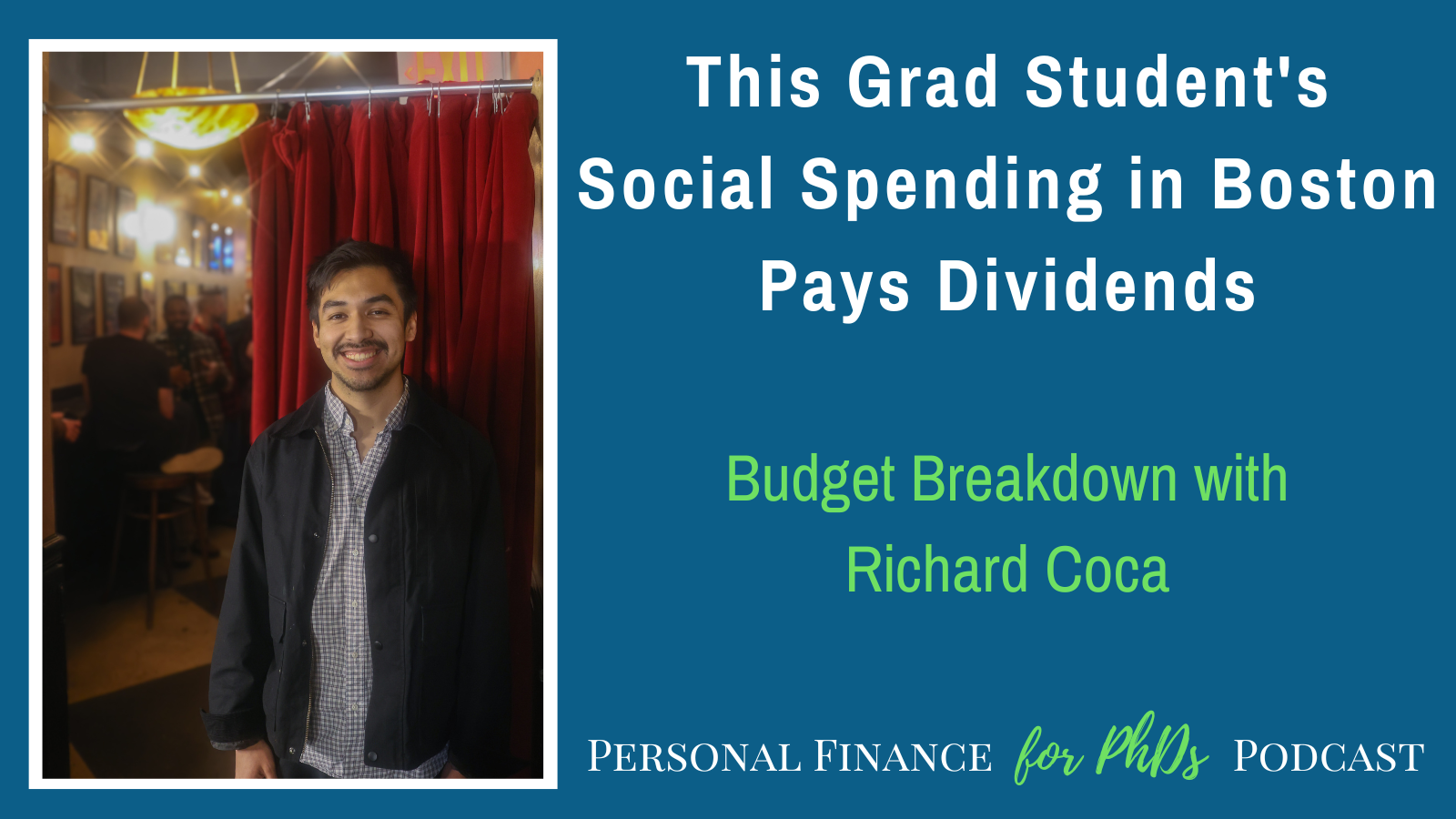
This Grad Student Puts Half Her Stipend Paycheck into High-Yield Savings

September 9, 2024 by Jill Hoffman

In this episode, Emily interviews Maggie Canady, a rising second-year grad student at the University of California at Irvine, on her budget breakdown. Maggie gives us a peek into her life via her top five expenses each month, which are rent, car insurance, groceries, utilities, and travel. Despite taking a pay cut when she started grad school, Maggie maintains close to a 50% savings rate on her stipend. Maggie and Emily end their conversation by discussing how Maggie can get started with passive investing.

Links mentioned in the Episode

  • PF for PhDs Quarterly Estimated Tax Workshop
  • Host a PF for PhDs Seminar at Your Institution
  • Emily’s E-mail Address
  • PF for PhDs Subscribe to Mailing List
  • PF for PhDs Podcast Hub
  • Maggie Canady’s Website
  • Maggie Canady’s Twitter
This Grad Student Puts Half Her Stipend Paycheck into High-Yield Savings

Teaser

Maggie (00:00): I live in a, uh, beautiful, like two story craftsman house here in LA and I have three other roommates. One of them is my boyfriend. Our house is, uh, $4,500 like total, and there’s four roommates total, and we split it four ways evenly. So we each pay, um, 1100. My boyfriend and I share, um, the like master bedroom, the larger bedroom. Yeah, I’ve lived in this house for two years now. It’s been great. I love my place and that’s also why I’m kind of doing the commute from LA to Irvine because I really love the community I’ve built out here.

Introduction

Emily (00:44): Welcome to the Personal Finance for PhDs Podcast: A Higher Education in Personal Finance. This podcast is for PhDs and PhDs-to-be who want to explore the hidden curriculum of finances to learn the best practices for money management, career advancement, and advocacy for yourself and others. I’m your host, Dr. Emily Roberts, a financial educator specializing in early-career PhDs and founder of Personal Finance for PhDs.

Emily (01:13): This is Season 19, Episode 2, and today my guest is Maggie Canady, a rising second-year grad student at the University of California, Irvine, and we break down her budget. Maggie gives us a peek into her life via her top five expenses each month, which are rent, car insurance, groceries, utilities, and travel. Despite taking a pay cut when she started grad school, Maggie maintains close to a 50% savings rate on her stipend. Maggie and I end our conversation by discussing how Maggie can get started with passive investing.

Emily (01:47): Let’s talk fellowship taxes for a minute here. These action items are for you if you recently switched or will soon switch onto non-W-2 fellowship income as a grad student, postdoc, or postbac; you are a US citizen, resident, or resident for tax purposes; and you are not having income tax withheld from your stipend or salary. Action item #1: Fill out the Estimated Tax Worksheet on page 8 of IRS Form 1040-ES. This worksheet will estimate how much income tax you will owe in 2024 and tell you whether you are required to make manual tax payments on a quarterly basis. The next quarterly estimated tax due date is September 16, 2024. Action item #2: Whether you are required to make estimated tax payments or pay a lump sum at time tax, open a separate, named savings account for your future tax payments. Calculate the fraction of each paycheck that will ultimately go toward tax and set up an automated recurring transfer from your checking account to your tax savings account to prepare for that bill. This is what I call a system of self-withholding, and I suggest putting it in place starting with your very first fellowship paycheck so that you don’t get into a financial bind when the payment deadline arrives.

Emily (03:07): If you need some help with the Estimated Tax Worksheet or want to ask me a question, please consider joining my workshop, Quarterly Estimated Tax for Fellowship Recipients. It explains every line of the worksheet and answers the common questions that PhD trainees have about estimated tax. The workshop includes 1.75 hours of video content, a spreadsheet, and invitations to at least one live Q&A call each quarter this tax year. The next Q&A call is this coming Friday, September 13, 2024. If you want to purchase this workshop as an individual, go to PF fsor PhDs dot com slash Q E tax. You can find the show notes for this episode at PFforPhDs.com/s19e2/. Without further ado, here’s my interview with Maggie Canady.

Will You Please Introduce Yourself Further?

Emily (04:14): I am delighted to have joining me on the podcast today, Maggie Canady. She is a current graduate student at UC Irvine, and today we’re doing a budget breakdown and we haven’t done one of those in a really long time, so I’m very excited about it. So Maggie, would you please introduce yourself to the audience a little bit further?

Maggie (04:30): Yes. Hi, everyone and Hi, Dr. Emily Roberts. That’s so, I’m so happy to be here. Um, my name is Maggie Canady. I am a rising second year clinical psych PhD student at UC Irvine. I’m originally from Dallas, Texas. I received my bachelor’s degree from Harvard in 2020 where I majored in psychology and minored in dance. Um, really broadly, my research interests, interests include understanding the risk and resilience factors around trauma exposure, as well as, um, learning about culturally responsive trauma interventions.

Emily (05:07): Okay, fascinating. And actually now that I know that you had a little bit of a gap between finishing undergrad and starting graduate school, let us know what you were doing during that period.

Maggie (05:17): Yeah, so my first year after I graduated and obviously graduated during the pandemic, I received a traveling fellowship from Harvard and I was supposed to be in Southeast Asia for a year. Um, that obviously couldn’t happen, so they said, okay, we’ll still give you the money, um, but you have to choose and create a project that stays in one state. So for my first year I was interviewing and photographing mixed race individuals and doing a, um, kind of like ethnographic project, um, about mixed race identity. And then after that I worked full time as a research assistant at the University of Southern California.

Emily (05:54): Okay. And I’m trying to sort of place some numbers on those kinds of jobs, like did you take a pay decrease when you started graduate school from that assistantship position?

Maggie (06:04): Yes, I did. So, um, at USC I was making about, I think I was making about $48,000 a year, $49,000 a year, and then went to a graduate student, uh, stipend <laugh> after that.

Current Stipend, Additional Income, and Household Size

Emily (06:17): Yeah, go ahead. Tell us what is your stipend right now?

Maggie (06:20): So this past year as a first year, I made a total of $29,125. Um, and that was for nine months of working as a part-time teaching assistant, which is defined as about 20 hours of work a week. Um, I also received a diversity recruitment fellowship of about $5,000 when I first started, and then I also received a merit award to help with summer costs, um, which I received at the beginning of the summer for $3,000. Um, this upcoming year I’ll make about $35,000, and this is due to the 2022 strike, um, that happened all across UC campuses. So starting, um, this, this year, the lowest paid workers will make $34,000. And then based on your level of experience, you make a little bit more incrementally. So this upcoming year I’ll make 35,000, which is great.

Emily (07:14): And that’s again for teaching assistantship, is that right?

Maggie (07:16): Yes, uhhuh.

Emily (07:17): Wow, I’m so glad to hear that. I’m so glad to hear that was the, the effect and also that you had some bridge funding for last year to kind of bring you closer up to that a number that you know, we will get to in this upcoming year. That’s really, really good to hear. Do you have any sources of income outside of your stipend?

Maggie (07:35): I occasionally tutor and babysit, but it’s very like one off and kind of just if my schedule allows, I’m also a dancer and I’ll get paid for gigs occasionally, um, like music video gigs or performance gigs. Um, but that’s more for like my own interest and like personhood as opposed to depending on that as, as like a source of income.

Emily (07:59): I see. Okay. And is there anyone other than you in your household, any living beings?

Maggie (08:05): Living beings? Yes. So I live in a, uh, beautiful, like two story craftsman house here in LA and I have three other roommates. One of them is my boyfriend, um, my boyfriend and I split a lot of the house grocery expenses, but when I pay my taxes at the end of the year, it’s just me.

Emily (08:24): Gotcha. Um, so no dependents, but you do have people, your boyfriend and other roommates that you’re sharing expenses with.

Maggie (08:30): Exactly.

Current Financial Goals and 50% Savings Rate

Emily (08:32): Alright. Are you currently working towards any financial goals?

Maggie (08:36): So I would eventually love to buy a house that feels a little bit, um, kind of like of a, a dream in the far distance right now, just with my stipend and how crazy California is with, um, like yeah. Houses. Um, but it’s definitely in the back of my mind, mind and when I put money into savings, that’s kind of what I’m thinking. I also love to travel, so I feel like I’m always kind of planning a trip or thinking about a trip and having money tucked away for a trip. I feel like when I think about my budget budgeting categories, that’s definitely one of them that I’m always, um, saving money for.

Emily (09:15): Okay. So you are, you do have some kind of savings rate for this like eventual house goal, um, and that could be several years away. Are you keeping that money in, in cash right now in like a savings account or are you investing it in some way?

Maggie (09:29): So I have, uh, Robin Hood and I am investing it, but I also have a high yield savings account. Um, and so I, this is like kind of one of my like tips or things that I learned this year, but, um, my 50% of my direct deposit goes directly to a high yield savings account and that, uh, a, that high-yield savings account is not connected to any of my credit cards or any of the ways that I spend money. So I feel like it’s just like this pot of money that, um, is really growing, which is really awesome. Um, and then I will also invest, um, invest like kind of every other month or so depending on like my schedule.

Emily (10:06): Wow, okay. A 50% savings rate. So once the money goes into the high yield savings account, does it come back out for spending in the present, like for travel, for example, like you just mentioned?

Maggie (10:16): I try not to, I try to really use like my 50% and, and go from there, but I definitely can pull from it and like have in the past, but I really try not to, I try to not touch it.

Emily (10:28): Okay. Wow. So you’re, you’re close to a 50% savings rate then. Yeah. This is something I’ve never heard of from <laugh>, a graduate students, so, okay. Now I’m very interested to hear how you’re managing your expenses to make that happen on the stipend numbers, um, that you mentioned. So that’s incredible. Let’s start talking about that. So we’re gonna go through your top five largest monthly expenses. And tell me first, are we hearing about these top five expenses based on like your average spending over the last year or like what you budget or like just last month or how did you come to this list?

Budget Breakdown: Housing and Car Insurance

Maggie (10:58): Yeah, so a couple of them are set in stone. Like my rent for instance is set in stone, that’s every month. My car insurance, I pay, um, every six months, so I just averaged it out for each month, but I pay it kind of in bulk. Um, and then my groceries, utilities, and, um, like flights that I pay for, um, that’s kind of an average. Um, so yeah, my rent is my biggest expense. Of course, it’s $1,100 a month. Um, so I’m, I immediately automatically budgeting for that.

Emily (11:30): Okay. So $1,100 per month for rent. Are you sharing? Okay. Just tell me more about the house. Like how many bedrooms are there? Yeah, how many people are there? Are you sharing a bedroom with your boyfriend and then you’re splitting it? Like, just tell me how you came to this number and what the house looks like.

Maggie (11:43): Yes, so fair. So, um, our house is, uh, $4,500, um, like total and there’s four roommates total and we split it four ways evenly. So we each pay, um, 1100. Well, we used to pay, we used to pay 1125 each. Um, but we have like a apartment. It’s kind of a long story, but now we each pay 1100, um, and we split it evenly. My boyfriend and I share, um, the like master bedroom, the larger bedroom. Um, and yeah, I’ve lived, uh, in this house for two years now. Um, we’ve lived together for coming up on four years. It’s about like three and a half right now. Um, and we’ve always split the rent evenly. Um, yeah, it’s been great. I love my place and that’s also why I’m kind of doing the commute from LA to Irvine because I really love the community I’ve built out here. Um, so yeah, 1100 and that’s what everyone in the house pays.

Emily (12:40): Gotcha, okay. Yes. ’cause I didn’t realize that you weren’t close to the university. So how long was your commute?

Maggie (12:46): My commute is anywhere <laugh> from 40 minutes to an hour and a half. Um, but I usually take the train and the train is like a clean an hour, 20 door to door, and I’m doing work on the train, et cetera. But if I drive, it varies depending on the traffic.

Emily (13:05): And do you commute every day? Every weekday?

Maggie (13:08): I, so during the school year, I commuted every day for the first two quarters, so about two thirds of the year. And then the last quarter I commuted for, I think it was, I think it was three days a week. Um, it really just depends on the quarter. It, and like these first two years are the most class intensive obviously. Um, so I will be commuting every day. And then the expectation is that as classes lessen more of my research becomes kind of independent. I won’t have to commute as much. And so it was like this real back and forth that I went of like, okay, do I move down to Irvine and like, do I kind of lose this community that I have but I’m closer to school or do I invest in kind of like my personal happiness and then have this balance? Um, and obviously I cho chose to stay in Los Angeles, um, and it’s, it’s been great. Um, occasionally I’ll house sit down in Irvine, which I guess is also, I don’t make money from it, but it is like kind of a relief from the commute. So it is an investment in some sorts but I’ll house, sit, dog sit, uh, closer, closer to campus.

Emily (14:12): I’m curious, um, how you and your roommates found this house,

Maggie (14:17): Craigslist, <laugh>? Yeah, so we were living in, um, echo Park, um, which is different neighborhood in la and we were looking for a new place that was slightly bigger. So we looked for about a year, really, I think eight years, eight months to a year. Um, and then my boyfriend found this place on Craigslist before it was on Zillow in the other, um, rental websites. So we were the first to apply. Um, we had three interviews with the landlords because they wanted to, um, rent to a family. Um, yeah, so they wanted to rent to a family. Um, but we convinced them that, you know, we all have incomes and steady incomes and that we’re reliable. So it’s been great. They’ve been great landlords.

Emily (15:05): Oh, that’s really interesting. I’m glad I asked about that. <laugh>. Um, yeah, ’cause I don’t talk with too many graduate students who live in houses with multiple roommates, but I think it can be a very cost effective, um, situation. So anyway, I’m, I’m just glad to hear all those details about yours.

Maggie (15:19): Oh my gosh. Yeah. I feel like it’s just like such a great perk of Los Angeles, that there’s so many beautiful, like artisanal houses and we have a front in the backyard and laundry and, you know, AC and uh, a fireplace. Like there’s so many, like, I don’t know, homey perks of it. And it is cost effective, which is sick.

Emily (15:37): All right. Number two, expense

Maggie (15:40): Car insurance. Um, so I pay $300 a month for a car insurance, which is definitely on the higher end. Um, I recently got an electric vehicle and it was a more expensive premium because of that. Um, yeah, my car insurance expires in September, so I’m definitely gonna be shopping around for a cheaper premium. So if you have any recommendations, I’ll definitely take them. Um, yeah, so it’s 300 a month.

Emily (16:10): I actually don’t have recommendations because I just found out that our car insurance company is pulling out of California.

Maggie (16:16): Wait, mine too.

Emily (16:16): I was using E-surance.

Maggie (16:18): Yes, same.

Emily (16:19): Okay. So we will both be shopping around.

Maggie (16:21): Okay.

Emily (16:21): For insurance on our electric vehicles. ’cause I also recently got an electric vehicle. Um, tell me, yeah, you too. How did you acquire this car? Because I’m not seeing a car payment on your list of expenses.

Maggie (16:33): Yeah, so I had a little electric car, um, before this one. It was like a little 2015 Nissan. Um, and I bought it on Facebook marketplace. Um, and it just didn’t go the distance. Like I had to charge it constantly, um, and all of that. So I was selling this car, I I put it on Facebook marketplace and then after about three to four months on Facebook marketplace, someone, um, purchased it. So I had, um, like that immediate check. Um, and I had, I’d say about like, so the car was 30, $37,000. I had this like about $10,000, $11,000 check from the car I sold. So then it was $26,000. I had about half of that money that I could, you know, I had allotted to like buy a new car. And then my parents helped me with the last like $12,000. So that’s how I bought the car full out. And then when I got my tax return in April, I got $7,500 back from that that I was able to give back to my parents. Um, so, so I’m, I know that math is kind of hard to like, speak out loud without seeing it. Uh, my parents probably gave about $5,000 to help me just like pay it out in full. And I had the rest in savings, the rest with selling my last car and then the, uh, tax stipend.

Emily (18:02): Yeah. Amazing. Um, I guess you probably had a pretty high savings rate during your last position as well, right? Making more money living in this same place. It sounds like same people.

Maggie (18:13): Mm-Hmm. <affirmative>.

Emily (18:13): So similar rent.

Maggie (18:15): Mm-Hmm. <affirmative>.

Emily (18:15): Um, yeah, so I, I see how that savings account was, was healthy enough to help you with that purchase, so that’s amazing not to have a car payment during graduate school, but, uh, yeah, hopefully we can get that insurance, uh, monthly cost down a little bit. I mean, you and I were probably both with insurance because it was a pretty good bargain <laugh> the last time we looked around, but hopefully there will be another bargain that we can both find. Um,

Maggie (18:36): I hope so. Yeah. <laugh>.

Emily (18:37): Yeah. Anything else you wanna say about that? Car insurance?

Maggie (18:40): Yeah, I guess this is more of like, um, kind of like a bigger thing, but, um, like my, my parents are like huge savers and I feel like I have like a very kind of like conservative background when it comes to money of like, okay, I’m going to like save my money and like, really just like, be aware of like, what’s coming in. And so I feel like I, I’m like always like, like nesting acorns or something, <laugh> with my money, which has been, has really paid off with like these bigger, um, payments. Um, so yeah, I, I think that that’s where it’s coming from of like, ’cause I know it’s like kind of insane to have like 50% of my income going to payments. Uh, sorry, 50% of my like, um, income’s going to savings. Um, but yeah, so I think that that’s where that’s coming from of this like very like, almost like must conserve my resources. Um, yeah.

Emily (19:35): Okay. Well let’s put a pin in that. We’ll come back to it at the end of the interview.

Commercial

Emily (19:41): Emily here for a brief interlude. Would you like to learn directly from me on a personal finance topic, such as taxes, budgeting, investing, and goal-setting, each tailored specifically for graduate students and postdocs? I offer workshops on these topics and more in a variety of formats, and I’m now booking for the 2024-2025 academic year. If you would like to bring my content to your institution, would you please recommend me as a speaker or facilitator to your university, graduate school, graduate student association, or postdoc office? My seminars are usually slated as professional development or personal wellness. Ask the potential host to go to PFforPhDs.com/financial-education/ or simply email me at [email protected] to start the process. I really appreciate these recommendations, which are the best way for me to start a conversation with a potential host. The paid work I do with universities and institutes enables me to keep producing this podcast and all my other free resources. Thank you in advance if you decide to issue a recommendation! Now back to our interview.

Budget Breakdown: Groceries, Utilities, and Travel

Emily (20:56): Let’s continue with our list. What’s your third largest monthly expense?

Maggie (21:02): Um, my third largest is groceries. And so I split this with my boyfriend. Um, but even after splitting, it’s anywhere between like one 50 to two 50 a month. Um, I love to cook and we’re always kind of cooking meals, so that’s part of it and that’s more cost effective. But groceries are expensive. Like I can see the difference even from being here since 2020. Like it’s just, it’s just crazy.

Emily (21:30): Yeah. But that number actually seems pretty low to me. I mean, I also <laugh> grocery shopping, cook for a family of four, but it’s two little kids, so it’s not that much more than, you know, just two adults and, uh, we spend quite a bit more than that. So you must be doing something right. Tell us about a few of your go-to meals.

Maggie (21:47): So we have, um, a Costco membership. And so like, we’ll get like a rotisserie chicken, like $5 rotisserie chicken from Costco.

Emily (21:54): The loss leader.

Maggie (21:56): Um, Yes, love, um, big fried rice, stir fry kind of people. I just made like a shrimp fried rice, so frozen shrimp and then whatever veggies I have. And, um, we buy like a 20 pound thing of rice, which is awesome. Um, soups, I, not really right now ’cause it’s summer, but I’m a big soup girl <laugh>, and that’ll last, like, that’ll be made in bulk on like a Sunday, and then I’ll use that as like meal prep for the week. Um, and then I eat like, pretty light breakfasts, like I’ll buy like a pack of like a big thing of yogurt and like granola. Um, yeah. Yeah.

Emily (22:36): So eating out does not appear in your top five expenses, but let us know where that falls in the list. Like, are you eating out, how often do you do? So,

Maggie (22:45): Uh, it really depends on my social battery <laugh>, which I feel is like this pendulum swing. And, um, like, so I was in Europe, um, this, um, at the first two weeks of this month, and like my shopping was like through the roof, like my eating out obviously because, you know, we were on vacation and so like when I came back I like shut my doors, like grabbed my groceries and like, have been cooking, like eating in just because like I can’t, like eat out for the whole month. Um, and then when I’m back in LA like it’ll kind of depend on like, oh, okay. I’ll feel like, oh, I have a little bit more free time in my schedule, so I’ll see more of my friends and then we’ll like go like, grab a drink or we’ll go out to eat. Um, and then I’ll like feel like, oh no, I’m way too stressed. I have to like, just can’t see anyone have to stay in and then I’ll just do that. Um, yeah, so it really kind of varies. Um, but when I, I do go out, I try to just like go for coffee or like, um, frozen yogurt or something, like, something that it’s like still I’m, I’m still paying for something, but I’m not paying like 30 bucks for a meal, you know?

Emily (23:56): Mm-Hmm. <affirmative> especially if your purpose is to see people, then it doesn’t really matter how much money you’re spending on the food or whatever, it’s more having this setting to to be together with other people.

Maggie (24:06): Yes, exactly.

Emily (24:07): And how about, um, takeout or, you know, DoorDash, GrubHub? Do you do any of that?

Maggie (24:13): So, no, my mom owns a restaurant. She’s had a restaurant for like 30 years and I worked for her growing up. Um, and then even throughout college whenever I was back. Um, and GrubHub and DoorDash just like are so awful to small business owners. Um, and so kind of seeing like behind the scenes, I was just like, I, I cannot endorse this. So it’s like more of a personal value. Um, but I, I don’t, I don’t, DoorDash, yes, <laugh>. Um, I’d say utilities, they average about $75 a month. Um, it’s $25 for, um, wifi and then like somewhere between like, like 10 to $20 for gas. And then depending on the month, the rest of it is, um, uh, electricity. So anywhere, honestly, probably like closer to 75 to a hundred dollars a month. Like it really just depend, like we’ve had the ac blasting this, you know, this past month, so it’s going, it’s gonna be a lot higher than usual, but then kind of in the fall and spring it’s, it’s very, very little, very minimal.

Emily (25:26): Yeah. And this is one of those areas where having the multiple roommates really, really helps because yes, your utilities go up a little bit more with the higher square footage, but things like internet, like that’s just gonna scale down. Right, exactly.

Maggie (25:38): Yeah. Yeah, yeah. That’s exactly right.

Emily (25:40): Sounds great. And your last expense? The fifth one,

Maggie (25:43): My last one, it’s, uh, most recently been flights. Um, I’ve been trying to buy like my holiday flights early and then, like I said, I was in Europe, so I bought those flights. Um, the most recent flight I bought was for my parents actually to come visit me. Uh, my dad had a coupon and then for my mom’s, uh, ticket was $400 round trip. And so like kind of going back to that, like travel as like a bucket for my budgeting, like it’s, it’s one of those things that I’m like, I will be traveling home for the holidays or like, I want my family to come see me or I wanna go on vacation. So it’s one of those things that I just, I’m like, okay, this is where money is gonna go, you know?

Emily (26:24): Yeah. And with a 50% savings rate, nobody can argue with spending a little bit on travel as well. Um, tell us about your, um, strategies around buying flights, if there are any. Like, are you loyal to any airlines? Do you use any certain credit cards? Like how do you work this?

Travel Credit Cards

Maggie (26:40): So I have a Southwest credit card, which honestly has not been as great as I expected. Um, but I’m from Dallas and uh, Southwest, um, has like love, uh, love Field Airport, which is 10 minutes from my house. So it’s, um, it’s nice to have the Southwest credit card because I am building points on that and I try to use those when I can, but the flights are usually quite expensive still. I also have a, um, I have to look at the exact one, but it’s a Chase, like traveling credit card and that’s been great.

Emily (27:14): The Sapphire Preferred, I’m assuming?

Maggie (27:16): Yes.

Emily (27:16): Okay.

Maggie (27:16): Yes, the Sapphire Preferred. I love that card. I try to do like all of my expenses on that card and that card actually paid for my flight to Europe this past time, like after, like, just spending for the entire year. And I love that. So those are my two. I also have a Amex Blue Preferred, which gives 6% back on groceries. Um, and so I’ll just give that back as like a, um, kind of like cash, like return. Um, so yeah, those are my, my top three.

Emily (27:51): Uh, what airline did you use for your trip to Europe?

Maggie (27:53): Oh, great question. I used, um, I think it was, I’m, I will probably get the name wrong. France Air or like Air France. Mm-Hmm. <affirmative>. Okay. Yeah. Um, because they’re a partner with Chase and so I was able to transfer my points from Chase to Air France.

Emily (28:10): Yeah, I’m, I’m quite familiar with the Chase system because I also was trying to be loyal to Southwest for a little while. Um, it’s a little bit easier actually with the family because we can do the Southwest Companion Pass, which is a really great like, value. Are you familiar with it?

Maggie (28:26): Yes. That’s amazing.

Emily (28:27): Yeah, so like you can always take one for the listeners once you earn the companion pass. You can always take one when, when the primary person books a flight, they can always take a companion with them on any flight, unlike some other airlines where it’s like once per year. Nope, it’s every flight as long as there’s a seat available, um, for free, which is amazing. Uh, but anyway, the Chase points Trav, uh, transfer to Southwest as you probably know. So I was working that system for a little while. And smart. Yeah. Seeing where else the Chase points could go. ’cause we also have the, um, the Sapphire preferred card, but I haven’t gotten into any of the other systems yet. Like I’m not an Amex, you know, so it’s something to explore and see what those partners are. ’cause yeah, I mean, using credit card rewards for travel seems to be the kind of the biggest bang for your buck.

Maggie (29:07): Yes, I totally agree. And I feel like I’m like so sold on Chase as like my credit card because of how many flights and like how many points I get that I can then transfer. I’ve heard that for American Express, like it’ll start paying off once you have like the platinum or whatever, like the highest kind of credit cards are, and I’m just not, I’m just not ready to spend like $600 a year on a credit card. So I haven’t yet, but <laugh> maybe one day.

Emily (29:34): Um, yeah. Well this is really exciting. So you’re spending quite a bit on travel, but you’re also trying to optimize as what, as much as you can with points and so forth. Mm-Hmm. <affirmative>. Um, and it seems like you’re sort of using that, uh, save the high yield savings account that you split your paycheck into as, um, what I would call a, a targeted savings account, at least to a degree. Mm-Hmm. <affirmative> because you can pull from that account when you have these like large flights or whatever coming up, right?

Maggie (29:57): Exactly. Yeah, you’ve got it exactly on the head.

Saving Vs. Investing

Emily (30:01): Okay. Um, so the question I kind of wanted to come back to is why are you saving and not investing given that you have quite a high savings rate and you could be doing some of both?

Maggie (30:12): Yeah, that’s a great question. I honestly feel like it’s from a, like lack of knowledge around investing. Like I know that investing kind of consistently and monthly and like diversifying your assets is the way to go, but I feel like there’s still a bit of fear for me there. And kind of going back to this idea of like where my parents came from of like saving, like my, my mom and I just got into investing in 2020, so it’s kind of this new endeavor for both of us and she’s really gotten into investing, um, in the past few years. Um, and for me, like, it’s just, I haven’t put that like energy into like really knowing what I’m doing. Um, but I feel like that’s potentially like a financial goal I can work on, um, alongside like saving for a house, um, just because there is like so many benefits, um, to it. So if you have any advice for me, I would definitely take it.

Emily (31:14): Yeah, I mean, I, I said a second ago that you weren’t investing, but that’s not quite true, right? Because you are using Robinhood Mm-Hmm. <affirmative> you said sort of inconsistently. Mm-Hmm. <affirmative>. What kind of investing are you doing with Robinhood? Like what are you investing in?

Maggie (31:26): Um, like I’ll invest, you know, I have to honestly go back and like, look, it’s kind of all over the map. Like, like I, it would be like Apple <laugh>,

Emily (31:37): But single stocks is what we’re talking about.

Maggie (31:39): Yes. Yeah, Exactly.

Emily (31:39): Not Like, um, ETFs or something

Maggie (31:41): Like that. No, not ETFs. Yeah. Okay. And see, like I, I feel like I can feel myself like not even really know, like exactly like feel, not feeling super confident in like having a conversation about it because I, it’s just, it’s like a place where there’s a big gap in my financial knowledge. Um, so yeah, I think that that’s definitely like kind of a next step for me. Um, yeah.

Emily (32:04): Yeah. Well I have, I have content recommendations for you, please. Are you more of a reader or more of a podcast listener? Um,

Maggie (32:13): Podcasts, I think for, especially with my drives,

Emily (32:16): So there’s a very, uh, well known person in the, uh, the fire space, the financial independence and early retirement space. His name is JL Collins. Mm-Hmm. <affirmative>. And he has a book, if you are a reader, I would recommend his book. Okay. But since you’re a listener, I would say find his interviews, which he goes on a lot of different podcasts, but he’s been on, for example, the Choose Fi podcast several times. So I, I would go find like the earliest one or two interviews where they’re probably going over the basics of, uh, his book is titled The Simple Path to Wealth. So it’s all about this strategy, which is passive investing, which is investing in, um, index funds and ETFs that are based on indices. And so it’s a very like set it and forget it kind of investing strategy, which I really like. And it’s the kind of strategy that I teach also because it’s the most effective Mm-Hmm. <affirmative>

Emily (33:02): In terms of the money that you’ll have at the end of the decades, like in your pocket because you’re paying very little in fees and you’re not letting your, um, psychology and your human emotions, you know, get in the, in the way, in the way of like your investing strategy. So I would go find some interviews with him, definitely on Choose fi. You can probably just search like your podcast player for Col j Collins and hopefully some interviews will come up. But choose FI for sure, has him. Um, I might also suggest Afford Anything that’s another podcast name. I bet he’s been on that podcast too, although I haven’t listened through all the archives extensively. So yeah, just find, find a few interviews with him and see if you sort of like his argument, his philosophy.

Maggie (33:42): This is so helpful. Thank you so much. And I will definitely check out The Simple Path to Wealth. Um, I have like two free audio book credits for some reason right now, so that’ll be one of ’em. <laugh>.

Emily (33:54): Yeah, I don’t know if it’s an audio book. I certainly heard Hope it is Okay, because it is very popular, so hopefully they have turned it into an audio book. But I’m curious, um, whether he the author is the one who’s reading it or whether they hired someone else. He has a very like deep like gravelly like old man voice, which actually think would be great for an audio book. So, um, yeah, I’m curious if if he’s the one who’s who, uh, read it or not. Um, but yeah, start, start there, I would say.

Maggie (34:19): Okay. I definitely will. And if, like, I’ll definitely take a book recommendation too, especially with the summer. I have like ex like exponentially more free time. Mm-Hmm. So

Emily (34:27): The one After The Simple Path to Wealth that’s also great on investing is Ramit Sethi’s book, I Will Teach You To Be Rich. Mm-Hmm. And that’s on more broad personal finance topics, but he’s, he does have a couple chapters devoted to investing, passive investing. So that would be another good one to read.

Maggie (34:42): Thank you. That’s so helpful.

Emily (34:44): Oh, sure. I mean, you are already, honestly most of the way to winning the game by just having like a very high savings rate on obviously a limited income and really dialing in your expenses. Obviously you’ve thought a lot about what you value, um, in the travel and so forth. So like you’re already doing a ton of stuff really well, and if you decide you want to, you know, devote some of that very high savings rate toward investing, you’ll really be able to grow your money, um, over the next few years. And even, um, this is not like advice, but depending on how far out that potential house purchase is, um, you know, a savings account might not be the most appropriate place for it. Some conservative invest investments might be an appropriate place, but it kinda depends on what your timeline is on, on that front. So it’s just something to think about. Like you could do a split, right? You can do a certain percentage into just straight savings, a certain percentage into investing. Maybe some of it’s for long term, some is for medium term. Mm-Hmm. <affirmative>, um, again with high savings rate you kind of can’t go wrong. Um, yeah. With choosing where you wanna put that money.

Maggie (35:42): Yeah, that’s a great point. Yeah. Okay. This is a great summer project. I am excited to Yeah. Kinda go down this route.

Emily (35:50): Yeah. Um, I hope the listeners enjoyed this because this is a really, you know, unique example of like living in a very high cost of living area. But as we were talking about kind of setting those highest, you know, the, the expenses that are, have the potential be the biggest in the budget, the rent, the transportation, getting those set at the, the best level that you can and sort of letting everything else fall where it may, and, and doing that, um, strategy of paying yourself first by splitting your paycheck. These are really great examples. So I wanna say to the listeners, if anybody else wants to come on and do a budget breakdown, I love doing these kinds of episodes. I wanna hear from people all over the country with all different kinds of stipends, and it’ll be every one single one is gonna be a very different story. Right.

Best Financial Advice for Another Early-Career PhD

Emily (36:29): Um, so Maggie, thank you so much for coming on the podcast. I’d love to ask you the final question that I end all my interviews with, which is, what is your best financial advice for another early career PhD? And it could be something that we’ve touched on already in the interview, or it could be something completely new.

Maggie (36:44): Ooh, okay. Yes. Well, a couple things We’ve already touched on. High-yield savings account. Definitely recommend that. Um, I use SoFi because I had a great offer. Um, so kind of look at whatever has, you know, a great, uh, high interest rate. Um, like I said, the, you know, trying to like immediately put my direct deposit into savings and into that high yield savings account, so I don’t even have to think about it, um, was like kind of a great, like passive like, or, you know, intentional act that now has become like routine. So that was really helpful. Um, I listened to, um, financial Feminists by Tori, uh, Dunlap this, uh, at the beginning of this year. And I feel like it was a really like great, um, like supportive start into thinking about finances, um, because she really breaks things down and you don’t feel like overwhelmed or Yeah, she, it just feels like it comes from like a context in a place in a positionality that I also, uh, subscribe to.

Emily (37:48): And that was the audiobook version, right? Yes. She has a podcast as well. I don’t think it’s called Financial Feminist though.

Maggie (37:53): No, it was the audiobook. Yes. Great distinction. Um, and that’s where I learned about, um, kind of like values and having like when you’re thinking about budgeting, kind of breaking up the budgeting into buckets and like three buckets that you care about. Um, and that was a really helpful framework. And then this is kind of like a small piece of advice. Sorry, I feel like I, I just have my list, so I was like, oh, lemme just say it. Go for it. Um, but institutions have money and like applying for stuff, my first year was really fruitful. Like I was a mentor and received a stipend, you know, like I was a volunteer for a conference and I received a stipend. Um, yeah, just like reading the emails weekly, weekly emails you might get from your institution and just like checking those for additional pockets of money.

Emily (38:42): Great. Great advice. Um, you won’t be needing it as much, right? With a massive pay increase that you’re gonna enjoy this year, but should still be available to you should you want to access those opportunities and amazing. Well, Maggie, thank you so much again for volunteering to come on the podcast and sharing your life with us for the last half hour.

Maggie (38:59): Of course. And thank you so much for having this podcast. It’s so helpful for people like me. So yeah, I really appreciate you.

Emily (39:06): You’re absolutely welcome.

Outtro

Emily (39:16): Listeners, thank you for joining me for this episode! I have a gift for you! You know that final question I ask of all my guests regarding their best financial advice? My team has collected short summaries of all the answers ever given on the podcast into a document that is updated with each new episode release. You can gain access to it by registering for my mailing list at PFforPhDs.com/advice/. Would you like to access transcripts or videos of each episode? I link the show notes for each episode from PFforPhDs.com/podcast/. See you in the next episode, and remember: You don’t have to have a PhD to succeed with personal finance… but it helps! Nothing you hear on this podcast should be taken as financial, tax, or legal advice for any individual. The music is “Stages of Awakening” by Podington Bear from the Free Music Archive and is shared under CC by NC. Podcast editing by Dr. Lourdes Bobbio and show notes creation by Dr. Jill Hoffman.
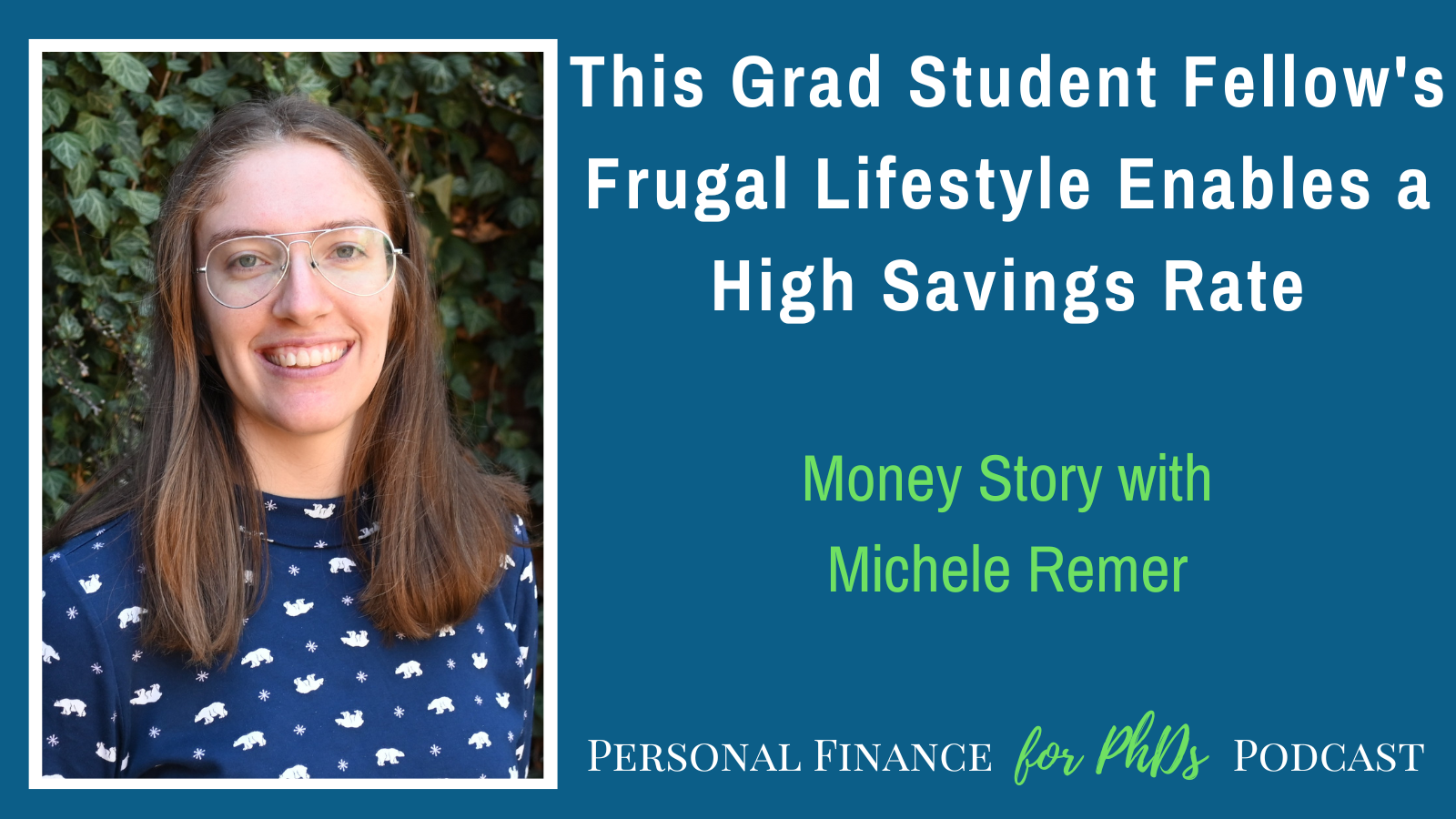
This PhD Student Budgets Manually and Dynamically

May 29, 2023 by Meryem Ok Leave a Comment

In this episode, Emily interviews Ariel Floro, a second-year PhD student at the Buck Institute for Research on Aging in northern California. Ariel details her budget, from the mechanics of her system to the emotional benefits she experiences. Ariel started budgeting after finishing her bachelor’s while she worked as a research associate, and she was able to adapt that system to still work for her with a lower income in a higher cost of living area. Ariel explains why she believes budgeting is an essential activity for every graduate student.

Links Mentioned in the Episode

  • Emily’s E-mail Address
  • PF for PhDs S14E11 Show Notes
  • Budgeting Apps
    • Mint
    • EveryDollar
  • PF for PhDs Season 15 Contribution Sign-Up
  • PF for PhDs Subscribe to Mailing List (Access Advice Document)
  • PF for PhDs Podcast Hub (Show Notes)
Image for PF for PhDs S14E11: This PhD Student Budgets Manually and Dynamically

Teaser

00:00:00:00 Ariel: It just gives more control and power overall and not being so, not feeling like we’re like completely powerless to, you know, grad students just make this and that’s just how it is. And I’m poor and I can’t really do anything. And I know it is really hard to live on the income that we have now, but it gives us some control back and some power so that we can really set ourselves up well financially in the future.

Introduction

00:00:27:20 Emily: Welcome to the Personal Finance for PhDs Podcast: A Higher Education in Personal Finance. I’m your host, Dr. Emily Roberts, a financial educator specializing in early-career PhDs and founder of Personal Finance for PhDs. This podcast is for PhDs and PhDs-to-be who want to explore the hidden curriculum of finances to learn the best practices for money management, career advancement, and advocacy for yourself and others. This is Season 14, Episode 11, and today my guest is Ariel Floro, a second-year PhD student at the Buck Institute for Research on Aging in northern California. Ariel details her budget, from the mechanics of her system to the emotional benefits she experiences. Ariel started budgeting after finishing her bachelor’s while she worked as a research associate, and she was able to adapt that system to still work for her with a lower income in a higher cost of living area. Ariel concludes by explaining why she believes budgeting is an essential activity for every graduate student.

00:01:29:22 Emily: If you’ve been getting value from this podcast, would you please do me a favor? This is a perfect time of year to recommend me and my work to a potential host or sponsor at your university or alma mater. In case you didn’t know, I offer numerous personal finance seminars and workshops on topics like financial goals, investing, budgeting, and debt repayment, all tailored for graduate students, postdocs, and/or prospective graduate students. These are in addition to my tax workshops. If you think that you and your peers would benefit from my teaching in the upcoming academic year, please recommend me to your graduate school, graduate student association, or postdoc office. My seminars are usually slated as professional development or personal wellness. These recommendations help me get my foot in the door with new clients or remind past clients of the need for this material. If you choose to recommend me over email, please cc me, [email protected], so that I can pick up the conversation. I really rely on these types of recommendations and appreciate them so much. The paid work I do with universities and institutions enables me to keep producing this podcast and all my other free resources. Thank you in advance if you decide to issue a recommendation! You can find the show notes for this episode at PFforPhDs.com/s14e11/. Without further ado, here’s my interview with Ariel Floro.

Will You Please Introduce Yourself Further?

00:03:04:12 Emily: I am delighted to have joining me on the podcast today Ariel Floro. She is going to speak with us about her budgeting journey during graduate school and prior and all the things that she’s learned and how much budgeting has benefited her. So, Ariel, I’m really pleased to have you on the podcast today. Would you please introduce yourself a little bit further for the audience?

00:03:21:09 Ariel: Yeah, thank you so much for having me here. So, as you mentioned, my name is Ariel. I’m currently a second-year PhD student at the Buck Institute for Research on Aging, which is in NorCal up in Novato in the Bay Area. And it is a joint program with the University of Southern California.

00:03:41:07 Emily: Alright. I can already see that it’s going to be a very interesting conversation because obviously, budgeting is especially challenging in a high-cost-of-living area. So, actually, let’s get some groundwork out of the way first. Do you mind sharing how much your stipend is?

00:03:56:24 Ariel: Yeah, our stipend is $38K per year, which actually just recently got moved up.

00:04:01:21 Emily: Okay, nice. So, we’ll be talking a little bit about, I guess, last year. What was it like prior to being bumped up?

00:04:07:15 Ariel: It was $34K last year.

Budgeting: Peace of Mind

00:04:09:01 Emily: Okay. So, 34 up to 38, sounds decent, but again, very high cost of living area. So, I’m really curious about your strategies here. So high level first, what benefits have you enjoyed in your life thanks to your budgeting practice?

00:04:25:19 Ariel: The first thing that comes to mind and I think is really the key one, is just peace of mind amongst many different fields. So, the main thing knowing that because it’s such a low income, knowing that I’m not spending more than I actually have, because that just like really terrifies me. And along with that, just giving myself the freedom to enjoy time with friends, like going out to eat or do other fun things.

00:04:49:00 Ariel: And so that I know that if I budgeted a certain amount of money for that, then I have the freedom to really just not stress out about it and enjoy it and not like freak out or like, “Oh, I shouldn’t be doing that,” or feel guilty in any way. That’s the main one. I would say the second one is just planning for saving more or like financial goals, and just know that even though again, because it’s kind of like a low income at this moment, I’m still setting myself up well for later, even if it’s just investing a little bit of money or saving a bit of money, like any bit helps and kind of helps to build that habit.

00:05:22:07 Emily: So, it sounds like in your case, a lot of times people have this like kind of avoidant behavior with their finances, like it stresses them out, so they don’t want to look at it. But it sounds like you’re like me, which is that it was it was stressful not to know. And so, it’s easier to look and make the plan and execute the plan as best you can. Is that right?

00:05:41:12 Ariel: Yeah, definitely.

00:05:42:19 Emily: So, how did you get started with budgeting? Did this start in graduate school or were you budgeting in at any point prior to that?

00:05:49:22 Ariel: Yeah, the minute I graduated from undergrad, I worked as a research associate for two years and between, and once I knew that I was having a steady income, I knew I had to budget the first dollar that came into my bank account. And so, I have kind of been planning, you know, since that time and really built up the more efficient process that I have on budgeting now.

00:06:12:23 Ariel: I also saw it as once I knew I was going to go to graduate school while I was working as an RA, I took even more power over my budget at that time and said, okay, I’m making more as an RA right now than I would be as a graduate student. So, I’m going to make sure I know the ins and outs of my entire budget so that when I do move to that lower income, I know where I can cut costs where I want to, you know, what I can sacrifice and this and that.

Gap Years Working as an RA

00:06:40:16 Emily: Give us a few more details about that time you spent as an RA. Like, where were you? You said you’re making more, but how much more?

00:06:48:16 Ariel: Yeah, I was at UCLA working as an RA, and I think starting I made about $40K and then it jumped up to maybe a little over 45. But at the end I was making a good amount. Yeah, so that was all in L.A. and I was just planning out. Rent there is still more expensive. But you know, there are a lot of areas around L.A. that you can find cheaper places. And so, I had a roommate, we lived in a two-bedroom, two-bathroom place, which is a really good spot.

00:07:19:13 Emily: Okay. So, it sounds like your experience going from being an RA to a graduate student, your income is going down a bit. Your cost of living is probably jumping up a bit, but not huge shifts in either of those directions. So probably a lot of what you learned as an RA, that is to say with your budgeting as an RA, was able to apply. Do you want to tell us any more details about you know, you said you kind of took more control of your tightening up and then how you did that transition into graduate school with your budget?

00:07:46:24 Ariel: Yeah, I think I was definitely the main thing is I like to go out to eat a lot with friends and I’m sure a lot of people do. So, I realized that that was probably the first thing I was going to cut down was just eating out and food and being more intentional about cooking meals and like looking at prices and not just like, “What am I going to cook today?” and then just buying things off of the shelves. The other interesting thing about my program is that because we’re at the Buck Institute and USC, we actually spend our first semester at the Buck Institute, and then we have to move to USC for the second semester. This is all within the first year. And so that was another cost that my cohort and I had to think about is moving here and there and then having to do short term leases. So, I would say also the way that I budgeted this past year is different than now because I had to keep in mind just having money to move and my rent actually was even higher because it was a short-term lease.

00:08:42:10 Emily: Yeah, that’s a big financial challenge to throw at a first-year graduate student of living in two different places. And then I understand, so it was like you were living in the L.A. area, then you moved up to Northern California, then you moved back to the L.A. area. Now you’re back in Northern California. Okay. So, at least you had some familiarity with those areas.

Mechanics of Budgeting

00:09:01:04 Emily: Let’s talk more about kind of like the mechanics of how you budget. Like, do you use software? Do you use your own spreadsheets? How often are you looking at or touching the budget?

00:09:11:12 Ariel: Right now, I use an app on my phone, and I know there’s some there’s one called Mint that I’ve tried to use and it doesn’t really work that well for me. I actually use an app called EveryDollar, and I’ve used that since the beginning where they have every line item, you know rent and food for groceries, you can even add certain funds in there maybe if you’re saving up for something. And so normally, like in the beginning, I kind of took a couple of months to figure out what I was spending each month on certain things and realizing I probably spent more on eating out than I thought I did and other things like that. And so, then I kind of started to regulate and now it’s a lot faster where I just kind of copy last month’s budget and I go through and make minor changes. If I maybe have a friend’s birthday or something that I have to buy a gift.

00:09:59:18 Ariel: And the other thing that I really like about the app on my phone is that some of them can connect directly to your bank accounts or your transactions can go directly into them. But the app that I use, I actually don’t have that software for that just because it’s an extra fee for it. But I do have my bank account app on my phone, and anytime I use my debit card that’ll show up as a transaction, as a notification in my phone. And so, I kind of see those notifications build up as like a to-do list to enter into my budget later. So, I end up probably looking at it at least I once every couple of days, maybe once a day even.

00:10:36:24 Emily: Okay, so two things I want to follow up in there. So, one, budgeting, I mean, we’ve been using term budgeting, but I really think of budgeting as two different actions. So, one is budgeting, which is telling your money what to do in the future and the other is tracking, which is making sure that your money did what you told it to do. And that’s like the accountability portion of it. So, you just mentioned both of those, right? So, on the budgeting front, you are creating a unique budget for every single month. It’s based on, you know, roughly templated from what you did last month. But you’re making those individual tweaks for what’s going on in this current month, is that right?

00:11:10:03 Ariel: Yes.

Manual Tracking of Spending

00:11:10:24 Emily: And then the tracking component of it, like you, I’m a little bit familiar with every dollar, so you can pay a fee to have your transactions automatically down a little, but you choose not to. You are manually tracking. And what I love about that is, of course, it does take some time and it takes, again, accountability with yourself to stay on top of it, like you just mentioned, your system of notifications, but it keeps you very, very intimate with your numbers. There’s no like escaping, facing up what you did with your money as long as you are keeping up with the tracking. So, I think that works really, it’s not for everybody, but I think that works really, really well for some people. Can you maybe give us an example of how the manual tracking specifically has helped you? Like in behavior change, for example?

00:11:54:24 Ariel: Yeah, I mean, even just if I stop at a Starbucks or something and get a coffee and then I have to put that into my budget. And since the interface is very easy to look at, sometimes I just kind of end up scrolling through the rest and, you know, I might say, “Oh, okay, I actually only have like $40 left for eating out and it’s only like halfway through the month or something like that.” Then I can kind of keep track and keep an eye out and like, how far into the month I am and versus how much I’ve earmarked for all of the things that I budgeted for.

00:12:29:00 Emily: So, you mentioned that you started with this budgeting practice the minute you graduated from college and had this regular, you know, salary coming in. What was it that inspired you to start budgeting at that point, and maybe why not earlier?

00:12:44:21 Ariel: Yeah, I think my dad was a big influence and wanted to set me up well financially, where even going back to like the 2008 recession, I remember when our house had to go on a short sale. I mean, it was I just always style. My dad really stressed with money and so he was always, especially after that point and kind of getting a hold of his finances, he was always very intentional, telling me, like, I want you to do this. I want you to you know, when you have a steady income, you should start budgeting and kind of encouraging me to do a lot of that. And it made a lot of sense to me. So, I do attribute my dad to helping me a lot in that way.

00:13:19:03 Ariel: Before then, I didn’t really budget that hard because in undergrad I would get some income here and there. Maybe if I was teaching a private lesson for like a hobby or other things like that and I was just so used to saving anyway, it was I would just dump them into my savings. And then if I wanted to go out to eat, and I didn’t go out that often, right? Because college is just so busy, I kind of just knew, I just kept tabs on how much I had in my savings. So, it felt a lot easier once I was getting a steady income. I could say I’m making X amount of dollars per month and I’m going to designate each dollar in that to a certain point. So, I know exactly where my money’s going each month. And I felt like it gave me a lot more control over my finances and again, gave me the peace of mind to know that I’m doing okay.

Looking Ahead

00:14:06:18 Emily: Yeah, that makes sense. Do you think there’s ever a time in the future when you wouldn’t budget or would change the mechanics of how you budget?

00:14:15:24 Ariel: I do see a possibility where, if your income goes up significantly and the way you live your lifestyle stays about the same, you might have that flexibility where, you know, no matter how much you know, if you’re spending and living your normal lifestyle in your normal ways, that you’re always going to have enough in savings. I think that might be a way like a situation where you wouldn’t have to budget. But then I would still think that with the extra money there, you know, there’s a lot of potential other than just dumping it into savings. You know, you can put that into investing. You’d be giving it away to charity. So, I don’t know, I would say maybe rarely at this point, but I wouldn’t know for sure.

00:14:56:19 Emily: Yeah. You’re actually describing kind of the point that I am with my like budget right now, which is the way that I budgeted when I was in graduate school and for a few years afterwards is not necessarily serving me now with a higher income, but also different kinds of goals than I had before. So, it’s like, how do I have the income that I have, meet the goals that I want to meet, not overspend, but also feel more like relaxed about how much to spend and how to balance all that together. And we’re recording this in December 2022. So, like, I’m literally thinking about this of like for the new year, like how do I adjust my budgeting system so it works more with the current realities that I’m living in rather than, you know, kind of a holdover from what I was doing before? So anyway, just a little food for my thoughts there.

Commercial

00:15:42:01 Emily: Emily here for a brief interlude. We’re doing something special for season 15 of this podcast, and as a loyal listener, I know you’re going to want to be involved. Season 15 will be a chance to share your financial experiences, even if you don’t want to give a full episode interview or want to remain anonymous. We’re going to publish compilation episodes around certain themes, and each episode will feature at least a half dozen different contributors.

00:16:12:05 Emily: If you are interested in contributing, check out PFforPhDs.com/season15/. That’s the digits 1 5. On that page, you’ll find a list of the proposed themes and how many volunteers I’ve identified for each episode. Your next step is to email me at [email protected] to let me know which episode you’d like to contribute to or if you have another idea for the list. Once I’m confident that we have enough contributions for an episode to be created, I’ll give the volunteers specific prompts and directions to create their submissions. I hope you will choose to participate in this unique season! I can’t do it without you, so please get in touch! Now back to the interview.

Expected, Irregular Expenses

00:17:06:24 Emily: So, let’s get back to some more like kind of mechanics of budgeting. So, I wanted to know how you handle large irregular expenses. So, by that I mean maybe something that costs maybe a couple hundred, few hundred dollars that comes up very occasionally. And I’m always curious about this because I know irregular expenses are a really tough challenge for graduate students or anyone living on a tight income. So, how do you handle those? I mean, I know you already mentioned adjusting your budget, but let’s say for a really large one, how would you do that?

00:17:33:10 Ariel: Yeah, I think the main, so one of the points that came to mind is that you know, there’s large irregular expenses that might be unexpected and there’s those that are expected. And so, under the expected category would be things like I have a car, so car maintenance is something that’s, you know, large and irregular. I think since I’ve started budgeting, I have that as a fund where I put some money into a fund designated specifically as car maintenance. And then whenever that comes up, I know I have that fund. And I realized probably about this year that I’d put a lot more money in it that I may have needed to. And so that actually gave me a little bit of leeway for other irregular expenses, maybe like, like the current thing right now that I know is coming up is that I might want to buy a pair of skis which can be like a couple of hundred dollars or more.

00:18:20:21 Ariel: And so, if it’s something like that, then I can spend the past few months prior saying, okay, I’m going to put X amount into this fund. And then of course that might have to come out of some other aspect of my budget and just, you know, it’s only just for those three months and then I’ll have the amount needed for the item and then I can purchase that. And then other times maybe if I just, at the end of the month, I will go through my budget. And because some of the times what you actually planned isn’t going to be exactly what I end up planning, or what I end up actually spending. So, I might find that, oh, I didn’t spend as much on gas as I had expected to. I can put the excess there and to just general savings and I’m sure something might come up. But I do like having a good amount, like maybe like a little bit more in liquid savings in cash I have on hand just because I know things can come up here and there.

00:19:12:20 Emily: So, when you say, you know, moving money into general savings or moving in to a certain fund, is this like different bank accounts or is this maybe within your budgeting app, you’re like allocating things differently?

00:19:23:03 Ariel: This is within the budgeting app, so it’s all within my bank account. But just in terms of my like where I’m mentally earmarking them, that’s how that goes. And I also do have some investment accounts. And so, then if I know I want to put more into investing than I actually have to like deposit that into that account.

00:19:43:07 Emily: Okay. But you are operating for all of your cash out of a single account. A single checking account.

00:19:48:13 Ariel: Yes.

Money Mindset of a Saver

00:19:49:18 Emily: What stops you, psychologically, from spending how you didn’t allocate? That was always my temptation and the reason that I don’t use a single account for everything is that I would really be tempted to move things around.

00:20:04:04 Ariel: I think I also have just been a saver since I was little. If I would get like $20 for Christmas, I was like, “Oh, I’m going to save this all so when I get older, I’m going to have a lot of money and be financially stable.” I have with my bank, I have like a checking and savings, and technically my savings I have what my emergency fund and the checking I have right now, it’s just the remainder of my cash. But I think just because I am naturally such a saver, I do kind of get like a, I guess I don’t know if it’s a reward or reward thing when I see a bigger number in my account, but it just makes me feel safer. So, I put more towards savings and not just spending it.

00:20:44:11 Emily: And you also mentioned a moment ago about like if you come in sort of under budget in some categories, you said gas specifically. So, for your variable expense categories like gas, are you usually coming in under budget? Like have you set a generous enough budget that that’s a typical thing that you spend less? Or if not, what do you do in situations where you have overspent the budget?

00:21:06:01 Ariel: Most of the time, I put in roughly about the amount like, I’ve tightened my budget now to where I spend the amount that I plan to. There might be some instances where if I’m expecting to spend say $200, if I maybe carpool with friends to an event that we’re going to and they’re nice enough to not or they don’t ask for gas money or I tend to drive back home because I’m from L.A., so I tend to drive home a lot. And so, I know I’m going to be spending more on gas in those times. And again, that’s just a thing that if I know I’m driving to L.A., then I’ll add it in more money into the gas budget the beginning of that month. But most of the time, I think they stay pretty closely. I mean, if I come under budget on some categories together, that might come up to maybe 100 bucks, but that’s still like 100 bucks more I can put in the savings versus not really planning for that before.

00:22:05:22 Emily: So, it sounds like you’re keeping like you have a dynamic budget, from month to month you do. In the course of the month, do you also update what you budgeted for that current month?

00:22:15:21 Ariel: Yeah, I think there’s times where that could happen. I think that like one of the examples is maybe if I know I want to go out with friends and do another thing or if there’s a concert or something, and then I’m like, “Oh, I really want to go to this concert,” I would take out from my eating out budget to spend more on going out to a concert, for example like that. So, it is very, very dynamic and I think that’s super easy to do being a single person and just having me on the app. So, I really, again, I really appreciate the mobility of having the app on my phone and just deciding wherever and whatever I want. As long as it’s within the monthly income, I still know that I’m still planning where everything is going.

Unexpected, Irregular Expenses

00:22:57:21 Emily: Gotcha. And when I was starting to ask you about irregular expenses, you mentioned four expected irregular expenses. That’s a system that I called targeted savings. What about for unexpected irregular expenses? Are there any unexpected irregular expenses in your life, or do you expect everything?

00:23:14:05 Ariel: I think maybe some unexpected might be medical or something. And I know I always have an emergency fund on hand for that. I just again, I’m such a saver and I’m kind of in a transition period right now because I moved. And so, I do have a heftier amount of cash in my checking than I probably normally would. But for unexpected ones, I could always dip into the emergency fund and take that out. If it was like an E.R. visit, for example, but then the next month would have to be really hunkering down and replenishing the emergency fund back up to what it was before. Then I can go back and do fun things and all that.

00:23:54:01 Emily: Yeah, I think that system makes a lot of sense. And like the way that I sort of define an emergency is an unexpected but necessary expense. It can’t be discretionary, and you should try to anticipate everything that you reasonably can. Yes. If you get into like some sort of major accident or unforeseen illness, of course those things can happen. You may not have prepared for that. I mean, that’s why we have insurance for, right? So like insurance then accessing your emergency fund, that really makes sense. But yeah, under sort of my like system, you would you would anticipate everything like you would really spend some time brainstorming like the things that could happen and setting up either targeted savings or like you, just a general dynamic, flexible budget that will help you meet those expenses when they do come up. And then if something is truly necessary and truly unexpected, hey, that’s what your emergency fund is there for. And like you said multiple times so far, like it gives you peace of mind to have this money in your savings, in your checking, to know that you know you’re spending within your budget and so forth, living within your means.

Regular Expenses: Housing, Transportation, and Food

00:24:54:00 Emily: Zooming out a little bit more like high-level speaking about your budget, how did you set your large regular expenses like housing, transportation, food? How did you set those up so that you are able to live within the stipend provided?

00:25:11:13 Ariel: Yeah, I think even from, so again, going back to once I graduated and started as an RA, even those months prior, it was my dad and I kind of just he was helping me form what a budget is. And so, we were saying, well, you know what would rent be? I’m going to estimate this and maybe get an idea of if it was me going into an RA position, I would get an idea of what RA’s normally make and the rent that was in the area or some of the areas that I wanted to live in and just kind of do like a mock budge then and get an idea. And so, once I had had that, it was actually pretty similar because I set a rent estimate that ended up being pretty much exactly to what I ended up spending for that. And so, that was pretty easy to transition into. And now coming into this program, like the first short-term lease that I had to take for moving up here, I just did the same thing. I kind of mock budgeted on my app and I put in, “Okay, I’m probably going to spend this amount on rent. How is that going to look? Where am going to have to cut? Can I even afford this?” And it really was just kind of trial and error through the app and me taking time and sitting down and manually doing it.

00:26:22:03 Ariel: Because I know that a lot of the general advice for how much you should be spending on rent based on your income is always like, I feel like doesn’t really apply to PhD students because you spend way more. But I was just making the mock budget and when I had moved back to L.A. for that short-term lease, it was also kind of tricky because then instead of renting a place, I did like an Airbnb, and that meant that utilities and everything were included. Plus, it was for a four-month period of time versus sometimes you have to be locked into like a six-month lease. And so, with that one, I kind of had to budget long-term, but it was still amongst the same principles of just trial and error, trying it and seeing if I could do it, where would I have to cut? Is this okay? And this and that.

00:27:08:14 Emily: Let’s put aside the short-term leases because that’s obviously, it’s a big challenge, but it’s a little bit like unique to your situation. Let’s take the example of when you moved back to start, what I presume is you’re now on a year-long lease, right? Currently?

00:27:21:13 Ariel: Right now, my situation’s a little interesting. I came back. I’m actually living with my boyfriend’s parents because of some personal things with him moving back. And so, we had just signed a lease. We’re signing on to a one-year lease now. So, now I’ll be on a 1-year lease.

00:27:38:22 Emily: Okay, so in this process that you’re currently in of figuring out your housing expense for the upcoming year, locked in for a year, how are you like researching the market? I mean, obviously, you’ve lived here prior as well, so like that gives you some insight, but how are you figuring out like what’s reasonable, what is attainable for you to spend on rent in this area so that you can build as your budgeting model?

00:28:00:20 Ariel: I think just getting an idea of if you go on any of the apartment’s websites and saying what the average, you know, one or two-bedroom or three-bedroom places depending on roommates and stuff, I’m getting an idea of that. I also like when I was originally in L.A., I paid about $1200 a month for rent and I was pretty comfortable with that at that time. And even though I’m at a lower income now and knowing that it’s higher cost of living here than it was when I was in L.A., I ran the numbers again and know that looking at that, that if I do $1200, I could still be pretty good with that and feel okay.

00:28:40:16 Ariel: It’s still super tricky to find that around here. And so, my boyfriend and I actually had spent a lot of time kind of like researching like when is rent really low and rent prices are really low in winter. And so, we’re really, really grateful to have his parents nearby and letting us live with them to figure that out. But I think about like around here, I have a friend who has a one-bedroom for $1600. I have three friends that are paying, like two of them are paying $1100 and the other one’s paying $1400. And so, kind of those seemed pretty similar around to the $1200 range that I had thought. And I just realized, you know, if I did end up having to go higher like $1300, that’s just something I have to figure out. Because I really do want like my own room, if I was going to live with roommates and other things I would have to consider and just realize like a lot of things like that.

00:29:34:02 Emily: Yeah, that makes sense. I love that you mentioned that you actually know how much your peers and friends spend on rent. It’s a topic of conversation that is not as taboo among graduate students as it may be at other times in your life to kind of like share that information. So, I’m really happy about that.

Why is Budgeting Essential for Grad Students?

00:29:47:20 Emily: So, kind of to wrap up here, why do you think that budgeting is essential for graduate students?

00:29:54:10 Ariel: I think as I mentioned before, the number one thing is just that we have such a low income anyways, and it’s really vital knowing where all your dollars are going and you don’t run any risk of overspending. Like I know somebody in my program who is like, “Yeah, I kind of just put my card and see what happens.” And hearing that really just did kind of terrify me. And so, you don’t want to accidentally go into debt or you’re just more intentional. It’s more about the overspending that I think really like scares me a bit. And I think that alone is like the biggest goal to come out of a PhD without any debt.

00:30:32:09 Ariel: I was also actually pre-med and I didn’t want to go $200,000 into debt and so if that’s really one of the big things that I went into a PhD, I think that’s a good goal to have. And you’re still able to fulfill some financial goals, even though it might not be as high of a degree as you want to. It still really helps you to facilitate that and just gives more control and power overall and not being so, not feeling like we’re like completely powerless to, you know, grad students just make this and that’s just how it is. And I’m poor and I can’t really do anything. And I know it is really hard to live on the income that we have now, but it gives us some control back and some power so that we can really set ourselves up well financially in the future. Even if it’s not putting, you know, $300 into savings every single month, if it’s just building a habit of saving or building a habit of investing or building habits of this, this, and this, that’s really going to help you financially.

00:31:26:13 Emily: I love those points. Thank you so much for articulating that. I also think that budgeting is a really powerful and essential tool and especially because of not only like sort of the tangible benefits that we’ve talked about of having control of where your money is going and awareness and so forth, but also the intangible ones that just help you sleep better at night and everything.

Best Financial Advice for Another Early-Career PhD

00:31:45:03 Emily: So, I’m so thankful that you volunteered to come on the podcast to talk about this subject in detail, Ariel. And I want to finish up here with the question that I ask of all of my guests, which is what is your best financial advice for another early-career PhD? And it could be something that we’ve talked about already or it could be something completely new.

00:32:01:12 Ariel: Yeah, I would say my best advice, I mean, I’m also an early-career PhD, is having to do with investing. And I would say it’s best to start investing monthly, even if it’s something that seems kind of small and you’re wondering, is this even worth it? Again, it’s still just building that habit and building that, you know, like muscle memory and plus one is bigger than zero. So, I think anything is good. And I’ve heard some people, like a lot of people say a bunch of different things, like, “No, you should just save a lot.” And maybe it’s different for, you might be in a different situation. But I find that even just starting to invest at this time will help you get the habit once you graduate.

00:32:43:13 Emily: And to add on to that, I mean, the habit formation alone is a great reason to start investing or start budgeting or start doing other kinds of financial practices. But specifically with respect to investing, I think it’s really powerful just to get your systems like off the ground. Like with investing, you have to make a bunch of decisions, like especially with an individual retirement arrangement or an IRA, you have to decide which brokerage firm you’re going to house it at, you have to decide what funds you want to invest in. So those are like big, like they don’t have to take necessarily that much time to make those decisions, but the decisions have to be made and it’s really easy to procrastinate them. And so, if you aren’t, you know, determined to start your investing now, it could be something you end up putting off for years just because of the annoyance of like starting this system, right?

00:33:27:01 Emily: So, not only the habits but just getting like your account set up is like a great thing to do and it’ll facilitate, you know, continuing to invest going forward. Yeah, really easily. So, I’m really glad you brought that up. And I think you also want to give some advice about those two years you spent as an RA, right?

00:33:43:14 Ariel: Yeah. Those two years that I took in between undergrad and grad school were some of the best, like really was probably one of the best decisions that I’ve ever made. I was pre-med, I graduated and was a little bit unsure if I wanted to do a PhD because I was kind of not wanting to do med school at that point. And I thought, you know, what’s the rush? Let me work. I like research. Let me work in research and just figure things out. And just realistically, in terms of a PhD, it helped me figure out what I wanted to research for a PhD, what I wanted to get out of it, why I’m even doing it. But even after that, just taking the designated time for working and kind of settling into a bit of adult life and gaining an income, I really learned a lot and matured a lot mentally, emotionally, and as we’ve talked about financially.

00:34:35:07 Ariel: And so, I think those two years were really key for me to set myself out well for the rest of my time in grad school. And I can’t imagine like going straight from undergrad into grad school. I feel like that would be a complete whirlwind. So, that’s another thing I like to tell a lot of friends thinking about whether they want to take gap years or not, I think that’s like a really good time to kind of just figure things out on your own and plan out, you know, everything across the board or just, you know, just figuring out what you want to do.

00:35:02:17 Emily: And I know we already talked about you like starting your practice of budgeting that period of time, but were you also able to come into graduate school with some savings? 

00:35:12:11 Ariel: Yeah, I saved good chunk just because again, the habit. So, I think going into graduate school, I would save just general savings monthly however much I wanted to. I hadn’t invested at that point because I knew I wanted a little bit more of like a safety net coming into grad school to have on hand.

00:35:32:03 Emily: Yeah, that makes so much sense. And it’s, Ooh, it’s a lot easier to build that emergency fund when you are making a little bit more rather than, you know, having to build it up once you start graduate school. Of course, there’s no time like the present. So, start if you haven’t started already with that emergency fund, but it’s really giving yourself a leg up to have done it when you had a higher income before. So, that sounds awesome. Ariel, it was such a pleasure to talk with you. Thank you so much for volunteering to come on the podcast!

00:35:55:22 Ariel: Yeah, thank you so much. This was really great!

Outtro

00:36:02:23 Emily: Listeners, thank you for joining me for this episode! I have a gift for you! You know that final question I ask of all my guests regarding their best financial advice? My team has collected short summaries of all the answers ever given on the podcast into a document that is updated with each new episode release. You can gain access to it by registering for my mailing list at PFforPhDs.com/advice/. Would you like to access transcripts or videos of each episode? I link the show notes for each episode from PFforPhDs.com/podcast/. See you in the next episode, and remember: You don’t have to have a PhD to succeed with personal finance… but it helps! The music is “Stages of Awakening” by Podington Bear from the Free Music Archive and is shared under CC by NC. Podcast editing by Lourdes Bobbio and show notes creation by Meryem Ok.

Budgeting for the First Year of Grad School Even with Financial Anxiety

April 17, 2023 by Meryem Ok Leave a Comment

In this episode, Emily interviews Georga-Kay Whyte, a first-year graduate student in history at Brown. Georga-Kay is a first-generation college student from Jamaica who grew up with financial insecurity, which spurred her to set a high bar for the financial support she expected from her graduate program. Georga-Kay was just as forward-thinking as she evaluated her housing and transportation options for her first year at Brown to set them at a reasonable level for her stipend. However, once she started living the grad student life, she realized she was overspending, especially on groceries and Amazon. She shares how she worked through her financial anxiety to confront her spending and start to budget. Finally, Georga-Kay details her financial goals for her 20% savings rate going forward. This episode is a must-listen for anyone with an upcoming career transition or move, especially if it’s your first!

Links Mentioned in the Episode

  • PF for PhDs Tax Center
  • PF for PhDs S14E8 Show Notes
  • PhD Stipends
  • PF for PhDs: Set Yourself Up for Financial Success in Graduate School (Workshop)
  • Rocket Money (App)
  • Mint (App)
  • The Financial Confessions (Podcast)
  • Her First $100K (Podcast)
  • I Will Teach You To Be Rich (Book by Ramit Sethi)
  • You Are a Badass at Making Money (Book by Jen Sincero)
  • Georga-Kay Whyte’s Website
  • PF for PhDs Subscribe to Mailing List (Access Advice Document)
  • PF for PhDs Podcast Hub (Show Notes)
Image for S14E8: Budgeting for the First Year of Grad School Even with Financial Anxiety

Teaser

00:00 Georga-Kay: There’s so much like financial literacy that we don’t have as graduate students because it isn’t prioritized. And so, the best way to sort of break that barrier is to talk to other people who are in similar situations. And that’s how it’s helped me to approach a lot of the things that I do now and how I think about creating a budget or how I think about my lifestyle. So, I highly recommend just reaching out to your community and starting those conversations. It helps a lot.

Introduction

00:31 Emily: Welcome to the Personal Finance for PhDs Podcast: A Higher Education in Personal Finance. I’m your host, Dr. Emily Roberts, a financial educator specializing in early-career PhDs and founder of Personal Finance for PhDs. This podcast is for PhDs and PhDs-to-be who want to explore the hidden curriculum of finances to learn the best practices for money management, career advancement, and advocacy for yourself and others. This is Season 14, Episode 8, and today my guest is Georga-Kay Whyte, a first-year graduate student in history at Brown. Georga-Kay is a first-generation college student from Jamaica who grew up with financial insecurity, which spurred her to set a high bar for the financial support she expected from her graduate program. Georga-Kay was just as forward-thinking as she evaluated her housing and transportation options for her first year at Brown to set them at a reasonable level for her stipend.

01:28 Emily: However, once she started living the grad student life, she realized she was overspending, especially on groceries and Amazon. She shares how she worked through her financial anxiety to confront her spending and start to budget. Finally, Georga-Kay details her financial goals for her 20% savings rate going forward. This episode is a must-listen for anyone with an upcoming career transition or move, especially if it’s your first! If you’re listening to this episode the day it’s released, you know that tomorrow is the filing and payment deadline for your 2022 tax return as well as the payment deadline for your quarter 1 2023 estimated tax. If you haven’t yet cracked the code for your grad student or postdoc taxes, there’s still time to receive my help! Go to PFforPhDs.com/tax/ and sign up straight away for the appropriate workshop for you. The workshops are asynchronous, so upon registration you’ll have immediate access to all the video modules with transcripts, worksheets and/or spreadsheets, and recordings of previous Q&A calls. Best of luck finishing up! You can find the show notes for this episode at PFforPhDs.com/s14e8/. Without further ado, here’s my interview with Georga-Kay Whyte.

Will You Please Introduce Yourself Further?

03:04 Emily: I’m so excited to have on the podcast with me today, Georga-Kay Whyte. She’s a first-year graduate student at Brown, and our subject today is budgeting and what she’s learned as a first-year graduate student about that topic. So Georga-Kay, would you please introduce yourself a little bit further for the audience?

03:20 Georga-Kay: Yes! First, thank you for having me. My name’s Georga-Kay, I’m a first-year history PhD student at Brown University. I study 20th century African American labor history and I’m actually first-gen Jamaican. My parents are immigrants. We all migrated to the U.S. And so, I sort of like had to figure out not only personal finances in terms of like living in a new country but also personal finances because like I didn’t grow up with a lot of personal finance talk in my family. So yeah, that’s just like my background.

03:51 Emily: Okay, so you get the multiple first-gen labels, right? Like you get first-generation American, I don’t know about first-generation college, necessarily.

03:58 Georga-Kay: I am first-gen in college as well. <Laugh>, first-gen graduate student, first-gen everything.

04:02 Emily: First-gen grad student, we got it all. Okay, that’s wonderful! And what age did you come to the U.S.?

04:08 Georga-Kay: I came to the U.S. actually right before I turned 18. So, I was pretty, yeah I was, I was much older.

04:13 Emily: Very new.

04:14 Georga-Kay: Very new to the U.S., yes.

04:16 Emily: Yes. And where did you go to college?

04:18 Georga-Kay: I went to college at Agnes Scott College in Decatur, Georgia. It’s a small women’s liberal arts school.

Money Mindset at the Start of Grad School

04:24 Emily: Yeah. Okay. So, wow. Okay, this first question that we have, what was the state of your finances and your financial background and money mindset coming into graduate school? So really we’re talking about what you grew up with in Jamaica, and then also just that short time you had in college. Yeah. So what was going on both in your finances and your like money mindset by the time you entered graduate school?

04:47 Georga-Kay: Yeah, so I grew up, I would say like relatively low income. In Jamaica, like I would be considered mostly like middle-class but in the larger scheme of things I grew up with a lot of financial insecurities. So, I had like an anxious sort of relationship with money from like childhood. And so, once I was coming into grad school I was super anxious about it because I had just started like looking online and seeing like the discourse around grad school and grad students being like they’re underpaid and they’re not like happy with their financial situation. And coming from someone who’s first-generation, I didn’t have a lot of financial safety nets. Like I just know that if anything, I’d have to figure it out on my own. And so yeah, definitely once I was like deciding to go to graduate school, this was before I found out about like what schools I’d be going to when I was thinking about like applying, I was like, “Oh my god, is this going to be the worst financial decision of my life to do this right at this time?” Because I came straight from undergrad, so I didn’t have a lot of time to like build up savings and stuff like that. But I really knew that I was passionate about the topic so I was like, I’m going to do this, hopefully it works out. Hopefully I can get a stipend that’s like livable. And that was my number one concern. I wanted a stipend that I wouldn’t be in a financially precarious situation just because I’ve already experienced so much like financial turbulence that I wanted some sort of safety net.

Role of Finances in School Selection

06:04 Emily: Absolutely. That makes so much sense. So, I want to talk a little bit more about maybe application and admissions process. You, I mean as anyone would be, were very nervous seeing the discourse currently going on, rightly so, about how difficult graduate school is financially. And all the unionization movements and so forth. So like, tell me about like the schools that you chose to apply to, were finances on your mind? Let’s talk about that. Like the selection process of where to apply.

06:31 Georga-Kay: Yeah, so I was super selective about the schools that I applied to, and I sort of feel like I was really naive in a way, but it worked out right <laugh>? I was like I’m going to apply to mostly private schools because they tend to have higher stipends, unfortunately. I started looking, I actually used, I forget what the platform is called, but they publish stipends for students. I think you might know what it’s called.

07:01 Emily: Is it PhDstipends.com?

07:03 Georga-Kay: Yes. Is that a website that you run?

07:05 Emily: That’s mine, yeah.

07:06 Georga-Kay: Yes. Okay, okay. Yes. So, thank you for that because I actually used that website a lot. So I looked at the PhD Stipends and I was really serious about, “Okay like is this a stipend that’s livable?” And then I would go ahead and like look at the livability calculator to see like, “Okay, is this going to work?” And I ruthlessly took schools off my list if they weren’t in that like situation of like they had a decent stipend for the area. So even if the stipend on its face was like, you know, almost $40K and the livability like it’s in New York, it’s like okay that’s still not going to work. So I was very serious about that, and I ended up applying to nine programs. And those nine programs I felt like had really strong stipends and they had other benefits like health insurance and stuff like that that I was looking at, too.

07:52 Emily: So, you’re the first I think interviewee I’ve had on the podcast who answered that question in that way. Because a lot of people I talk to, of course by the time they get into admission season they’re thinking about the financial offers and so forth. But to back that up into application season, I mean this is actually what I teach in my workshop for prospective graduate students: Set Yourself Up for Financial Success in Graduate School, is it starts way back the summer before you apply even earlier than that, understanding the funding models, just like, I mean you said you were naive, but that is a very advanced strategy that you’re applying. So that’s awesome. Yeah to really think through like why bother applying to a place that you are pretty confident already is not going to support you sufficiently? And so to just, if you have programs that you know, make your list, that’s great. You don’t need to bother with the other ones who aren’t. If this is a priority for you, which it was for you. It’s not necessarily going to be a priority for everybody, but for you it was. So, I love that process.

08:48 Georga-Kay: It was really just my financial situation, like coming in with so much student loans. Like I felt a lot of guilt over the amount of student loans I had, and I knew I didn’t want to get any more student loans in graduate school. And so I was like, I need to find a situation that’s going to work out. And the reason why I say naive, just because talking to people about like the admissions chances in graduate school. So I was like, okay, I’m going to be selective but these schools are going to have higher competition. Because they do like, they have high stipends and people know about them and stuff like that. So that’s why I was like, okay, well hopefully I get it <laugh>, you know?

Considering Other Factors

09:19 Emily: Yeah. But applying to nine schools, that’s a pretty good number. I think that’ll give you a lot of chance. Anyway, it has worked out. So let’s talk about admission season. I don’t know how much you want to share about how many offers you got, but like, you know, did your expectations bear out? And the offers that you did get, yes, they were decent stipends? And then maybe you could share how much more finances, if at all, played in the decision of where to go or if you’d already done that filter early on, maybe it didn’t really have to.

09:46 Georga-Kay: Yeah, so I got three admissions out of the nine that I applied to. I got admitted to Penn, Brown, and Maryland. University of Pennsylvania, Brown University, and University of Maryland. And those offers were pretty good offers honestly. Especially looking at like the averages for stipends. So, I got $38,000 from Penn and then I got $45 from Brown. And I think Maryland offered like $32. I don’t remember specifically, because I knew almost immediately that Maryland had the lowest stipend. So I was just mainly considering Penn and Brown. And yeah, those were like comparable in some sense. Obviously like there’s still a discrepancy there between the amount that I got from Penn and the amount I got from Brown. It was actually a hard decision for me because the programs were both equally great, but then also the cost of living was relative. And I knew that like if I wanted to, I could have probably negotiated with Penn, which I didn’t end up doing, but I definitely still considered finances when I was thinking about it. But it was like close enough where I felt like, “Okay, well what else do I want from graduate school?”

10:51 Emily: Based on how you’ve talked about your thought process so far, and I’m pretty sure I know the answer to this question, but were you only considering your first-year stipend and like the source of the funding? Or were you also looking forward to like, were you being funded for five years or were there guarantees or you know, was it a TAship versus a fellowship? Like did you factor all that stuff into?

11:12 Georga-Kay: I factored everything in. When I got my offers, I reached out to the like DGAs of each department and I was like, okay, explain to me how this works <laugh>? I was just like, I wanted all my bases covered. So I talked to both schools and I was like reading through the offers and sort of seeing, okay, like first year, they were very similar. So it was like first year would be fellowship and then you would TA for some years and then you’d go back on fellowship. And both schools offered like five to six years of funding. Brown guaranteed six years, Penn basically they’re like, you basically will get six years but we’re guaranteeing five. And so, I knew that like throughout the program I would be funded for the entirety of it.

11:53 Emily: I’m so glad that you shared that as well. This is another thing that I encourage in my workshop is following up with the directors of graduate studies or maybe the admin in the department to like explain to you anything that’s not really clear, or maybe they’re only talking about the first year but they’re not talking about subsequent years. Like they’re recruiting you, okay? They want to convince you to make good on that offer that they just made you and convince you to come there. And so they should have pretty solid answers to these questions. And they might say, like Penn did, “Okay, you know, we’re not officially going to guarantee that sixth year, but you know, in nine cases out of 10, like we do find funding for you know, that sixth year or whatever.” Like they should be able to give you those really well-thought-out answers to those questions. So I’m so glad that you went through that process as well of really investigating.

Financial Expectations in Grad School

12:35 Emily: And you chose Brown, and that’s where you are now. So, let’s kind of talk I guess about now that you knew the stipend, you knew that maybe had some degree of confidence that the precarity was not going to be as much of an issue for you. What were your expectations then about how your finances would look in graduate school once you had that offer in hand?

12:56 Georga-Kay: Yeah, once I had the offer, I sort of felt a lot more secure just because like I feel like $45,000 is like a relatively, it’s not like anything crazy, but it’s average enough where it’s like, okay, in Providence I could live on that. And I think I could save on that, which was like a big deal because I know that like a lot of times in graduate school people talk about not even being able to save. And I wanted to be able to save and like achieve other financial goals. So, once I got that offer in hand, I started to think about, okay, well now what do I want to do? Like I know I’m going to make this much money. How much do I want to spend on rent? Do I want to keep like my costs low? You know, how much am I willing to compromise for the next few years–because I’m in my early twenties–to sort of set myself up for a good financial foundation?

13:39 Georga-Kay: And so those were just sort of all the questions that I had in my head. And then also, I started to think about like the realities of graduate school and what in cost that would incur as well. So, I like when I was going through my stipend and sort of backtracking a little bit, going through my offer, I would see that, oh I had like research funds and these funds, but I didn’t know until I sat down with the DGS and asked about it. I was like, “Is this money that would be like deposited into my account?” And they’re like, “No, it’s reimbursements.” And I was like, “Oh okay.” So then I had to learn about this whole reimbursement thing. So I was like, I have to actually have to have a safety net, like some sort of savings because if I want to pay for something I have to pay for it first before I get the money back. And so I started to think about that and just, yeah, just a lot of wheels turning now that I know that okay this is how much I’m going to make, how can I make this work in order to like pay for my day-to-day living expenses?

Housing and Rent

14:29 Emily: And one other thing, again, I’m talking about this workshop so much because this is the process you just went through. One other thing I talk about in this workshop is about the big decisions you need to make in your budget that happen probably before you even arrive at graduate school, right? You mentioned housing, so like did you commit to a lease for example, in advance of moving? Or is that something you were able to arrange once you got there? It’s very different, you know, different housing markets.

14:50 Georga-Kay: Yeah, so housing for me was one of the biggest things that I thought about because it was going to be my first time paying rent because I came from undergrad where I was like paying tuition and that would like cover, you know, my expenses. So, I wasn’t paying anything monthly. So moving to Providence and then also having to pay for moving expenses. I knew that like housing was going to be a big deal and I knew that it would probably be my biggest expense. And I had to make a decision about whether I wanted to live with roommates or I wanted to live alone and what does that mean? So I decided to live alone. I’m currently in graduate housing and the housing is somewhat subsidized. I don’t know if they say it’s subsidized on their website, but it’s like a lower cost of living apartment than I typically would be able to find in Providence, essentially.

15:32 Georga-Kay: And that was great. I started that <laugh>, luckily I started the process early so I was able to sort of like compare housing situations. I looked at the average cost if I wanted to live with a roommate in a house or if I wanted to live in a studio. I currently live in a studio and my rent is like, I feel like it’s on the high end of what I would want to spend, but I knew that I would appreciate that more having that sense of like security and that sense of not having to worry about if I have a roommate that maybe I don’t mesh with or you know, like there’s things that you have to think about lifestyle stuff. So I was like, okay, I know that I’m willing to pay a little bit more to live alone and keep my other costs low.

16:10 Emily: What I love about this model, I mean you’ve listened to the podcast, you know, I’m always like roommates, roommates, good idea. But what you did was you worked with your numbers and you knew that it was feasible, especially making that you know, decision to go with the on-campus option and so forth. I’m curious now we’re recording this in March, 2023, if you’ve already made a decision for housing next year? Or like are you going to keep the same situation? Do you think you’re going to do something different?

16:34 Georga-Kay: Yeah so I’m definitely, unfortunately the housing at Brown, they only guarantee it for two years. So I’m going to keep those two years. So I’m going to keep going until next year because I really love the area that I live in. I love my apartment, and so I feel like I really lucked out with housing. So, I’ll keep it and I probably will have to move after my second year since it’s not guaranteed and that it’s a really high interest area. Like a lot of students want to live here. So, I feel like after the second year I’ll be more comfortable in the area I can find somewhere else.

17:02 Emily: Yeah, and you might have met someone you really like enough to live with <laugh>.

17:06 Georga-Kay: That is true.

17:07 Emily: So, a roommate might be more feasible.

17:08 Georga-Kay: I’ve also considered that. Yes, I’ve thought about that too.

Transportation and Other Expenses

17:10 Emily: Yeah. So, we’ve already talked about kind of what I call the biggest rock in your budget, which is housing. And I’d like to know about your transportation choice. Like do you own a car or do you think it’s necessary? What is your choice there?

17:24 Georga-Kay: So, I decided to actually sell my car <laugh>. I sold my car before. When I was living in Atlanta, I bought a car used and it was a great car. It carried me to my like last two years of undergrad. But then I was like, I’m moving to the northeast. The transportation here seems a little bit easier. There’s a lot of public transit and there’s also trains and stuff. So, I talked to graduate students and they said that it would be fine to live without a car. So I was like, I’m going to use that money to move. And now I currently don’t have one and I rely on public transit, walking, and Brown has a university shuttle that’s actually really, really good and I’m able to basically spend like less than $50 a month on transportation costs.

18:06 Emily: Love that. Whenever it’s possible to live car-free, especially if when you’re pairing that with the campus housing, it’s like, I’m sure it’s really convenient and everything, you can just, not eliminate entirely, but dramatically reduce the costs associated with transit by getting rid of your car. Ugh, I have a car but I’m such a like anti-car person. <Laugh>, I live in Southern California.

18:26 Georga-Kay: No, I love living in a walkable city and that’s something I considered too. I was like, I wanted to, I knew that like if I’m going to be paying a little bit higher rent then at least if I don’t pay transportation, it kind of evens out.

18:37 Emily: Yeah, absolutely. So, we’ve talked about these major, major components of your budget, the housing and the transportation. And so I’m curious like how you formulated the rest of your budget, maybe more with the other smaller fixed expenses and other variable expenses? And then kind of what you’ve learned through living with that budget for the last, you know, six, seven months?

18:55 Georga-Kay: Really the things that I thought about was rent and transportation and then the rest of it was just sort of like I was going to do trial and error. So I was like, I don’t know what’s a reasonable grocery bill? I don’t know how much I should expect to, you know, spend, I also have a pet. And so that’s also a part of my budget. So I was like, I don’t know how much I’m going to be spending for vet bills. And so, I really just was like, okay, like this is less than half of my, like my total living expenses is less than half of my stipend. And so I was like, whatever the rest is, I’ll play around with the numbers. So when I originally started, I realized I was overspending because I just sort of didn’t want to look at it to be honest.

19:32 Georga-Kay: I was like, I’m going to take care of the big stuff. And because of my financial anxiety, I sort of had a lot of avoidance about money, especially when I just moved because I was like, “Oh my god, like am I going to, you know, completely throw off my budget or something like that?” So I was like, okay, I have this wiggle room essentially and we’ll figure it out. And so I started just shopping without caring. And then once I started looking back at my budget, which is something that I’m really happy I did, I started actually looking at my money. I was like, oh, maybe I’m spending a little bit too much on groceries. Like, and talking to other graduate students as well. I’ll get to this later, but talking to other graduate students and realizing, oh this is like an average cost for, you know, a meal for a single person, like a grocery bill for a single person, or this is the average cost for electricity or something like that. So I at first was avoidant, but then I started slowly having those conversations, started slowly thinking about it and then I started actually setting price markers like, oh I want to spend $300 on groceries. Oh, I want to spend this much on electricity. And then actually going in and doing those numbers and keeping track of that.

20:38 Emily: I think this process that you’ve gone through is so relatable. Absolutely. You don’t know how much you’re going to be spending on all these little variable expenses that aren’t like a contract that you’re entering into.

20:48 Georga-Kay: Yes, <laugh>.

Financial Discussions with Other Grad Students

20:49 Emily: When you first get to a new city and you have a new lifestyle different than the one you had before. So it definitely makes sense to just kind of work it as you go. And really, I’m actually very impressed you’re talking about having financial anxiety around this just six months ago and six months later you’re coming on a financial podcast? Like that’s a lot of progress in a short period of time. So I’m very impressed. How did you start having these conversations with other graduate students? Like, did you just come out and say, what’d you spend on groceries last month? Or like, what was it?

21:15 Georga-Kay: No <laugh>, no it wasn’t like that. I feel like I just started getting closer to the people in my program, but also just to people that I’ve met through school. And I like to think I’m a pretty forthcoming person. So if like we’re talking and everyone’s like, how’s your week been? And it’s like, you know, if there’s something on my mind, especially now that I feel like I have a close relationship with some of the people in my program I’ll mention like, “Oh my god, like I feel like I’m overspending on groceries,” which is literally something I did. I was like, I feel like I’m overspending on groceries, but I don’t know. And then all of a sudden everyone starts chiming in, like, oh, I think I spend this much. And then we all start comparing. We’re like, oh. And so I sort of like, I guess instigated the conversation, but now I feel like there’s so much more financial transparency between us all, like within my history cohort and we’ll share things now where it’s like, okay, do you guys think this is a reasonable amount to spend for this or something? And yeah, so I just feel like luckily I’ve always been open to sharing and I feel like sharing invites other people to share.

22:09 Emily: Absolutely. What you did there was like, you were a little bit vulnerable, you said, oh I have a little weakness or like something I’m unsure about, can you help me?

22:19 Georga-Kay: Yes.

22:19 Emily: And you like invited that feedback. And that allows the other person to like be the expert for a second, because they’re the expert in their own budget, right?

22:25 Georga-Kay: Yeah.

22:25 Emily: So like then they can help you and everybody feels good about it and like, oh man, that’s a wonderful like sort of pattern that you have established. I think that’s going to help you so much throughout your time in graduate school. I remember for example, not necessarily about groceries, but like just asking other people how much they spend in rent. Like, oh I really like your place. Like do you mind me asking because this is what I spend and like how much do you have? And that was a way that I found like a really great deal on housing. My friend was like, you wouldn’t believe it. I only pay such and such for this great place. You know? And so just having that, those open conversations, I feel like it’s easier among people who are all paid the same <laugh>, which I suspect probably everyone in your cohort is more or less like being paid the same, at least at the moment, right?

23:05 Georga-Kay: Yeah, we’re all paid the same. I do have an additional fellowship just a little bit, but yeah, we’re relatively all on like similar pay scale. And I also with the rent thing, like that was also a thing that we talked about was like, okay, well this is how much I pay for rent. This is how much we all pay for rent. And having those conversations, like especially for someone I think because I’m first-gen and I’m also like the youngest in my program that I’m like the baby and I’m like, I want to ask because like you guys have had a few more years of like, people have been in master’s programs, so I know like I feel like accepting that like I’m still figuring it out and not having any sort of pride about it of being like, oh I’m not going to share because you know, maybe someone will judge me. Just being like, hey, like you know, I’m figuring out and you’ve had some experience like what is your take on this? As you said, like they’re the expert in their budget and so people like to help in that way.

Commercial

23:55 Emily: Emily here for a brief interlude! You’ve heard me mention several times during this interview how Georga-Kay perfectly lived out the principles and strategies I teach in my year-long asynchronous workshop, Set Yourself Up for Financial Success in Graduate School. If you would like to take a deep dive with me into financial tutorials designed for prospective and rising graduate students, please check out PFforPhDs.com/setyourselfup/. The workshop modules that relate to the topics in this interview are:

  • Stipends vs. Cost of Living
  • Decipher and Compare Offer Letters
  • Right-Size Your Necessary Expenses
  • Prepare for Your Start-Up Expenses

To learn more about these modules and the structure of the workshop, visit PFforPhDs.com/setyourselfup/. I hope to see you inside the workshop and to help you set yourself up for financial success in graduate school the way Georga-Kay has! Now back to the interview.

Tracking and Budgeting

24:53 Emily: Okay, so you’re on the ground, you’re figuring things out, you’re using your cohort to kind of bounce ideas off of. I love that. Tell me about your actual practice of budging. Because you said at first you didn’t want to look at the numbers, but does that mean that you were actually tracking? Like there were numbers there that you were avoiding looking at? Like practically, what was happening with those numbers?

25:14 Georga-Kay: Yeah, so once I moved, I sort of had a little nest egg to move because I knew that I would need that money. Luckily, we did get a transitional amount. We got $2,200 so I knew I was going to get that as well. So I had like a number in my head, okay, this is how much I’ll need to move. And once I paid for my moving costs, there’s a lot of things I didn’t think about. So like how much furniture costs, buying a trashcan, buying a trashcan is so expensive. Like all of these little things I’ve never paid for before. And I quickly went over budget and had to put some of those things on a card. And that was the first time I’ve ever done that, which is like put expenses that I couldn’t afford on a card, and that gave me a lot of financial anxiety as well.

25:52 Georga-Kay: And so once I did that I was like, I don’t want to look at this, I don’t want to know how much I have to spend because some of this stuff was like necessary expenses and I knew that once I started getting like regular stipends I could like then start thinking about it more critically. But in the first like month or two I was just like, I knew I was spending and I knew I wasn’t overspending, but I was definitely spending very close to like the borders of my budget I guess. My budget being the amount that I know that I make per month, that’s sort of like what I had in my head is like this is how much you make, this is how much you have to spend on your actual, like as you said, like the things I have to spend like contractually.

26:30 Georga-Kay: But everything else I was like okay, I’m going to spend and hope I don’t go over. And so I wasn’t looking at it. I wasn’t looking at it. I was just spending and not looking. And then after I would say about October, I downloaded Rocket Money, which is this app, I don’t know if you’ve ever heard of it, but it’s just like, it’s sort of like a Mint. If anyone’s familiar with Mint and they do like roundups, essentially. They tell you this is how much you spent on restaurants, this is how much you spent on Ubers this month and whatever. And so that was my first step into like, okay, what am I actually spending per category here? And then I saw the numbers, I was like, oh God, you know? And once I saw those numbers and I didn’t have to do a lot for it, I feel like that also is like something I would recommend if you’re scared about it and you don’t want to actually sit down, like go line by line, having some sort of like app that does it for you. It’s just like all I had to do was open, put my bank account in, open it and then just be like, okay, what is here? And so I looked at it and I was like, this is how much I’m spending per category. And then I started to think about changes that I might want to make in the future.

Frugal Measures

27:30 Emily: Yeah. Can you give some examples of what those changes were having realized that you were, your spending was a little bit too high? Like what were some, I would probably call it frugality, but what were some frugal like measures you started taking?

27:42 Georga-Kay: Yeah, so the spending that I saw was like mainly Amazon, which is <laugh>. I feel like people can relate to that. I was overspending on Amazon because I was constantly being like, oh I need to get this for my apartment because I had just moved and I realized, oh I don’t have like you know, I really want a toaster or something like that. Things that I didn’t need in the moment. And so I was like spending this much on Amazon, but I was doing it like in singular expenses, so I was never tracking how much I was actually spending and I wasn’t thinking about the cash flow of like, maybe I should wait a week or two until I get my next stipend to pay for this as opposed to like buying everything at once. And so I was just like not paying attention to it.

28:20 Georga-Kay: So once I saw it I was like, oh, I’m spending like $500 on Amazon, that’s like so much money. And then I was like, okay, I need to plan out what are the essential things that I need right now for my apartment since I just moved. Everything else will have to wait. And then also I looked at groceries, which I’ve mentioned a few times before and I was like, oh, I’m spending this much on groceries. I was spending like over $350 on groceries and I’m a single person and I wasn’t even eating that much. And I was like, that seems like a lot of money to me. And so I asked people and people were like, oh, like I actually spend like $300 or a little bit less than that on groceries. And then I realized it was because I was shopping at the more expensive grocery store. And I didn’t know, because I didn’t like shop around. I was like, this is the closest grocery store to me, so that’s what I’m going to go to. But literally if I just went in a like one that’s like a little bit further away, I found cheaper groceries and so I was able to get the same amount of groceries for a little bit less. And so yeah, those were the things that I realized once I looked at the numbers.

29:13 Emily: This is so relatable to me personally. And also I think the audience generally just, yeah, it’s a transitional time when you’re starting grad school and you don’t know the place to shop yet. And you do need, well need is a relative word. You want to have some things for your new place. And so it sounds like it was a combination of like finding some more frugal tactics to apply, and then also just really the proactive aspect of budgeting. You know, you were doing the reactive, the retrospective aspect, which is like looking at where your money had gone. And then you started adding in the, okay, well I only have, you know, available this amount of money for you know, discretionary Amazon purchases so I’ve got to keep it to that limit and anything else will have to wait for the next pay cycle and you know, we refill the coffers. Is there anything else that you’d like to add about that practice of budgeting?

30:02 Georga-Kay: I would say once I started doing like the automated where it was like the app was tracking it for me, then I actually sat down and like made an actual budget. Like I was like okay, this is how much, not like what the thing is telling me that I should spend based on my previous expenses, but based on my goals, like my savings goals, how much should I reasonably spend? And then that actually made me cut back a little bit more because I was like, oh, if I want to save up an emergency fund, then I can’t be spending this much on you know, eating out or something.

Resources for Budgeting

30:31 Emily: Yeah, I want to get back to those financial goals in just a minute, but before we do, so you said that you had some resources that you’d like to share about, you know, how you’ve learned about budgeting, how you’re practicing budgeting. You mentioned, I’m going to say Rocket Mortgage, that’s like the ads that I hear for them, but Rocket Money, is that the name of the budgeting app?

30:49 Georga-Kay: Yes, Rocket Money is the one that I started with. I’ve actually, in college I tried to use Mint because everyone was like, oh, Mint is a great app and I think it is a great app, but I quickly realized the interface just wasn’t like super user-friendly to me it was just, it was a little bit clunky. So I stopped using that and mainly also because I was just scared to budget at that point as well. It’s taken me a while to get into proactively looking at my money. And so Rocket Money has helped me to do that because it’s been like a really simple interface and once I put in my stuff it just sort of gave me all the numbers that I wanted to look at. And I would say also a lot of personal finance podcasts, which obviously this one I listened to, which I think is really, really helpful because there are just some things as an academic that like other podcasts will be like, oh you need to focus on, you know, negotiating for a raise or things like that.

31:37 Georga-Kay: And it’s like, okay, that’s not super practical to the life I’m going to be living for the next few years. But in terms of podcasts, I love The Financial Confessions. I feel like it talks a lot about like the social life of money, like money with friends and money and relationships, which I think helps a lot. I also like the Her First $100K podcast, which is like, I feel like that’s a pretty popular one, but it’s like Women in Money and thinking about how we perceive money, which is a lot of these podcasts are actually thinking about like how we think about money, how we use money on a daily basis. And then books. I love books I feel like as academics, like of course like my first sort of introduction to finance was through books. So I Will Teach You To Be Rich, which is a very popular one.

32:19 Georga-Kay: But also Jen Sincero’s, How to Be a Badass With Money [You Are a Badass at Making Money]. I think that’s the title of the book.

32:26 Emily: Yeah, I’ve read that as well.

32:27 Georga-Kay: That one really, yeah, that one is really good. I know people have mixed opinions on it, but the reason why I personally enjoyed it is because it’s sort of like allowed me to think about the ways that I talk about money to myself in ways that I didn’t really think about before. Because as I mentioned a lot that I’ve had anxieties around money and so I would just sort of be like, oh, like in college, like I’m so broke or I’m so this and like a lot of negative money talk and I’ve stopped doing that and I think having done that for a few years now and sort of reframed the way that I think about myself and my relationship with money has allowed me to make these like larger steps towards being like more financially competent.

33:02 Emily: Yeah, I noticed in those books that you listed, there are a lot of money psychology, like aspects there. It’s not, and that’s the hard part, right? Like the hard part is not necessarily the math <laugh>, like it’s not like the addition, subtraction, multiplication. It’s not the facts of like, okay, do I have access to an IRA or not? I mean I talk about that because it’s a little wonky, but like once you know, you know. The psychology part of it is the one that you need to work on over a time and it’s like you’re never really done with it <laugh>. You’re always evolving to like a new level with it. So, I like that you mentioned those like for that reason specifically. Yeah, any other resources that you’d like to add to your list?

33:41 Georga-Kay: I would say, I don’t know if this really counts as a resource, but what I mentioned previously, which is talk to graduate students. Like talk to graduate students, preferably graduate students are in a similar department to you or in a similar field to you because then you can get like ideas about, you know, the decisions that you can make that might help you in the future. Like just like daily living expenses. As you said, like maybe talking to them about apartments you might find a great deal or something. So I found that actually some of the best like resources have been like the other students in my department and students at Brown.

34:14 Emily: What I love about that suggestion is just that you’re going to get the most relevant information from the other people who are living that similar life to you. Like for me, like I work on a national level, so I do not get to be an expert in every single different state in every single different city. And so, sometimes when I go to speak at certain universities, I ask the people who are living it, like for their suggestions, like I can say some things that work generally, but like they’re going to know like the exact, like you mentioned earlier, the right grocery store to go to for like this specific thing. Like oh this farmer’s market is really wonderful for blah blah blah, whatever. Or like, oh, have you heard about this city-specific subsidized resource? Things like that. Like that is not what you’re going to get from from books and and national podcasts and so forth.

34:57 Emily: It’s really, you have to get it from the people who are living through it with you. So it’s an amazing resource. I’m so glad that you’ve been tapping into it. I hope people listening to this episode will follow that model as well.

Financial Goals

35:08 Emily: Okay, so I want to turn now to talking about the future. We’ve talked about how diligent and thorough you’ve been with like investigating your finances and becoming more comfortable with them in the past. But now I’m wondering like have you set some financial goals for the rest of your time in graduate school?

35:26 Georga-Kay: Yeah, so my biggest goal is to save three to six months of expenses so that I can have just like a little cushion if I need to so that I don’t end up incurring more debt in the future. I would love to be able to, you know, occasionally be able to go back home, go to Jamaica, go visit extended family or even having a pet. Like I am scared that if something happens and I need to cover like a really big vet bill, I don’t want to have to put that on a card. So my immediate immediate goal is to save three to six months of living expenses. And then my second goal is really a way to like manage my financial anxiety, which is just to automate a lot of the big picture stuff that I know that I want. So, automatically like saving 20% of my income.

36:09 Georga-Kay: And then also once I’ve done that, moving on to automating retirement and investment. So, that’s something I see as more like a building sort of building block sort of goal where I’ll be working on that for the next year or two of just slightly changing things within my account so that the money goes where I need it to go. My third goal is to increase my income, which is not something I hear a lot of graduate students talk about and I get why. But I really do feel like especially for me, I want to be able to help with family stuff and just feel more secure. And so I feel like the best way to do that is to increase my income. And the way that I sort of see myself doing that is through additional teaching responsibilities. So, I can teach in the summers and I can also do like proctorships that pay a little bit more and those will pay up to like $10,000 more per year. So, that’s just a small way that I can increase my income so that I can have a little bit more flexibility.

37:01 Emily: So, with your first two goals of building up that emergency fund and then you know, starting to invest and starting to save for like other types of goals as well, you mentioned a 20% figure. So, I’m wondering are you currently saving 20% and is that going towards your emergency fund? Or is 20% something you’re like working up to over time?

37:22 Georga-Kay: Yeah so I’m currently saving 20%. I have my account set up where once I get my stipend, it automatically takes off that 20%. I am not going to lie, I’ve had to dip into it a couple times. Mainly for my dog. She’s had some stomach issues and so I just had to pay a huge vet bill. But I will continue to save that as much as I can and do that 20% minimum. And in the future, I would actually like it to be more, but for now I feel like 20% is a good amount to save.

37:52 Emily: Definitely don’t feel any guilt about spending on emergencies. I mean that’s what it is when you have like a medical situation, whether it’s yourself, your family member, your pet, if it has to be done, it has to be done. That’s what, I mean you’re saving the emergency fund, that’s what the emergency fund is for, so you’re saving it and yeah, you spend down but you still have the 20% savings rate and it’ll, you know, not every month is going to have, you know, one where you have a big expense like that. So, that’s awesome. That’s an amazing savings rate for a graduate student. So, just congratulations to you and I’m really excited for, you know, when the emergency fund is filled and when the other, you know, cash savings goals are filled and you get to turn to investing, it’s going to be so exciting.

38:25 Emily: And I love this idea of, you know, of course increasing income as a graduate student but also that you’ve thought through what your options are. And sometimes like it seems like you identified in your case there are opportunities even at your university that you can sort of easily pivot to and just add on to the responsibilities that you know you’ll have in the moment that’ll allow for that additional income. And I like that because you know, side hustling is sometimes frowned upon, sometimes disallowed, but when it’s an opportunity that comes through your university, it’s like oh you’ve kind of already like been approved for this because it’s something they offer to you, you know? So it doesn’t have to be like hidden or you know, anything like that.

39:00 Georga-Kay: Yeah, and that’s something I thought about. I’m very much a work smarter not harder person. And so I was like I keep my, now we’ve gotten like emails about like, oh if you want to teach in the summer, I’m actually going to be teaching this summer. And that’s an additional $4,000. So I was like, actually this is great. Like if I teach every summer or if I try to, then I can make a couple thousand dollars and then if I take on like an extra TA assignment, I can make another couple thousand dollars and that’s like money that I can put towards savings because right now I feel like pretty good in my base living expenses that I don’t need to like, you know, upgrade apartments or anything like that. So, it’s like all that money can go towards my larger goals.

39:39 Emily: Yeah, and you’ve just identified another great strategy there, which is base your, you know, your typical budget, your contractual living expenses, your necessary expenses around the minimum amount of money you can expect to be taking in the course of the year so that you know, anything you’ve taken above that could be used for savings, or also other discretionary purchases. Like you mentioned, you know, going like back home to Jamaica, and so like that maybe you could do an extra trip, you know, and still have money to put like into savings as well. So, I love that balance and it’s a great strategy for pretty much any stage of life, not just graduate school.

Best Financial Advice for a Fellow Early-Career PhD

40:09 Emily: Well, Georga-Kay, this has been such an amazing interview. I’m definitely going to be pointing to it for all the prospective graduate students as a model for how to handle this. And even especially, you know, even like your self-awareness around the money anxiety and so forth and how you, you know, faced it and like trying to work through it and everything. Again, super relatable I think to so many people. So, I’d like to finish up here with the final question that I ask all of my guests, which is, what is your best piece of financial advice for a fellow early-career PhD? And that could be something that we’ve already touched on in the interview or it could be something completely new.

40:41 Georga-Kay: Okay, so I have two, but I’ll make it quick. I would say the first one is one that I’ve mentioned a few times, which is that you should talk to the people around you. Like I would say not even just graduate students but also if there are any postdocs in your department or even early-career faculty. I have just like had such great conversations, and it might be hard at first to sort of like bring things up, but I feel like you don’t even have to ask about specific numbers, but just how people make it work in graduate school because there’s so much like financial literacy that we don’t have as graduate students because it isn’t prioritized. And so the best way to sort of break that barrier is to talk to other people who are in similar situations. And that’s how it’s helped me to approach a lot of the things that I do now in how I think about creating a budget or how I think about my lifestyle.

41:28 Georga-Kay: So, highly recommend just reaching out to your community and starting those conversations. It helps a lot. I would also say the second thing is to look at your money <laugh>. I think that’s harder than it seems especially for people who maybe struggle with being scared about what they’ll see, but it really, really helps because you don’t even have to make any changes. Like I just start looking at it and like being cognizant of like, okay, this is how much I’m spending. And I feel like that automatically leads to you making some slightly different decisions.

41:59 Emily: I agree. Totally, totally agree. It could just be you don’t even have to do, like you sort of went very quickly from the looking at the numbers to the starting to budget stage. But even staying at that, like I’m just looking, I’m not intentionally making any changes, but as you said, it kind of works in the background of your mind and you’ll automatically most likely start to make at least a couple of changes and you don’t have to be too like forceful with yourself about it, just having that awareness. So that is great advice. Thank you so much for sharing and Georga-Kay it’s been an absolute pleasure. I’m so glad that you volunteered to come on the podcast and you know, I hope you’ll come back in a couple of years for an update.

42:31 Georga-Kay: Thank you! I’ll be back anytime you want me <laugh>.

42:35 Emily: Okay, lovely. Thank you so much!

42:37 Georga-Kay: Thank you for having me!

Outtro

42:43 Emily: Listeners, thank you for joining me for this episode! I have a gift for you! You know that final question I ask of all my guests regarding their best financial advice? My team has collected short summaries of all the answers ever given on the podcast into a document that is updated with each new episode release. You can gain access to it by registering for my mailing list at PFforPhDs.com/advice/. Would you like to access transcripts or videos of each episode? I link the show notes for each episode from PFforPhDs.com/podcast/. See you in the next episode, and remember: You don’t have to have a PhD to succeed with personal finance… but it helps! The music is “Stages of Awakening” by Podington Bear from the Free Music Archive and is shared under CC by NC. Podcast editing by Lourdes Bobbio and show notes creation by Meryem Ok.

How This Outdoorsy Graduate Student Budgets Her Money and Time for Hobbies

October 24, 2022 by Meryem Ok 2 Comments

In this episode, Emily interviews Selena Cho, a second-year graduate student at the University of Utah who receives the NSF Graduate Research Fellowship. Selena shares her budget breakdown, through which her values and the joy she experiences in using her money in this way shine. Selena has right-sized her housing, transportation, and food spending so that they are fairly low but still meet both her needs and wants. By intentionally choosing a university in a medium cost-of-living city and maintaining moderate expenses, Selena has plenty of room in her budget for investing, eating out, and entertainment, which in her case means biking, skiing, camping, and other outdoor pursuits. Don’t miss Selena’s final advice about cultivating happiness during graduate school.

Links Mentioned in This Episode

  • Selena’s LinkedIn
  • PF for PhDs S13E5 Show Notes
  • Emily’s E-mail
  • PF for PhDs: Speaking (Seminars/Workshops)
  • PF for PhDs Subscribe to Mailing List (Access Advice Document)
  • PF for PhDs Podcast Hub (Show Notes)
S13E5 Image for How This Outdoorsy Graduate Student Budgets Her Money and Time for Hobbies

Teaser

00:00 Selena: We recently discussed the stipends at Utah in the department, and I would say the rough estimate for the stipend is around $22 to $24K for other students. And like having that in my head, I also made sure to like kind of live within those means as well because like, you know, the GRFP is only for three years. So, therefore, like if you know my PhD takes, you know, four or five years, I have to probably live on that stipend so I made sure to live within those means.

Introduction

00:40 Emily: Welcome to the Personal Finance for PhDs Podcast: A Higher Education in Personal Finance. I’m your host, Dr. Emily Roberts, a financial educator specializing in early-career PhDs and the founder of Personal Finance for PhDs. This podcast is for PhDs and PhDs-to-be who want to explore the hidden curriculum of finances to learn the best practices for money management, career advancement, and advocacy for yourself and others. This is Season 13, Episode 5, and today my guest is Selena Cho, a second-year graduate student at the University of Utah who receives the NSF Graduate Research Fellowship. Selena shares her budget breakdown, through which her values and the joy she experiences in using her money in this way shine. Selena has right-sized her housing, transportation, and food spending so that they are fairly low but still meet both her needs and wants. By intentionally choosing a university in a medium-cost-of-living city and maintaining moderate expenses, Selena has plenty of room in her budget for investing, eating out, and entertainment, which in her case means biking, skiing, camping, and other outdoor pursuits. Don’t miss Selena’s final advice about cultivating happiness during graduate school.

02:02 Emily: I’d like to give you an update on how things are going for Personal Finance for PhDs and myself as the owner and sole employee. This year, I’ve had some aha moments about how I want to spend my time in the business, and I’ve taken steps to restructure so that I’m spending more time doing things that really energize and inspire me and less time doing things that are not so fun or draining. First, I decided to continue shifting how I deliver my financial education. This shift started a few years ago as an experiment, but I’m now confident that it is the right direction for me. Pre-pandemic I was doing mostly live in-person seminars, which then switched in 2020 to live remote webinars. I realized that what I find most fun and rewarding in the business is interacting with you all, the PhDs and PhDs-to-be, through answering questions and facilitating discussions and the like. That’s why I do this interview-based podcast as opposed to another form of content. I also love creating educational materials, for example my slide decks and scripts, but in terms of actually presenting them, I only like it. Overall, I really enjoy giving live seminars and webinars, but it’s because of the interaction component, not the presenting component.

02:09 Emily: So, the shift is that I’m offering much of my content now in a pre-recorded format paired with live Q&A and discussion sessions. My experiment years ago was with a pre-recorded tax workshop, and I now offer my two tax workshops exclusively in this format, which I believe serves both me and the participants really well. In 2021, I also created a series of four deep-dive pre-recorded workshops for graduate students and postdocs on financial goal-setting, increasing cash flow, investing, and repaying debt. This year, I’m creating a year-long workshop series for prospective PhD students. Through this format, I get to spend my time largely on creating and updating the materials and interacting with the people who have already viewed or read through them, and I get to skip the middle part of presenting. I find this super enjoyable and am either nudging or requiring my university clients to move in this direction with me, depending on the content.

04:21 Emily: Second, I decided I want to return to working in person—selectively. I didn’t do any in-person work from the start of the pandemic through spring 2022, but in the past several months, I attended two conferences in person and facilitated two in-person discussion and Q&A sessions for the aforementioned deep-dive workshops. I had the best, best time at every single one of those events. They were so life-giving. It sounds cheesy but it’s true! I love my work, and I did not realize how much I had missed talking with people face-to-face for work. I now see that I’m definitely experiencing Zoom fatigue, specifically when it comes to giving webinars. On the other hand, I like not traveling and being at home with my family. So, I don’t want to return to the kind of travel I did pre-pandemic, and I don’t need to sustain or grow the business because I have all these pre-recorded offerings like I just discussed. So, my conclusion is that I would like to start back up with in-person seminars and workshops, but I’m going to be selective about the kinds of events I agree to and make sure that it’s going to be really fun for me to participate in. Conferences would definitely qualify. Ideally, like I had a chance to do with the discussion and Q&A sessions I just mentioned and will again next month with my workshop Hack Your Budget, the events would involve more interaction and less presenting.

05:47 Emily: I’ll wrap this up now with a heartfelt thank you to all of you who have recommended me as a speaker or recommended my tax workshops to your graduate schools, postdoc offices, grad student associations, etc. Finding the appropriate sponsors for this educational content and convincing them that it’s an in-demand topic is something that I could never do on my own. Thank you so much for planting those seeds. It’s the work that I do with universities, etc. that funds the whole business, including this podcast and the other free content I make available. If you would like to see it continue, and I hope you do, please consider making such a recommendation today. Thank you again, and that’s it for this update. You can find the show notes for this episode at PFforPhDs.com/s13e5/. Without further ado, here’s my interview with Selena Cho.

Will You Please Introduce Yourself Further?

06:50 Emily: I am delighted to have joining us on the Personal Finance for PhDs Podcast today Selena Cho. We are doing a budget breakdown today. So, we are going to hear how Selena manages her budget as a second-year graduate student at the University of Utah in Salt Lake City. So, Selena, welcome to the podcast. Will you please introduce yourself a little further for the listeners?

07:09 Selena: Thanks for having me, Emily. Well, hello everyone. I’m Selena Cho. I’m currently a second-year PhD student studying mechanical engineering at the University of Utah. I did my undergrad at UMass Amherst in mechanical engineering, and I’m actually in a transition phase where I’m switching labs.

Income and Household

07:27 Emily: We’re here to talk about your finances in Salt Lake City. So, please tell us more about your income and who’s in your household and those kinds of details.

07:38 Selena: So, I currently live in Salt Lake City. I’m originally from Boston. I grew up there all my life. And currently, I’m funded by the NSF GRFP. So, that’s $34K a year. And right now I live with my boyfriend and two other roommates in a four-bed, two-bath. The total rent is $2,500, and Sam and I are paying $600 each because we’re sharing a room.

08:06 Emily: Okay. Sorry, let me get this straight. You have four bedrooms and four people, but you are sharing a room.

08:12 Selena: Yes.

08:12 Emily: So, who has the extra bedroom? What’s going on there?

08:14 Selena: So the extra room is our gear room <laugh>.

08:18 Emily: Okay.

08:19 Selena: So, I guess I explain my hobbies yet. So, the household here we ski, we rock climb, we mountain bike, we cycle, we play tennis. Anything you can name, we do it. So, we also camp a lot too, meaning we have a lot of gear, which we have our fourth room dedicated to all of our gear. Yeah, <laugh>.

08:45 Emily: So, it sounds like you and your boyfriend and these other two roommates all share this like certain kind of lifestyle that apparently requires a lot of equipment that fills an extra bedroom and the garage in the house and so forth, all the storage. But in any case, your share of all this rent comes down to $600 per month. So, that’s what’s going into your budget, which seems like a pretty manageable amount of money, right? On that $34K GRFP stipend, right?

09:10 Selena: For sure. It’s actually the most expensive place I lived so far in Salt Lake City. But I would say the average rent in Salt Lake is around six to $800. I think that’s pretty fair, especially if you have roommates and stuff. Previous places I lived in were like $525 and like $435, and I think those were kind of like outliers in terms of rent because they were quite low. And originally, this place was listed for $2100, meaning it was going to be like $525 per tenant. But the landlord increased it actually to $2,800 and then we’re like wow, that’s a $700 increase. And we talked it down to $2,500, which was more manageable, especially on a graduate stipend.

Furniture Flipping Side Hustle

10:03 Emily: Wow. It’s good to know actually that negotiation is still possible even in an era of rapidly rising rents. Okay. So that is great. Is there anything else you want to add about, you know, your income or anything like that?

10:18 Selena: Sam and I like to pick up random furniture off the streets or wherever we find on KSL or Marketplace, and then we like to just sand it down and like make it pretty and then list it and resell it for, I don’t know, whatever price. So recently, we found a free teak table with eight chairs, an outdoor table setting, and we just like sanded it down, put some teak oil on it, and then we like resold it for $250, which was fun. <Laugh>.

10:52 Emily: Alright. So you have a little sort of monetized hobby, side hustle kind of situation. How much would you say that brings in on average on like a monthly basis?

11:02 Selena: Safe to say like around like $200, I think, a month at least. Because we also just like find random things and sell random things. And I guess that like really fluctuates. But the thing is we don’t really depend on it at all. It’s just more of like, oh now we have a little extra money to, I don’t know, go out to eat or something like that.

Financial Goals

11:22 Emily: Yeah, that sounds great. Well, let’s dive into your financial goals. So, we’ll talk about your expenses in a moment, but right now I want to know more like yeah, what are you doing overall to improve your personal financial situation? What kind of goals do you have going on?

11:37 Selena: So, I contribute to a Roth. So, I max it out. I think this year is $6,000, and I’ve been doing that for the past three years I think. So, I started in my undergrad, and my parents also started a life insurance for me. And so, I contribute that every month like a hundred dollars for a total of $1,200 a year. So, those are like my financial goals right now. I wish I had access to like a 401(k) where I can contribute but I don’t.

12:09 Emily: Well, I mean the $500 per month that’s going into the Roth IRA is already an awesome goal, awesome investing rate. So congratulations on your commitment to that. Do you do that regularly? $500 per month?

12:22 Selena: Pretty regularly. I think like if I can put in more that month, I will. Like I think early on in the year I just wasn’t spending that much money, therefore I was just like, guess I’ll just contribute to my Roth IRA this year. Because like I have, you know, a rainy day fund where I have enough in my savings where I can probably live off for a year. And then I also have like my checking account that has more than enough for me to live on with a year. And honestly I think I’m just like saving a little bit too much, and I should probably just contribute more to more of my investment accounts. Because I do have like your regular individual taxable accounts too.

13:04 Emily: Yeah, I was just going to say that would be a great next step if you wanted to invest beyond, you know, the amount in the Roth IRA, that a taxable brokerage account would be perfect. And you’re already there. So that’s great, it’s there if you ever want to to use it. Yeah, that’s one of the things that I teach in this framework that I use. I have like an eight-step financial framework that I teach, especially during my seminars. And one of the reasons I give ranges around like how much cash to have on hand is kind of for what you just mentioned, like sometimes it’s possible even as a graduate student to have too much cash on hand. Too much in the sense that it could then, you know, be used toward another purpose like repaying debt or used towards investments or something like that. And so, some people, because they don’t have a defined goal around that, they just keep accumulating and then it’s like well at some point it’s not really serving you to have that much cash. So, it sounds like you’re kind of at that like tipping point right there.

13:52 Selena: Yeah, I also recently paid off my car. So, after graduating, one of my quote graduation gifts that I got was a car where I supposedly share 50/50 with my parents, but it turned out to be 75 me, 25 my parents. So I recently was like, I have so much cash on hand right now. Literally why am I not paying it off? So I did, which is fun because I’m planning on selling that car to get another car that fits my lifestyle. So, like right now, the car that I bought was $18K, and right now even by a dealer’s party or whatever I can at least get $20-21K. So, Private Party on Kelley Blue Book right now is between 23 to 26. And my car is really low miles right now and I’m just planning on reselling it because I can make a lot of money off of it and planning on getting a vehicle that’s currently costing around $12-14K. So, that’s like my current, I guess financial goal is me selling off this car and buying a vehicle that suits my life better.

Income Tax

15:12 Emily: Yeah, I mean I love that on all fronts. Like, you know, tailoring the possessions that you have to the life that you actually want and of course selling a car in this like weird market where it happens to be that you can sell it for more than you bought it for. Wow. Who would’ve ever expected that? But that’s awesome all around. Okay, I know you have one other, what I would call kind of a financial goal, which is to handle your income tax because you’re on the GRF stipend. So, can you talk about how you do that?

15:40 Selena: Oh, so I think you had like a free Excel sheet that calculated your income tax. So I just used that and I just trusted it and hoped it worked. And the IRA isn’t coming after me right now, so I guess I did it right. So I think based on the sheet I believe it’s like around, I say set aside about $200 a month for the income tax. And that’s something I just automatically do. I didn’t set up like a new checking account just for that because I personally don’t need it because I know that $200 is there and I know I’m not going to touch it. And that’s just me, personally.

16:23 Emily: So, it sounds like it goes in with your other sort of general savings that you mentioned earlier. Yeah. But you’re just sure to put aside an additional $200 every time you get paid.

16:32 Selena: Yep.

16:32 Emily: Awesome. Well, we will link to that spreadsheet and the email series actually that it comes in in the show notes. So, if anyone else is interested in grabbing it, I’m glad it seems to have worked for you for last year. Hopefully, it was pretty accurate. Yeah. Okay, so we’ll link to that.

#1 Largest Expense: Rent & Utilities

16:48 Emily: Okay, let’s dive into your expenses, and we’ll just go one by one. So, starting with your largest monthly expense, what is that?

16:57 Selena: Largest is usually rent and utilities. So, currently, right now my rent is $600 and my utilities, which is just gas, electricity, and Wi-Fi is about $30 to $40 I think per month. So, let’s say right now my rent and utility is $650, so that’s my largest expense normally.

17:24 Emily: Now, you mentioned earlier that this is the most expensive place you’ve lived so far in Salt Lake City. Can you talk about that decision to spend more on rent than like you absolutely had to?

17:35 Selena: Yeah, so I think I wanted to live in a place that had, you know, more sunlight and just had more room for all my stuff and also living with friends. So, the people that live in my house right now, I ski with them and I bike with them and I climb with them. And basically, it was a place where we had more than enough space for everyone’s stuff and also have room for like a little workshop. So like for the little side hobby of like flipping furniture. So you know, we have like a whole garage where we have like a workbench and like all our tools and stuff. And for me like doing that makes me happy. Like doing all like the climbing, all the outdoor activities and hanging out with my friends makes me happy and flipping furniture makes me happy.

18:29 Selena: So, for me, I can justify paying slightly more because I think my quality of life increased. Compared to like when I was paying $435 for rent and I had like a window, but the thing is it was like under like a loft, therefore there’s no direct sunlight. So my room was dark all the time, therefore I didn’t really want to spend time in my room and I just like was over at my boyfriend’s house more, and basically I was just like paying money, paying rent for a space that I didn’t even live in, which was like in my eyes like a waste of money because I didn’t even use it.

19:08 Emily: Yeah. So, another kind of lifestyle decision, definitely this one takes a little bit more, but overall your rent is only just over 20% of your gross income. Of course that’s not taking into consideration your taxes, but that’s nowhere near, you know, the kinds of rent percentages that we see for graduate students in, you know, higher cost-of-living areas. So like yeah, even spending a little bit more, you’re still like well under the, you know, maximums that you sort of theoretically should be under to have a balanced budget. So, you’re totally free to spend more than that if you want to. It sounds great.

19:39 Selena: Yeah.

Commercial

19:42 Emily: Emily here for a brief interlude. Would you like to learn directly from me on a personal finance topic, such as goal-setting, investing, frugality, increasing income, or student loans, each tailored specifically for graduate students and postdocs? I offer seminars and workshops on these topics and more in a variety of formats, and I’m now booking for the 2022-2023 academic year. If you would like to bring my content to your institution, would you please recommend me as a speaker to your university, graduate school, graduate student association, or postdoc office? My seminars are usually slated as professional development or personal wellness. Ask the potential host to go to PFforPhDs.com/speaking/ or simply email me at [email protected] to start the process. I really appreciate these recommendations, which are the best way for me to start a conversation with a potential host. The paid work I do with universities and institutions enables me to keep producing this podcast and all my other free resources. Thank you in advance if you decide to issue a recommendation! Now back to our interview.

#2 Largest Expense: Groceries

21:05 Selena: I think like, I guess like moving on to my next expense, which is groceries. So, I cook all the time. I am a huge cook. I love cooking, and I love food because it was just like part of my family. We always ate well no matter what. And I was very, very like I only buy, you know, fresh produce. I never buy processed food. Because I just thought that I can make it myself. It’s so much more expensive to buy the box even though it’s more convenient. And I was like basically still saving a lot of money where I think my grocery bill per week was like, like $30 to $50 because I just knew how to buy groceries. Because like a lot of grocery stores, they would have like reduced bags of produce which was like a whole like, I don’t know, I would say like a five-pound bag of vegetables for like $1.25.

22:03 Selena: So, like I would buy that. And I have learned to spend a little bit more because that’s where I spend basically the most amount of money, next to my rent. And I’ve learned to, you know, like I go splurge at Costco a lot now because of it where I’m like, I deserve it because like I don’t spend money on anything else. So like why don’t I like eat better? Where I can, you know, like yeah I’ll buy salmon, I’ll buy a pack of salmon type of deal. And I used to like not even do that because I was like, oh you know, $20 is a bit too expensive for this. So like now I’ve just learned to spend a little bit more because I know I can afford it. Because previously I was just really like tight budgeting everything and I think, I wouldn’t say like I was like, you know, like sad about it but I think I wasn’t living my life as much.

23:06 Emily: I love another example of an area that you are, you know, you’ve sort of modulated how much you want to spend and found like a good balance for you right now. So, you mentioned I think that you were spending $30 to $50 a week on your like lower spending end. So like how much would you say you’re spending now?

23:21 Selena: I would say about $75. So, it’s not that big of an increase. So, $75 to like $100. The thing is I now split my groceries with my boyfriend. So, I would say normally groceries is between $300-400 per month.

23:43 Emily: Per person. Yeah.

23:44 Selena: No, no, no. Between the two of us.

23:46 Emily: Okay. Okay. So, your part is $150-200.

23:50 Selena: Yeah exactly. And I think because there’s like two of us, I feel like I’m like I can go buy more because there are two people, but the same time I’m really not expending, like it’s not a linear trend where like therefore you know, a second person means double the money. It really wasn’t. If anything, in some ways I save money because I’m able to like afford like expensive cuts of meats that I normally wouldn’t buy if it was myself.

Cooking and Meal Prepping

24:20 Emily: Interesting. I’m actually wondering how you fit in all this like cooking that you love to do with, you know, the work schedule obviously and then all the extracurriculars as well. How do you manage your time in that sense?

24:32 Selena: Well, I cook every night <laugh>. I don’t think I normally like schedule it, it’s just like a natural thing for me to do. It’s like it’s dinner time, therefore I’ll cook. So, when I go grocery shopping, I already have an idea of what I want to eat that week. And then usually all the ingredients that I get, I don’t like getting ingredients specifically for a recipe. I dislike doing that. I feel like you spend a lot more money when you do that. And I’ve learned to just work with what I have, because it’s not going to drastically change the taste of the dish at all. So, I’ve just like learned to get an idea on like what I want to eat. So let’s say like the week is like “Mexican week,” then like I know that I’m getting tomatoes, I’m getting avocados, I’m getting onions and stuff and all that stuff I can cut myself.

25:28 Selena: And that’s like stuff I can make a big bulk of, because I can make a whole big batch of beans, a whole big batch of pico. And then maybe at Costco, I buy the $4.99 rotisserie chicken, which is a steal. And I would get that and I would just basically break down the chicken myself and just like have it in the Tupperware all week. So then throughout the entire week, all I really need to do is just put my burrito bowl or my salad together, because I already have it pre-prepped. Or like, I like finding recipes I can make big bulk of, like Mediterranean. I can make a lot of chickpeas. I can roast chickpeas really fast. I can make all these like yogurt sauces like in you know, mason jars and stuff. And that’s stuff I can eat the entire week. So, I think it’s a lot of like buying stuff that you can easily maintain through the week. Like I would spend like an hour or two maybe on like a Sunday or whenever I buy groceries and break it down and then really all I need to do is just heat up stuff or maybe like make an additional salad where it just still feels fresh to eat.

26:46 Emily: I’m so glad I asked this question because when you were describing how you were eating earlier, I definitely was not picturing this. But it sounds like you are doing batch cooking, bulk prep and then your, you know, cooking or meal assembly each night is really just drawing on some of those ingredients you had prepped earlier in the week. So, it’s like a pretty fairly fast and easy like assembly at that point, which I think is great for coming home from work or whatever you’ve been doing that evening. So, that makes a ton of sense to me. Is there anything else you want to say about your grocery budget?

27:17 Selena: Don’t hardcore meal prep. I think my definition of meal prepping is making individual things that can be paired with other things. For instance, my chipotle yogurt sauce that I make. I can use it on a salad, I can use it as sauce on a burger, I can use it in a sandwich or anything. I like to make items that are very versatile and that I can change up what I’m eating so that it doesn’t feel like the same meal every dinner or lunch. I would say that’s my tip for people for meal prepping. It’s not have chicken, broccoli, and rice every single meal. It’s making stuff that can be used with other items is my advice.

28:11 Emily: Yeah, when I was sort of studying up on meal prepping a couple of years ago, that was a real insight that I got at that time, what you just articulated. I had first imagined meal prep as being what you just said, like actually assembling the same meal you’d eat like every day for a week. But instead, you can do the shift that you did, which is just assemble the components and then use the components in different ways. Like you said, salads or sandwiches or wraps or bowls or you know, whatever it might be. Yeah, that makes a ton of sense. Thank you.

#3 Largest Expense: Eating Out

28:40 Emily: So what is your third largest expense?

28:43 Selena: I would say eating out. So, I like to try different restaurants, and I keep that to like once a week type of deal. And I have a budget of probably I would say like $100-200 a month for eating out. Because I just grew up trying different restaurants, so that’s something I continue. And my partner and I, you know, enjoy doing it and exploring restaurants. And we didn’t want to be like hindered by the fact, you know, like, oh you shouldn’t eat out because it’s expensive. It’s like, I think the idea is that since we budget for it, we can spend money for this thing because we care. We, you know, enjoy it and that’s what we do. So, we budget about, you know, $100-200 a month to just eat out, try different restaurants, and not feel guilty about spending that money.

29:41 Emily: Yeah, I mean look at, you know, the elements we’ve mentioned so far. Like your income being what it is on the GRFP, your rent being reasonable, you have, you know, your car paid off, you cook almost all of your meals. So, spending, that’s only like $25 to $50 per person per meal if you’re only eating out once a week, which is like, yeah you’re trying like a pretty decent restaurant. Like that’s not convenience eating, that’s like a good like dining experience, right? So, I love this that, I don’t know, I’m just, every item I’m just like, oh wow, you’re really thoughtful about this and you really like tried to, you know, figure out what you want your lifestyle to be. This is great.

#4 Largest Expense: Gear

30:14 Emily: Okay, fourth expense then.

30:17 Selena: Gear. Gear like camping, ski passes, bike. So, I would say more these are kind of more one-time expenses. So, let’s say like, I think the most expensive thing I ever purchased was my bike, which was like $850. And you know, that’s a large amount of money to be spending on one item. But, you know, I’ve used that bike a lot to justify the purchase of that bike because it’s, you know, part of my lifestyle now that every weekend we go biking during the summer, or during the week we go for morning rides before work. And then in the winter it’s skiing season or snowboarding. I do both. So, a ski pass last year on the student discount from the U is $450 for the base icon pass and I’ve skied 25 days on it, so that’s like $18 a day for skiing, which is worth it in my head because I enjoy it very, very much.

31:23 Selena: And then coming out here I got, you know, a new pair of used skis for me. So I think, and I got a pair of good ski boots. I would say ski boots are probably the first purchase you should make that’s big for yourself, especially if you’re skiing because that’s the most important thing is ski boots, how comfortable they are. And it was like, should I buy like a cheap pair or should I buy a relatively good pair that fits me very well? And I decided on the latter, where I think I spent I think like $250 on it. But this pair of boots is going to last me for at least five to 10 years. So, that’s how I justified that cost. And then my skis, I got them for a hundred dollars used, and I can wax it myself and sharpen it myself.

32:17 Selena: So, I save another 50 to a hundred dollars there for tuning. This year, I think the ski pass I’m planning to get is like $750, which is very expensive for just, I know it’s only one mountain which is Alta. And it’s a lot of money, but we enjoyed skiing at Alta the most. So, why don’t we just only go to Alta compared to all the other places that we already visited and went for a few days? So, we decided to spend a little bit more so we can ski the place that we actually want to ski.

32:51 Emily: So, how much would you say that average like monthly/year category comes out to?

32:58 Selena: I would say about like $100-200 if it’s like spread out throughout the whole year. Because these purchases are kind of random at random times, because they’re not common occurrences.

Handling Irregular Expenses

33:11 Emily: Yeah. You mentioned when we were chatting before the interview started that you don’t use a system of targeted savings accounts, which is something I suggest for like a budgeting way to handle these like irregular expenses. So, why don’t you tell us how you do handle these irregular expenses?

33:28 Selena: I don’t think I personally plan for it. It’s more of like, because I already set aside money for my Roth and then like my savings, I’m good with my savings right now where I don’t feel like I need to contribute more. Because I already like set aside money for rent, groceries, Roth, and everything else. I know that I have this budget already that I can just spend money on. Because like I have the savings where I don’t touch it. That’s like my rain day fund. And then I have my checking account where it’s like more than enough for like really big purchases. And the checking account is the only account that I really touch throughout the whole month. And basically whatever is in that account, I can use because I already did everything beforehand.

34:23 Emily: I see. So, if I can express that in my own words, you know, you have your investing goals going on, you have your savings set, you have a need to draw down from savings that’s more like sort of emergency or like longer-term savings. And then you have your checking account, and just by glancing at your checking account, you can see how much money is sort of built up there. Because it sounds like you know, you’re living beneath your means in a sense of every single month you’re probably building up some buffer, more buffer in that checking account. And then occasionally you’ll have like these larger drawdowns if you have like a big purchase to make. But just by looking at the balance, you can see whether or not you have money available for a larger purchase. And you, it seems like, sort of naturally think about the course of a year.

35:03 Emily: You know, you mentioned earlier, oh you do these activities in summer, you do skiing and snowboarding in the winter, so you know you’re going to have some larger expenditures, maybe at the beginning of those seasons, but it’s something you can see coming. It sounds like a lot of this is coming intuitively to you or it’s something you’ve practiced very naturally for years. Whereas like I get very like analytical and like spreadsheety about this because I’m not like naturally that way. Like I would just spend money if it was available to me. So, I have to like hide it from myself to make sure I don’t spend it, right? Until the time comes when I do.

35:36 Selena: Mm-Hmm <Affirmative> that’s fair. And also, because I spend like the extra money for nicer items for my gear, these are one-time purchases for the next five to 10 years. So, like I would say last year was quite an expensive year for me because I bought a lot of new gear. I bought a bike, I bought skis, I bought boots and then like all the equipment, all the clothing that comes with it. But the thing is, I did not need to spend any of that this year because I already made that purchase. So like yeah, like sure I already saved on money, and the only thing I need to really buy now is just like ski passes, which are very expensive but it’s the only thing I need to buy. I don’t need to buy anything else.

36:21 Emily: Yeah. So really, that like, we called it a gear category earlier. I would actually just, leveling that up, it’s basically just entertainment. It’s just your flavor of entertainment, which is going to be buying ski passes and stuff like that. Because you really did the gear purchasing, you know, in the past as you just said. And going forward it’s just going to be like access to the, you know, places you want access to.

Note About Transportation

36:40 Emily: Well, this just sounds fantastic. Do you want to add a fifth expense this list, or do you want to stop there?

36:48 Selena: I don’t have any other expenses, maybe gas but <laugh>.

36:53 Emily: Well yeah, I was going to say we didn’t have any transportation expenses in this top, you know, four. So, would you put that at five, gas? Or like car insurance?

37:01 Selena: Not really, because I bike to work. So, and also, University of Utah, all the students and faculty have free access to the public transportation. So, whether it’s the bus or the TRAX system, which is like a train. And so, that’s free for all the students. And at all the places I lived in, I made sure that it was near public transportation. So, whether like I can walk to it or I can bike to a bus, which all the buses also have a bike rack on them, so I can just bike to the bus and then ride the bus to school and then I bike back home. So, because of that I don’t need to spend much money on gas besides like on weekend trips. And I would say like right now gas is like, what, $4.20 right here, I think? So, usually a tank is between like $40 to $60 for me. And I do that according to like my, you know, spreadsheets and stuff. I only do that once or twice a month. I have to say, I bike to school regardless of the rain or storm. Last year, I biked every single day to school or to work, whether it was snowing or not. Because I can always get to a bus at least.

38:25 Emily: So, it sounds like, I now see what you meant earlier when you said you were thinking of, you know, exchanging your car for one that better fits your lifestyle, because this is not a daily commute car, right? Or it is a daily commute car, but you don’t have a daily commute so you don’t need it for that purpose. You really want a car that’s going to fit your, as we were talking about earlier, the camping and the going up the mountains and so forth, all of that stuff. So actually, like the gas spending is almost really under that category that we talked about before under entertainment, because you’re using it for those weekend trips and everything and so, it’s access to the places you want access to for your entertainment purposes. Yeah.

38:58 Emily: Well, that sounds so great. Okay. Any other comments you want to make about your expenses?

39:05 Selena: So, we recently discussed the, like stipends at Utah in the department. And I would say like the rough estimate for the stipend is around $22-24K for other students. And like having that in my head, I also made sure to like kind of live within those means as well, because like, you know, the GRFP is only for three years, so therefore like if my PhD takes, you know, four or five years, I have to probably live on that stipend. So, I made sure to live within those means.

39:43 Emily: Yeah, that’s a great idea to make your fixed and larger expenses like your rent to fit within that lower stipend amount.

Best Financial Advice for Another Early-Career PhD

39:51 Emily: Let’s go to the question that I conclude all of my interviews with, which is, what is your best financial advice for another early-career PhD? And it could be something that we’ve touched on already in the interview or it could be something completely new.

40:07 Selena: I think when you’re applying to schools, know your lifestyle. So for me, I, you know, got into schools that are, you know, in big cities, you know, like Washington, the Bay Area, Boston, and Philly. And all of those cities were just very high-cost living, rent-burdened, you know, places. And they didn’t have the outdoor access that I wanted. Because I know that I’m going to be, you know, going somewhere on the weekends I know that I will be. And I wanted the access to be there, whether it’s, you know, climbing or biking. And I didn’t, you know, want to live in a rent-burdened city. I wanted a city that, you know, fit my outdoor lifestyle. And Salt Lake was that city for me. Where, it’s getting pretty expensive, but it’s not nearly as expensive as, you know, Boston where I grew up in. And for Boston, like I needed to drive two hours up to New Hampshire if I wanted to go climb outside.

41:13 Selena: And then like, you know, all the ski mountains are, you know, New Hampshire, Vermont, and Maine, which are all at least a two-hour drive. And then in Salt Lake it’s a 30 to 40-minute drive with traffic up the mountains, and I have four resorts near me right now that are less than one hour away. So, there was that for me. And I think while like the lab and the project is very important, the most you spend your time on is you know, your life outside of the lab. And I think it’s very important to be happy outside. Because I know that I need to be active for me to be happy. And I think people need to take that into consideration when picking grad schools. Because I’ve seen many of my friends that are, you know, very sad in the cities because they can’t really do anything, or things that they want to like back in undergrad going outside and stuff. So, that’s what I recommend.

42:11 Emily: Obviously, you know that I love this advice so much of really as you said, knowing yourself, knowing your values. I think your, like joy in your lifestyle has come across so clearly as we’ve been talking through how you break down your budget. Because your budget does reflect what your values are and what you want to be spending your time and your energy on. Of course, work is part of that and you chose a great university to go to. But as you said, work is actually a relatively small <laugh> fraction of how we spend our time. And so, what you’re doing outside of that is going to have a huge impact on your quality of life. And so, I’m just so pleased to hear this advice from you, and I I hope that a lot of, you know, whoever is listening to this who’s a prospective graduate student will really take that to heart and think critically to themselves about what they want their life to look like in graduate school, and hopefully apply to some places that are going to be able to, you know, offer them that lifestyle.

43:06 Emily: And in your case, you’ve paired it of course with also having a fantastic fellowship that pays you, I’m assuming above, you know, what the base stipend would be in your department, and so forth. And so, you really got kind of the best of both worlds of having like a decently high stipend in an okay cost-of-living area and getting to do all these other fantastic things with your time. So, I’ve just been so pleased to hear about your lifestyle. So, thank you so much for volunteering to come on the podcast, and it’s really been just a joy to talk to you!

43:36 Selena: Thank you for having me! I enjoyed my time here.

Outtro

43:43 Emily: Listeners, thank you for joining me for this episode! I have a gift for you! You know that final question I ask of all my guests regarding their best financial advice? My team has collected short summaries of all the answers ever given on the podcast into a document that is updated with each new episode release. You can gain access to it by registering for my mailing list at PFforPhDs.com/advice/. Would you like to access transcripts or videos of each episode? I link the show notes for each episode from PFforPhDs.com/podcast/. See you in the next episode, and remember: You don’t have to have a PhD to succeed with personal finance… but it helps! The music is “Stages of Awakening” by Podington Bear from the Free Music Archive and is shared under CC by NC. Podcast editing by Lourdes Bobbio and show notes creation by Meryem Ok.

  • Go to page 1
  • Go to page 2
  • Go to page 3
  • Interim pages omitted …
  • Go to page 5
  • Go to Next Page »

Footer

Sign Up for More Awesome Content

I'll send you my 2,500-word "Five Ways to Improve Your Finances TODAY as a Graduate Student or Postdoc."

Success! Now check your email to confirm your subscription.

There was an error submitting your subscription. Please try again.

We won't send you spam. Unsubscribe at any time. Powered by Kit

Copyright © 2026 · Atmosphere Pro on Genesis Framework · WordPress · Log in

  • About Emily Roberts
  • Disclaimer
  • Privacy Policy
  • Contact