• Skip to main content
  • Skip to footer

Personal Finance for PhDs

Live a financially balanced life - no Real Job required

  • Blog
  • Podcast
  • Tax Center
  • PhD Home Loans
  • Work with Emily
  • About Emily Roberts

money story

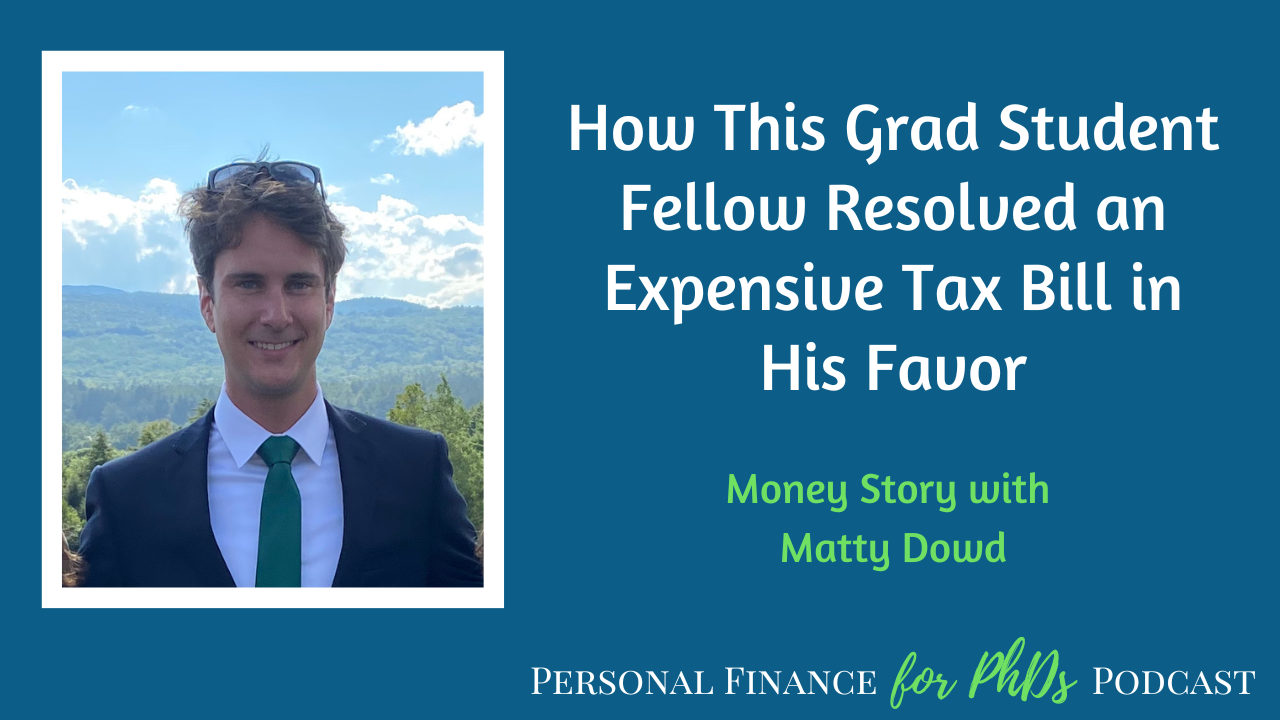
This PhD Student-Nurse Is Confident in Her Self-Worth

September 12, 2022 by Meryem Ok Leave a Comment

In this episode, Emily interviews Brenda Olmos, a nurse practitioner and rising third-year PhD student in nursing. A first-generation college student who grew up without financial stability, Brenda was debt-averse throughout college and her master’s degree and started building wealth in her 20s through investing and real estate, eventually aligning with the FIRE movement. When she decided to pursue a PhD in her late 20s, she held out for an online program with an excellent culture and funding package. Thanks to her lucrative outside work, Brenda has continued to invest consistently during her PhD, although more slowly than she did pre-PhD. Brenda’s strong financial position and career optionality have set her up well for a fulfilling post-PhD career.

Links Mentioned in this Episode

  • PF for PhDs Podcast Volunteer Form
  • PF for PhDs S13E2 Show Notes
  • Fintwit
  • Bigger Pockets Podcast
  • Stacking Benjamins Podcast
  • Affording Anything Podcast
  • Earn & Invest Podcast
  • Minority Millennial Money Podcast
  • Estimated Tax Form 1040-ES
  • PF for PhDs Quarterly Estimated Tax Workshop (Individual link)
  • Brenda Olmos Twitter (@almostbrenda)
  • Brenda Olmos Instagram (@almostbrenda)
  • Brenda’s G-mail Address
  • Brenda’s LinkedIn
  • PF for PhDs: Subscribe to Mailing List
  • PF for PhDs Podcast Show Notes
Image for S13E2: This PhD Student-Nurse Is Confident in Her Self-Worth

Teaser

00:00 Brenda: It’s so cool to like see yourself grow in ways that you never thought you could. And financially like, okay, maybe I’m taking like a 50 or $60,000 per year cut. But in the course of my life, like is three years really going to matter that much, you know? And how much more will my life be enriched by having this degree? Like what doors will it open for me? Whether they’re monetary or not is not really the point for me anymore. And that’s something that I was able to achieve in my twenties.

Introduction

00:37 Emily: Welcome to the Personal Finance for PhDs Podcast: A Higher Education in Personal Finance. I’m your host, Dr. Emily Roberts, a financial educator specializing in early-career PhDs and founder of Personal Finance for PhDs. This podcast is for PhDs and PhDs-to-be who want to explore the hidden curriculum of finances to learn the best practices for money management, career advancement, and advocacy for yourself and others. This is Season 13, Episode 2, and today my guest is Brenda Olmos, a nurse practitioner and rising third-year PhD student in nursing. A first-generation college student who grew up without financial stability, Brenda was debt-averse throughout college and her master’s degree and started building wealth in her 20s through investing and real estate, eventually aligning with the FIRE movement. When she decided to pursue a PhD in her late 20s, she held out for an online program with an excellent culture and funding package. Thanks to her lucrative outside work, Brenda has continued to invest consistently during her PhD, although more slowly than she did pre-PhD. Brenda’s strong financial position and career optionality have set her up well for a fulfilling post-PhD career.

01:56 Emily: Would you please help me out with something? I want to record six podcast interviews this fall to be published over approximately the next six months. Will you consider being a guest? As a listener, I’m sure you have something to say about money as a PhD or PhD-to-be! Simply fill out the Google Form at PFforPhDs.com/podcastvolunteer/ to get the ball rolling. Alternatively, if you have someone in mind who you’d like to hear me interview, please connect me with that person over email or Twitter! I really appreciate it! Let’s keep the podcast going strong! You can find the show notes for this episode at PFforPhDs.com/s13e2/. Without further ado, here’s my interview with Brenda Olmos.

Will You Please Introduce Yourself Further?

02:52 Emily: I am delighted to have joining me on the podcast today someone I know from Fintwit, Brenda Olmos. She is a rising third-year PhD student at the University of Oklahoma Health Sciences Center. She’s actually doing a PhD in nursing, so a very different kind of PhD student than we’ve had on here before. Not only that, her program is online, so she lives in Austin, Texas. So, Brenda, I’m so happy to have you on the podcast and get to have a deep-dive conversation with you. Will you please tell the listeners a little bit more about yourself?

03:20 Brenda: Sure! Hello everyone. My name’s Brenda Olmos. And, like Emily said, I live in Austin, Texas, and I’ve grown up in this area of central Texas and really enjoy living here. So, when I was searching for PhD programs, I was definitely searching for distance programs. And that’s the case about me being in an online PhD program. I grew up, like I said, here in central Texas, and I went to UT Austin for my undergraduate in nursing degree. Six years later, I graduated with my Master’s in Nursing as a family nurse practitioner. So, I had about six years of experience as a registered nurse at the bedside, which means I basically worked in inpatient hospital settings, taking care of people who were acutely ill. And then I chose to leave that setting when I became a nurse practitioner and I worked in an outpatient primary care setting for older people.

04:11 Brenda: So, I’m a geriatric nurse. And I found a scholarship in 2019 for geriatric nursing research. And I was kind of at a point in my life where I was satisfied with my career, and I found it rewarding. I found my work very gratifying, but I felt that my potential wasn’t really maximized in that role, that I made a difference one-on-one with patients, but that I wanted to make a difference at a larger scale. And in nursing, there are two paths for a doctorate degree. There’s a Doctorate in Nursing Practice, which is a DNP, and a lot of nurses do that because they want to make immediate change, like in administration or policy. And then there’s the PhD, which is the Doctor of Philosophy. And that’s more of a research-based doctorate, like most other PhDs in which you focus on generating new knowledge and you learn the research process.

05:07 Brenda: And I actually had really great mentors, which caused me to lean towards the PhD. And I chose the PhD in nursing because I felt that I wanted to have the doctorate that was universally recognized as a terminal degree and as a doctorate, whereas a DNP is very specific to nursing. I wanted to have something that, you know, the three letters that mean something to everybody <laugh> in the world, right? So, that’s kind of been my trajectory. I worked as a nurse practitioner for three years, full-time from 2017 to 2020. And then in 2020, I had been accepted to the PhD program. I was still kind of on the fence about it because I was making six figures as a nurse practitioner. And even though I didn’t know at the time that I had won this scholarship, I was like, I don’t know, this is a big leap to take. And then the pandemic hit and that took away so much of the joy of my work. And so much of the compensation that I realized I’m ready to go do something different. So, I’ve been in my PhD program since August of 2020. And like you said, I’m going into my third year now.

06:13 Emily: Wow. I love when I get someone on the podcast who has really, really thought deeply about their career and the trajectory of it and chosen, after all of that, to go into a PhD program. I don’t want be, you know, too critical of people who went like directly from undergrad down that path. I went almost directly from undergrad, but I just think it takes on a different tone. You have more focus in your research usually with all that like background work experience, and especially for you having a very, you know, very solid, super lucrative like career leading into that and you just really thought about, well, what do I want in my life? How do I want to be spending my time? That’s actually a lot of what we’ll be talking about today.

06:51 Emily: And I just want to kind of frame this for the listener a little bit that you know, Brenda’s had, as we just said of really different career trajectory than probably most people who are listening, probably the vast majority of people who are listening. And so once we get to start, you know, talking about Brenda’s finances, you’re going to see a pretty rosy picture. And it is of course, largely due to having that career in her twenties. But I don’t want you to like dismiss this episode as like, you’re never going to learn anything from it because you’re not in the same kind of position that Brenda was, because I still think there’s going to be something here, some strategy, some mindset, especially, that you can learn from. So, keep with us even though it may be a little bit of a different kind of story.

07:29 Brenda: And I do want to add to that that not every nurse is in my position, right? Like I had a really great scholarship for undergrad. Probably about 75% of my undergrad degree was paid for through scholarships and grants. I paid for my master’s degree, partially through hospital tuition reimbursement, and partially by working full-time. But I had classmates who took out a hundred thousand dollars for two years of their master’s program, and they’re paying that off now, right? So, I just want to be transparent about the fact that like, don’t go up to every nurse and be like, oh my God, you have no debt and you make a ton of money. Like, no, I was very strategic about the way that I got my education and I was always debt-averse. And so, I think that’s also important to point out.

Financial Independence, Retire Early (FIRE)

08:14 Emily: Yeah. Because I next want to kind of talk about you discovering the FIRE movement, which you did prior to starting the PhD program, but you had already, as you just said, taken some, you know, FIRE-like steps leading up to that, by being debt-averse, by working a lot while you’re in school, by choosing an employer who’s going to give you tuition reimbursement and so forth. So like, you were already setting yourself up well financially, even if you hadn’t, you know, discovered that particular movement. But let’s go to that like moment when you discovered the FIRE movement and what appealed to you about it? Like, why did you decide to start going that route?

08:45 Brenda: Yeah, I think a lot of it was rooted in, like for many of us, the way that we grew up around money, right? Like the beliefs that were planted in our minds as young kids. And for me, and I’ve talked about this in BiggerPockets and in some other podcasts, is that I had so much financial instability growing up and I knew so much about my parents’ finances and I knew the lows and I knew the highs. And I had kind of, maybe not consciously, but unconsciously decided that I was going to be stable, that my adult life was not going to be a roller coaster of emotions, secondary to my financial situation. And so, I think that’s why FIRE appealed to me because it was like, oh, I don’t just have to be stable. Like, I can be free. <Laugh>, you know, it’s like, there’s one extreme where you’re tied to the ball and chain, there’s the middle ground where you’re stable and you’re working, you’re saving, maybe you’re investing. And then there’s financially independent where no matter what you do, whether you work or you don’t work, you’re okay, right? So, I found out about it through some podcasts, StackingBenjamins, Afford Anything, Earn and Invest. And I just started listening and I was like, wow, there’s a lot I can do with some money I have saved up. Or like, maybe I should buy a property, you know? And that’s kind of how it all took off.

10:13 Emily: I think we’re going to get here, like later in the interview, but this like really interesting overlap in your story between pursuing FIRE and pursuing the PhD, and like the time freedom that FIRE can give you to then apply it to your academic interest. Even if those interests don’t pay as well as other career paths, perhaps, that were available to you. So, I really hope, yeah, we pull that out later in the interview. So, give me a couple, like, you know, mechanical things that you did in those early years of FIRE. You mentioned, oh, maybe I should consider buying a property. Like, what were some things that you did that were deviations from the path that you were on before, once you learned about FIRE?

10:49 Brenda: Right. So, I started investing in a brokerage account, which I had never done before. Like the thought of investing in the stock market was really foreign to me. I knew that my parents had 401(k)s, but I didn’t know that that was investing in the stock market. And so, I started doing research on that. And I talk about this on the podcast I have with my friend, Minority Millennial Money, about how my first experience into investing was like going to Wells Fargo and having an advisor there telling me that I needed at least $25,000 to like open a portfolio <laugh> and, you know, I look back on that and I did it. But I look back on that and I’m like, oh, I was so naive, you know? And now I know so much more and eventually, I transferred it out of Wells Fargo, but so the first thing was investing, and the second thing was buying a home.

House Hacking

11:40 Brenda: First, it was a small condo in 2017. Prior to that, I had kept my living expenses low because I just lived with a friend who owned a home and I rented a room from her for $600 a month, right? So, for Austin, even seven years ago, that was really cheap. So, and I didn’t, I don’t mind living with people, but it was nice to have my own place when I bought a condo in 2017. And then in 2019, I bought a single-family home and I rented out the condo. And so, now I have both.

12:11 Emily: So, let’s see, in 2019 you bought the single-family home, in 2020, you started the PhD program. So, are you still living in that single-family home? Or did you move again?

12:19 Brenda: Yeah, and I house hack it. So, I mean, house hacking is really just having roommates, right? So, basically, I started having travel nurses stay with me so that I didn’t have a permanent person. I just kind of had a nurse house. And so, I really enjoyed that. And there was a little bit of a lull there when COVID hit because many of their contracts got canceled. And so, I was at a critical point where I was like, I’m quitting my job. I have this house to take care of and the income may not be there, but it ended up working out. And hosting travel nurses is really awesome.

12:59 Emily: Yeah. This strategy of house hacking is one that I have given some air time to in the past and I’m really excited about for PhD students, because for that stage of life, it’s already really normalized to live with roommates. And so, if you have the financial wherewithal to be able to purchase, be the owner and be the landlord, it can like really radically transform your finances. So, so glad to hear that you were taking advantage of that strategy even before starting the PhD.

Choosing a Supportive PhD Program

13:22 Emily: So, we kind of already talked about like, why you wanted to start the PhD, you know, why you thought it was the best move for your career. Did you want to add any more details about, I don’t know, that particular program or anything else about your, you know, deciding to go down that career?

13:35 Brenda: Yeah. And, you know, we have met over Financial Twitter and there’s also Academic Twitter. And on Academic Twitter, I see so many horror stories of like really difficult programs, really toxic environments. And I was like, A) I don’t have to do this. So, I am not going to go to a program like that. And B) What if I found a really great program, you know? And so, I just created a spreadsheet with all the schools I was looking at. And this particular program, the director called me, she wanted to talk, she was warm, she was encouraging. And she was genuinely interested in me, you know? And I was like, wow, that’s really special. Whereas other schools like just sent me computer-generated emails, you know? And I was like, okay. So, like my email just went into like a black hole. So, that was important to me, especially because I know that people don’t know this, you know, people outside of nursing don’t know this, but nursing academia has a really negative reputation for being very toxic, very discouraging, not supportive, hazing, in a sense.

14:44 Brenda: And it’s especially prominent at the graduate, you know, and doctoral level. So, I was like, I don’t need that in my life. So, I’m going to look for a program where I feel like it would be a good experience. And I found that, and I was like, okay, I could do this here. So, that was important to me. And also, it was important to me that, if I was going to take this big financial hit, that it was going to be for something worth it. And like you said, for me, the PhD is really something I’m doing for personal enrichment, right? There’s no guarantee that I’m going to make more money when I’m done. You know, I made almost $200,000 in 2019 just working a little bit extra. If I get a job that makes me that much post-PhD, I’ll be really excited. But for me, it was also really important to see people that look like me because I’m a Latina nurse practitioner. And I just could count on one hand how many people who were nurses who had PhDs, who were Hispanic, that I knew, you know? And so, in a field that’s predominantly or 95% white women, I thought it was important to increase the representation.

16:00 Emily: Yeah. I love all those overlapping motivations. And I love, it sounds like you were patient, right? Like you were willing to be really selective about the program that you went to. And I love that little note about like, oh, this person actually called me, like, I talked to this person over the phone instead of just email correspondence and just form letter stuff. And I love that like, you looked at this field, like you said, it has this bad reputation, and you said to yourself, I don’t need to do this. And I’m only going to do it if I can find the program that is going to be really supportive of me. It’s the right fit for me. And even if you know, Academic Twitter and everything else is telling you, no, no, everything’s terrible. It never, it doesn’t exist anywhere. You were like, no, I’m going to hold out and find that perfect program for me. And you did. So like, I just say that to point out that, like, that’s a limiting belief that you could have had. Like, you could have told yourself, oh, I’m never going to find a home. It doesn’t matter. People like me never, you know, get into this level of nursing or succeed or whatever, whatever. And you chose to not have that limiting belief, right? So, I want other people to hear that message as well.

17:02 Brenda: Yeah. And I’ve spoken with my classmates about this, and I think I’m just fortunate in the sense that I have a very positive disposition <laugh> and so I didn’t, it never occurred to me that I wouldn’t find one. I just thought, I just need to find one <laugh>.

Net Worth in Grad School

17:17 Emily: Okay. So, let’s hear more details about your life, like coming into the program. We’ve heard a couple of things. You already owned two properties. You had been making like over six figures. In fact, your income was nearly $200K in that year immediately prior to starting graduate school. Would you like to share anything about like your net worth or just any other aspects of your financial picture at the time that you started graduate school?

17:38 Brenda: Yeah. So, at the time I started graduate school, that was 2020. So, my net worth now is about $550,000. And at that time it was probably, I think I remember tweeting about it and I think it was like $330K at that time. And that big leap has really just been real estate prices just skyrocketing. And so, I do count like potential, you know, appreciation in my net worth. And then I probably have, right now, I have about $160K or $170K invested. And at that time I probably had like $120K. And so, I’ve been contributing, let’s see, with Roth contribution maximum, which is 6,000, plus about a thousand dollars a month. So, that’s like $18,000 a year in the last two years. So yeah, that makes sense. $120K plus another $35K to $40K. So, I’m at $160K. And I anticipate, you know, this is just kind of a lull in my investing trajectory. And once I go back to full-time work and I’m earning a full-time income again of hopefully at least a hundred thousand, if not more, because I’ll be able to add my clinical practice contract work to it, then I’ll be able to go back to investing closer to $25,000 a year.

19:00 Emily: I mean, investing $18,000 a year while you’re in a PhD program is well, definitely the highest number that I’ve heard <laugh> of anybody on the podcast. So, you’re not exactly a slouch in this area. But so, prior to the PhD, though, it sounds like you were using a taxable brokerage account and maybe some employer-provided stuff 401(k) or 403(b).

19:18 Brenda: Yes, a 401(k).

19:18 Emily: Yeah. Okay. And so, that benefit went away, I assume. Like at the moment you’re only doing your Roth IRA and then the taxable brokerage account.

19:27 Brenda: Yeah. And actually, so before the episode, we talked about my stipend. So, my stipend is, just to protect my time, I don’t owe any kind of labor for that stipend, but I am limited to working 20 hours per week. The great thing about that stipulation is that I’m not limited to how much money I can make. I’m just limited to hours I can work. So, I have been a graduate research assistant at the university since spring of 2021 with one of my professors. And we’ve actually published two papers together, which is awesome. But one of the benefits of that is that as a GRA, you become staff of the university and you get access to their 403(b) and 457. So, I have been contributing at least half of my GRA income, which pays $25 an hour. And what’s funny about this is that the original pay for that position was $15 an hour at the university.

GRA Salary Negotiation

20:27 Brenda: And I told my professor, I was like, I’m sorry, like, I am passionate about your work, but like, I just cannot do it for $15 an hour. Like I have too many things going on and I have too many other much more lucrative offers. And so she went to financial, I don’t know, the financial services building and they agreed to bump it up to $25 for everyone in the nursing program, because we’re all registered nurses, at least, you know, some of us are nurse practitioners. So, it was like almost insulting <laugh>, you know? I mean, I don’t want to be a snob about it, but it’s like, who would take $15 when I can go work the same hour for $65 or $75? So anyway, so yeah, I’ve been doing the Roth, the taxable brokerage, which really comes third on my list. Like if I’m short on money one month, that’s the last one I fund. And then I contribute 50% of that $25 per hour income, which is 10 hours a week, a thousand dollars a month. So, half of that goes to the 457. And I chose the 457 on purpose because you can access it anytime without penalty.

21:38 Emily: Love all those details. Actually, it’s interesting because most people who I speak with who are like on the level of 10-hour per week employees are not offered those benefits. So like, I would say that’s a great, like, exception that your university or health sciences center offers that. So, that’s awesome that you’re doing that. And I love that you, you know, shared that negotiation story and that it not only benefited you, but benefited everybody. Like this is a message I’m trying to get across with like, you can negotiate for yourself as an individual. Yes. But it can also help other people when you do that, because it sends a message.

22:12 Brenda: I wouldn’t have expected them to just give it to me. I mean, it would’ve been fine, but then it’s like, I think it was a fairness issue, right? Because they were like, oh, well, all these other students are also doing it. No, it was great. And I think it was definitely something that the graduate college had to take into consideration because you’re looking at, you know, graduate students, but we’re also working professionals, right? So, that is kind of a unique situation that nurses in graduate school are in.

22:43 Emily: Absolutely.

Commercial

22:47 Emily: Emily here for a brief interlude! These action items are for you if you recently switched or will soon switch onto non-W-2 fellowship income as a grad student, postdoc, or postbac and are not having income tax withheld from your stipend or salary. Action item #1: Fill out the Estimated Tax Worksheet on page 8 of IRS Form 1040-ES. This worksheet will estimate how much income tax you will owe in 2022 and tell you whether you are required to make manual tax payments on a quarterly basis. The next quarterly estimated tax due date is September 15, 2022. Action item #2: Whether you are required to make estimated tax payments or pay a lump sum at tax time, open a separate, named savings account for your future tax payments. Calculate the fraction of each paycheck that will ultimately go toward tax, and set up an automated recurring transfer from your checking account to your tax savings account to prepare for that bill. This is what I call a system of self-withholding, and I suggest putting it in place starting with your very first fellowship paycheck so that you don’t get into a financial bind when the payment deadline arrives.

24:06 Emily: If you need some help with the Estimated Tax Worksheet or want to ask me a question, please consider joining my workshop, Quarterly Estimated Tax for Fellowship Recipients. It explains every line of the worksheet and answers the common questions that PhD trainees have about estimated tax. The workshop includes 1.75 hours of video content, a spreadsheet, and invitations to at least one live Q&A call each quarter this tax year. If you want to purchase this workshop as an individual, go to PF for PhDs dot com slash Q E tax. Now back to our interview.

Sources of Income in Grad School

24:50 Emily: So, let’s like back up a tiny bit and talk about sort of all of your income sources during graduate school. Because you know, you’ve mentioned a couple times you have this really fantastic scholarship, so let’s start there. Like, what does the scholarship give you?

25:02 Brenda: Right. So, the scholarship is specific to my university, and it’s a special foundation that was money given through a philanthropic organization. And they basically allotted $150,000 scholarships separated into three years, $50,000 per year. That comes out to $30,000 per year or $2,500 per month as a stipend, and $3,000 for summer tuition, $6,000 for spring and fall tuition, and $4,000 leftover are for travel to conferences and that kind of thing. And I will say that I have used some of your courses and the taxes because that $2,500 counts as 1099 income for me. So, I do have to pay taxes on that. And most of my contract work is not on a W-2. So, I do have to pay taxes on that as well.

26:01 Emily: Okay. So, it sounds like the scholarship is fully paying your tuition and fees, giving you a stipend of $2,500 a month, and you have this additional professional development fund per year. Wow. Okay. That sounds great, but we’re not done yet. The way that we talked about this earlier, and I think the best way to phrase it for the listener is that that stipend of $2,500 per month essentially protects 20 hours per week of your time for you to devote to your dissertation research, or your classes, whatever it is you have to be doing for your PhD. And so, with the next 20 hours of your work week, you can be doing other paid work in that time. So, you can earn above your stipend. It’s just, you’re limited in the number of hours you can spend working. And so for you, you’ve already mentioned like the assistantship that you have at 10 hours per week. Do you have any other work that you do in the other remaining 10 hours per week?

Clinic Contract Work

26:52 Brenda: Yeah, so my former employer kept me on as a contractor. So now, I technically work for the agency that staffs their clinics, but they have urgent care clinics every weekend from nine to four. So, I’ll pick up weekend shifts. And occasionally, because my former boss knows me and knows that I know like the day-to-day clinic work, then he’ll ask me if I can work some days during the week. And so, I’ll do that. And that’s at $75 an hour. And then I have a couple of other jobs where I fill in for other nurse practitioners, like when they’re on vacation or they’re out sick or something. And the great thing about some of those is that they’re kind of slow clinics. And so, I can just take my schoolwork and do it there <laugh>.

27:43 Emily: Yeah. Sounds like a sweet deal. So, with all these active income sources together, the stipend plus the other work that you’re permitted to do, what does that add up to in terms of like your yearly income on average?

27:56 Brenda: So, last year my taxes were a little bit complicated, so I have the 1099 income, and then I have the real estate income. And I don’t take any of that as income from the real estate. So, the condo has its own account, and it has a little emergency fund for itself. And anything that it makes, it stays in there for emergencies, and same with the house. It has its own account. I pay rent into the homes account for myself, and then my tenants pay for pay into that account as well. But I rarely take any money from those accounts. So, I don’t count that. So, out of $112,000 last year, about $30K of that was from the rentals. And so, I really made about $70K, probably. So, $30K of that was from the stipend and then I made another $40K in part-time work.

28:53 Emily: Okay. So interesting. So, you have income sort of on your tax return, you have income that you don’t actually consider, like you’re not actually taking it into your personal accounts. You’re just leaving that as emergency funds and so forth for the real estate stuff. Yeah, that makes sense. Well, earning $40K on top of the $30K, again, really great for a PhD student. So good for you. The message that I want the listener to be hearing from this part of the interview is Brenda’s time is valued in a certain way because of her existing credentials and work experience and so forth. But earning something like $75 an hour is not out of the question for a PhD student in other disciplines. Depending, of course, on your work experience and what your field is and how, you know, in-demand it is, et cetera.

Valuing and Monetizing Your Skills

29:38 Emily: So, like you made the comment earlier. It’s a good thing they’re only limiting me on time and not the amount of money that I can make, because, you know, in some of your income sources, you can command quite a high hourly rate. I would love for other graduate students and postdocs to hear that message and think about, wow, if I’m making $75 an hour, a hundred dollars an hour, I only need to work two hours a week to make a really huge difference in my budget. You know, like when you can get to those high hourly rates, you don’t have to spend a ton of your time, you know, to get your finances in the shape that you want them to be in.

30:10 Brenda: For sure. And I think that, you know, like you said, I have a very particular skill, but there are skills that I don’t have that I would gladly pay someone $65 an hour to do. Like currently I’m dealing with some big data and I’m like, oh my gosh, I’m like going on websites of like, you know, people you can pay on an hourly basis to like walk you through something. And I’m sure that there are people in PhD programs who know this like the back of their hand, and they’re just not making themselves available for someone like me. Because I can earn that money, you know, relatively easily, and I’m happy to pay someone for their expertise as well. So, that’s very true. And I think that maybe sometimes, you know, I am very aware of my skill because I have a license and a certification for it, but you may have skills that other people need that don’t necessarily have, you know, very formal credentials, but that people would be happy to pay for.

31:12 Emily: And I think it’s so easy to get caught in this trap of undervaluing yourself inside academia. Like what you were talking about earlier with like the $15 versus $25 per hour negotiation that you did. It’s so common inside academia to undervalue ourselves. We see everybody else doing it, then we do it as well. But if you can take a little bit of a pivot and maybe, you know, market your skills to somebody outside of academia where these are not, you know, a dime a dozen kind of skills that everybody has, then you can, you know, potentially get those higher hourly rates. So, definitely food for thought, I hope, for some people.

Negotiating In-State Tuition

31:42 Emily: So, I think that you are probably the first interview we’ve had on the podcast who is doing like a hundred percent remote program. Not just like remote for COVID or whatever has been going on temporarily. So, you live not in the same state as where your university is. So, how does that work out with your scholarship and with the tuition and everything?

32:02 Brenda: Yeah, so that’s true. I specifically was looking for long-distance programs because I like where I live. I live close to my family, and I knew that a PhD was an experience that I would need support for <laugh>. And so, I didn’t want to leave my support system behind to do that. And so, whenever I got accepted to the University of Oklahoma and I was still living in Texas, and I had no plan to leave Texas, there was the issue of out-of-state tuition costs. And so, I got accepted in about March 2020. I found out I got the scholarship in April of 2020, and I had kind of set that as the bar, like if I get accepted and I get the scholarship, I’ll go, right? But then I thought, well, out-of-state tuition is almost double, right? It’s the difference between $10,000 and $6,000 a semester.

32:58 Brenda: And I just told the director, like I really want to go to this program, and I’m really grateful for the scholarship, but I realized financially that the out-of-state tuition is going to eat up about 50% of my stipend per semester. So, is there any way I could get in-state tuition? And she actually took it up to the graduate college and they agreed to give me a waiver for three years. So, I pay in-state tuition, and actually the great part about being a graduate research assistant is that, when you take on that position, it’s actually the grant that is funding you, that pays the waiver. And so, the waiver that I had originally been promised can be given to someone else while I’m a GRA.

33:44 Emily: Wow. Okay. Another great example of negotiation, and also another kind of general negotiation point that I like to make to prospective graduate students is like, you don’t necessarily know all the different levers that these people behind the scenes can pull to like enhance your package. So, you made the suggestion, maybe I could pay the in-state tuition rate instead of the higher rate, and they made that happen. And if that hadn’t exactly been possible, maybe they could have found a different way to augment your package to make up that, you know, $4,000 per year difference. So, yeah, so encouraging for prospective graduate students.

34:15 Brenda: I do want to mention that one of the points I brought up was that, and maybe this is just using a rivalry to my advantage, but you know, UT Austin and the University of Oklahoma are rivals in football. And UT Austin has a policy that, if you’re an out-of-state student and you come in to Texas with a scholarship from Texas, like if you won a scholarship in Texas, then the University waives your out-of-state tuition. And so, I presented that to the director and I said, you know, UT Austin does this, do you guys do anything like this? And I think that was what helped, you know, is that I had kind of done my research and I was like, you know, this is something another university is doing. Can you guys do it? And they said yes.

34:58 Emily: That’s a great example as well of like sharing of best practices. Hey, these other people have found this solution over here. Sometimes it helps to open their mind. Oh, well, maybe we could find this similar solution. Absolutely.

Money Mindset

35:09 Emily: So, you mentioned, you know, you’ve taken a pretty substantial income cut to pursue the PhD. Are there any other ways that taking this step in your career has impacted your path towards financial independence?

35:23 Brenda: Yeah, like I said, it’s probably a little bit of a setback numbers-wise and on the spreadsheet, but I feel that it’s so valuable to me personally and professionally and in my development as a person, as a researcher, as a scientist, as a nurse. You know, I’m just being challenged to think in ways that I never did before. And my practice in primary care became kind of monotonous and, you know, unfortunately, there wasn’t very much motivating me forward. And I feel totally different now. You know, even though sometimes I’m overwhelmed to learn new things, it’s so cool to like see yourself grow in ways that you never thought you could. And financially like, okay, maybe I’m taking like a $50 or $60,000 per year cut. But in the course of my life, like is three years really going to <laugh> matter that much, you know? And how much more will my life be enriched by having this degree? Like what doors will it open for me, whether they’re monetary or not is not really the point for me anymore. And that’s something that I was able to achieve in my twenties, right? Like that I set myself up to where, whether I make $50,000 or $150,000, what matters most to me now is that I’m happy, that I’m fulfilled, that I’m challenged, that I enjoy the people I work with, that I genuinely feel that I’m making a difference.

36:54 Emily: And it’s just so like gratifying to hear that, you know, the work you did on your finances in your twenties, both before and after discovering the FIRE movement, set you up to have this excellent financial experience during the PhD. Now, part of that is your field, and this is normal and so forth, this fantastic scholarship, you got all of that. But part of that is just, you know, when I was listening to some of your other podcast interviews, I was thinking that you just sound so like, calm about your finances. Like you just sound so like relaxed about them, which is a very different energy than what I give off sometimes, and like other people who I listen to, or interview on the podcast. But that is on the back of all the work that you did in your twenties to lead up to this point.

37:37 Emily: And so, you get to be relaxed because you have this net worth, you have your properties, you have your house hack, and you have this fantastic income. And this is just something that I so wish that more PhD students could experience. Even a fraction of the experience that you’re having, right? Like maybe it’s having the reasonable income for a person in their twenties or thirties. Or maybe it’s, you know, having worked for a few years, building up a bit of a nest egg before taking that income cut the way you have. I just, I love hearing just your whole like, sort of disposition towards this.

38:09 Brenda: Yeah. And I think a lot of it is reorienting your mind to not have a scarcity mindset, right? To kind of have an abundance mindset, like I’m going to thrive and I’m going to find a great job after this. And like I said, I’m just gifted with a naturally positive disposition, but like, I don’t have any worries about what will happen after, because everything’s worked out so far. <Laugh> maybe that’s just because I’ve been so strategic, right? Maybe in some ways I could have relaxed a little bit, but I am very forward-looking, right? I’m always kind of thinking about the next thing. And I have to remind myself to live in the moment, too, but yeah. I think that most PhD students, like you said, undervalue themselves. And I think about my classmates alone. You know, I’m like, they’re so talented, they’re so smart. Some of them are doing this with kids, with a family, taking care of their parents, with a job. And I’m just like, those are skills, right? Like those are highly marketable skills. Like just getting through the program with life the way it is is a crazy good skill. So, I really appreciate that you encourage people to, you know, maybe do some inward thinking about how can I monetize these things that just come naturally to me now in this stage of my life?

What is Coast FI?

39:40 Emily: You said a couple of minutes ago that, well, it doesn’t really matter if I make $50,000 or $150,000 a year. It’s going to be okay. It’s going to work out. That reminded me of the term Coast FI, a particular version of FIRE. Do you think about Coast FI? Would you describe yourself as Coast FI? Let’s define that for the listener.

39:59 Brenda: Yeah. I think traditionally, Coast FI means that your retirement is set, even if you don’t invest another dollar. I wouldn’t say that I don’t need to keep investing. I think I do. But I don’t really see myself retiring early in the traditional like FIRE sense because I have, A) A very useful skill that’s highly needed in this country. B) I speak Spanish, which is really useful in my part of the country. C) I’m just such a busybody. Like I could never stop working, you know, <laugh> like, I just, when people talk about staying home, like with children, I’m like, I could never do that. I could have children, but I’m not staying home with them 100% of the time. So, yeah, Coast FI for me just means that I have the financial flexibility to choose something that means something to me, as opposed to just a means to an end, to like pay my bills. And a part of that has also been keeping my expenses low. But the other part is, like you said, everything I did to set myself up in my twenties. And, you know, a few years ago, I probably would’ve told you that I would quit working at 45. And now that I’ve been in the PhD program, I’m like, no, there’s so much to do. There’s no way I could cut off 15 or 20 years off my career, you know?

41:26 Emily: That’s so interesting that you described earlier kind of finding, getting into like a lull in your career. Like you weren’t so stimulated. And I think that some people, like you did, would see FIRE, the potential to retire early, as the solution to that. And you did, but you also found another solution, which is, you know, taking your career in a slightly different direction, going down the academic path. And you found that reinvigoration there. And now you have kind of choices on both fronts. You have many career options, you have many financial options, to work, to not work, to work in a capacity that other people would not be able to, perhaps, because they hadn’t maybe had all these, you know, made all these decisions in their twenties and so forth. So, kind of the world is your oyster really <laugh> once you finish this program.

42:09 Brenda: Yeah. And things have come up during the PhD program. I don’t know if it’s because of the PhD program, but for example, I was a volunteer vaccinator for a local community center that was giving out COVID-19 vaccines every three weeks. And I was just consistently going, because I just wanted to help my community. And then they reached out to me about being the clinical consultant for their community center, because it was part of their grant. It would help their grant application if they had someone, you know, whose name they could put down, and they offered to pay me for that as well. That was an income source I forgot to tell you about. So, they pay me $500 a month, and I basically like attend some meetings and answer questions about COVID, about the vaccine, about what to do if this or that. And that was something I never would’ve thought I would do. You know? And it’s just like kind of a result of just saying yes, like I was like, well, I don’t see clinical consultant on my resume yet. <Laugh> but I guess I’ll do it. You just tell me what to do and I’ll show up, you know?

43:17 Emily: That comes from having that financial margin in your life and the time margin, right? To be able to say yes to, at first unpaid, but then later look what it turned into, you know, opportunities, which is something I could certainly <laugh> learn from.

Post-PhD Plans

43:29 Emily: Okay. So let’s talk a slight bit more about post-PhD plans. You mentioned earlier, you know, you have a few different career paths that you might choose among. What are you thinking?

43:40 Brenda: So, the idea of working in industry, or like the pharmaceutical area appeals to me because every pharmaceutical company has a medical affairs division in which they have doctoral-level prepared clinicians or pharmacists, which kind of serve as the bridge between the scientists creating the drug or the device and the prescribers out in the world. And so, that’s actually a really lucrative option. Like I know a couple people who do it and they make about $170,000 plus bonuses. So, they’re making like $200,000 a year. So, if I wanted money, that’s what I would do. <Laugh> which I’m not above saying that I want money. Okay. <laugh> so if that job came up, I would definitely consider it. Then there’s obviously the traditional route of pursuing some kind of tenure-track research career in academia. I’m kind of iffy on that. I don’t know that it’s the best use of my strengths. I’m definitely a people person. I’m an extrovert. I can do writing and I can write grants, and I could potentially, you know, try to prove myself to the NIH for the rest of my life <Laugh> to try to get research money, but I’m not sure that I want that.

45:03 Brenda: And then, I could do a blend of clinical practice and teaching where I just teach as an adjunct and I maintain my clinical practice. That’s kind of what I was doing before the PhD. So, I’m not sure that I would really be maximizing what I learned in the PhD if I went back to that. And then there’s a postdoc if I do want pursue research and I just want to get into someone else’s work and see what they’re doing, and maybe that’ll make me more excited about a tenure-track career. And then I was also looking at the National Clinician Scholars Program, which is kind of like a subset of the Robert Wood Johnson Foundation. And that’s a program at six campuses all over the country in which you basically get more education on health policy and organizational change. And most of the graduates go on to work at like the Department of Health or Health and Human Services or the CDC or some kind of federal agency where policy is happening. So, that’s probably one of my top ones. Pharma’s one of my top ones, and teaching in a, non-research, like very little research, that’s probably my third one.

46:11 Emily: Yeah. Well, hopefully, you have all of those things on the table once you get towards your graduation. And like you said, money could play a role in your decision, or maybe you’ll be following, you know, what seems most interesting to you. And again, the position that you’re in affords you those options. So, it’s wonderful to hear. And I think you said earlier, you know, you’re probably not going to be idle, right? Even once you achieve financial independence, however you want to define that. It sounds like you expect to have a long career, which is, once you’ve invested in something like a PhD program, it’s very, I think, worthwhile to keep your skills out there and keep, you know, working for your communities you’ve said so far. Yeah. Anything else you want to add about what you envision your life to change or not change? Like after you achieve financial independence?

46:57 Brenda: I think as a woman and as someone in their early thirties, you know, one of the big factors in deciding what I do is like, if I want to start a family, and what career option would be most conducive to that. And like you said, I have options, but like women have to think about that more. And especially in academia or in science, like you don’t want to be put on the mommy track, right? So, that’s also something I consider like if I were to have children, would it be right away after the PhD? Would I settle into another job? Like give it a year or two? I’m going to be 33 in September. Like what about my, you know, what about my fertility? Like, there are so many things to think about. And I think that’s very real for a lot of women in academia, right? It’s like juggling your human babies and the baby of your career, which is your research or whatever you’re working on post-PhD.

48:00 Emily: Absolutely. And another thing that having a strong financial position just puts you in a strong position to decide about. If you want to take an extra long maternity leave that’s unpaid, but you have a job to go back to, well, maybe that’s going to be, you know, the best situation for you, or maybe not. Maybe it’ll be a different decision, but whatever you do, I mean, having money gives you options. I say that over and over again, it just gives you options. And that’s really what you have now, which is so delightful to hear.

Where Can People Find You?

48:24 Emily: So, if people want to hear more from you, where can they find you?

48:29 Brenda: I’m on Twitter @almostbrenda, like the word almost, and then my name, almost Brenda. And that’s also my Instagram handle and my email address at Gmail, [email protected]. I’m on LinkedIn. That’s linkedin.com/in/bolmosfnp for family nurse practitioner. And I’d love to connect with people. Even if, you know, even if you just want to talk about how to improve your finances, I know Emily, you’re a great resource for that. And I’ve been in the Community forums there too. But if you’re interested in coming on our podcast, I cohost Minority Millennial Money which is on Apple and Spotify and all of the platforms. We love to have people come on and we talk through their finances with them and see what they could do better. So yeah, I’m easily reachable. I’m all over the internet. <Laugh>

Best Financial Advice for Another Early-Career PhD

49:26 Emily: Wonderful. I hope you’ll have a few people follow up with you from this. Okay. I’m going to conclude with the question that I always ask my guests at the end of interviews, which is what is your best financial advice for another early-career PhD? And it could be something that we touched on in the interview, or it could be something completely new.

49:44 Brenda: I would say it would be to disassociate your self-worth from your net worth, right? Because although I’m in a particularly advantageous position, I know how difficult it must be for people who are not in this position and are looking forward to those days when they get to earn a higher living. And you know, you’re already undervaluing your skills. You’re already in places that may be toxic and not supportive. Like, the very least you could do is like not value yourself based on what’s in your bank account. <Laugh>. And also, if you have the ability to keep investing, like to not lose time, because time is money in the market, right? So, anything you can throw at it is super helpful.

50:32 Emily: Great messages to end on. Brenda, thank you so much for this delightful interview!

50:36 Brenda: Yeah. Thank you!

Outtro

50:42 Emily: Listeners, thank you for joining me for this episode! I have a gift for you! You know that final question I ask of all my guests regarding their best financial advice? My team has collected short summaries of all the answers ever given on the podcast into a document that is updated with each new episode release. You can gain access to it by registering for my mailing list at PFforPhDs.com/advice/. Would you like to access transcripts or videos of each episode? I link the show notes for each episode from PFforPhDs.com/podcast/. See you in the next episode, and remember: You don’t have to have a PhD to succeed with personal finance… but it helps! The music is “Stages of Awakening” by Podington Bear from the Free Music Archive and is shared under CC by NC. Podcast editing by Lourdes Bobbio and show notes creation by Meryem Ok.

This Grad Student Advocates for Higher Stipends Using Cost of Living Data

August 15, 2022 by Emily

In this episode, Emily interviews Alex Parry, a sixth-year graduate student at Johns Hopkins in the history of medicine. Alex is a strong advocate for increasing stipends both in his department and at Hopkins broadly and is deeply involved with the grad student unionization movement. Alex and some colleagues recently released the results of a study of stipends vs. the living wage for about a dozen peer institutions to Hopkins, and he explains in detail the methodology of the study and the patterns that they found, making a case for the urgency to increase stipends at virtually all US universities. Emily and Alex discuss the benefits of this approach vs. how PhDStipends.com collects data. Alex shares a powerful concluding message on the need for collective action among graduate students.

Links Mentioned in this Episode

  • Alex Parry’s Twitter (@SafetyWorkHSTM)
  • PhDStipends.com
  • PF for PhDs Community
  • PF for PhDs: S12E7 Show Notes
  • Alex’s Tweet Comparing PhD Stipends
  • MIT Living Wage Calculator
  • IRS Form 1040-ES (Estimated Tax Worksheet)
  • PhD students face cash crisis with wages that don’t cover living costs (Nature article)
  • Ph.D. students demand wage increases amid rising cost of living (Science article)
  • PF for PhDs Quarterly Estimated Tax Workshop (Individual link)
  • PF for PhDs Quarterly Estimated Tax Workshop (Sponsor link)
  • PF for PhDs Register for Mailing List (Access Advice Document)
  • PF for PhDs Podcast Show Notes
S12E7 Image: This Grad Student Advocates for Higher Stipends Using Cost of Living Data

Teaser

00:00 Alex: But ultimately, our ability to get what we need as adults and as employees of these universities done is contingent on what kind of pressure we are able to bring to bear. And what data we’re able to bring to bear. And the data are only a starting point, right? They provide the talking points you need, they provide the evidence you need. They provide the ability to do the negotiations, right? But ultimately, we will succeed or fail collectively. And we will succeed or fail on the base of our ability to sort of band together to demand what we rightfully deserve.

Introduction

00:37 Emily: Welcome to the Personal Finance for PhDs Podcast: A Higher Education in Personal Finance. I’m your host, Dr. Emily Roberts, a financial educator specializing in early-career PhDs and the founder of Personal Finance for PhDs. This podcast is for PhDs and PhDs-to-be who want to explore the hidden curriculum of finances to learn the best practices for money management, career advancement, and advocacy for yourself and others. This is Season 12, Episode 7, and today my guest is Alex Parry, a sixth-year graduate student at Johns Hopkins in the history of medicine. Alex is a strong advocate for increasing stipends, both in his department and at Hopkins broadly, and is deeply involved with the grad student unionization movement. Alex and some colleagues recently released the results of a study of stipends vs. the living wage for about a dozen peer institutions to Hopkins, and he explains in detail the methodology of the study and the patterns that they found, making a case for the urgency to increase stipends at virtually all U.S. universities. Alex and I discuss the benefits of this approach vs. how PhDStipends.com collects data. Alex shares a powerful concluding message on the need for collective action among graduate students.

02:01 Emily: If you are a fan of this podcast, I invite you to check out the Personal Finance for PhDs Community at PFforPhDs.community. The community is for PhDs and people pursuing PhDs who want to take charge of their personal finances by opening and funding an IRA, starting to budget, aggressively paying off debt, financially navigating a life or career transition, maximizing the income from a side hustle, preparing an accurate tax return, and much more. Inside the community, you’ll have access to a library of financial education products, including my set of Wealthy PhD Workshops. There is also a discussion forum, monthly live calls with me, and progress journaling for financial goals. Our next live discussion and Q&A call is on Wednesday, August 17th, 2022. Basically, the Community exists to help you reach your financial goals, whatever they are. Go to pfforphds.community to find out more. I can’t wait to help propel you to financial success! You can find the show notes for this episode at PFforPhDs.com/s12e7/. Without further ado, here’s my interview with Alex Parry.

Would You Please Introduce Yourself Further?

03:23 Emily: I am delighted to have joining me on the podcast today, Alex Parry. He is a rising sixth-year graduate student at Johns Hopkins in the history of medicine. And we have a really valuable conversation coming up for you because we are talking about stipends and how to increase them, and the advocacy work that Alex is doing. We are recording this by the way in May, 2022. I know it’s going to be out a few months later. So, just for context, that’s where we are. Alex, would you please introduce yourself further to the listeners?

03:53 Alex: Sure. So, as it was already stated, I’m a rising sixth-year in the History of Medicine Department at John Hopkins. I work specifically on the history of consumer product safety and home accidents in the United States from about 1920 to 1980. And I’m also one of the organizers with Teachers and Researchers United (TRU) which is the currently unrecognized graduate student union at Johns Hopkins. So, one of many people who’s trying to push here and at other universities for increases to our stipends to accommodate a quickly accelerating rise in the cost of living.

Teachers and Researchers United (TRU) History

04:26 Emily: Yes. So, let’s hear more about that unionization movement right now. So, it’s currently unrecognized. Can you give us a little bit of the recent history, and where you’re hoping to go in the near future?

04:35 Alex: Yeah, absolutely. So, TRU has been around since roughly 2014. It started initially at the arts and sciences campus at Hopkins and was focused primarily on parental leave for graduate students as well as to try and increase healthcare benefits, particularly making sure that all graduate students had access to dental care and to vision care. Since then, the union has sort of grown and sort of formalized. And right now, we’re currently in the midst of an ongoing recognition campaign trying to basically work through the National Labor Relations Board or NLRB to try and seek an official union election at Hopkins. So, we’re hoping to basically have a unit that will encompass all PhD students at the university. So, sort of regardless of what division or campus people are located at, which is about 3,000 PhD students altogether. And we’re currently in the midst of trying to build up our core of organizers, have a lot of conversations with other graduate students at the university about things that are working for them and things that aren’t, in the hope of then sort of staging to basically a card petition with the NLRB sometime over the next couple of years.

How to Become an Officially-Recognized Union at a University

05:44 Emily: Okay. And walk me through this because my university was not unionized at the time. There was not even a movement when I was there. So, you basically gain enough support from the people who would be part of the union on campus through this card campaign. What happens next? The NLRB is involved, but then how does the university ultimately recognize the union?

06:04 Alex: Sure. So, there are sort of two main pathways to get to an officially-recognized union at a university, especially for a private university. Either the university can voluntarily recognize you, say that enough graduate students support this, that we’re just basically going to acknowledge your presence and then sort of work towards a contract from there. Most universities don’t take that path because they’re sort of concerned about having to bargain with graduate students. So, what ends up typically happening is, and this was recently reaffirmed by the NLRB over the last year or so, but if one is trying to seek an election through the NLRB, what one does is you can submit a petition to the NLRB to basically arbitrate an election at your campus when you have signatures from approximately 30% or more of the bargaining unit. Most unions will aim for a higher number than that because you don’t want to sort of rely on a third of the people at the university to 1) be a reliable indicator of how much people want a union, or 2) basically, one typically expects to have a more difficult time in the actual in-person election, which is what we’ll follow if the NLRB accepts your petition.

07:14 Alex: Because typically when you’re just signing the initial petition, you can basically do that remotely. So, people can just sign a digital card. During the actual election, typically those are done in person, which means that it’s harder to turn people out. And there, you’re looking for basically a bare majority of the voters. So, ordinarily, people will aim for more like 50% of the entire bargaining unit when they submit a petition to NLRB, and then after that, an election follows. If the election is successful, then you would then sit down with the university administration and basically negotiate directly over a contract.

Winning an NLRB Election

07:48 Emily: Okay. So, if it’s gone through the NLRB for this like official card campaign, then the university has to recognize the union at that point. Is that right?

07:56 Alex: Yeah, that’s correct. If NLRB hosts an election and the sort of proposed union wins, then the university is obligated to negotiate in good faith. So, there are various mechanisms that then both the university and then the proposed union will use to sort of conduct negotiations. Typically, they’ll have like labor lawyers and/or sort of like corporate lawyers involved. And you’ll sort of haggle over the details. A really good example of what this looks like as ongoing right now is at MIT. They’ve just won their election earlier this year. They’re currently in the midst of negotiations which started sometime late April to the beginning of this month. Those are likely to extend for another several months after this.

08:39 Alex: So probably, they won’t have a contract ratified or least put up to a vote because after you’ve had their bargaining committee come up with a contract, you then send it back to the base to all of the membership, to see if people actually approve of the contract that’s been written. So, sometime, probably this fall, maybe this winter, MIT will finish negotiating a contract, will send it back to everyone to basically vote on, and then if a bare majority approves of the contract, then that will sort of be the first contract for MIT’s graduate workers.

Shift to Stipends Advocacy

09:10 Emily: Okay. Thank you so much for explaining that process to me. One other follow-up question. You said when the union at Hopkins was originally introduced as an idea, back in 2014, they had concerns about leave and about vision and dental insurance. But you mentioned that you’re now more focused on stipends. So, were those initial concerns like fulfilled in some way over the intervening years? And why are stipends the focus now?

09:36 Alex: Yeah, both great questions. Sort of to answer the first one, most of the things that TRU has been advocating for, eventually we were able to win. So, at this point, at least at the school of arts and sciences, vision and dental, they’re not perfect coverage. I don’t want to give the impression that it’s phenomenal, but they do have paid for health insurance, dental, and vision now, as well as parental leave at the Homewood campus. So, overall TRU has been relatively effective in terms of getting sort of these smaller asks dealt with, things that are relatively lower cost, and also things where Hopkins had sort of fallen behind many of its peers. One of the reasons this campaign on healthcare had been so successful is that, one, Hopkins is a world-renowned health provider and the hospital is literally attached to the university.

10:24 Alex: So, it was kind of a bad look that people weren’t getting the kind of healthcare coverage that they needed. But the other sort of major factor there is that other universities that Hopkins considers its peers had provided much better coverage than Hopkins was. That same sort of rationale is part of the reason why stipends have now come to the fore. If you look at Hopkins vis a vis some of its peers, one, of private universities, like private R1 universities, it has one of the lowest raw PhD stipends of almost any school. If you adjust for the local cost of living, it ranks basically in the bottom third regardless of division. So if you look at, you know, engineering, stipends versus medical students stipends versus like biomedical, I should say, biomedical PhD stipends, or social sciences, humanities stipends, more or less across the board, Hopkins ranks the bottom third.

11:16 Alex: The other sort of major reason why we’ve shifted to stipends, in addition to, again, this sort of increasing gap between Hopkins and its self-described peers, is that a lot of us have been hit very, very hard by the inflation post-pandemic. And many people were also affected financially by the time that they were trying to deal with the pandemic, whether that’s in terms of childcare, inability to use research funds that people had earmarked to go on research travel that couldn’t be deferred or delayed. In addition to basically just as soon as the pandemic was starting to change to the current moment we’re in, obviously the pandemic is not over, but we seem to have entered a new way of dealing with it from public health terms and in terms of the community. Since then, rents have skyrocketed, grocery prices skyrocketed. And because of that people, who used to feel a little more comfortable with their stipend here are really starting to feel pretty significant financial pressure.

12:16 Alex: So, the other reason that we really started to push for this at the school-wide level and university-wide level is because we’ve been hearing from many of our members that people are both feeling less able to pay their bills month to month, and are also becoming more and more financially precarious. Where if someone has an unexpected expense, like a major medical bill, or like last summer my car battery died and I had to replace all of my tires all at once. That thousand dollars was, was a pretty substantial hit for me. So, these are the kind of things that we’ve been concerned about, and this is why we’ve brought this to the administration. It’s something that really needs to be addressed sooner rather than later.

Departmental Advocacy

12:54 Emily: And you’ve been speaking about you know, school-wide and university-wide initiatives, but I understand that you’ve also been working just within your department on advocacy. And I really was happy to hear the example earlier of some, I guess, some success with advancing the benefits that are offered at Hopkins. Not even necessarily through unionization, but just through bringing awareness to it. And Hopkins realizing, as you said, it’s falling behind its peer institutions. So, you know, advocacy can be successful even before unionization is totally in effect or even without that being in effect. So, not that that’s not also worthwhile, but that’s a long process and there can still be wins along the way. So, I want to hear also from you about what you’ve been doing, like in your department, specifically.

13:39 Alex: Yeah. And I hundred percent agree. Like, you know, obviously I am a card-carrying union member. I, you know, really want us to have an election to have a contract, but one thing that’s important for people to know is that sort of just the gradual growth of pressure that accompanies unionization, where you’re sort of talking with your peers, gathering together, working as a group, is often enough to get small wins. Those wins aren’t necessarily protected because you have a contract, right? And those wins are not necessarily of the degree or magnitude that one would hope for in a contract. But there is something to be said for just doing the work initially will get you somewhere and you can just get further than with unionization. So, I think it’s definitely sort of a both-and situation, not an either-or kind of situation.

14:26 Alex: In terms of what we’ve done specifically in our department. One thing that initially brought stipends to our attention even before inflation started spiraling even more out of control, is I’m part of an interdivisional working group that brings together representatives from the student government associations, the recognized ones at the university, as well as the union, to sort of talk together to share information and to make sure that everyone’s on the same page about what advocacy issues are pressing to the community. And also sort of how then to mobilize both institutional channels, talking directly to the administration and sort of like more grassroots advocacy-style channels, more militant-style organizing. So, we were having one of these conversations and realized that apparently the School of Medicine as a whole has a minimum stipend that at that point was approximately $34,900 a year. At that time, folks in my department were making $30,500.

15:23 Alex: So, we were a little bit confused and concerned about the fact that we seemed to be making $4,000 roughly less than our peers while working in the same school and, you know, being under the same umbrella. And everything we saw online was indicating at least that this should have been an across the board minimum. So, we went to our department and asked basically why this discrepancy had appeared, or why this was the case, and didn’t get phenomenally helpful answers. And so we went then to speak with the Dean of the school, Peter Espenshade, who works on basically like graduate student affairs and graduate student research at the School of Medicine. And eventually what sort of came out is that our stipends in particular were tied to the stipend of the school of arts and sciences for a series of sort of complicated and frankly not super compelling <laugh> historical reasons.

16:18 Alex: So, this kind of got us to think more about the fact that, one, not only are all graduate students at Hopkins being underpaid relative to the local cost of living, but also there are significant and often sort of inexplicable disparities between programs and departments at the university. There really is no good reason why social science and humanities students are paid less than hard science students at the school of arts and sciences, and why those students are then paid less than the biomedical science students and the engineers at this university. And then at the very sort of bottom of the economic food chain here, people at the School of Education and people at the School of Public Health have even lower stipends. And at the School of Public Health, some students aren’t even guaranteed stipends at all. In which case they have to basically perform hourly work.

17:06 Alex: So, part of what this advocacy looked like was, you know, going through institutional channels, sort of talking to both sympathetic faculty and our department chair and our DGS. Then sort of like going to Dean Espenshade, being then redirected to the School of Arts and Sciences, where we were able to basically lobby successfully both folks from my department, as well as other members of TRU and other folks at the School of Arts and Sciences to get all of our stipends increased to $33,000. So, it’s a substantial raise, $2,500, at least for my department. But it’s also still not close to enough. The estimated cost of living for Baltimore as of this previous December is over $38,000, which means that even after this raise, we’re looking at a $5,000 shortfall.

TRU Study Comparing Stipends Across Institutions

17:51 Emily: Yeah. So, you can pump your arms and say, “Okay, great! Like good job, partial win here, but like, let’s keep on going. Like, people are listening to us.” And yeah, that’s great. Okay, well, let’s talk more about this study that you did. So, I found you because of something that you shared on Twitter that got a ton of traction. So, I wanted to talk to you more about it.

18:12 Alex: Yeah. So, essentially what I and some other folks from the TRU data and resource committee have spent some time doing was, one, trying to find basically stipend figures for particularly biomedical science and social science and humanities programs at a few sort of select institutions. And then comparing those stipends with the cost of living estimated by the MIT Living Wage Calculator for a given county. And then what we did is basically to calculate the raw difference between those things, and then to calculate basically the percentage of the living wage that a stipend would cover in those areas. Some first major results, then we could talk more about method and why we did this this way and not some other set of ways. One, we found that only two schools actually did meet or exceed the local cost of living out of the set that we used. Out of our sample, only Brown and Princeton actually exceeded the cost of living. Every other institution, including big names like UPenn, Yale, MIT, and Cornell as well as Harvard, Columbia, and others, were falling anywhere from about, you know, 98-99%, so close to local cost of living, all the way down to closer to like three-fourths, like 75% of the local cost of living.

19:34 Alex: And basically, our goal here was to demonstrate that stipends, while they have risen and have been rising, one, are not keeping up with inflation. So, even though a lot of these schools have been getting somewhat regular raises, the raises have not been enough, especially in recent years to cover that inflation. And that sort of given that the MIT Living Wage Calculator is really only supposed to cover bare essentials, not sort of the comfortable lifestyle, not, you know, it explicitly says in a technical documentation that it doesn’t account any eating out, basically no savings, you know, no travel. And some of those things, at least travel, often graduate students are expected to pay for out of pocket if they need to do it for their own work. Unless they’re able to get an external grant or have access to enough research money to cover things in full, which is pretty rare.

20:27 Alex: Given all of that, it was also important for us to note that the MIT Living Wage Calculator data is supposed to be sort of a minimum standard of living that is not the poverty line. As we all know, the poverty line in the U.S. has fallen well below what is even reasonably livable in basically any part of the country. And so, this is an alternative measure, and graduate students are consistently getting paid less than that sort of bare minimum standard of living.

20:53 Emily: Yes. I also point people to the Living Wage Calculator, which is an incredible resource. It covers every county and every major metro area in the country. So, you can look up, basically depending on your family size, how much this sort of, again, just to pay for basic expenses, I’m not talking about poverty level, but just basic expenses, basic housing, basic food, basic transportation, healthcare, these kinds of things, what it would cost for a single adult. That’s what I usually reference for graduate students. But there’s also like if you have a number of children or if you have a partner, et cetera. I love referencing this, especially for prospective graduate students who haven’t yet moved to the city that they’re going to be attending and haven’t yet experienced what the costs are. This is one way to give them kind of a touch point.

21:36 Emily: But as you said, what I also very much try to emphasize to them, and I don’t want the listener to miss this, is this is only talking about necessary expenses. There’s no saving included in this calculation. There are no discretionary expenses included. It’s just to run a baseline lifestyle. And as you said, not even those numbers are being met at the institutions that you studied. I do want to sort of reiterate, because I think this was maybe missed on Twitter, but like you were only looking at, it sounded like maybe a dozen different institutions. Private institutions, R1 institutions, maybe all in the Northeast to Mid-Atlantic. Is that right?

22:11 Alex: Not just Northeast and Mid-Atlantic, but only a handful of schools for other regions.

22:16 Emily: Yeah, so like, and I just sort of know from experience that the situation is worse at other places outside of private universities, outside of R1 universities. So, even this bleak picture is sort of like the best picture of the data that probably you could have selected.

Commercial

22:34 Emily: Emily here for a brief interlude! These action items are for you if you recently switched or will soon switch onto non-W-2 fellowship income as a grad student, postdoc, or postbac and are not having income tax withheld from your stipend or salary. Action item #1: Fill out the Estimated Tax Worksheet on page 8 of IRS Form 1040-ES. This worksheet will estimate how much income tax you will owe in 2022 and tell you whether you are required to make manual tax payments on a quarterly basis. The next quarterly estimated tax due date is September 15, 2022. Action item #2: Whether you are required to make estimated tax payments or pay a lump sum at tax time, open a separate, named savings account for your future tax payments. Calculate the fraction of each paycheck that will ultimately go toward tax and set up an automated recurring transfer from your checking account to your tax savings account to prepare for that bill. This is what I call a system of self-withholding, and I suggest putting it in place starting with your very first fellowship paycheck so that you don’t get into a financial bind when the payment deadline arrives.

23:54 Emily: If you need some help with the Estimated Tax Worksheet or want to ask me a question, please consider joining my workshop, Quarterly Estimated Tax for Fellowship Recipients. It explains every line of the worksheet and answers the common questions that PhD trainees have about estimated tax. The workshop includes 1.75 hours of video content, a spreadsheet, and invitations to at least one live Q&A call each quarter this tax year. If you want to purchase this workshop as an individual, go to PF for PhDs dot com slash Q E tax. Even better, recommend that your grad school, grad student association, postdoc office, etc. sponsor the workshop on behalf of yourself and your peers. I offer a discount on these bulk purchases. Please point the potential sponsor to PF for PhDs dot com slash sponsor Q E tax. Now back to our interview.

Resources for Comparing University Stipends

25:00 Emily: What I would love to talk more about right now is how you found the stipends. So, the Living Wage is very easy to work with, a calculator from MIT, but how did you find the stipends to compare it to at these different institutions?

25:13 Alex: Yeah, so it was not super easy. A lot of universities do not make their stipend data particularly public, which is one reason why we’ve also used data from your basically database of self-reported data, PhD Stipends, which is, you know, a great sort of way to get self-reported information about what people are making in different departments at different places. We found that when we were working with the administration to try and lobby for increased wages that self-reported data weren’t as compelling to them as having something where we could point to an official university communication. So, all the data that we’ve collected have been sourced directly from offer letters, from university websites, or from internal university correspondence. So, you know, announcements of raises, for example, that went out to a graduate student listserv.

26:04 Alex: This has its cost and benefits. On the bright side, what this means is that it’s very, very difficult or impossible for administrators or other folks who are sort of less willing to provide increased stipends to sort of just basically wave the results away as badly reported self-reported data, or as sort of potentially not being an accurate reflection of all the quote unquote benefits that accrue to a graduate student. On the flip side, it means that we were then very limited in the amount of data we were able to collect. We’re a small team, it’s about four or five of us who work on this. And all of us are obviously also full-time graduate students. So, this is kind of a spare hours what little free time we have kind of project.

26:51 Alex: And so, that’s part of the reason why, as you’d mentioned that we really limited ourselves to the schools that Hopkins like self-describes as its peer institutions, which means R1, private, mostly Northeast, right? Which also as you pointed out means that this data is looking at the schools that should in theory provide the best of the best in terms of stipends. And the data looks substantially worse if you start looking at schools that, and there are many of them, that pay closer to like $16,000 a year, in some cases, in large metro areas. So, things could be better <laugh>.

27:29 Emily: Yeah, I’m really glad you brought up, like, so my website, my database PhDStipends.com. I say mine, but I just put it up. People can use it how they want, they can enter what they want into it, because it’s, as you said, it’s all crowdsourced and self-reported. We have thought about different ways to sort of verify like what people are reporting, the way that you’ve done for your study. But as you said, it’s very labor-intensive, and you’re asking people to give up very personal information. In my case, to an anonymous website, which is like out there and what protections do they have, you know? So, I think it really does, these are like complimentary approaches, I think. Because PhD Stipends can give you kind of a starting point. And that’s all it’s really meant to be, is like the more people use it, the more people enter, the clearer the picture gets. Yeah, you’re going to have some people write in typos or like people who are clearly making things up, but it’s a starting point. And you’ve, you know, jumped off from that point and done much more in-depth verification, which is wonderful.

28:23 Emily: But as you said, the data set only get so big when you go that route because it takes so much willingness on the part of the participants to let you have access to this information and then for the volunteers to verify it. So, I love that approach you took, and I know there are some other people working, you know, with similar approaches at different universities and different fields around the country. It’s all great work. And I love it. And that’s why I wanted to have you on to talk about this, but yes, I totally can understand. Some people do use PhD Stipends for advocacy work, but I think it’s, as I was just saying, a starting point rather than like the end all be all of what the data can be.

Stipend vs. Living Wage Patterns

29:00 Emily: Are there any other patterns that you want to share with us when you were doing the study regarding the stipends versus living wage?

29:08 Alex: Sure. So, one other thing that we’ve tried to do, and this is still sort of in the early stages, we’ve only gotten a few schools’ data collected so far for this, but we’re also trying to compile some longitudinal data. So, the table at the beginning of the Twitter thread and things that I think, you know, PhD Stipends sort of attempts to do is basically primarily to give like a one year snapshot. Like this is kind of like where things were in this single year without sort of then trying to do the detailed work of trying to figure out exactly what that means when you start accounting for inflation or especially inflation and cost of living in the local area. But one thing that we’ve been trying to do with the data set is now to compile using sort of both either sort of synchronic pictures at different moments of what the MIT data look like, or using right now, we’ve just basically been using data from the consumer price index to look at inflation over time and then tracking the stipends backwards for about five to six years.

30:03 Alex: What we have been noticing is that for almost all these schools, if you look at the, at the four, five-year trend, the overall real wage is declined. So, not only is the situation now that stipends are below the local cost of living, but in fact, we were making more in real terms five years ago than we are now. So, a lot of schools have been sort of touting the fact that they have increased stipends or are trying to increase stipends either, you know, a couple years back, or even now in response to inflation, but we still haven’t even recouped the amount that we’ve lost over the last few years, let alone actually gotten to the point where graduate students are making a livable wage. So, that’s another major trend. This long-term decline is something that we want to do more research on and sort of see how consistent it is, and also try and assess this magnitude in a more systematic way.

Effect of Unionization on History of Stipends

30:53 Emily: Yes. Wow. I guess also another question that I have, and I don’t know if you’ve looked into this at all, is to see what effect unionization and unionization movements have had on that history of stipends, because I would guess that, at the point when a union contract is first ratified, there’s probably going to be a substantial jump in at least some of the stipends at these universities. Maybe they’ve been falling behind in recent years and that jump helps catch them up a little bit, but it may be these sort of not gradual changes, but very abrupt changes when certain outside circumstances like that occur.

31:29 Alex: Yeah. I mean, I think what I’ve noticed from schools that have recently gotten contracts or have been, you know, in the process of getting contracts for a few years is, typically, if you look at the year when the contract is ratified, even if it doesn’t bring them up into sort of like the absolute upper echelon of schools in terms of the pay given to graduate workers, in many cases, because there’s been a many-year delay that added to the pressure that led to the unionization campaign to begin with. A lot of those schools have a very substantial percentage raise. So, if you look at the stipend table that was on the Twitter thread, you’ll notice that Columbia is near the very bottom in terms of relation to local cost of living.

32:08 Alex: Columbia would be even further behind, like closer to, at the moment, humanities and social science programs there are paid about 75% of the cost of living for New York. Without the most recent raise, which was substantial, I think like a 10% raise or something along those lines, you’d be looking at closer to like 68%. So, it’s important to note, when sort of interpreting the effect of unionization, yeah, there are some schools like Brown. Brown is the best-paid program relative to cost of living in the country. And a big part of that is the fact that they have a very strong militant union that has done a lot of great work. But even for schools that you might turn around and say like, well, how is it then that Harvard and Columbia, which have unions, don’t rank higher? There, it’s just a factor of 1) that the cost of living in Boston and New York is so high, and 2) that they actually are getting raises that are outpacing the annual raise of other places, but because they were so far behind to begin with, those additional raises or that super added raise is only just bringing them sort of further out of the gutter, so to speak, not necessarily actually again, launching them into an above cost of living style wage.

33:18 Alex: So, those are the things I would sort of initially note. I guess the last thing I would say about this is that one other effect that we’ve seen that’s happened a lot in unionized schools that is really important is that wages tend to get standardized across the school. And what that actually means in practice is that the folks at the lowest end of the income scale get pulled up to the highest. I’ve heard concerns or rumors that graduate students are afraid that if a union contract passes that wages will “meet in the middle.” That has literally never happened in a graduate student unionization campaign. In all cases, what’s basically happened is, if schools of public health or humanities and social science students at the bottom end of the income scale, they get boosted either all the way up to where the hard science students are, or get boosted up to some arbitrarily set lower level. And we can talk more about the fact that hard science students are consistently paid more than humanities and social science students, and more than public health students. But regardless, the effect is raises for everybody, but really big raises for folks who are at the bottom.

Consideration of Non-Employee Stipends

34:23 Emily: Yeah. So good to hear. Very, very reassuring for anyone who has that concern, or like heard that rumor or anything. Something that has always interested me about these let’s say the stipends that universities claim that they pay their students, or like announcing, okay, everyone in this school is now going to be paid this baseline stipend, is that I believe it’s focused on people who have assistantships, usually. Because they are the employees of the university and that’s where the best and most consistent data comes from. But as you well know, there are many, many, many graduate students who are funded, not because of assistantships or employee positions, but through fellowships or training grants or other non-employee sources of funding. My understanding is that technically, if a union does come into place those people would not officially be part of the union when they have those types of positions, because they’re not employees, and unions are just for employees. But I think at some universities, they found a way to sort of include people who are non-employee graduate students in some of the benefits that may come about with a contract, like, you know, better health insurance, for example. Did you consider these non-employee stipends in your study at all? Or do you have any comments about how they might or might not be included in like these advocacy pushes?

35:43 Alex: Absolutely. So, it is a complicated question, sort of how external fellowships are factored into a bargaining unit effectively. Or how they would be folded or not folded into a filing union. One thing to keep in mind is that basically, if any of your revenue or any of your income is being given by the university, it doesn’t matter if you have an external fellowship, really. That seems to be the consensus that we’ve seen from previous cases. So, for a lot of training grants, especially at places like Hopkins, almost all graduate students are paid above the NRSA rate, which is basically the NIH training grant stipend level, which I think for this coming year is somewhere on the ballpark of $26,000, roughly.

36:27 Alex: At Hopkins, because most people on those grants are then paid a super added stipend on top of that to basically get them up to the School of Medicine level, we have a bunch of people who are on external money who actually would be a part of a final bargaining unit. And at least in our case, when we’re looking at School of Medicine stipends, they’re sort of equivalent across the board. There are places and there are some grants where that’s not the case, right? One of them is the NSF Graduate Research Fellowship program. Depending on what institution you’re at and how much money that’s valued at, in many cases that will come out to above whatever the university’s pay is. So, in those cases, many times during NLRB elections, those folks have been excluded, and actually they were recently excluded in the MIT election.

37:18 Alex: One thing that’s important to keep in mind, as you already indicated though, is that if we’re able to push for higher stipends for everybody, right? Then ideally <laugh> we’ll be able to push things above the GRFP rate, and/or make sure to apply external pressure to the GRFP so that it pays better as well. And obviously, our benefits are not often given through the external fellowships. Things like the healthcare access to library resources, additional research funds that are not controlled by a granting agency but are coming from your department from your institution, are still things that we can lobby for. Another thing that we’ve been pushing for at the School of Medicine that’s sort of along the same lines is to provide relocation funds for folks who are moving from other states or overseas to Baltimore.

38:05 Alex: So, those types of benefits, even if we can’t necessarily include someone explicitly in a contract, those benefits that apply to all graduate students enrolled in the program would sort of directly accrue even to those who are not sort of an official part of the bargaining unit and therefore sort of attached directly to stipend benefits. So, these are other things to consider when we’re talking about a unionization contract, we’re talking about benefits as we’ve already sort of been indicating. Stipends are one indicator and are, I think, the most important indicator, but things like healthcare coverage, access to research money, relocation money, things like childcare support. These are all also really important aspects of thinking about what a graduate student needs to survive and also sort of what is and is not made available by their institutions.

Look-Back Formula for Voting

38:58 Emily: Would someone who is, at the moment, not considered an employee of the university be able to sign a union card or vote on a contract? I ask this because at other points in their career as a graduate student, they may be an employee, and it may, you know, very well affect them at that point. But maybe at the moment those things are happening they’re not an employee. How does that work out?

39:20 Alex: Yeah, that’s another complicated question. The NLRB clearly does not think first and foremost of graduate students when they’re coming up with their policies, but they do actually have a workaround for this. The NLRB has something called a look-back formula. So, if you’re a graduate student who goes on and off of external fellowships, for example. So, just as a personal note, right? This spring I’ve been off of department funding. I’ve been using money from the Center for Injury Research and Policy at the School of Public Health. It’s internal to Hopkins, but it’s an external grant funded by the CDC. But for that period, I am not a W2 employee with Hopkins, right? When I’m teaching, I am. But when I’ve been on this fellowship and when I’ve been on, Hopkins provides to graduates in my department basically two years of what’s called fellowship funding, which essentially is just, you know, you’re paid without any TA or assistantship work requirements.

40:23 Alex: Obviously, we’re still working, right? We’re applying for grants, we’re still publishing papers, we’re going to conferences. We’re doing everything except for the teaching or assistantship stuff. So, I always find it a little funny that it’s called a fellowship as if it’s not work. We are actually still doing work, just different work, right? But the point being that, for folks who move on and off of different kinds of funding what the NLRB will say is like over the last, you know, two years or something, were you at any point being paid directly by the university? Especially if it was a W2 employee. And if the answer is yes during any of that period, you are eligible at that point to vote in the election. So, the other thing to, I guess, keep in mind along those lines is that, even if you’re technically receiving fellowship income from the university, so not from NSF or NIH or somewhere else, we’re pretty confident at this point, and again, the legal aspects of this are a little murky, but we’re pretty confident that for all those graduate students, they also count even if they’re not receiving a W2 and even if they’re not TAs or RAs in the same way that other people are. So, basically, if your paycheck is coming from the university, you can be pretty sure, or part of your paychecks coming from the university, you can be pretty sure you’d be included in the final bargaining unit.

41:40 Emily: It’s very interesting. I had not heard that update yet. So, I’m really glad that the NLRB has been examining the special case of graduate students to kind of figure out how to handle those. Because it is so common to switch on and off of external or internal or whatever, you know, employee, non-employee kind of statuses.

Best Practices for Advocacy

41:56 Emily: So, as like kind of takeaway messages for the listener, are there particular best practices that you have identified or put in place with respect to advocacy that you’d like to share with other graduate students, et cetera, who are trying to do the same on their campuses?

42:12 Alex: Yeah, I think one thing is, as we were talking about earlier, to be a little bit agnostic about sort of what approaches work. You know, you should try to talk to faculty, you should try to talk to the administration. Institutional channels sometimes will get the job done, right? However, that’s not always going to be the case. And especially when it’s something as dicey as stipends, where universities, many of them, I won’t say Hopkins is one, right? But many universities are relatively cash-strapped right now and are sort of deeply concerned about sort of their futures and how much money they have. And in situations like that, often, even if there is money out there to basically increase graduate student stipends or priorities need to be reshuffled at the level of the university budget, really the only way to do it is going to be talk to your colleagues. If you can, try to unionize and sort of work together.

43:00 Alex: I think the main thing that’s essential to both kinds of advocacy, whether you’re doing it within the institutional channels or outside of them, or some combination, is that graduate students really have to work together. You know, obviously faculty can be supportive, undergraduates can be supportive, administrators can be supportive, right? But ultimately, like our ability to get what we need as adults and as employees of these universities done is contingent on what kind of pressure we are able to bring to bear. And what data we’re able to bring to bear. And the data are only a starting point, right? They provide the talking points you need, they provide the evidence you need, they provide the ability to do the negotiations, right? But ultimately, we will succeed or fail collectively. And we will succeed or fail on the base of our ability to sort of band together to demand what we rightfully deserve.

43:48 Emily: Very strong message. Thank you.

Best Financial Advice for Another Early-Career PhD

43:50 Emily: Alex, thank you so much for this incredible interview! It’s been wonderful to have you on. Glad to hear about all the wonderful work that you and your colleagues are doing. I’d like to finish up by asking you the question that I ask of all my guests, which is what is your best financial advice for another early-career PhD? And it could be something that we’ve already touched on in the interview, or it could be something completely new.

44:12 Alex: I guess I would say to prospective students to, you know, choose wisely. Even a funded PhD does not mean that you’ll be really making the kind of money you’d be making without doing the PhD. So, you know, I think just having your eyes open about both what it means in terms of your financial future to get a PhD is important. And also, you know, also being aware that in some fields, a PhD will significantly improve your earnings potential and in others, it might not. And in some cases, it can even sort of be, frankly, a pathway to downward economic mobility. So, just think very carefully before doing a PhD.

44:53 Alex: For those who have already committed to it. And, you know, I don’t regret my PhD at all. I’ve found this a very intellectually rewarding experience and have really appreciated the chance I’ve had to both do my own research and to work with others, both on, you know history of medicine topics, but also on things like unionization. I’d say the big thing is join your union if there is one, and make sure again, to work with your colleagues. Figure out what people need to get through this degree. It’s a long slog, and it’s a very, very difficult job. But I’d say, you know, get together with your colleagues, make sure that you know, what you need and what they need, and do whatever you can to work together to achieve it.

45:33 Emily: Thank you so much, Alex, for joining me!

45:35 Alex: Thank you. That was really a pleasure!

Outtro

45:42 Emily: Listeners, thank you for joining me for this episode! I have a gift for you! You know that final question I ask of all my guests regarding their best financial advice? I have collected short summaries of all the answers ever given on the podcast into a document that is updated with each new episode release. You can gain access to it by registering for my mailing list at PFforPhDs.com/advice/. Would you like to access transcripts or videos of each episode? I link the show notes for each episode from PFforPhDs.com/podcast/. See you in the next episode, and remember: You don’t have to have a PhD to succeed with personal finance… but it helps! The music is “Stages of Awakening” by Podington Bear from the Free Music Archive and is shared under CC by NC. Podcast editing by Lourdes Bobbio and show notes creation by Meryem Ok.
This Grad Student Advocates Individually and Collectively for Higher Stipends

July 18, 2022 by Emily

In this episode, Emily interviews Alyssa Hayes, a rising 4th-year graduate student in nuclear engineering at the University of Tennessee at Knoxville. Alyssa is a first-generation college student who experienced food insecurity and other forms of financial precarity as an undergraduate. Now that she earns a stipend of approximately $45,000 per year and lives in a low cost of living city, she feels financially secure—and wants the same for all graduate students. To that end, Alyssa shares two advocacy approaches: 1) Ask for what you need. As a prospective graduate student, she negotiated for a top-up fellowship to be added to her assistantship stipend. 2) Share pay information with your peers across universities and use that data to collectively bargain for higher stipends in individual programs. Alyssa and her peers in nuclear engineering are currently gathering this data, including stipends, benefits, cost of living, and university and departmental ranking.

Links Mentioned in this Episode

  • UNLP Funding for Nuclear Engineering Graduate and Undergraduate Students
  • Overview of University of Tennessee Graduate Fellowships
  • Alyssa’s Twitter (@NuclearQuaffle)
  • Generation Atomic
  • PF for PhDs Expert Interviews with Sam Hogan
    • S5E17: How to Qualify for a Mortgage as a Graduate Student or PhD, Even with Non-W-2 Fellowship Income
    • S8E4: Turn Your Largest Liability into Your Largest Asset with House Hacking
    • Sam’s Website
    • Sam’s Cell #: 540-478-5803
  • PF for PhDs S12E5 Show Notes
  • PF for PhDs Quarterly Estimated Tax for Fellowship Recipients (Workshop)
  • Emily’s E-mail
  • Nuclear Innovation Bootcamp
  • PhD Stipends
  • PF for PhDs Register for Mailing List (Advice Document)
  • PF for PhDs Podcast Hub (Show Notes/Transcripts)
Image for S12E5: This Grad Student Advocates Individually and Collectively for Higher Stipends

Teaser

00:00 Alyssa: I think that like all grad students should feel as comfortable as I feel in terms of my financial situation. I think that I make a fair wage, and maybe I’m biased because of my previous financial situation, but I personally have no complaints about the amount of money that I’m making right now. I feel supported by my advisor and by my department. I feel that I am valued for my labor. And I think that shows through how much they pay me. And I think that everybody should be able to feel that way about their department and about their advisor.

Introduction

00:44 Emily: Welcome to the Personal Finance for PhDs Podcast: A Higher Education in Personal Finance. I’m your host, Dr. Emily Roberts, a financial educator specializing in early-career PhDs and founder of Personal Finance for PhDs. This podcast is for PhDs and PhDs-to-be who want to explore the hidden curriculum of finances to learn the best practices for money management, career advancement, and advocacy for yourself and others. This is Season 12, Episode 5, and today my guest is Alyssa Hayes, a rising 4th-year graduate student in nuclear engineering at the University of Tennessee at Knoxville. Alyssa is a first-generation college student who experienced food insecurity and other forms of financial precarity as an undergraduate. Now that she earns a stipend of approximately $45,000 per year and lives in a low-cost-of-living city, she feels financially secure—and wants the same for all graduate students. To that end, Alyssa shares two advocacy approaches: 1) Ask for what you need. As a prospective graduate student, she negotiated for a top-up fellowship to be added to her assistantship stipend. 2) Share pay information with your peers across universities and use that data to collectively bargain for higher stipends in individual programs. Alyssa and her peers in nuclear engineering are currently gathering this data, including stipends, benefits, cost-of-living, and university and departmental ranking. You won’t want to miss Alyssa’s powerful messages peppered throughout the episode!

02:30 Emily: Longtime listeners of the podcast will remember the interviews I’ve published with Sam Hogan, a mortgage originator specializing in graduate students and PhDs, an advertiser with Personal Finance for PhDs, and my brother. Several years ago, I told Sam how I’d heard over and over again about graduate students and PhDs being denied mortgage loans because of their unusual income sources and income history and asked him to look into the issue. Following that request, Sam actually developed quite an expertise in this area and is now the go-to mortgage originator for people with non-employee fellowship income. He even found a way around what we thought was an insurmountable barrier in the 3-year continuance requirement. If you’re considering buying a home, especially if you have non-W-2 income, I encourage you to reach out to Sam for a quote. He has a new website, which you can visit at PhDHomeLoans.com, or you can reach him on his cell phone, 540-478-5803. You can find the show notes for this episode at PFforPhDs.com/s12e5/. Without further ado, here’s my interview with Alyssa Hayes.

Will You Please Introduce Yourself Further?

03:56 Emily: I am delighted to have joining me on the podcast today Alyssa Hayes. She is a rising fourth-year graduate student in nuclear engineering at the University of Tennessee at Knoxville. And we have a lot to talk about in terms of like her pay and her money mindset. And I’m really excited for this conversation. So Alyssa, thank you so much for volunteering. And would you please introduce yourself a little bit further for the audience?

04:16 Alyssa: Thank you for having me! Yeah. So, I’m currently at the University of Tennessee. I did my bachelor’s degree in the same field at the University of Illinois. My current work involves like, you know, fusion engineering, specifically. I do a lot of computational plasma boundary stuff. But yeah, I guess we’re not really talking about any of my technical work today. <Laugh>

Money Mindset Up Until Starting Grad School

04:38 Emily: No, but very related to your experience as a graduate student. So, let’s take it back a little bit and tell me about sort of what your childhood’s like, and specifically how it relates to money and how that sort of developed your money mindset through your childhood and through undergrad, up until you started graduate school.

04:58 Alyssa: Yeah. So, I come from a biracial family, and my father comes from a long line of Americans in the military where, you know, his family was very like blue-collar labor. Like there wasn’t as big of a push to go to college, especially during the time when my dad was growing up in the seventies. And my mom is an immigrant from the Philippines. And her family was not extremely wealthy in the Philippines. And they came here when she was younger to pursue a better life. And she currently works at Walmart and has been for like almost 20 years and has supported my three siblings and me through retail and fast food. So, I was the first person in my family to pursue college. And we lived in an area where we had a lot of, like, there was a lot of really good funding for the school system, even though we weren’t in the nicest part of town. There were other folks who were pretty well-to-do, so I took advantage of everything that I could at that high school. And I got a full ride at the University of Illinois to pursue nuclear engineering. I didn’t have a lot of financial security while I was there, but I didn’t have to worry too much about student debt or tuition or paying fees or anything like that.

Food Insecurity in Undergrad

06:18 Emily: That’s amazing. The full ride to college, and obviously you went after it, <laugh> starting in your earlier years. But tell me a little bit about like the discretion that you had over money. Like, were you budgeting or like, how did you manage it? How did you manage what money you had above that, you know, what’s paying for tuition and room and board and so forth?

06:39 Alyssa: Yeah. So, I was first of all, extremely food insecure and didn’t realize it until I entered grad school. Once a month, I went out to lunch with like a professor who like, he knew I was food insecure, even if I didn’t know I was food insecure, and he would like pay for my food and we would like go somewhere nice that I couldn’t afford to eat at. For the most part, like there were times when like either because I, you know, couldn’t afford to go out to eat as often, but didn’t have the time because I was so stressed out to like make food from home. I like skipped meals often when I was in undergrad. I was very cheap and frugal all the time. I was constantly like thinking about like, I am hungry all the time and like bringing, like, trying to bring snacks with me. Apples were my thing.

07:22 Alyssa: I brought apples everywhere because they were so easy to just grab and then eat on the go. And then it was mostly about trying to make money to pay the bills and to pay rent. My rent, like in undergrad was only like $450 a month. But I worked a minimum wage job in the like plasma lab on campus. And then I worked as a TA as well. So that added stress onto my undergrad. I wish that I didn’t have to have worked so hard in order to like pay to live while trying to be a student. But that’s what it was like. Luckily, I don’t have any student debt now, but I couldn’t really you know, spend the money that was granted for my tuition on, you know, myself or the ability to make ends meet.

08:14 Emily: Yeah. So, I sort of misspoke or misunderstood earlier. You had a full ride in terms of the education cost, but not your living expenses. So, you were working to pay all of your living expenses.

08:25 Alyssa: Yes.

08:25 Emily: Yes. Okay. So that is a little bit like graduate school in a sense, except you didn’t have like a job that you were given. You had to cobble together like multiple sources of income, it sounds like. And there’s more management. You were probably paid, you know, less than maybe the average graduate student is. So, that sounds really stressful.

08:43 Alyssa: I had a little bit of spillover for my scholarships that I had received. So like it paid for like tuition and fees plus a little bit of extra and then like that would go towards rent, but it wasn’t like enough.

Student Loans for Dorm Payment

08:55 Emily: Why didn’t you take out student loans during that time?

08:59 Alyssa: So, I did have to take out student loans during my freshman year to pay for the dorms. Because dorms are a scam. If anyone who’s like not currently in grad school is listening to this, dorms are a scam. Do not live in them longer than you have to. The university says it’s so that way you can you know, help get acclimated to the college experience, but that’s a lie. They’re trying to take your money. I had to take out student loans to pay for those. Other than that, I didn’t take out any other student loans because I was afraid of the debt like piling up. I knew that like one of the types of loans didn’t charge interest until you were done, but the other type of loan did. And I, you know, didn’t want that to accrue while I was in college.

09:38 Alyssa: And I knew that I like had done all my budgeting and I knew that I was able to work to pay for all my stuff. So, I just kind of like, you know, I didn’t think anything was like wrong with the way that I was living. I didn’t see any like problems with like being so frugal or so cheap or skipping meals or missing sleep and stuff. But like, I guess grateful now to past me that I didn’t do that because now I don’t have any student debt. I paid off what little loans I had in like six months. But I did have to like work a lot to get there. But I was also happy doing the work that I did. I enjoyed being a TA and I enjoyed working in a research lab. And honestly, I’m glad that I didn’t end up like working somewhere that didn’t have anything to do with nuclear engineering. So that way I was able to apply all of that to my career trajectory later on in grad school, by having that research experience.

Funding and Finances in Grad School

10:36 Emily: Yeah. This kind of goes to show you like how we aren’t even aware of our own beliefs around money and our own mindsets around money until we sort of consciously try to take a step outside and examine them. And I understand that you can say now, “Oh, past me, I didn’t even know at the time.” You can say things like that because you’ve now reached a new phase in your financial life, which is the graduate student phase. So, tell us about how you’re funded now and how your finances are going.

11:00 Alyssa: Yeah. So, when I was applying to grad schools, I applied to the University of Illinois where I originally wanted to stay because I really loved working for my advisor there. And I also applied to the University of Tennessee because I had, through conferences and networking, I met my current advisor here. And I told both schools that I would stay at Illinois for less. And Illinois didn’t have the power to offer, or like the nuclear engineering program at the University of Illinois, didn’t have the power to offer me more than like the base research assistantship that they offer to like all of the graduate students there. But the University of Tennessee has these like top-off fellowships that they will add to a base stipend in order to get a student to commit to the university who’s maybe deciding between two programs.

12:01 Alyssa: And with just the base stipend, Illinois, I think pays, I might be mistaken on the exact number, but I think they were offering like $26,000 a year. And the University of Tennessee’s base pay at the time was $30,000 per year. We’ve since gotten a raise and now it’s $33K. But the top-off fellowship that was offered to me was $10,000 a year. So then it became a no-brainer. And I was like, I would stay at Illinois for less, but not this much less. And so, now I am making about $45K with bonuses and like a couple of like, you know, service-based scholarships that I get on a somewhat regular basis. So, it kind of evens out to about $45,000 a year with the raise and the top-off fellowship. And so now, I feel like more of a regular adult that has a livable amount of money and I’m not as worried anymore about like, “Oh God, I saw a movie this weekend and now I can’t do anything else fun for the rest of the week.” And so like, I don’t have any of those like worries anymore, but I do still think about them. Like that mindset is always in the back of my mind of like, “Oh, like, is this like a waste of money? I don’t need to be doing this,” or, “This is so expensive,” you know?

$45K Stipend in Knoxville

13:24 Emily: Okay. There was so much in there. So much good stuff that I want to follow-up on. Let’s take it kind of in turns. I want to put a pin in the negotiation part of it. We’ll come back to that in a moment. But let’s focus now on like again, still your money mindset. You just mentioned some of it. You don’t have to be as worried about small joys and extravagances that you allow yourself. So, you’re making about $45,000 a year. Very good stipend for a graduate student, especially in a, you know, lower cost of living area. How, like give us some context about how much that pays for. Because obviously in other areas of the country, $45K is like, “Oh, I’m barely scraping by.”

14:00 Alyssa: Yeah.

14:00 Emily: How does that feel for you right now?

14:03 Alyssa: Knoxville is very affordable to live in. When you’re going to school, like in not really a big city, but more of like a rural part of the country, that definitely helps. Although there’s definitely, you have to balance that with being a person of color, too. So there aren’t other Filipinos, like in this whole city, it seems. I haven’t met any of them or seen anybody else like that’s the same race as me. There’s also a lot of segregation here. And so like, there are parts of town that you can’t go to. So you kind of have to balance that when you’re like, “Oh, if I live somewhere rural, then that’s more affordable to live in,” but there are parts of those areas that also may not be safe for you if you’re in a similar situation.

14:48 Emily: Yeah. I’m glad that you pointed that out because it’s something that I often don’t acknowledge or that can go unacknowledged that people of color in some cases do not have all of the options available to them that White people do, or, you know, other like races. Because as you just said, there are some areas where you can’t live, you have to pay the premium to live in a different area because it’s simply not an option to feel safe, you know, paying the least amount of rent that you could or whatever. So, a very important consideration when people are choosing graduate schools to kind of, to feel out if you are going to feel safe there, and what is the university going to do to support you?

15:21 Alyssa: And while we’re kind of on this, it might also be worth mentioning the current abortion scenario in the United States. If that’s something that matters to you and you have the ability to become pregnant, like a lot of the 26 states that are passing laws that restrict your access to it may also be something to consider because a lot of those contain the rural areas where it is more affordable to attend a university there.

15:46 Emily: Another wrinkle. Yeah. We’re recording this in May, 2022. I don’t know exactly when we’re going to release this. There may be more developments between now and then. But yes, an issue that I think many of us were not expecting to have to consider when we’re choosing graduate school. So, another good point.

Prioritizing Happiness

16:04 Emily: Let’s talk more about the money though. So like, you’re able to pay, you’re able to live a more comfortable lifestyle. Your mindset is still, how is your mindset doing? Like, are you able to splurge on yourself a little bit, or do you still have some of the mindset lingering from when you grew up or your undergraduate experience?

16:22 Alyssa: A lot of it is more, I guess, in the back of my mind, but I have put like a conscious effort into prioritizing my own happiness. Not just in the way of like work-life balance, but financially to ensure that like, you know, spending money on things that make you happy is not wasted money in the same way that spending time on things that make you happy is not wasted time. And so, like I saw two movies this weekend <laugh> instead of one with my partner, because I wanted to and that helped distract me from some heavy things that were going on in my life. And that was money well-spent. Yeah, it wasn’t on a bill, but it’s something that I like, you know, put effort into not feeling bad about that. So, I’ve been dealing with grief this weekend, and I’ve been spending a lot of money, like additional money than I would in any other week on eating out a lot. Just so that way I wouldn’t have to like do household chores, like dishes or worry about cooking while I’m dealing with grief.

17:29 Alyssa: And so like, those are like, you know, that was part of like, I guess, a change in mindset that I noticed where it was easier for me to do that in my current financial scenario, like situation versus when I was in undergrad. Like I had those thoughts in the back my mind of like, “Wow, I’m spending a lot of money. <Laugh> this week alone between, you know, funeral costs and like the additional money I was spending on food.” I’ve easily spent like a thousand dollars in the last four days on not bills, but that was easier for me to accept now and probably even easier now versus like my first year in grad school, when that would’ve been a harder, like mental hurdle to get over.

18:16 Emily: Yeah. And I’m assuming that this simply would not have been an option for you in undergrad to spend in this way. It is not an option for many graduate students, either, who are being paid less. And in our prep for this conversation, you said to me something along the lines of, you know, you’re living well right now given what you’re paid and given the low cost-of-living, and you think that all graduate students should feel this way. Can you elaborate on that a bit?

18:42 Alyssa: Yes. So, currently, like I said, I make $45,000 about per year. And whenever I tell other graduate students that like, sometimes, like I try not to let it like come off as like a brag because of the low cost-of-living in Knoxville, too. But it’s more of that I obviously agree that like everybody should, you know, talk about their wages, especially to your coworkers. Because I think that like all grad students should feel as comfortable as I feel in terms of my financial situation. I think that I make a fair wage, and maybe I’m biased because of my previous financial situation, but I personally have no complaints about the amount of money that I’m making right now. I feel supported by my advisor and by my department. I feel that I am valued for my labor. And I think that shows through how much they pay me. And I think that everybody should be able to feel that way about their department and about their advisor.

Commercial

19:52 Emily: Emily here for a brief interlude. I have set a big goal for my business and our U.S. PhD community broadly. My goal is for every graduate student, postdoc, or postbac in the U.S. who is not having income tax withheld from their stipend or salary to be offered training on how to 1) estimate their future income tax liability, 2) determine if they are required to pay quarterly estimated tax, and 3) prepare to pay their tax bill or bills through setting up a system of self-withholding. I provide just such a training, which is my asynchronous workshop titled Quarterly Estimated Tax for Fellowship Recipients. Now, some universities, institutes, or funding agencies already offer such a training, and they have no need to work with me. But others won’t allow their employees to touch the topic of taxes with a 10-foot pole, and that’s where working with me can really benefit everyone. Would you please send me an email and tell me which camp your university falls into—or if it’s somewhere in between? You can reach me at [email protected]. Furthermore, let me know if you want to take Quarterly Estimated Tax for Fellowship Recipients for free or think that the cohort coming in this fall should, and I’ll reply with how you can help make that happen. I look forward to hearing from you! Now back to our interview.

Learning to Negotiate

21:33 Emily: I wanted to come back now to the negotiation piece. So, I think you mentioned something like, you know, you told both universities that you would accept a slightly lower stipend from University of Illinois. Tell me like, you even brought up money in these conversations. Like why were you even having conversations with the programs? What gave you the idea that you could talk about this and that maybe there would be more for you there?

21:56 Alyssa: So, part of it was because while I was at the University of Illinois, I got comfortable asking for money. One by being a leader in a lot of the different like student programs and then having to correspond regularly with the staff and the department head there. So, I knew a lot of those people well, and at one point I wanted to go to the Nuclear Innovation Bootcamp in the year 2017. And there was like obviously paying for travel flight costs. I didn’t have to pay for lodging as part of that Bootcamp, but there was also a hefty registration fee and I couldn’t afford any of that. And so, like there was no route to like ask for it to be paid for. There was no like standardized path or form that you could fill out for things to be waived.

22:46 Alyssa: So, I wrote like a little one-page request to my department saying like, this is this program. I really want to go. This is what I’m going to get out of it. Will you pay for it? And then at the very bottom, it said more information about why I may qualify for financial need available upon request. But I didn’t really like talk about my financial situation. I just explained what the program was, and why I wanted to go. And I gave that to them, and with no further questions they paid for everything. I think they even, I want to say they reimbursed my flights, but if I hadn’t bought them, they may have paid for them in advance. I don’t quite remember. But I had realized that like they wanted to support me, and that they were okay with students kind of going the outside-of-the-box route in terms of asking for money.

23:38 Alyssa: And that was when I was a sophomore in college. So, that gave me the confidence, then, when I was in grad school to ask for a higher rate or wage when I was applying to grad school. And they, unfortunately, weren’t able to do it or I don’t, you know, necessarily know all the behind-the-scenes that went on there. And sure, they said no, but I wasn’t at all reprimanded for asking in the first place. Like nothing, you know, bad happened to me. The best that I could have done was ask, even if they said no. So, I’m glad that I did. And it turned out well for me because at the University of Tennessee, I didn’t even know that there were top-off fellowships. But I got one because I was upfront with the University of Tennessee about how I would have, you know, taken the lower offer elsewhere and about how I was considering other schools and kind of in the same way that you’re like, I learned how to like negotiate a car price down from my dad.

24:36 Alyssa: So that was, I guess, a little bit of a privilege that I had because I had to buy a car to like move to Tennessee, because they have terrible public transit here. It’s kind of the whole tell the other you know, person that you’re negotiating with about this other thing that you’re also considering. Make that look nice and shiny. So that way they’ll try to give you a little bit of a better offer. I ended up also getting this laptop and all of the accessories that go with it out of the same deal with my current advisor. Like I asked them to buy me, you know, personal equipment that I could use to like, you know, be a person outside of grad school, too. Like I didn’t have a functioning laptop at the time. And so all of that got thrown in as well.

25:23 Emily: I think that’s such a powerful message, like, and I’m glad that you learned it as a sophomore in college and that you were able to then apply it in your process for applying to graduate school. Like just ask, like, just let people know of your need and let them figure out how they can best, you know, work behind-the-scenes to make that happen for you. So, you got this amazing like top-up fellowship. I mean, $10,000 is a very significant, you know, add-on to an already, you know okay base stipend. So, that sounds amazing. Just, I think this is a wonderful message for any prospective graduate students, or anybody at any stage, really just ask for what you need. Let people know, and especially like you said that you have options and this would help your decision. I think you said earlier, like it was a no-brainer to go with the University of Tennessee once they made that, you know, augmentation to their offer. So, so glad to hear that.

Normalizing Talking About Grad Student Stipends

26:12 Emily: Let’s talk more about stipends for other graduate students as well. So, I understand you’ve recently kind of entered into some conversations with peers about how we can, union is not the right word, but sort of collectively bargain or like share information about stipends. So, tell me more about that endeavor.

26:33 Alyssa: Yeah. So, normalizing talking about our wages is like step one in changing the culture around laborers. So that way we can all benefit collectively. But we kind of wanted to take this a little bit of a step further among nuclear engineering grad students specifically because by going to conferences and networking, not just with employers or other universities, et cetera, but we also spend that time networking with each other. And so, because it’s so common for grad students to kind of see the same people all the time in the nuclear engineering programs, because we’re so small, a lot of us just know each other from like all across the country. And I know that this isn’t something that a lot of other fields have the benefit of because it’s not realistic for like every electrical engineering graduate student to all know each other.

27:31 Alyssa: But at least to know somebody who knows somebody at pretty much any nuclear engineering graduate program is realistic for us. So, we got together at the most recent student conference. And we are currently building a spreadsheet that has everybody’s like gross pay, all of the things that you have to pay for that are related to your health insurance or your academic costs, your fees, and then what your take-home pay is, and then comparing all of that to the cost-of-living based on where your university is, your university’s ranking, and your department’s ranking. So, that way you can kind of compare and contrast. So that way, if there is a department that is ranked highly compared to its university’s ranking, which implies that that department has more power to maybe change the pay that their graduate students are receiving, but those graduate students maybe aren’t being paid well, then they can use the collective sheet to say like, this is where we’re falling right now, compared to how much these other similar programs are paying their graduate students. And we think that you should, you know, value our labor a little bit more and that we deserve to have higher wages. And so, use like that collective information for other institutions to bargain. So that way maybe they can get the same level of financial comfort that I am afforded right now.

29:07 Emily: This is an amazing effort. I totally commend you and your peers for like this idea, and starting work on this. It sounds like you’re in the data collection stage.

29:17 Alyssa: Yes.

29:17 Emily: Is that right? Like you’re building the spreadsheet, putting in all these different factors. I love that you mentioned like ranking of university, because I have some work in this area as well, and I just think about cost-of-living. I don’t think about like how, you know, the university is regarded or their program is regarded. So, I think that’s a really interesting like additional element. I’m not sure when this episode will come out in relation to these other ones, but I have some other podcast episodes slated for 2022 on this same issue of like sort of information-sharing about stipends and bargaining in some manner to increase stipends. So, this is wonderful and it aligns very well with that.

Health Insurance (Non-)Coverage

29:53 Alyssa: The thing that like, the one piece of information that like made it, like click in my brain where I was like, “We need to like, do something more about this and just talk about our pay,” was that one of the grad students that I didn’t even know well, like while I was at U of I, that I was just kind of like chatting with at a social at this conference told me that his health insurance was not covered. And like, mine is, like, I don’t, it’s not taken out of my pay. Like, yes, it’s like technically like, “Oh, like you could have just, you know, they could have just given me the money that they’re using to pay for my health insurance,” but like the University of Illinois’ grad student health insurance is like taken out of their pay. So, that’s like a part of like the gross pay that they advertise. And I was like, that’s not cool. <Laugh> what do you mean your health insurance isn’t covered? So then I asked to have a meeting with the department head there because I like knew him well from when I was a student there. And he actually was the one who gave me the idea. He was like, why don’t you get more of this information from other schools? And then, so we’ll go from there.

30:59 Emily: That’s excellent. And I totally agree, like in PhD Stipends as well, I have a way to enter like what your stipend is, but then like, what are you paying out of that stipend in terms of fees and tuition and whatever. And like for health insurance and other types of fees as well, like that can add up to thousands of dollars a year. So, that’s not some insignificant like, oh, it’s a $20 fee, whatever. This is a really big percentage of like that overall stipend that they’re receiving.

31:23 Alyssa: Yeah.

31:24 Emily: The other thing I’m really excited about for your project too, is like this fellowship that you received is probably one that’s offered sometimes to other students as well. So, it’s good to have both sets of information, right? Like what’s the base stipend and then, “Oh, sometimes this additional funding is available.” Wouldn’t it be great if we could pull everybody up to that level or, you know, that kind of thing? So, I just, if you aren’t already, I would definitely encourage you to include that kind of information as well in the spreadsheet. What different students are being paid, even within the same department.

31:52 Alyssa: Yeah, we did get a raise this year, which took effect about two months ago. So, because of the change in the economy throughout the pandemic, all graduate students in the nuclear engineering department at the University of Tennessee received a 10% stipend raise. So, full research assistants are now making 33 instead of $30,000 per year as the base-level stipend. Additionally, this was through the effort of our nuclear engineering graduate student assembly, which is kind of like also not a union, but a collection of just the nuclear engineering grad students. We managed to through a couple of years actually of pressure convince our department to begin covering our academic fees. So, which also kind of feels like a raise in terms of take-home pay. So, now we no longer have to pay as much and many students don’t have to pay any fees anymore for things like, you know, your basic like academic, you know, transportation fee, student health center fee, recreational fee. So, all of that is pretty much covered now.

33:02 Emily: For sure. And it makes it so much easier to compare apples to apples, right? When those kinds of fees are covered. But I’m sure in your spreadsheet you’ll be accounting for everything. So, I love this idea. I’m so excited for y’all to like move forward with this and hope it comes together in the near future.

Best Financial Advice for Another Early-Career PhD

33:16 Emily: Well, Alyssa, it’s been such a pleasure to talk with you and I’m so glad that you volunteered to be on here, and you’ve had so many really vital messages that have come through in this interview. And I’m really grateful for that. I wrap up all my interviews by asking my guests one final question, which is what is your best financial advice for another early-career PhD? And it could be something that we’ve already touched on in the interview, or it could be something completely new.

33:39 Alyssa: I had a similar question asked of me in my most recent D&D session with my friends. Just like we were talking after. And, specifically, their question was, how much of my success is rooted in like just being confident? And that applies to so much in that, like I had the confidence to ask to go to all these different programs, the Bootcamp, to different conferences. And when I’m at conferences, then while I’m there, I’m networking with all these different potential employers and powerful people, like some of my future reference letter writers are people that I’ve only ever interacted with at conferences and have no other like relationship with them. And so, by networking with those people that, you know, that’s how I met my current advisor, and that’s how he learned about my work.

34:42 Alyssa: And that gave me the confidence to then talk to him about my financial situation. And you know, even asking to go to conferences in the first place built my confidence in asking for funding and asking for a raise. And it really taught me that, I mean, the best thing you can do is to at least ask and see if, you know, people will just give you money. Because sometimes they will. So, I don’t necessarily like the mindset of, you know, just apply to everything because it also can take resources and time. But apply to the things that you can, or that you have the spoons to. And it’s a way to try to tackle imposter syndrome is to know that other people have it too, but you deserve to have the confidence, regardless of any imposter syndrome you might have, to put yourself out there.

35:41 Emily: Thank you so much, Alyssa, for those concluding thoughts. Again, it’s been great to have you. Thank you so much!

35:46 Alyssa: Yeah. Thank you! Thank you for having me!

Outtro

35:53 Emily: Listeners, thank you for joining me for this episode! I have a gift for you! You know that final question I ask of all my guests regarding their best financial advice? I have collected short summaries of all the answers ever given on the podcast into a document that is updated with each new episode release. You can gain access to it by registering for my mailing list at PFforPhDs.com/advice/. Would you like to access transcripts or videos of each episode? I link the show notes for each episode from PFforPhDs.com/podcast/. See you in the next episode, and remember: You don’t have to have a PhD to succeed with personal finance…but it helps! The music is “Stages of Awakening” by Podington Bear from the Free Music Archive and is shared under CC by NC. Podcast editing by Lourdes Bobbio and show notes creation by Meryem Ok.
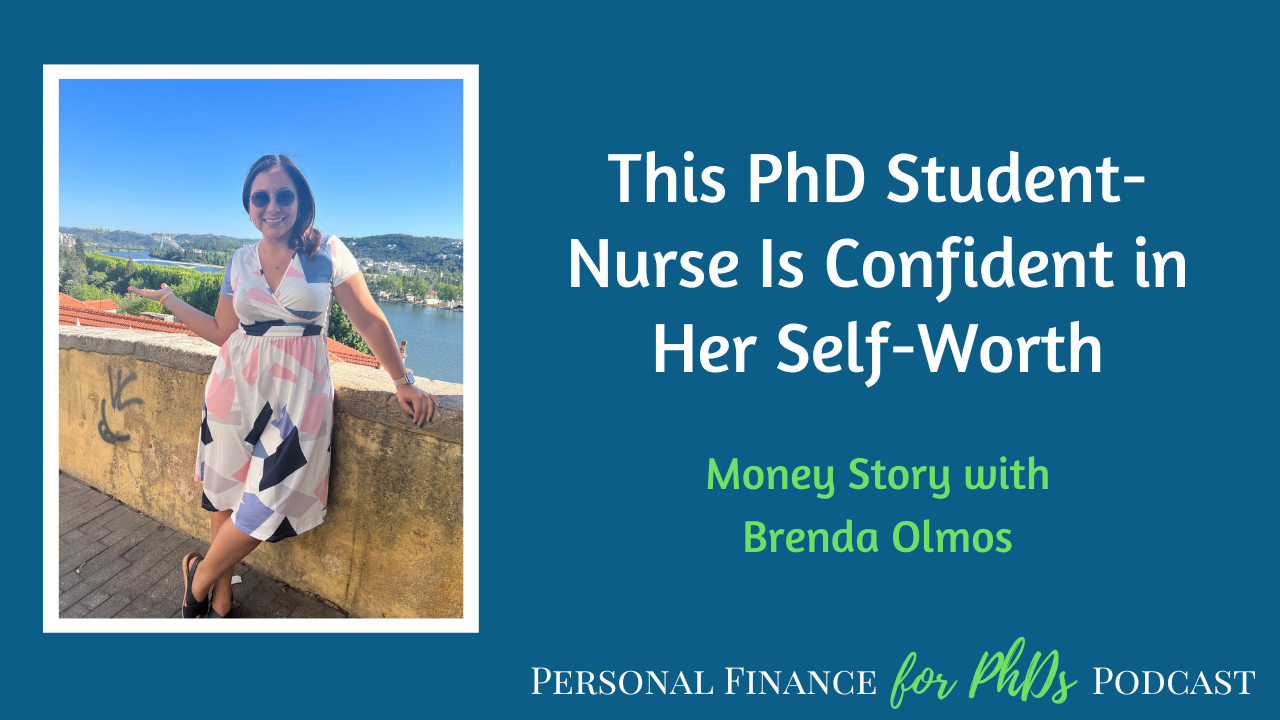
This Grad Student’s Finances and Mental Health Were Stuck in a Negative Feedback Loop

July 4, 2022 by Meryem Ok 2 Comments

In this episode, Emily interviews Dr. Haley Sanderson, a postdoc at the University of Saskatchewan. Haley was dramatically underpaid during graduate school and discouraged from working on the side. While many of her peers lived hand to mouth, Haley’s situation was made more dire by her at-the-time undiagnosed and untreated mental health disorder. Haley entered a negative feedback loop in which her finances, mental health, and physical health deteriorated together. Emily and Haley discuss what her program could have done to ameliorate this negative spiral and why it’s vital to sufficiently financially support PhD trainees. Haley concludes with her very practical financial advice for anyone at a career transition point.

Links Mentioned in this Episode

  • PF for PhDs Sponsor QE Tax
  • Emily’s E-mail
  • PF for PhDs S12E4 (Show Notes)
  • Agriculture and Agri-Food Canada
  • PhD Stipends
  • PF for PhDs Register for Mailing List (Advice Document)
  • PF for PhDs Podcast Hub (Show Notes/Transcripts)
Image for S12E4: This Grad Student's Finances and Mental Health Were Stuck in a Negative Feedback Loop

Teaser

00:00 Haley: My suggestion would be, if somebody’s in my situation, to go get the help you need and get the financial help that you need, even if it means taking out loans. Because it’s much better to have the financial debt than the mental health debt.

Introduction

00:22 Emily: Welcome to the Personal Finance for PhDs Podcast: A Higher Education in Personal Finance. I’m your host, Dr. Emily Roberts, a financial educator specializing in early-career PhDs and founder of Personal Finance for PhDs. This podcast is for PhDs and PhDs-to-be who want to explore the hidden curriculum of finances to learn the best practices for money management, career advancement, and advocacy for yourself and others. This is Season 12, Episode 4, and today my guest is Dr. Haley Sanderson, a postdoc at the University of Saskatchewan. Haley was dramatically underpaid during graduate school and discouraged from working on the side. While many of her peers lived hand to mouth, Haley’s situation was made more dire by her at-the-time undiagnosed and untreated mental health disorder. Haley entered a negative feedback loop in which her finances, mental health, and physical health deteriorated together. We discuss what Haley’s program could have done to ameliorate this negative spiral and why it’s vital to sufficiently financially support PhD trainees. Haley concludes with her very practical financial advice for anyone at a career transition point.

01:44 Emily: I have set a super audacious goal for my business and our U.S. PhD community broadly. It’s actually a bit difficult for me to even speak it out loud! My goal is for every graduate student, postdoc, or postbac in the U.S. who is not having income tax withheld from their stipend or salary to be offered training on how to 1) estimate their future income tax liability, 2) determine if they are required to pay quarterly estimated tax, and 3) prepare to pay their tax bill or bills through setting up a system of self-withholding. I am passionate about this topic because surprise tax bills, high tax bills, and fines are an almost completely preventable source of financial strife for my community, and all that’s needed is a bit of education delivered at the right time. I provide just such a training, which is my asynchronous workshop titled Quarterly Estimated Tax for Fellowship Recipients. Most of you have heard me talk about it before, and some of you have taken it. The perfect time to give PhD trainees access to this workshop is when they start or switch onto non-W-2 income, which often happens near the start of the academic year, i.e., the near future.

03:08 Emily: If you share my passion—or maybe it’s more of a frustration for you—and know that your university is not already providing sufficient training in this area, would you please recommend that your graduate school, postdoc office, graduate student association, or department sponsor my workshop for those interested in taking it? You might want to take it yourself, or perhaps you just want to save the entering cohort the time and energy it took you to figure this all out on your own. To make this recommendation, simply email the potential sponsor with the reason you are recommending the workshop and this link: PFforPhDs.com/sponsorqetax/. If you’re comfortable with it, you can Cc me [email protected], and I can pick up the conversation. Thanks for participating with me in trying to reach this goal! I know it will prevent a lot of people in our community from experiencing tax-related financial emergencies next spring.

You can find the show notes for this episode at PFforPhDs.com/s12e4/.

Without further ado, here’s my interview with Dr. Haley Sanderson.

Will You Please Introduce Yourself Further?

04:33 Emily: I am delighted to have joining me on the podcast today, Dr. Haley Sanderson, who is a postdoc at the University of Saskatchewan, and she is coming on the podcast to talk about a really sensitive topic, which is living on a very low graduate student stipend while dealing with mental illness. So, Haley, I’m really pleased that you volunteered to be on the podcast to talk about this important topic. So, would you please introduce yourself a little bit further for the listeners?

04:58 Haley: Hi, I’m Haley. I have a PhD in environmental studies where I specialize in environmental microbiology and biotechnology. I finished my PhD in five years defending and graduating in fall 2018, since then I’ve completed postdocs with the Agriculture and Agri-Food Canada, Dalhousie University, and I’m now a postdoc in the Vaccine and Infectious Disease Organization at the University of Saskatchewan. And I’m currently applying for more full-time permanent gigs <laugh>.

05:37 Emily: Well, best of luck with that. Okay. So we’re going to go back to your grad school years, and most of my listeners are going to be in the U.S. So, could you please explain, give some context for how you are funded during your PhD?

Funding During the PhD

05:53 Haley: So, during my PhD, I started as a master’s student, so I actually started on a much lower stipend of about $14K Canadian. So, to get that money, I had to TA for about two semesters every year and then do a research assistantship in the summer. I was a master’s student for a year, and then I bumped up to be a PhD. I ended up getting three provincial scholarships in Ontario that bumped my stipend up to $25K, which is only a little bit higher than the base stipend for a PhD student. So, with that stipend, we actually have to pay tuition out of it. So, not all of it gets to go to living. You also have to pay your tuition out of the money that they give you. So, the actual amount that I lived off of was much smaller than the stipend that I got <laugh>.

07:14 Emily: Yeah. Well, let us know, do you remember the numbers on that? Like after paying the tuition, what amount were you living off of? And then give us some context for, like, how does that compare to the local cost of living?

07:26 Haley: I don’t know the exact numbers, but tuition was about $2,000 a semester, I would say, for about $6,000 a year. So, when I was on my original master’s stipend, I only had maybe $8K <laugh>, which is a little <laugh> insane. I had a lot more to live off of once I was in the PhD program. So, when I was a master’s student, I actually had to work, but there were some problems with the department not wanting me to work and kind of threatening to take away the stipend that was paying like my tuition and my rent.

Challenges to Supplementing the Stipend

08:09 Emily: Yeah. I mean, the numbers that you’re throwing out there sound incredibly low. It’s not surprising at all to me that you would, you know, seek other sources of income. Was that something that your peers were doing as well? Was the department also like threatening other peers who were working, or how were they making ends meet?

08:27 Haley: A lot of the other people in my department had like side gigs that they’d only do every once in a while. A lot of people hid if they had part-time jobs. Unfortunately, I worked close to the university and some of them saw me working, so that didn’t work out too well <laugh>.

08:48 Emily: How was that resolved? Did you have to give up the side job?

08:53 Haley: Some of the admins helped me apply to the provincial scholarships. And once I got the provincial scholarships, I was kind of told to get rid of the part-time job.

09:03 Emily: And would you say that when you had that higher $25K minus, okay, let’s say $19K per year stipend during the latter part of your PhD, was that enough to survive, or did you feel like you would’ve worked more if you were allowed to?

09:18 Haley: I probably would’ve worked more, but I think I would’ve had trouble doing that with the mental illness, because there were a lot of things that that impacted. Like my eating, my sleeping, my social life were also impacted by finances, and moreso by the mental health problems.

Mental Health Impact on Money Mindset

09:41 Emily: Yeah. Let’s talk about that more now. So, you had an undiagnosed slash untreated mental health condition at that time. So, how was that affecting how you handled your finances?

09:54 Haley: So, I have a psychotic disorder that causes me to have delusions and hallucinations that are usually really disparaging and kind of controlling. So, let’s say, for instance, when I got accepted into the master’s program, my mom made a comment that my brothers paid for their second degrees. And that kind of morphed in my mind to my parents won’t help me at all, so don’t ask them. Even when I tried to apply for like student loans, I kind of got it in my head that I would never be able to pay them back. So, it was kind of like a brick wall to actually apply for that. There were other things in my life, like I couldn’t eat certain foods because I thought I’d get really sick and stuff like that. So, it was essentially that I couldn’t really do anything to help my situation because my brain would tell me, like, you can’t actually do this.

10:58 Emily: Wow. Yeah. I had not like, thought about that or realized that was a potential, you know, symptom that some people could be experiencing. So, thank you for sharing that. I do a lot of like, how do we find workarounds on this podcast? Or like breaking through like your money mindset stuff. But like when you’re dealing with a serious mental health condition, that’s simply not an option without higher-level treatment, right? Which you eventually got, and we’ll get to that. And so, how then also did having such a low income during graduate school affect your ability to get diagnosed or treated?

11:33 Haley: I started to have psychotic episodes during my third year of my undergrad. And at that time, I went to go see a doctor and that doctor gave me antidepressants, which there was a co-pay for. And he wrongly sent me home without doing any more assessment and essentially told me, you might be developing schizophrenia, we’ll see <laugh>, which is not the best thing <laugh>. So, I was already on a very small budget when I was in undergrad. My parents paid for like my tuition and my rent. So, I was never in a situation where I would be homeless, but I was still in a situation where I didn’t have that much money. If I were in that situation now where I’m on my antipsychotic and my antidepressant, the antidepressant is maybe a couple dollars a month, but if I didn’t have benefits my antipsychotic would be over $200 a month.

12:43 Haley: So, part of the reasons why I stopped taking the medication at that point was, one, that it caused pretty severe hallucinations, more than I had before I got on the medication, because it was the wrong one. And the other thing was that I didn’t necessarily want to pay for it <laugh> because it was making me feel worse. So, I was kind of in denial that I needed them when I was in grad school, because I could no longer tell if I was feeling well, or if I was sick. Everything just kind of melded together. So, in terms of the impact of having a really low budget in grad school, I couldn’t eat properly. I maybe spent $30 a week on food, and I pretty much ate the same things all the time. Like rice, lentils, beans, and apples.

13:48 Haley: I was so worried about things that I also didn’t sleep. And by that I would mean I would be in the lab for maybe 16 hours a day and I’d go home and sleep for four to six hours. And one of the big things about controlling psychosis is that you need to get enough sleep. So now, I actually need close to eight to 10 hours on average. So, that was a pretty big impact. And it certainly didn’t help the delusions that I couldn’t get financial help <laugh>. It was kind of like a feedback loop.

14:27 Emily: I was just going to say that sounds exactly like a negative spiral, right? Like you are having tight money issues, so you forgo the medicinal and also other forms of self-care that maybe were somewhat available to you. And then your mind is also telling you that you can’t access or don’t deserve those things. And then it loops around again. So yeah, that sounds horrible.

Financial Stress and Sacrifices on a Low Stipend

14:56 Emily: You just mentioned living off of a really small, like food budget, for example. So, were there other things that you didn’t spend on that you forwent spending on to make that really low stipend work?

15:10 Haley: I didn’t go out very often and kind of avoided any social situation where I might have to pay for stuff. Particularly in my first two years. After my first two years, I moved somewhere with a better cost of living. I kind of filled my time only with work because I couldn’t really afford to have hobbies <laugh>. At one point when I decided to move in my second, third year, I had to give up a cat that was kind of my emotional <laugh> animal at that time, because I couldn’t move them across the country to where I was working. I didn’t go home for Christmas, and I barely saw my family because I really couldn’t afford to go on a bus or go on a plane. I didn’t take a vacation throughout my entire PhD. I didn’t date anyone during my entire PhD. And I avoided buying anything other than food. So, I would wear clothes until they like physically fell apart. Same with shoes. I’d wait until I really, really had to. So, I essentially forgo like anything that would be making me kind of happier <laugh>. So, it really wasn’t ideal.

16:39 Emily: Yeah. I realized that I kind of phrased that question as like, “Oh, what are the great strategies you used?” Not that I meant it that way, but this is not at all a laudable list, right? This is all a list of things that caused you to become even more unhealthy. And again, in that spiral that we were just talking about, and to not be able to break out of it. Like having an injection of some extra money, I mean, it would also help if your mind were, you know, allowing you to spend on these things, but having some extra money would’ve helped your general mental health, but also specifically your condition so much. It’s so obvious that that would be the case. I’m just like hearing a picture of you like drowning during graduate school. Financially, mentally. And I’m wondering about the people around you, like your advisor or other people in your department. Like, was there anything that they could have done? I’m asking this in a way of like, what can other people listening to this, take away if they see a peer or someone in their program that is to say, maybe they’re a faculty member or someone else who has a bit of power in the situation too. Like what, what should they have been doing or what could they have done to help you out of this spiral?

What Could Have Helped?

17:59 Haley: In some ways, there wasn’t really much people could do. In terms of what the department did, they tried to help me get scholarships, which did make the situation a lot better. There is an opportunity to do like graduate assistant work that I did for two summers. That was really helpful. Maybe having like emergency funds that are easy to apply to would be very useful too. But a lot of the time, I didn’t think that my, I couldn’t tell that my situation wasn’t normal <laugh> because a lot of my peers had similar problems. Probably not to the same mental extent, but in terms of money, it was pretty common. And maybe just increasing the stipend would make a big difference. I checked the department’s website and it looks like the PhD stipend has increased, but the master’s stipend is still quite low. But that would be what I would think of when I think of what the department could do to help people.

19:09 Emily: Absolutely. I think pay graduate students more. Pay graduate students enough that they don’t experience the things that you mentioned, like not being able to go home and visit your family members, never going out socially if there was, you know, a possibility you might spend money. In addition to just being like the compassionate thing to do for students who are under your charge, as well as, especially if you’re not going to allow them to work or whatever, they’re not developing. You were not developing as a scholar in the way you could have. You could have blossomed even more, had you been sufficiently financially supported. Same goes for your peers too. So, it’s just really, it’s very hard for me <Laugh>, I’m sure for the listeners as well, to hear how much you were struggling and how big of a difference, you know, a few more thousand dollars a year from your department would’ve made, and what exactly is tying their hands to make that not happen? If their goal is to develop scholars and PhDs, they could do that even better by financially supporting them better. That’s how I view it.

20:12 Haley: Yeah.

Commercial

20:15 Emily: Emily here for a brief interlude. I have set a big goal for my business and our U.S. PhD community broadly. My goal is for every graduate student, postdoc, or postbac in the US who is not having income tax withheld from their stipend or salary to be offered training on how to 1) estimate their future income tax liability, 2) determine if they are required to pay quarterly estimated tax, and 3) prepare to pay their tax bill or bills through setting up a system of self-withholding. I provide just such a training, which is my asynchronous workshop titled Quarterly Estimated Tax for Fellowship Recipients. Now, some universities, institutes, or funding agencies already offer such a training, and they have no need to work with me. But others won’t allow their employees to touch the topic of taxes with a 10-foot pole, and that’s where working with me can really benefit everyone. Would you please send me an email and tell me which camp your university falls into—or if it’s somewhere in between? You can reach me at [email protected]. Furthermore, let me know if you want to take Quarterly Estimated Tax for Fellowship Recipients for free or think that the cohort coming in this fall should, and I’ll reply with how you can help make that happen. I look forward to hearing from you! Now back to our interview.

Ending the Negative Spiral

21:56 Emily: So, how did you ultimately end this spiral that you were in? Did you get on medication? Did you see different doctors? Was it a matter of graduating? Like what happened?

22:06) Haley: Graduating was actually the worst thing that happened <laugh>. So, I had to pay for my ticket to do my defense because I was living in Alberta at the time and I had to come back to Ontario, and that actually completely depleted my bank account. If I hadn’t gotten a job pretty much right away, I would not have had a place to stay and I wouldn’t have been able to go home at all. I ended up going through an even bigger spiral where I entered like acute psychosis. Like the CRA is after me <laugh> kind of psychosis or people are actively following you and you’re hearing complete conversations and more disparaging comments and so on. I essentially kept working for almost six months with acute psychosis. And then I finally hit a point where I couldn’t do it anymore and I realized that there was something incredibly wrong.

23:21 Haley: So, I ended up going to the doctor who tried to put me on an antipsychotic, but I essentially spiraled further when I got onto the antipsychotic because it was essentially too late to be putting me on it in an outpatient location. So, I ended up having to go to the ER twice. The first time there wasn’t a psychiatrist. So, they sent me home. The second time, I was essentially really dehydrated, only weighing 80 pounds and completely out of reality <laugh> essentially. So, the psychiatrist put me into inpatient care and I stayed there for a month where they put me on medication and I essentially slept because I was burnt out from work and the PhD. So, it’s taken probably two and a half years to get on the right medication and recover fully from that.

24:23 Haley: Starting a postdoc that actually pays me enough to live has been pretty helpful <laugh> in that because I’ve been able to start eating more healthy. I’m not as worried. And I have the psychosis under control between medication and therapy. So, I’m sleeping a normal amount. I’m eating a normal amount. I’m exercising because I can afford to go to the gym and like go to spin class and stuff like that. One of the weird things is I actually got out of the grad school with absolutely no debt because I couldn’t actually apply for the loans. Like my head would not let me apply for them. So, I ended up getting out with absolutely no debt, but also absolutely no money <laugh>. So, I was really lucky that I was offered a job right away. After I was hospitalized, I had to take three months off. So, I actually lost the job that I had gotten and I had to find another job, which I had to move across the country for. And then after that job, I had to move across the country again, which has always been kind of a financial burden, but that’s just kind of how my job goes <laugh>. But I’m doing much, much better than I was doing in grad school and have a lot of things more under control.

Paying Off the Mental Health Debt

25:57 Emily: I am so glad to hear that you’re in a much better place right now. Although it does seem to me that it’s taken a long, long time to get there. I mean, you mentioned that you came out of graduate school with no financial debt, but you had a debt to yourself of another kind, right? Of having not taken care of yourself and had been on the medication and doing the sleeping and the eating and all that stuff. So like, you still had to come out of that depth of the, you know, of care that you needed to get back up to the point you’re at now, the stable and healthy point.

26:32 Haley: I would say that I would’ve rathered have the financial debt than the mental debt. So like, my suggestion would be if somebody’s in my situation to go get the help you need and get the financial help that you need, even if it means taking out loans. Because it’s much better to have the financial debt than the mental health debt.

26:57 Emily: I totally agree. And I’m really glad to hear you say that. I don’t want to criticize other people either in their financial situations, but when you’re in a unique time of life, like being a graduate student and it is ideally time-limited and you’ll move on to having a better-paying job later on, it can, in some situations make sense to take out debt and some people feel so debt-averse that they, and I’m not saying you did this because you had this mental health condition, but they put themselves into debts of these other kinds. They’re not eating properly. Maybe they are not living in a safe situation. Again, I don’t want to sound like I’m criticizing them, but they do as a graduate student, at least in the U.S., have the option of taking out debt and alleviating some of that.

27:43 Emily: And so, I just want them to think about that as a legitimate option and not something that’s completely off-limits to them to help this short-term cash crisis that they’re in during graduate school. Again, the responsibility for that as we were talking about earlier falls much more on the programs underpaying people. That’s on them, rather than the people who are being underpaid. But that is a way out of a very difficult short-term situation. And like you said, you would’ve rather had a bit of money to pay off than having these years and years that it’s taken you to recover from the state that you were in by the end of graduate school.

Save Money and Study the Financial Side of Grad School

28:20 Emily: Do you have any other advice for prospective graduate students who are walking into programs like you did your master’s, your PhD program, who are potentially being radically underpaid compared to the local cost of living?

28:37 Haley: I would mostly work for a while and save money before you go to grad school. I wasn’t in a situation where I thought I could do that, but if I could do it again, I probably would’ve started working right away and then decided if I wanted to do grad school after I’ve made a little bit of money <laugh>. Make sure that whatever program that you want to go into does have a fair stipend. I didn’t even think of that when I joined grad school, but that should have been a much bigger consideration than what it was for me because I’m first-generation. I didn’t think that they would give me a stipend that I couldn’t live off of <laugh>.

29:17 Emily: Misplaced trust.

29:19 Haley: Yeah <laugh>. I would maybe do a little more digging on the financial side before starting grad school.

29:27 Emily: Yeah. I think those are great suggestions for someone considering graduate school. Definitely look into the stipends versus the local cost of living. I have a website that helps with that. At least if you’re in the U.S., which is called PhDstipends.com. So you can see what other graduate students actually report as being their income, not what the programs tell you they’re paying. Those might be two different things until you get the offer letter, at least. So you can kind of do some pre-research on the programs that you’re planning on applying to, to see if they’re paying a living wage or not. And like you said, I think a lot more people should be considering working for a decently-paying job for a year or two or three before they start graduate school to build up some kind of financial safety net so that they don’t have to do things like you were just mentioning, the cost of moving multiple times across the country.

30:13 Emily: That’s very significant. And if you end up paying for that, let’s say with like credit cards, because you don’t have the savings or cash to do it, then you’re kind of starting graduate school like already knocked back, already knocked onto your back foot, like financially, because you’re now having to pay down credit card debt in addition to living on this very, very small stipend. So instead, if you can have that savings, so, so helpful to just kind of get out ahead of these issues. So, that’s great advice for prospective graduate students. And thank you for giving that.

Best Financial Advice for Another Early-Career PhD

30:43 Emily: I do end my interviews with a standard question that I ask all of my guests, which is what is your best financial advice for another early-career PhD? And it could be something that we’ve talked about in the course of the interview, or it could be something completely new.

30:55 Haley: If you’re a postdoc, I’d start saving and get a retirement fund and maybe a rainy day fund. Because postdocs are fairly short for most people, and you’re probably going to have to move again and things come up. So, it’s good to start saving once you can start saving after grad school. And kind of the same advice for looking at a postdoc. Make sure the salary is enough to live comfortably on before you agree to do it. It’s not a nice thing to accept a salary and then get to the city and realize that you can’t really live there <laugh>. And maybe try to negotiate your salary if you can.

31:45 Emily: All wonderful advice. I’m recalling actually, when my husband got a postdoc offer in Boston, we were living in Durham, North Carolina at the time. So kind of moderate cost of living to high cost of living. And we calculated it after accounting for the cost of living change between those two cities. He was actually being offered effectively less money than he had made as a graduate student with that postdoc position in Boston. And he did try to negotiate and he got them to increase the offer very, very slightly. And ultimately did not take that offer and finances were, you know, a part of that decision. And so, I totally agree with you, especially if you have not yet lived in a city, whether it’s for grad school, for postdoc, anything else. You need to really investigate what the cost of living is because you just don’t know until you actually live there. And by the time you accept an offer and move, it’s too late <laugh>. You need to do as much as you can in advance. So, Haley, thank you so much for being willing to give this interview. I think it was a really important conversation that the listeners are going to benefit so much from. So, so glad to hear you doing well. And thanks again for volunteering!

32:50 Haley: Thanks for having me!

Outtro

32:58 Emily: Listeners, thank you for joining me for this episode! I have a gift for you! You know that final question I ask of all my guests regarding their best financial advice? I have collected short summaries of all the answers ever given on the podcast into a document that is updated with each new episode release. You can gain access to it by registering for my mailing list at PFforPhDs.com/advice/. Would you like to access transcripts or videos of each episode? I link the show notes for each episode from PFforPhDs.com/podcast/. See you in the next episode, and remember: You don’t have to have a PhD to succeed with personal finance…but it helps! The music is “Stages of Awakening” by Podington Bear from the Free Music Archive and is shared under CC by NC. Podcast editing by Lourdes Bobbio and show notes creation by Meryem Ok.
This Grad Student’s Side Business Pays Twice What Her Assistantship Does

June 6, 2022 by Meryem Ok 1 Comment

In this episode, Emily interviews Natilie Williams, a PhD candidate in communication at the University of Missouri, keynote speaker, and author. Natilie established her business prior to starting her PhD and was up front about it with the director of graduate studies from the beginning, which has been to her benefit. At times, her business has brought in double or more what her assistantship pays, which has been vital for her financial health and security during graduate school. Natilie manages her time and schedule fastidiously using a planner to excel in her graduate program and business.

Links Mentioned in this Episode

  • PF for PhDs Subscribe to Mailing List
  • PF for PhDs Show Notes for S12E2
  • Innerview: Lessons in Leadership (Book by Natalie Williams)
  • PF for PhDs Seminars
  • Dr. Emily Roberts’ E-mail
  • Nat Will, Speak! (Website)
  • @NatWillSpeak (Instagram)
  • @NatWillSpeak (Twitter)
  • PF for PhDs Podcast Hub (Show Notes/Transcripts)
S12E2 image for This Grad Student's Side Business Pays Twice What Her Assistantship Does

Teaser

00:00 Natilie: I was able to, once you added in book sales, you added in speaking, yeah, I was able, at some point, I made maybe like two and a half times my assistantship, almost three, by being able to do these things and elevate my speaking career. Expand it, so not just speaking, but then also a book.

Introduction

00:25 Emily: Welcome to the Personal Finance for PhDs Podcast: A Higher Education in Personal Finance. I’m your host, Dr. Emily Roberts, a financial educator specializing in early-career PhDs and founder of Personal Finance for PhDs. This podcast is for PhDs and PhDs-to-be who want to explore the hidden curriculum of finances to learn the best practices for money management, career advancement, and advocacy for yourself and others. This is Season 12, Episode 2, and today my guest is Natilie Williams, a PhD candidate in communication at the University of Missouri, keynote speaker, and author. Natilie established her business prior to starting her PhD and was upfront about it with the director of graduate studies from the beginning, which has benefitted her. At times, her business has brought in double or more what her assistantship pays, which has been vital for her financial health and security during graduate school. Don’t miss Natilie’s description of how she manages her time and schedule to excel in her graduate program and business.

01:35 Emily: I have a gift for you if you’re not yet subscribed to the Personal Finance for PhDs mailing list. At the end of every interview, I ask my guest to give their best financial advice for another early-career PhD. My team has collected short summaries of all the answers ever given on the podcast into a document that is updated with each new episode release. The document is even organized by topic so you can easily see which type of advice is most popular. I invite you to join the mailing list to receive access to this document through PFforPhDs.com/advice/. I hope this quick, powerful resource will help you up-level your finances this summer! You can find the show notes for this episode at PFforPhDs.com/s12e2/. Without further ado, here’s my interview with Natilie Williams.

Will You Please Introduce Yourself Further?

02:38 Emily: I am delighted to have joining me on the podcast today, Natilie Williams. She is both a PhD student and a professional public speaker and author. And so I’m really excited to learn how she’s managing her business as well as her career as a graduate student. So Natilie, welcome to the podcast. Thank you so much for volunteering! And would you please tell the listeners a little bit more about yourself?

02:58 Natilie: Absolutely. Thank you so much for having me. I’m super excited. I am a fourth-year doctoral candidate. I’ll actually graduate in just two months, so I’m very excited about that. So, I’ll graduate in two months. I am at the University of Missouri in Columbia, where I am finishing up my PhD in Communication with a focus in Identity and Diversity, and also maintain an assistantship there. I actually recently accepted a professor position in the Midwest. And so I’m really excited about that. And I also have the privilege and the honor to serve as a keynote speaker across the country on student leadership, collegiate success, and academic and professional development. And then that wasn’t enough for me. I also wrote and published a book called Innerview (I N N ER): Lessons in Leadership. And so, really excited about the book. And so, it looks at how we can use moments of reflection in order to enhance ourselves as leaders.

04:00 Emily: Wow. I can already tell, I wish we had another interview to do all these other topics on like, and actually hear from you and your, you know, the main topics that you speak about because that sounds absolutely fascinating. We’re going to keep it more focused on like you as a graduate student and having this business and how you’re doing both of those things at the same time. Hopefully get some good gold nuggets for the listeners who also have businesses that they want to run as well as being graduate students or PhDs. But congratulations on your faculty position! That’s really, really exciting. And yeah.

04:29 Natilie: Thank you.

Getting Into Public Speaking

04:29 Emily: So, that’s awesome. Let’s kind of back up a little bit. And how did you start speaking professionally? Did this come like before graduate school or since you started graduate school? How did you come to that?

04:40 Natilie: Absolutely. So I started speaking professionally about three months after I received my master’s degree. So I had a really mind-blowing experience. I did my master’s thesis on a TV show called A Different World, which was a spinoff of The Cosby show. And it was a very much so like a staple in like the Black community. Like that show ended May of 1993 and it is still talked about now. People still dress up as the characters for Halloween. And so I did my thesis on that show, and I got surprised by The Steve Harvey show with actually meeting the cast because they did a reunion. I talked about my thesis and it was just like this big national, even international thing.

05:20 Natilie: And so where I went for undergrad, Central Michigan University was like, “Hey, we have this freshman orientation leadership program and we want you to come and serve as a keynote speaker. And we want you to talk about your old leadership experience you had on campus as an undergrad. And we know that you just had that really cool experience with A Different World. Do you think you could tie that in as well?” And so, I did it. I keynoted in front of about 300 plus people. And at the end of that keynote, I had lines and lines and lines of students waiting to talk to me afterwards. And that was the moment where I realized it was more than just me being good at speaking, but it was truly a part of my purpose. And then I eventually learned, maybe months after that, the business side of speaking and was able to start it as a business and turn it into a very much so awesome, successful career path.

06:13 Emily: And so, I understand from our prior conversation that you had some years in the workforce between when you finished your master’s and when you started your PhD. So that’s kind of when you were learning, as you said, the business of speaking and growing that part of it. Is that right?

06:27 Natilie: Absolutely. So with the master’s, I was working for a corporate organization part-time and then once I graduated, they actually hired me on full-time. And when they hired me on full-time, I worked there for about two and a half years. So during the time where I started my speaking career, I was working in corporate and I was actually teaching as an adjunct at night because I was still living in the same town where I got my master’s degree from where I also had had an assistantship that paid for my master’s degree. And they were like, Hey, we know you’re still here in town. You did really good work when you were teaching for us. You want to come do it at night? And so I was really able to use my corporate job to fund my speaking career to start funding the business, right? The website, the photoshoot, different things of that nature. And I had my adjunct position as well as some extra savings. And it got to a point where I was working corporate where I was like, I don’t want to do this anymore. I’m not a fan of this position. And I actually realized that I’m a geek. I love to read and write. I want to go back to school and get a PhD and still maintain and enhance my speaking career.

Speaking in the Collegiate Circuit

07:34 Emily: That’s a great thing actually about sort of side hustling or having your own business generally. It can be on the side of different full-time things. You can have transitions in your career and take your business with you as you go through this transition. So that is awesome. And so, your niche about speaking, you said you’re on the collegiate circuit. So do you speak mostly to college students? And you mentioned leadership earlier, like what are kind of the general topics that you speak about? And did it come from that initial engagement or how have you, you know, expanded since then?

08:04 Natilie: So yeah, it’s come from the initial engagement. It’s also come from my own collegiate experience that has really propelled me as a leader and have taken advantage of opportunities and so, and networking. So like mentorship, relationship building, leadership despite trauma, Greek leadership, Black and multicultural Greek leadership, first-year experience. So how do you even plan out your college career? Whereas you can take over the campus, what are some resources and opportunities that you should take advantage of as a college student? So studying abroad, pre-professional programs, networking with professors, and things of that sort. So those include some of the speaking topics, professional development, preparing yourself for your career path. What can you do in college to prepare you for post-graduation? So those are some of the speaking topics. And it’s on the collegiate circuit as well, but I also am starting to do more stuff with high schools and middle schools as well, including like that social and emotional learning component to leadership. So, it’s starting to expand greatly.

Time Management as a Grad Student and Business Owner

09:12 Emily: That’s awesome! Now I want to hear about you as a graduate student, and also as a business owner. And since you started the business back when you had a full-time job and another part-time job, you probably took some lessons from that in terms of time management and so forth. But I’d love to hear about how you’re applying them now as a graduate student. Like, how are you managing your time and your energy to make sure that you’re doing both these things well?

09:35 Natilie: Absolutely. So I believe it’s time management and also time prioritization and time stewardship. And so figuring out what’s important right now and how much time do I need to allocate to it. But for me, coming in as a graduate student, working on a PhD was really new to me because I had never done that before of course. And so my first thing was, I need to understand what’s the lay of the land. How much time do I need to dedicate to this because it was in-person and it was full-time? And so for me, I really had to figure out what I didn’t know. And I looked to upperclassmen to see how much time are you all spending on readings and coursework? What’s the writing load like? And so I actually sort of, kind of, when I first started the doctoral program, I took very few speaking engagements that first semester, because I was like, I need to focus on this program.

10:31 Natilie: And once I learned that I could balance my coursework and my speaking career, it was all she wrote after that. So it would get to a point where I knew my schedule perfectly. I knew when I had to teach. I knew when I didn’t have to teach. I knew how long it would take me to get to the nearest airport. So I was about two hours from the nearest airport and it would be sometimes I would literally get done with class as a doctoral student. I would have my suitcase packed in my car. I would drive two hours to the airport. I would fly out to go speak. That same day, when I got done off the stage speaking, I would fly right back, finish work as a doctoral student, maybe teach that morning as my assistantship, and I would do it all over again. So I really learned my schedule perfectly. And I would do my papers sometimes on the airplane, do my class readings in the back of the Uber as I was going to my hotel to speak. I would sometimes get to my hotel the night before, so I could do my coursework. And so I really got the timing down perfectly, and I always keep a planner with me. So I knew due dates for assignments as an instructor, and due dates for assignments as a graduate student as well.

Schedule Flexibility

11:47 Emily: I’m not that familiar with like your field. So like, what is the nature of the research that you’re doing? Like is a lot of thinking and writing and reading? Or do you have to like, be certain places aside from like the teaching component? Like, do you have to be certain places at certain times? Like how flexible is your schedule, I guess?

12:02 Natilie: Very flexible schedule. So, as a doctoral student, I study communication. Specifically, I’m more of an interpersonal and family communication scholar. Specifically, I look at what’s called voluntary care relationships. And so those are relationships that have no biological tie, but because we say they’re family, they’re family. So your best friend that you consider your sister friend or your childhood nextdoor neighbor that you may have considered your cousin growing up because you all have known each other for the past 20 years. Godparents and things like that. And so I look at that, but specifically within the context of Black families and Black people and the validation process of those relationships, the impact of them, and the benefits. And so, I’m also a qualitative scholar. So I spend the time interviewing people and things of that sort. So that’s my research interest. And when you’re doing the interviews, you can, you know, do them over the phone and things like that. So, I had a lot of flexibility except for the fact that my coursework was in person. So I just, I knew how much time I had to drive to the airport right after class. I knew how much time I had to board the airplane. So I really just really got it down to a science.

13:16 Emily: That’s amazing. I don’t <laugh>, I don’t think I’ve ever gotten near that degree of specificity with like my time blocking practice. But it’s because I have much fewer, I think, constraints on my life, especially prior to becoming like a parent. Like once you have like that the parenthood stuff going on, I know it’s like a thing that’s said like, you know, mothers become like the most efficient workers you’ve ever seen because they have like, so limited time to like, do their work and then they have to do these other things. So like, but even that, like, I’m not to the degree that you just described, like time blocking. So I really like admire that. It sounds like an amazing skill to have.

Speaking Engagements During COVID

13:53 Emily: And how, like, during this time that you’ve been a PhD student, you know, you mentioned that you took very few speaking engagements at first when you were kind of getting the lay of the land. But then how has your business grown over the past few years? And I’m especially wondering how things have changed with COVID, because you just mentioned you were doing in person speaking. I assume that at least changed for some amount of time for a while. So how have things been going, you know, since starting your PhD?

14:15 Natilie: So as soon as I got the understanding of my schedule and the timing, I hopped right back on that road and it, I just, I knew if I had class, if I didn’t have to teach or my own classes on a Thursday or a Friday, I knew Wednesday night I could go fly out and come right back. And so I started to just be intentional about the different conferences I would present at, in front of students. But then also too, with the decision-makers present, understanding how many decision-makers will be present during that networking piece. And that networking piece, allowing decision-makers to meet me, sit in on my sessions, get to learn more about the learning objectives with my presentations, whether it was a workshop or a keynote, that really allowed me the opportunity to continuously to grow on the speaking circuit.

15:02 Natilie: And with the topics that I speak about, leadership and student leadership on the collegiate market, it’s not as many young black women doing what I’m doing. And so, I’m standing out, right? And I’m doing very well with speaking as far as the mechanics of it. And I was able to and still am able to get my name out there. And so that allowed me to grow my speaking engagements. And you also mentioned about COVID. Well, when COVID hit, I was in my mind, I first thought that this was literally the end of my speaking career. And I said, well, you know what? I had a great run. I did a great job. If that’s it, I went out with a bang. And I actually saw my business boom, shortly after. Like months after. And my mind was blown. I’m like, wait a minute. But I realized that these schools were like, we still need people to encourage our students.

15:53 Natilie: We still need people to give our students the how to. It’s now a virtual space. And so I was able to sometimes do two engagements in one day I could do one in California, one in Florida virtually and not have to leave and not have to also invest in travel expenses. And so, 2021 was probably one of my most profitable speaking years yet. And I think this year is probably on top to beat that. It’s definitely on top to beat that. And so, yeah, I was completely blown away by it, completely blown away. And once I finished coursework for my PhD, it was <laugh>, it was all she wrote. I was able to do a lot more. So I didn’t have to be in the classroom as a student. I just had to teach. And so I was able to have even more free time to get out there and to maximize my opportunities to get in front of my target audience.

16:47 Emily: Yeah. I’m so glad that your business has grown through COVID as well. I’ve observed the same thing. My client base has expanded. It’s so much easier to set up speaking engagements without having to do all the logistics of the travel. And you know, my schedule’s a lot more open, as you were saying, because the travel’s not there. So I’m free to accept engagements that are closer in time together than they used to be. And it’s been strange because I had the same reaction like, oh I can’t travel anymore. I’ve got to pivot. <Laugh> like, what else can I do in this business aside from speaking, because I’m clearly not going to make money from speaking anymore. No, that was not at all the case. Once people kind of got their bearings, the bookings started coming in again. So it’s really been like amazing and I’m so grateful, and grateful that it’s happened the same way for you.

17:27 Natilie: Thank you!

Commercial

17:30 Emily: Emily here for a brief interlude. Would you like to learn directly from me on a personal finance topic, such as goal-setting, investing, frugality, increasing income, or student loans, each tailored specifically for graduate students and postdocs? I offer seminars and workshops on these topics and more in a variety of formats, and I’m now booking for the 2022-2023 academic year. If you would like to bring my content to your institution, would you please recommend me as a speaker to your university, graduate school, graduate student association, or postdoc office? My seminars are usually slated as professional development or personal wellness. Ask the potential host to go to PFforPhDs.com/speaking/ or simply email me at [email protected] to start the process. I really appreciate these recommendations, which are the best way for me to start a conversation with a potential host. The paid work I do with universities and institutions enables me to keep producing this podcast and all my other free resources. Thank you in advance if you decide to issue a recommendation! Now back to our interview.

Business Income vs. Stipend

18:52 Emily: Let’s talk about money. So, you have an assistantship. I don’t know if you want to share how much you make through that. Feel free if you’re comfortable. But how does your, like the money that comes in through your business compare with like your stipend?

19:05 Natilie: Yeah, so with an assistantship so Hey, when I left corporate, I left corporate, I quit the job. I had saved up $15,000 over the timeframe that I had worked there. Especially when I knew I wanted to leave. I was like, well, I’m no fool. I need to, you know, I need to be able to live. And so I saved up $15,000 and then I got this assistantship. And this assistantship was paying me literally a third, one-third of what I made in corporate. And for me I’m like, I will figure it out. Like that’s one promise I’ve made to myself is that I will always be okay financially. Legally, financially, correct? And so yeah, so with the assistantship I was making like a third of what I made in corporate.

19:50 Natilie: And with speaking, I was able to, there were some times where I was literally making whatever my assistantship was, I could make double that with speaking. So I was literally making double my assistantship with speaking and still had my assistantship. And so for me that allowed me to realize like, okay, I can do both of these things well, and I’ve always been a saver and I knew that I would need, you know, I would need to live after I graduated. So I was able to prepare for life post-Graduation. And then also writing a book while I was in the doctoral program and releasing the book and also having book sales come in. So, I was able to, once you added in book sales, you added in speaking, yeah, I was able, at some point I made maybe like two and a half times my citizenship, almost three, by being able to do these things and elevate my speaking career. Expand it, so not just speaking, but then also a book. And so, yeah.

20:54 Emily: It sounds to me like, you know, going into your PhD program, it was never like a question that you would give up the speaking. Like, it’s part of your career now. But I’m just wondering like, had you come into graduate school and not had a side business, is your stipend even enough to live on? Like, are your peers living on it? Or do they all have like side stuff going on or taking out student loans or depending on family members? Or like what’s going on financially in your program, I guess?

Transparency with the Department

21:19 Natilie: Yeah. Most of them, they definitely, they hustle. When I say hustle, I don’t mean it in a bad way. But they’ll take another job. They’ll teach somewhere else. They will, some of them have maybe like a significant other, so they’re able like to split costs. But for the most part, we definitely, as part of our program, we look for other ways to bring in that additional income. And so for me, I came in as a speaker and I made sure that that was something I promised myself that I would not give up, but I wasn’t sure how the department was going to react or respond to it. Because I never wanted them to think that like I was not focused on the program. And I listened to one of your previous episodes where you were talking about that, where it’s frowned upon sometimes.

22:07 Natilie: And so, I came into the department and told the Director of Grad Studies for the department, like, Hey, I do speaking. And so there would be some Fridays where they would have, what’s called colloquium where like, it’s like a big research conversation. And I’m like, yo, I’ve got to go Denver to speak. I can’t make it to colloquium. And luckily the Director of Grad Studies was like, you know, I’m going to count you speaking as professional development since you already have your hand in your career. We’re not going to count it against you, that you aren’t at colloquium, right? Like you already have your hand in your career. We’re going to support that. And I was so happy that she was so generous because she could have been like, no, you need to be here. I can say for like some of the rest of the department more so like peers, I didn’t really let them know too much.

22:56 Natilie: I would just say like, oh, I have a leadership conference to go to. I didn’t mention to my peers that I was the keynote for the leadership conference. But once I saw that it was a comfortable space, I was able to let them know. And then once they saw that like I wrote a book and so they were like, oh, wait a minute, you really do this. Like you wrote a book like you are on a book tour, wait a minute. Like, you know, so once I felt comfortable, I didn’t mind sharing. But I had to be sure that it was a safe space because I was not going to allow anybody to sabotage this career that I had worked so hard for.

23:28 Emily: Yeah. I think this makes a ton of sense because when you have a business, a side business or whatever you might call it, that’s so like out there and public-facing, and especially it’s in higher ed <laugh> as well. Like, it’s something that’s probably impossible to conceal. Like sometimes with my podcast guests, they don’t want to let people know about it, and they can not let people know about it. They can do their side hustle on the weekends, in the evenings. It can be just a private thing. But I think it was really smart of you since you were already doing it when you came into graduate school just to be completely upfront and say, this is what’s happening. And I’m really glad too, that, you know, they worked with you on that. It also makes sense to me that what you’re doing is professional development enhancing your career. So, I’m really glad they gave you that, you know, a little bit of leeway on the attendance.

24:11 Natilie: It was difficult. Because it got to the point where like, I was so protective of my speaking career. Like I was not accepting my colleagues on social media because I didn’t want them to see that, like, you know, I’m speaking. Or if after class, as a student, I go hop on a flight to the airport and I post on social media that I’m on a flight and they’re like, oh, well, what is she doing there? Is she going to make it back in time to teach? And I would, but I never wanted people to question. I never wanted people even to have the opportunity to try and, you know, speak against or speak negatively or try to talk about what they didn’t have clarity on, you know, so. But now it’s all good.

Advice for Working on a Business in Grad School

24:47 Emily: Yeah. You proved yourself in your program and it came out that you were doing all of that with the business on the side, and being successful in both. So yeah, I’m really glad that you had that positive reaction. Is there anything else that you want to share with us about your business or your role as a graduate student before we wrap up?

25:03 Natilie: Absolutely. As a graduate student, if you come in with a business, you don’t necessarily have to lay it down by the wayside in order to focus on your doctoral studies. You can do both and you can do both well. I think it’s about coming into a department and figuring out how does this operate? And then also allowing yourself to have as much time as possible to work on your business and still be a person because doctoral programs are hard for no reason. But it’s possible to maintain both of those things. And if you are like, well, I’m a doctoral student and I want to start a business but I don’t know. Try and think about what skillset do you have that you can actually monetize, and that you can do it in a way in which you’ll have time to dedicate to it. Because you don’t want to start a business and you can’t serve your customers well. So I could not show up to my speaking engagements half-tired because I had a paper due last night that was 15, 20 pages, you know? So being able to still serve your customers in whatever capacity that you serve and try and figure out how you can monetize your skillset and do a ton of research, right? If you are interested in speaking, you can look up other speakers that may be doctoral students and figure out how did they do it. So, you never have to recreate the wheel.

How to Reach Natilie

26:22 Emily: How can the listeners find you if they want to learn more about your career or anything else?

26:27 Natilie: Absolutely. I would love for your listeners to follow me on social media and let me know that they found me from the podcast. And so, I can be found on Instagram @NatWillSpeak N A T W I L L S P E A K. And so that is @NatWillSpeak on Instagram, on Twitter, on Facebook. My website, www.natwillspeak.com. And I’m available if you know, they ever want just drop in and say, hi. And my book Innerview, I N N ER, Lessons in Leadership is available on my website, NatWillSpeak.com, and it’s also available on Amazon. And I really kind of lay out even more in the book of how I was able to start the speaking career and elevate it.

27:13 Emily: Yeah. Fascinating. I love that URL slash handle. Your name lent itself so well, that’s amazing.

27:18 Natilie: Thank you. <Laugh>.

Best Financial Advice for Another Early-Career PhD

27:20 Emily: So, the question that I ask all of my interviewees before we wrap up is what is your best financial advice for another early-career PhD? And it could be something that we’ve already touched on in the interview, or it could be something completely new.

27:33 Natilie: Know what you have coming in financially, know what you have going out paying bills. And you can do that for as in a budget. Budget, your money, so, you know, again, what you have due every month, what you have coming in, and that will really allow you to take more ownership of your finances to say, Hey, I realized that I have $800 leftover every month. I’m doing pretty good. I can start saving or investing. Or it may make you realize I need $800 more a month. I don’t have enough. Do I need to pick up another position? Do I need to try and apply for a fellowship or a scholarship or outside grants or things of that nature? So, I think that me budgeting, learning to budget my money, I budget down to the dollar. Not to the cents, but to the dollar, and me doing that, I was able to take ownership of my finances and know at all times where I stood. And checking bank accounts daily, making sure that, you know, what’s what, did this bill get taken out? So just knowing where I always stood financially gave me the knowledge to make the best-informed decisions financially as a doctoral student.

28:38 Emily: Well, Natilie, it’s been such a pleasure to meet you and thank you so much for sharing your experience and everything with the listeners! Thanks for coming on!

28:45 Natilie: Thank you so much! Thank you!

Outtro

28:52 Emily: Listeners, thank you for joining me for this episode! I have a gift for you! You know that final question I ask of all my guests regarding their best financial advice? I have collected short summaries of all the answers ever given on the podcast into a document that is updated with each new episode release. You can gain access to it by registering for my mailing list at PFforPhDs.com/advice/. Would you like to access transcripts or videos of each episode? I link the show notes for each episode from PFforPhDs.com/podcast/. See you in the next episode, and remember: You don’t have to have a PhD to succeed with personal finance… but it helps! The music is “Stages of Awakening” by Podington Bear from the Free Music Archive and is shared under CC by NC. Podcast editing by Lourdes Bobbio and show notes creation by Meryem Ok.

This Prof Is Taking Deliberate Steps Toward Self-Employment

May 9, 2022 by Meryem Ok Leave a Comment

In this episode, Emily interviews Dr. Leslie Wang, an associate professor of Sociology at UMass Boston. Over the last several years, Leslie has become a certified life coach and secured her niche as a coach for academic women publishing their first book. They discuss how Leslie manages what are essentially two full-time jobs on top of becoming a new parent during the pandemic and how she is using the revenue her business generates. Leslie speaks openly about her plans to take a leave of absence later in 2022 to try out coaching full-time so that she can finally decide whether to stay in academia or pursue her business.

Links Mentioned in this Episode

  • PF for PhDs: Set Yourself Up for Financial Success in Graduate School (Workshop)
  • Outsourced Children: Orphanage Care and Adoption in Globalizing China (Book by Leslie Wang)
  • Chasing the American Dream in China: Chinese Americans in the Ancestral Homeland (Book by Leslie Wang)
  • PF for PhDs Community
  • Dr. Leslie Wang’s Website
  • Dr. Leslie Wang’s LinkedIn
  • PF for PhDs Subscribe for Mailing List (Access Financial Advice Document)
  • PF for PhDs Podcast Hub (Show Notes and Transcripts)
Image for This Prof Is Taking Deliberate Steps Toward Self-Employment

Teaser

00:00 Leslie: I wanted to leave when I knew that what I was leaving for was much more compelling to me than trying to escape where I was at. I haven’t had that chance yet to a hundred percent devote myself to this. So that’ll start in May when my classes are over, and then I can really test it out, like fly the coop and just see what kind of happens, and still give myself some time to make a decision.

Introduction

00:29 Emily: Welcome to the Personal Finance for PhDs Podcast: A Higher Education in Personal Finance. I’m your host, Dr. Emily Roberts. This is Season 11, Episode 10, and today my guest is Dr. Leslie Wang, an associate professor of Sociology at UMass Boston. Over the last several years, Leslie has become a certified life coach and secured her niche as a coach for academic women publishing their first book. We discuss how Leslie manages what are essentially two full-time jobs on top of becoming a new parent during the pandemic and how she is using the revenue her business generates. Leslie speaks openly about her plans to take a leave of absence later in 2022 to try out coaching full-time so that she can finally decide whether to stay in academia or pursue her business. I am requesting your help with something. I’ve developed a new program for prospective graduate students titled Set Yourself Up for Financial Success in Graduate School. It’s a year-long interactive workshop that gives prospective graduate students the tools they need to understand their funding offers, select a financially supportive PhD program, and navigate the financial transition into graduate school. If you’re a regular podcast listener, you’ve probably heard me mention some free live webinars under this title that I piloted this spring.

01:57 Emily: I believe that many of the financial pain points of graduate school could be alleviated or eliminated by helping prospective graduate students develop a realistic financial picture of what their life in graduate school will be like if they choose a specific program. I also believe that PhD programs will take notice when prospective PhD students negotiate their stipends and benefits or decline their offers of admission citing insufficient financial support. If the programs receive the message that the financial support of graduate students is vital to their academic and personal success from yet another source, that can only benefit current graduate students. If you like this idea and wish that you had been given access to such a workshop when you were applying to and interviewing for graduate school, would you please recommend the workshop to an appropriate host? I primarily have McNair programs in mind as sponsors for the workshop, but I’m sure there are other appropriate programs at the undergraduate or postbaccalaureate levels. If you were part of a McNair program or other similar professional development or fellowship program, I would really appreciate you recommending that the director of that program check out this workshop at PFforPhDs.com/prospectiveworkshop/. Please cc me if you do email them so that I can pick up the conversation. Thank you very much! Without further ado, here’s my interview with Dr. Leslie Wang.

Will You Please Introduce Yourself Further?

03:38 Emily: I am delighted to have joining me on the podcast today, Dr. Leslie Wang. She is an associate professor of sociology at UMass Boston, and on the side, she is a certified life coach working with academics. So, I’m really excited to hear about this, you know, balancing the full-time job with the side hustle and how the finances work out with that. So, Leslie, I’m so excited to have you on the podcast. Will you please introduce yourself a little bit further to the listeners?

04:01 Leslie: Of course! First of all, Emily, thank you so much for having me on. Again, my name’s Leslie and I am an associate professor of sociology at UMass Boston. I received my PhD in sociology from University of California Berkeley in 2010. After that, I moved to Vancouver for two years to do a postdoctoral fellowship at the University of British Columbia. After that, I moved to Michigan for a year where I did one year of a tenure-track position at Grand Valley State University. And then since 2013, I’ve been at UMass Boston. And then, so in terms of my research, I am a feminist qualitative researcher who studies issues related to families and work and migration between China and the United States. And so, I’ve published two books with university presses. The first one is called Outsourced Children: Orphanage Care and Adoption in Globalizing China. That was based on my dissertation, and it was published by Stanford University Press in 2016. And then last year in 2021, I published my second book, which is called Chasing the American Dream in China: Chinese Americans in the Ancestral Homeland, and that was published by Rutgers University Press. And then I’ve also been a certified professional life coach since 2019.

Becoming a Life Coach

05:19 Emily: Alright. So, you have the academic chops for sure. Congratulations on your promotion to associate professor! And I want to hear more about the life coaching, because that’s what sets you a little bit apart. So, why did you start down that route of becoming a life coach?

05:36 Leslie: So, I decided to pursue a nine-month intensive life coach training and certification program in 2018. And so at the time, I was going up for tenure, you know, as I mentioned, I had moved three times in four years for this job. And by then I was feeling really burnt out. I felt really overworked. I felt like I didn’t have any boundaries with my job. And I also was tired of working in a fairly dysfunctional, emotionally unsupportive environment. And so, I was initially going to wait until after I got tenure to start my training. And that was always in my head, like, let me just put everything on hold until after tenure.

06:18 Emily: That’s familiar.

06:18 Leslie: Right, right. I attended a weekend-long coaching training program, and this was in Los Angeles. And I just felt so drawn to the work. I felt like there was an immediate impact that I had in making the world better that I hadn’t felt from the kinds of academic work that I had done before.

06:39 Leslie: And I realized I was looking for that feeling all the time through my research and my teaching, but I got it through coaching instead. And so, I changed all of my plans and I signed up for this program. And, you know, it took place in LA, and I was living in Boston. So, I flew back every six weeks for almost a year, and this was pre-pandemic, so all the trainings were in person. And so, you know, my goal as a coach was actually really trying to figure out what I wanted to do with my own career. It was totally like self-focused to start with. I was really unclear whether the problems I was facing and the unhappiness that I was feeling could be solved by moving to another faculty position, or whether I would be happier potentially outside of academia, which is not something I had ever considered before. And I just really needed to figure that out. And I can say now that I’m confident that I will be happier outside of academia. I’m moving towards making that happen in the next year or so, as we can talk about. But you know, that’s essentially why I started down that path, and then I’ve stayed with it because it’s really, really fulfilling. It’s been extremely satisfying and a really interesting new challenge.

Finding a Niche as a Writing Coach

07:54 Emily: Life coaching is quite general, but I understand you have a focus within that broader category. So, what kind of coaching do you do?

08:02 Leslie: So, now I am a writing coach and I work specifically with women scholars who are publishing their first book. And so it’s become very narrow. But it took me a while to get to this point. So I’ve been coaching now for three or four years, and I started out by coaching, like, I think everyone does this, but coaching anyone who would be coached by me. So this could be my friends, my colleagues, their partners. I coached women. I coached men. I coached you know, grad students, postdocs, faculty members, just to get a sense of like just the coaching itself and how does this feel and let me develop my own own style as a coach in the way that you do when you become a teacher. It’s like, you don’t exactly know the first time you walk into a classroom, what your style is going to be, how you’re going to react to things.

08:50 Leslie: So, I just had to build up that skillset. And then over time, I came to realize that if I really wanted to make this a go, so move it from a side hustle into being like an actual career, I really did need to focus on something. Because general life coaching at this point is so common. You know, everyone’s a coach, and you don’t actually need to be certified to be a coach. And I think it’s great that there are so many folks out there that want to help other people. And there are a lot of people looking for help. But in order to have like a message that lands with people, it needed to be more about an issue that I could help them solve that was more tangible than like live a happier life. Because that is really the goal, I think, of all life coaching, but having the goal of like let’s work together to help you create a sustainable writing habit and create an empowered mindset and be able to take the reins of your career and become comfortable being visible and getting your ideas out into the world and changing the world with your ideas.

09:57 Leslie: All of that ended up being easier to package into something when it was around book writing, which I had done already myself. And therefore, I can say like, Hey, this is my experience. I suffered a lot during that because I was so alone. And let me help you not have to go through those things, make it faster and easier. And then in the process you can live a happier life.

10:23 Emily: I think that niche makes, well, first of all, nicheing down, I’m obviously a fan because I have the nicheiest niche ever <laugh> of, you know, grad students and postdocs and early-career PhDs talking about finances, in particular. So, I’m all in favor of nicheing down. And this is an obvious one that has a connection to your current career. So, if you do end up leaving your current position, or whatever, for this side hustle becoming the full-time thing, it’s a little side-step. It’s not like this massive upheaval in your entire career.

Balance and Boundaries

10:51 Emily: So, you mentioned that you, you know, started down the certification route in 2018 and you were experimenting at first, and then you found your niche. Currently, how are you balancing the demands of your full-time position with this side hustle that’s growing into maybe its own full-time thing?

11:07 Leslie: I have to say, it’s not easy. I am essentially working two jobs at the same time. And so, it was fine for a while when, well, so if I back up a little bit, I had to stop coaching for all of 2020, because I had a baby early in the year, and then COVID hit. And so, that time happened to coincide with my sabbatical, but basically, the whole year was eaten up by childcare. That’s what I did. And so I was not working on the business. It was kind of like, I was just thinking and processing. I was listening to podcasts like yours, and I was thinking, you know, what are the next viable steps after I returned to my job, which I did last September. And so, juggling them, you know, teaching and doing faculty work in the time of COVID is hard.

11:59 Leslie: It’s much harder, I would say, coming back in the middle of the pandemic than before. And my life changed completely in the middle of that too. And so, for now I am juggling two jobs, and it is really about you know, can I practice what I preach in terms of what I work with my clients on: setting really strong boundaries, figuring out the things that, you know, inspire me versus drain me, and trying to say no to everything that drains me, if possible. That still doesn’t compromise the quality of my students’ learning, or I still want to fulfill all of the obligations of my job in terms of being a good colleague. But there’s a lot of gray area in there that, if you’re not really strong with your boundaries, you end up taking on more and more and more to the point where you are completely burnt out.

12:56 Leslie: And so, if I did that and I had the coaching, then I would be burning out twice sort of <laugh>. So, I’ve just been like, you know, with my job, like these are the hours I’m working my job. These are the committees I’m on. I know exactly how much time all of those things are going to need. And then there are certain things that I’ve stopped doing because I realized that I didn’t enjoy them all along. So, things that I felt like I had to do, like for example, present at conferences. I attended every conference. I never even questioned it. Except for the fact that when I got there, I didn’t enjoy them that much, especially when there were like 4,000 people milling around. And so, things like that, I’m like, I don’t have to do those things if I don’t want to. So, it’s more about asking myself, like, what do I want to do? And then I can take on more coaching because that’s what I want to do. But it’s definitely not easy, especially when you’re juggling parenthood.

13:55 Emily: I think this is a theme that often comes up when people start a side hustle and/or become a parent, or just have some other thing going on in their life that’s very demanding of their time and energy that they want to be demanding of it, right? They want to devote their time and energy over to that side. It does force you to create better boundaries in your full-time job instead of just saying, “Oh, my entire self is being given over to this job and take, take, take take, take everything you possibly can.” So, it sounds really healthy, although it’s a lot of work, obviously for you, he parenthood and the essentially two full-time jobs. I can definitely see how, and this applies for people in positions other than yours as well, that being forced to create those boundaries is ultimately a really healthy thing to do in all of these different spheres of your life. Is that how you feel about it?

14:42 Leslie: I completely agree. And one thing I was going to add is that I have stopped getting involved in any politics. So, any of the departmental and institutional drama that I used to get really sucked into, out of choice, really, because I was curious and it’s like, what’s going on? And how do I help fix this? And I realize like some of these issues, they are so systemic. I’m not going to be able to change them, especially in the time that I have left. And so, that’s part of it too, is when it comes to, I think more about energy than about time. And my energy, I’m not spending on the things that I used to worry about as much. So, that’s really helpful when you do have actually less time to work with.

Setting Boundaries and Saying No

15:28 Emily: I think that’s probably a lesson we’ve all learned during the pandemic where, suddenly, your time is very, very differently allocated. Maybe you’re not commuting or other things like this, but the energy becomes the key thing of how much can I really devote to this, that, or the other? And I have to, you know, allocate my resources carefully. Do you mind giving an example or two of some like specific boundaries you have with your full-time job? Whether it’s time or energy or, I mean, you already listed I’ve dropped certain kinds of non-required commitments, but do you have any other examples of boundaries?

15:57 Leslie: Sure. I mean, at this point, my schedule books out pretty far in advance. And so, there’s only so much I’m going to take on in a day. So for example, when there are some committee assignments and they want to throw on a meeting in like the next day or like a few days from that, I just say, no. I already have commitments. Even if there’s nothing actually over that time, it was time that I was going to use to decompress or to commute or, right? So, instead of like being like, “Okay, well I’m commuting, let me throw on this call.” I realize, unless it’s like something that I’m in charge of and they really need my input, it’s okay for me to say no. Especially when there’s like five or six people on this committee. And so, these things happen all the time. And normally I would say yes, but I also feel like, you know, people have to respect that folks have a lot of things filling up their schedules, and sometimes you just can’t make it.

16:59 Emily: I think this is another common like pandemic lesson, right? Like you literally cannot schedule me in Zoom calls all day long every day because I will not get any work done, period. So just, you can’t have it happen. You have to block out. I don’t know if you’re actually using time blocking, but you have to block out time in your schedule for these other things that have to fit into your life. So, I love that example.

Commercial

17:20 Emily: Emily here for a brief interlude. If you are a fan of this podcast, I invite you to check out the Personal Finance for PhDs Community at PFforPhDs.community. The Community is for PhDs and people pursuing PhDs who want to take charge of their personal finances by opening and funding an IRA, starting to budget, aggressively paying off debt, financially navigating a life or career transition, maximizing the income from a side hustle, preparing an accurate tax return, and much more. Inside the community, you’ll have access to a library of financial education products, including my recent set of Wealthy PhD Workshops. There is also a discussion forum, monthly live calls with me, and progress journaling for financial goals. Basically, the Community exists to help you reach your financial goals, whatever they are. Go to PFforPhDs.community to find out more. I can’t wait to help propel you to financial success! Now back to the interview.

Financial Side of Having a Coaching Business

18:25 Emily: Let’s turn to the financial side of having this business. How are you using, if you are, the income that you’re generating from it?

18:34 Leslie: Yeah. So, let’s see. I think last year I was coaching only from about May to December because that’s when we got childcare. In that time, I earned about $40,000 from coaching, and all of that went right back into the business. All of it. So, the big things were paying for a business coach who I worked with for half a year to develop an entire huge plan for how I was going to turn this into a full-time sustainable career. Let’s see, I hired a website designer to go along with it. Professional photoshoot. I was also part of a 12-month-long, let’s see, business kind of development program that was sort of like a coaching program. So, that took a chunk. And then all the costs that go along with starting and maintaining a podcast. So, I’ve been like starting my own podcast that hasn’t launched yet.

19:35 Leslie: So, there was a whole financial side of that as well as like the time that it takes to learn all of those skills. So, pretty much everything is back into the business. And you know, somewhere, I heard that advice of, you know, the first $75K of your coaching business should go back into the business. And I’m pretty much kind of following that. But I do think that that investment, when I was ready to make it, because it wasn’t at the very beginning, it was once I felt like, “Okay, I do know what I want to do with this, but I need help doing that,” that was a really good time for me to invest.

20:11 Emily: And I think this points out one of the real advantages of launching a business while maintaining your full-time position. Because your personal budget does not, if you want to take some of that money home into your personal budget, you have the option to, but if you don’t and like you, you want to reinvest essentially 100% of it, you have that flexibility in your personal finances to be able to, you know, the business is funding itself at the beginning and you don’t need to draw a salary from it right away. I have to say, I took completely the opposite approach when I started my business of like, this is my income and I am very reticent to spend any money like on the business. And that’s something I’ve had to unlearn over these years. It’s something I’ve had to like pry out of my brain, this like frugal nature. It is very different when you’re running a business versus running your own household how you choose to manage the finances. So, I’m really interested, you know, to hear about your journey initially. Now you mentioned that was for 2021. What is 2022 shaping up to look like for the financials? Like are you going to start taking any of that income home?

21:13 Leslie: I would say I pretty much have started. Yeah, I’m probably projecting that I would make around 65 to 80 this year. I am going to take a leave of absence this fall. So I won’t have, you know, I’ll have half of my faculty income. And so, basically, I have been slowly easing my way out. I wanted to get to a point where I felt like the risk did not feel like such a huge risk anymore. Like, I had proven to myself that I had a sustainable, profitable business. And also that I wouldn’t have regrets in leaving tenure and leaving, really a job that a lot of people would die to have. And I fully, fully recognize the privilege that I have, you know, come into through my entire career. And that said, I feel still very drawn to having even more flexibility and having even more autonomy and freedom and all of the things that I value so much about academia, I can have even more of once I’m running my own business. But I had to get to a point where I felt confident enough that I could do this. It’s not going to affect my family’s, you know, wellbeing in any way. And so, that’s why it’s taken me a few years.

Making a Final Decision Whether to Leave Academia

22:41 Emily: I really think that, given the particular job that you have, the risk is mostly not financial. It’s mostly the I’m going to leave this position and it’s, I don’t know what you put your personal likelihood on it, but the ethos is you can never get another job like this again, right? Once you’ve gotten the job, you can’t leave the job. And you can tell me if you think that’s actually going to be true for you, if you ever decide to change your mind again. But I’m curious about how you see this plan like playing out, if you’re comfortable discussing it. You’re planning on going on a leave of absence. You mentioned that’ll be at half-salary, so still a little more runway being provided to you. That’s great. At what point will you decide, okay, I am going to go back to this academic job full-time, or Nope, I’m officially out and I’m done and I’m a coach now?

23:29 Leslie: I need to decide by the end of this year.

23:33 Emily: Okay. So you have basically, like the fall semester, essentially, is your leave of absence.

23:36 Leslie: Mm-Hmm <Affirmative> I think that would be the fairest to my department as well. I don’t want leave them in the lurch. And it’s also not even about my position anymore. It’s more, I wanted to leave when I knew that what I was leaving for was much more compelling to me than trying to escape where I was at. It took me a while to get to that place, but now I’m definitely feeling that, but I’m still in the job. So, I haven’t had that chance yet to a hundred percent devote myself to this. So that’ll start in May when my classes are over. And then I can really like test it out, like, you know, fly the coop and just see what kind of happens, and still give myself some time to make a decision.

24:24 Emily: That is so fantastic. I mean, I’m sure it’s based on, you know, your particular position in academia, but I would say that academia generally, once you get to your level does provide these opportunities for flexibility in a way that other kinds of jobs wouldn’t, right? You just have to quit the job. Like that’s it, there’s no leave of absence. There’s no negotiating, you’re done with the job. And I love what you said about, you know, wanting to make sure that what you’re going to is more compelling than just merely the feeling of, I need to escape where I am right now. Because that’s something that comes up in the FIRE movement, the Financial Independence and Early Retirement movement. I don’t know if you’re familiar with it in the personal finance space.

25:01 Leslie: Mm-Hmm <Affirmative> Yeah, a little bit.

Financial Independence, Retire Early (FIRE Movement)

25:03 Emily: So, for the listener, the idea is, you know, especially for the retire early aspect of FIRE, this would be retiring very early, like when you’re 30 or 40 or 50, much, much sooner than the typical retirement age. And a lot of people who join this movement feel very fueled by getting out of their current job. And they think that the way out is to retire early. To just, I’m going to generate this big enough nest egg to give me financial freedom, and then I never have to work this job again. But now that there’s been, I don’t know, 10 or 20 years of early retirees, the wisdom coming back from them is don’t make it about the current job, find a job that you love and it’s maybe worth it to stay a few years longer. Maybe if you took a pay cut or something, but find work that’s compelling to you. You can still pursue the early retirement, but don’t make it about escaping from your current reality. Find a job along the meantime that’s a little bit more fulfilling than the one that, you know, you’re trying to escape from. So, I really love that you pointed that out and that you’re just taking such slow, gradual like deliberate steps toward this, because it is a big deal to leave this kind of a job.

26:03 Leslie: It’s a big deal emotionally, I think, for academics to leave academia, and to still, I’m fortunate to be in a position where it’s a choice, where I don’t feel forced out. And that’s extremely empowering. But also that’s work that I had to do in my own mind around feeling that it was a choice and feeling like I had other options and creating other options, too. So, I think that there’s a lot of grieving that goes along with giving up something that you have invested decades of your life into, your identity is fully intertwined, with your social networks are probably very much dependent on, and especially, you know, we, in our PhD programs, we’re socialized into thinking that the tenure-track position is the way. Like, that’s your way to happiness. And so, that’s why I feel like I did all of the things that I wanted to do.

27:02 Leslie: You know, publishing and getting a job and then getting tenure. I did all of these things so that I could know for myself, like, are these the things that will actually make me happy? And realizing, not so much. It didn’t feel that different. Like once these things happened, like I’m glad I did them. Glad for the experience. And then I also realized that if I really ground myself in my core values, like those weren’t really the things in the first place that I was really inspired by. So, you know, now I’m in a position where I can make a new choice. And that feels really scary. And I think getting used to that fear and still moving forward anyway, is a big part of the work.

27:47 Emily: I think this is such an important message for the listeners to hear if they are still somewhere on this academic track. Grad school, postdoc, first position, you know, as an assistant professor, et cetera, et cetera. It’s okay to reevaluate. You don’t have to accept the messages that academia tells you that this is the perfect position that everybody wants and everybody’s going for. It’s okay to evaluate your own self and figure out anywhere along the way, if something else will be more fulfilling for you. And like you, they can do this slowly and gradually and make sure that it’s the right decision. That’s okay. Or if it’s not your personality, you can do it abruptly, too. Nothing wrong with that.

Best Financial Advice for Another Early-Career PhD

28:26 Emily: This has been such a wonderful conversation, Leslie. I’m sure there are going to be some people who want to follow up with you. Can you tell us where the listeners can find you?

28:33 Leslie: Yes. So my business is called Your Words Unleashed, and that is my website. So YourWordsUnleashed.com, and my podcast has the same name.

28:43 Emily: Perfect. And we’ll end with the last question that I ask of all my guests, which is what is your best financial advice for another early-career PhD? And this can be something that we touched on during the interview, or it could be something completely new.

28:57 Leslie: So, great. I have a couple of suggestions. So, the first thing, people probably hear this all the time, but in terms of tangible things that I’m really glad I did was I hired a financial advisor right when I got my job. And so, it has been this major mental relief to have someone else on my team who just knows a lot more than I do <laugh> about finances and can give me advice or even, you know, sometimes just tell me what to do. It took this huge mental load off of me. So, when I first hired my advisor, her name is Inga Timmerman and she is actually an academic herself. And she specializes in working with academics. So that was important for me. But when I hired her, you know, I was 35, I was single, I had just moved to Boston.

29:47 Leslie: I had almost no savings. I was really afraid to confront my financial future. I had just been sort of ignoring it until I got a job. And so, you know, we looked at my finances together. So, it made it less scary. Rearranged some investments, increased my retirement contributions, and once we did that, like I knew that my financial future was safe. And so, that in itself is like worth every penny. And she’s also helped me figure out all the next steps. So, in the time that I’ve worked with her, I got married, I had a child, she’s helped me plan out next steps with my business. And so, it’s like having, she’s like a friend who just knows a huge amount about what I should do with my finances. And she understands academia. And so, that has been one really great thing. So, hiring a financial advisor.

30:40 Leslie: The other thing I would say is a bit more abstract, and it comes out of my coaching work. And so, I really encourage people to sit down, reflect, and identify your top five core values. And so, these are qualities that make you feel inspired and motivated, and if they’re not present in your life or you’re not sort of living into them, then something feels off to you. And so, you know, my advice is, you know, make sure your career decisions are always in line with these values. And this is the first exercise I do with all of my clients. And people are always surprised at what comes up as their core values. I think oftentimes we think we know what they are, and then you ask people really what they are. And they have like 40 things. It’s not really like the corest of the core values.

31:32 Leslie: And so, I would consider this to be financial advice because our career decisions are ultimately financial decisions. And having core values as your guide means that you have an internal compass and a way to make decisions that is separate from externally imposed criteria of success that is given to us by academic culture, or by our advisors or, you know, people we see like succeeding in all these ways that are prescribed, right? And we feel like we need to be that way in order to be successful. And so, you know, I think when you’re really grounded in your values, you can feel like you’re choosing your own path rather than feeling like you’re limited to doing only one type of work in one type of setting. And so, really, I just feel like for me, like always being acquainted with my values has let me see other possible avenues.

32:33 Leslie: You know, where I have been able to use my skillset, do work that I care about very deeply while also making a better living <laugh> and being happier, you know, than if I was to stay where I was. And so, I say all of this because I’ve gone through a huge mental and emotional transition to get to this point, and I’ve come through it knowing that I can actually become more fulfilled and more successful running my own business. And that is not something I ever would’ve thought, you know, even five years ago, let alone when I started this journey when I was 24. So, that’s basically financial advice as well as some coaching advice.

33:19 Emily: It’s excellent. And it’s the foundation of financial planning, financial considerations, should be, as you just mentioned, identification of your core values. And it’s something that gets overlooked. I overlook it quite a bit as well because it’s not very like tactical. It’s not like use this app or, you know, something really that you can put your hands around like that, but it’s something that has to be done. It’s the baseline work that you really need to work through to, as you said, have a fulfilled life. And career and finances are very closely tied together in this respect. But you can have, and once you identify those core values, you can see how they play out in your career. You can adjust your career if necessary. You can see how they play out in your finances. And of course, just your adjust your finances to better, you know, be in alignment with those. Because then you’ll really feel like you’re using your money optimally and not, you know, wasting it here or there and not getting value from those dollars.

34:14 Leslie: Yeah. And I think what’s really interesting is that, for so many of my clients, their core values are things like fun and peace <laugh>, calm, self-care. And they’re like, how does that work into work? And it’s like, actually, we can find ways to pull those qualities into your work life so that you can feel, if you’re prioritizing those things, then you’re going to eliminate some things, you’re going to increase other things. And then hopefully be happier and more financially successful along the way, right? It’s always just about like, because you’re attuned to yourself.

34:51 Emily: I have a feeling that the values that you just mentioned, you have at least one of those based on the boundaries that you have mentioned earlier, setting with your work. Because I can see how those boundaries have created that in your own work life. Well, Leslie it has been such a pleasure to speak with you. I really hope the listeners got a ton out of this episode, because I know that I have. It was great to meet you and thank you so much for coming on the podcast!

35:12 Leslie: Thank you so much for having me! It’s been a lot of fun.

Outtro

35:20 Emily: Listeners, thank you for joining me for this episode! I have a gift for you! You know that final question I ask of all my guests regarding their best financial advice? I have collected short summaries of all the answers ever given on the podcast into a document that is updated with each new episode release. You can gain access to it by registering for my mailing list at PFforPhDs.com/advice/. Would you like to access transcripts or videos of each episode? I link the show notes for each episode from PFforPhDs.com/podcast/. If you’ve been enjoying the podcast, here are 3 ways you can help it grow: 1. Subscribe to the podcast and rate and review it on Apple Podcasts, Stitcher, or whatever platform you use. 2. Share an episode you found particularly valuable on social media, with an email list-serv, or as a link from your website. 3. Recommend me as a speaker to your university or association. My seminars cover the personal finance topics PhDs are most interested in, like investing, debt repayment, and increasing cash flow. I also license pre-recorded workshops on taxes. See you in the next episode, and remember: You don’t have to have a PhD to succeed with personal finance…but it helps! The music is “Stages of Awakening” by Podington Bear from the Free Music Archive and is shared under CC by NC. Podcast editing by Lourdes Bobbio and show notes creation by Meryem Ok.
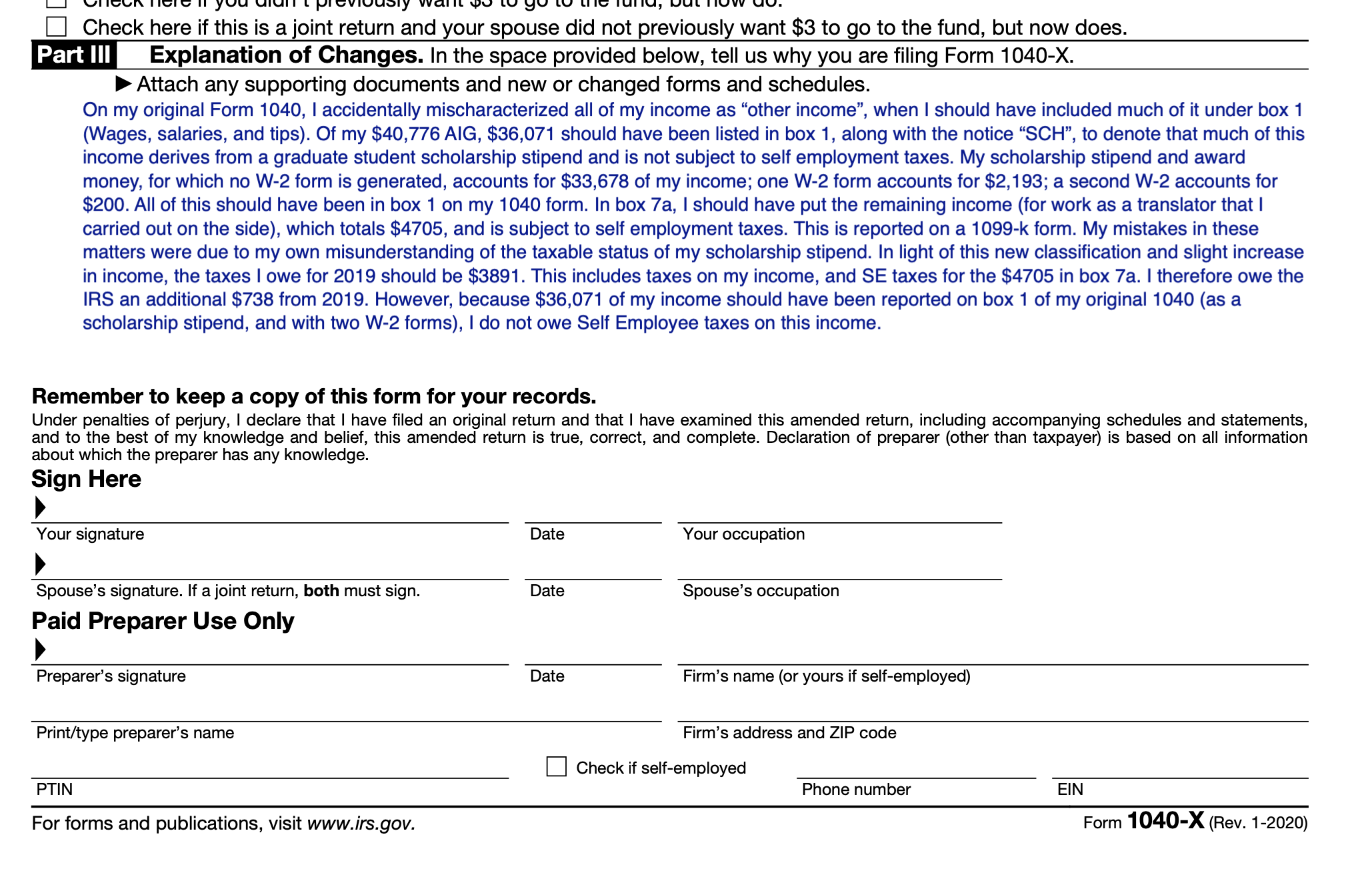
  • « Go to Previous Page
  • Go to page 1
  • Interim pages omitted …
  • Go to page 7
  • Go to page 8
  • Go to page 9
  • Go to page 10
  • Go to page 11
  • Interim pages omitted …
  • Go to page 25
  • Go to Next Page »

Footer

Sign Up for More Awesome Content

I'll send you my 2,500-word "Five Ways to Improve Your Finances TODAY as a Graduate Student or Postdoc."

Success! Now check your email to confirm your subscription.

There was an error submitting your subscription. Please try again.

We won't send you spam. Unsubscribe at any time. Powered by Kit

Copyright © 2026 · Atmosphere Pro on Genesis Framework · WordPress · Log in

  • About Emily Roberts
  • Disclaimer
  • Privacy Policy
  • Contact